Before the Doors Open, the Work Has Already Started
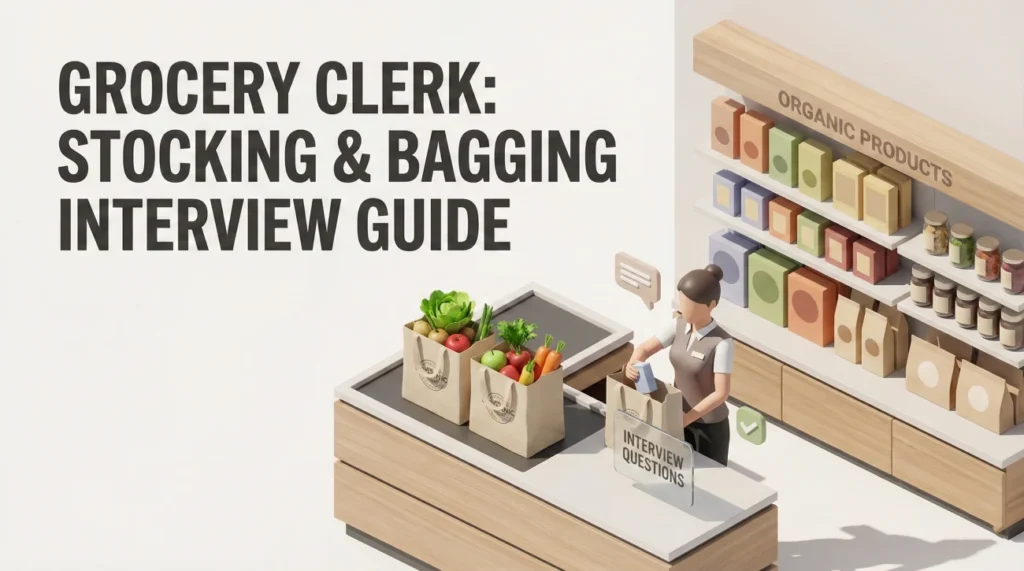
Cold air from the dairy case, pallets waiting to be broken down, and a checklist that never gets smaller. That is the world behind grocery store clerk interview questions. Managers are hiring for the person who keeps the store safe, stocked, and pleasant, even when the pace is not.
When you answer, show practical habits: clean aisles, correct rotation, careful bagging, and a steady tone with customers who are in a hurry.
Stocking & Inventory Management
Q: How do you prioritize stocking when multiple aisles need attention?
I prioritize based on customer impact and product type. High-traffic items and sale products come first because empty promotional displays cost the store sales. Perishables take priority over shelf-stable items because they have limited time before spoilage.
I also consider timing. During store hours, I stock aisles with lighter foot traffic to minimize customer disruption. I keep my cart organized so I can pause for customer questions without losing efficiency. Communication with supervisors helps when priorities conflict.
Q: Explain the FIFO method and why it matters.
FIFO stands for First In, First Out. Older products get placed in front so customers purchase them before newer stock. This prevents items from expiring on the shelf and reduces waste. When stocking, I pull existing products forward and place new deliveries behind them.
FIFO matters most for perishables but applies everywhere. Even canned goods eventually expire. I check dates while stocking and pull anything approaching expiration for markdown or removal. Proper rotation protects customers from outdated products and protects the store from waste costs.
Q: How do you handle damaged or expired products you find while stocking?
I remove damaged or expired items immediately and follow store procedure for documenting them. Most stores have specific bins or processes for damaged goods, some for vendor credit and others for disposal. I never leave questionable products on the shelf hoping someone else will deal with them.
For items close to expiration, I check store policy on markdowns. Many stores discount items approaching their sell-by date rather than waste them. I report patterns to supervisors because frequent damage from a specific vendor or repeated expiration of certain products indicates ordering or rotation problems.
Q: A customer asks where to find a product. How do you help them?
I walk them to the product rather than just pointing or giving aisle numbers. This ensures they actually find it and gives me a chance to ask if they need anything else. If I do not know where something is, I find out rather than guessing and sending them on a wild goose chase.
If the product is out of stock, I check the back room or our inventory system. If we are completely out, I apologize, explain when we expect more, and suggest alternatives. A customer who leaves empty-handed might not come back, so I try to find a solution.
Q: How do you read and follow a planogram?
A planogram is the diagram showing exactly where each product belongs on the shelf, including facing, shelf position, and quantity. I follow it precisely because placement affects sales. Products at eye level sell better than those on bottom shelves. Promotional items belong in designated spots.
When stocking, I match products to their planogram positions, ensure correct facings, and maintain the visual appearance corporate expects. If a planogram seems wrong or a product does not fit, I report it rather than improvising. Consistency across stores matters for the brand.
Checkout & Bagging
Q: What are the key principles for bagging groceries properly?
I group items logically: cold with cold, cleaning products separate from food, heavy items on the bottom with fragile items on top. Bread, eggs, and chips go in their own bags or on top where nothing can crush them. I double-bag heavy items to prevent bag breakage.
I ask about bag preferences since some customers bring reusable bags or want minimal plastic. I pack bags to a reasonable weight because overstuffed bags are hard to carry and prone to tearing. Speed matters during rushes, but a customer whose eggs are crushed will not appreciate how fast I worked.
Q: How do you handle a long checkout line?
I stay calm and work efficiently without rushing so much that I make errors. I acknowledge waiting customers with eye contact or a brief apology for the wait. If trained on the register, I offer to open another lane. If not, I call for backup so someone who can open a register knows help is needed.
While customers wait, I can prepare bags, help organize items on the belt, and answer quick questions. I never complain about being busy in front of customers. The line is not their fault, and negativity makes the wait feel longer for everyone.
Q: A price comes up differently than the customer expected. What do you do?
I apologize for the confusion and call for a price check. If the shelf price was indeed lower, most stores honor that price. I explain I am verifying to make sure they get the correct price. I remain calm because pricing errors happen, and getting defensive makes customers more frustrated.
If the customer is certain about the price but I cannot verify it, I involve a supervisor to make the call. I do not argue with customers about prices because even if they are wrong, the confrontation costs more in goodwill than the price difference is worth.
Q: How do you handle payment issues like a declined card?
I handle it discreetly to avoid embarrassing the customer. I quietly mention the card did not go through and ask if they would like to try again or use a different payment method. I never announce “your card was declined” loudly enough for others to hear.
If the issue persists, I offer to hold their order while they resolve it with their bank or get another card. I stay patient because payment problems are stressful for customers. If they cannot pay, I follow store procedure for voiding the transaction and setting aside the items.
Customer Service Scenarios
How would you handle a customer who is upset about an out-of-stock item?
I apologize sincerely even though I did not personally cause the problem. I check whether we have the item in back or can get it from another location. If not, I offer alternatives: similar products, the option to special order, or information about when we expect restocking.
I understand their frustration, especially if they made a trip specifically for that item. I might offer a rain check if the store has that policy. The goal is ensuring they leave feeling heard and with a solution, even if it is not exactly what they wanted.
A customer complains that an item they bought last week was spoiled when they got home. What do you do?
I apologize for the experience and process a refund or exchange immediately, following store policy. Most stores accept returns on spoiled items without requiring the product back because we do not want rotten food in the store. I thank them for letting us know because it helps us check for problems.
I alert my supervisor in case there is a batch issue that needs investigation. If multiple customers report similar problems, we may need to pull remaining stock. One complaint could prevent many more unhappy customers.
You notice someone who appears to be shoplifting. How do you respond?
I do not confront them directly because that can escalate to dangerous situations and many stores prohibit employee confrontation. Instead, I discreetly notify a manager or security and provide a description of what I observed. I continue working normally to avoid alerting the person.
I focus on what I actually saw, not assumptions. Someone putting items in a bag might have brought a reusable bag from home. Trained loss prevention staff handle suspected theft. My job is reporting, not apprehending.
How do you handle a customer who is rude or abusive?
I stay calm and professional, not matching their tone. Often frustrated customers are having a bad day that has nothing to do with me. I focus on solving whatever problem I can while maintaining boundaries. I use phrases like “I understand you are frustrated” to acknowledge their feelings without accepting blame for things outside my control.
If a customer becomes verbally abusive or threatening, I call for a supervisor. No job requires me to accept abuse. Most stores support employees in walking away from genuinely hostile situations. I document incidents as my supervisor directs.
Food Safety & Store Operations
Q: What food safety practices do you follow when handling groceries?
I keep raw meats separate from ready-to-eat foods to prevent cross-contamination. When bagging, raw chicken never goes in the same bag as produce. I handle produce gently and keep hands clean, wearing gloves when required. I report any pest sightings or sanitation concerns immediately.
For temperature-sensitive items, I work quickly to minimize time outside refrigeration. When stocking dairy or frozen, I prioritize getting products into cold cases fast rather than letting them sit on a cart warming up. Even brief temperature abuse affects shelf life and safety.
Q: How do you maintain cleanliness in your work area?
I clean as I go rather than letting messes accumulate. Spills get addressed immediately because they create slip hazards and attract pests. I keep my stocking cart organized, break down boxes promptly, and ensure aisles remain clear for customers and coworkers.
At the end of shifts, I leave my area ready for the next person. I check for items left in wrong places by customers and return them. Clean, organized stores make everyone’s job easier and create better customer impressions.
Q: Describe proper lifting technique for heavy cases.
I bend at the knees, not the waist, keeping my back straight. I grip the load firmly, keep it close to my body, and lift using my legs. I never twist while carrying weight. For very heavy items, I ask for help or use equipment like hand trucks.
Proper technique matters because back injuries are common in grocery work and can become chronic. A few seconds saved by poor lifting is not worth months of pain. I also wear appropriate footwear with good support and non-slip soles.
Grocery Operations Quiz
20 Practice Questions
1. FIFO stands for:
- First Inventory, Final Output
- First In, First Out
- Final Inspection, First Order
- Fast Inventory, Fast Output
2. When bagging groceries, raw meat should be:
- Placed with produce for efficiency
- Bagged separately from other items
- Put on top of bread products
- Mixed with cleaning products
3. A planogram is:
- A store floor map
- A diagram showing where products belong on shelves
- An employee schedule
- A delivery tracking system
4. When a customer asks where to find a product, you should:
- Point in the general direction
- Tell them to ask someone else
- Walk them to the product location
- Give them a store map
5. Proper lifting technique involves bending at the:
- Waist
- Knees
- Hips only
- Ankles
6. When stocking perishables, the priority is:
- Stocking as much as possible
- Minimizing time outside refrigeration
- Making displays look full
- Finishing before break time
7. If a customer’s card is declined, you should:
- Announce it loudly
- Handle it discreetly and offer alternatives
- Ask them to leave
- Void the transaction immediately
8. When you notice potential shoplifting, you should:
- Confront the person directly
- Follow them through the store
- Notify a manager or security discreetly
- Ignore it
9. Items approaching expiration should be:
- Hidden behind newer products
- Moved to front, marked down, or removed per policy
- Left for the next shift to handle
- Sold at full price
10. During busy periods, stocking should be done in:
- The busiest aisles first
- Lower-traffic areas to minimize customer disruption
- Checkout areas only
- The back room only
11. When bagging, heavy items should go:
- On top
- On the bottom
- In separate bags always
- With fragile items
12. A customer complains about a spoiled item they bought. You should:
- Tell them it is not your fault
- Apologize and process a refund or exchange
- Ask them to prove it was spoiled
- Blame the supplier
13. Cleaning spills should happen:
- At the end of the shift
- Immediately when noticed
- Only if a supervisor asks
- During slow periods
14. When a price displays differently than the customer expected:
- Tell them they are wrong
- Call for a price check and honor the shelf price if lower
- Charge the higher price
- Void the item without asking
15. Cross-contamination prevention includes:
- Mixing all groceries together
- Keeping raw meats separate from ready-to-eat foods
- Bagging items as fast as possible
- Using the same gloves all day
16. When an item is out of stock, you should:
- Say nothing can be done
- Check the back, offer alternatives, and provide restock information
- Blame the delivery company
- Send them to another store
17. Eye-level shelf positions are valuable because:
- They are easier to stock
- Products at eye level sell better
- They hold more weight
- Corporate prefers them empty
18. When a customer is rude or abusive, you should:
- Respond with equal rudeness
- Stay calm, professional, and call a supervisor if needed
- Walk away without saying anything
- Argue until they apologize
19. Damaged products found while stocking should be:
- Placed on the shelf anyway
- Removed and documented per store procedure
- Hidden behind other products
- Sold at full price
20. Double-bagging is appropriate for:
- Light items
- Heavy items that might break a single bag
- All items always
- Only when customers request it
❓ FAQ
🧊 What is one food safety detail I should always mention?
Temperature awareness. I keep cold items cold, I do not leave dairy and frozen out during stocking, and I separate raw meat from ready-to-eat foods when bagging or stocking.
🛒 How do I answer “what do you do when a customer cannot find something”?
I walk them to the item, not point. If we are out, I offer a close substitute and I tell them when we typically restock or who can confirm inventory.
🧰 What matters more, speed or accuracy?
Both, but accuracy protects the store. I move fast, yet I still check labels, rotate correctly, and avoid shortcuts that create waste or safety issues.
🧾 If they ask about registers, what should I say?
I say I am comfortable learning POS quickly, staying calm during rushes, and staying accurate with change and coupons. I also communicate when I need a manager for an override.
🧍 How do I show I can handle physical work?
I mention safe lifting, steady movement for long shifts, and keeping aisles clear. I also say I will ask for help with heavy loads rather than risking injury.
Final Thoughts
Most grocery store clerk interview questions are trying to predict one thing: will you make the store easier to run? If your answers show safe habits, clean execution, and steady customer service, you will be the easy choice.
Finish with one short story where you caught a problem early and fixed it fast. Then, if you want more practice prompts, use the question bank and drill your stories until they sound natural.
⚠️ Disclaimer: The interview strategies, sample answers, and negotiation tips provided in this guide are for educational purposes only. Hiring decisions are subjective and vary by company and industry. While these strategies are based on professional HR standards, they do not guarantee a specific job offer or result.