“I Just Want to Look Like Me, But Better”
That sentence shows up all the time at the counter. It is also why beauty advisor interview questions focus so much on listening. The best advisors do not chase trends. They translate a person’s worry, budget, and comfort level into a routine that actually works.
Expect questions about how you consult, how you keep hygiene professional, and how you recommend without pushing. Your goal is to sound helpful and precise, the kind of advisor people come back to.
Product Knowledge & Industry Trends
Q: How do you stay current with beauty trends and new product releases?
I follow multiple channels to stay informed. I read industry publications and beauty blogs, follow makeup artists and influencers on social media, and watch tutorial videos to learn new techniques. I pay attention to runway shows and celebrity looks that influence mainstream trends. Brand training sessions provide deep dives into new product launches.
I also listen to customers. They often share what they have seen online or ask about products before I have encountered them. Staying curious and continuously learning is essential in an industry that evolves constantly. Knowledge builds credibility, and customers trust advisors who clearly know their products.
Q: Describe your knowledge of different product categories.
Skincare forms the foundation: cleansers, toners, serums, moisturizers, and treatments each serve specific purposes. Understanding ingredients like retinol, hyaluronic acid, vitamin C, and niacinamide helps me match products to concerns. Makeup categories include complexion products like foundation and concealer, eye products, lip products, and finishing items like setting spray.
I also understand haircare basics and fragrance families for when customers have broader needs. Within each category, I know the differences between price points and formulations, so I can recommend appropriately whether someone wants luxury items or effective budget options. Comprehensive knowledge means I can serve any customer who approaches the counter.
Q: A customer asks about clean or natural beauty products. How do you respond?
I explain what clean beauty generally means: formulations free from certain ingredients like parabens, sulfates, or synthetic fragrances, though definitions vary by brand. I discuss any certifications our products carry, like organic or cruelty-free designations. I present options that meet their criteria without making unsubstantiated health claims.
I ask what specifically concerns them, whether it is sensitive skin, environmental values, or ingredient preferences. This helps me recommend products that address their actual needs rather than assuming what clean beauty means to them. I am honest about what our products do and do not offer in this category.
Consultation & Customer Assessment
Q: Walk me through how you conduct a skincare consultation.
I start by asking about their current routine and any concerns: dryness, oiliness, breakouts, aging, sensitivity, or uneven tone. I ask about lifestyle factors like sun exposure, sleep, and stress that affect skin. I observe their skin to assess type and condition, noting texture, pore size, and any visible concerns.
Based on this assessment, I recommend a routine tailored to their needs and budget. I explain why each product helps and how to layer them correctly. I offer samples when available so they can try products before committing. I follow up on previous purchases when they return to see what worked and adjust recommendations accordingly.
Q: How do you determine the right foundation shade for a customer?
I assess their undertone first: warm, cool, or neutral. I look at vein color on the wrist, how gold versus silver jewelry looks against their skin, and natural flush colors. Undertone matters more than surface skin tone for finding a natural match.
I test shades along the jawline where face meets neck, ensuring the color disappears rather than sitting visibly on the skin. I check the match in natural light when possible, since store lighting can distort colors. I apply enough to see true coverage rather than just a swatch. I encourage customers to wear the sample for a few hours to see how it oxidizes on their skin.
Q: A customer seems overwhelmed by choices. How do you help them?
I simplify by asking focused questions to narrow options. Instead of presenting the entire wall of products, I identify their primary concern and budget, then curate three to four options that fit. I explain key differences clearly without technical overload. Sometimes less information helps more than comprehensive product knowledge.
I read their energy and adjust my approach. Some customers want detailed education; others want a trusted recommendation they can grab and go. I offer to start with one product that addresses their main concern rather than overwhelming them with a complete routine. Building trust with one successful recommendation brings them back for more.
Q: How do you handle a customer whose expectations may not match reality?
I listen to what they want to achieve, then honestly assess what is possible. If someone expects a product to completely eliminate deep wrinkles overnight, I gently explain realistic timelines and outcomes. I focus on what products can accomplish rather than dismissing their goals entirely.
I suggest products that will show noticeable improvement even if they will not achieve perfection. I explain that consistency matters more than any single miracle product. Setting honest expectations prevents disappointment and returns while building trust. Customers appreciate advisors who tell them the truth rather than overpromising to make a sale.
Makeup Demonstrations & Application
How do you approach giving a makeup demonstration?
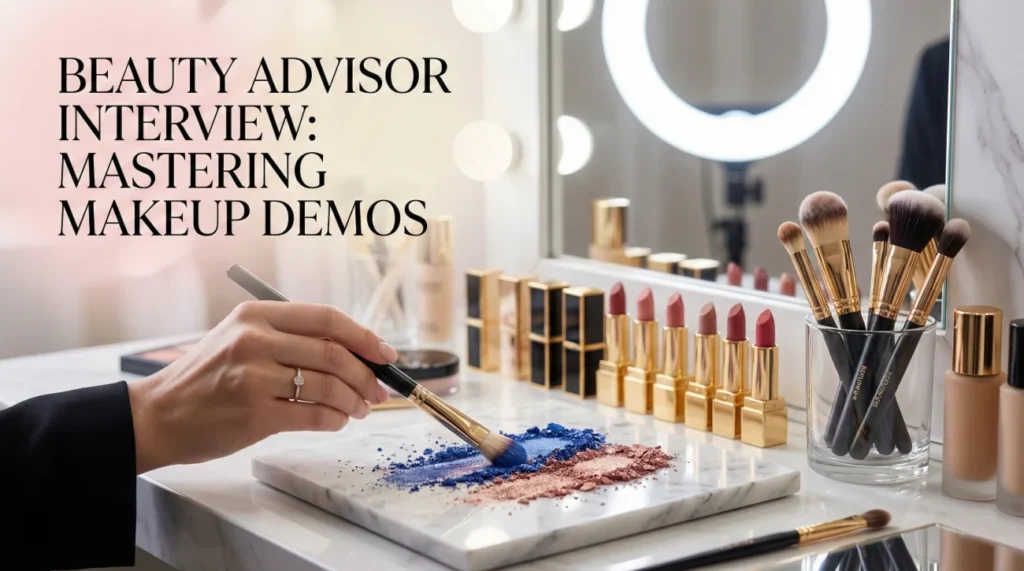
I start by asking what look they want and where they will wear it. A natural everyday look differs from evening glamour. I discuss their comfort level with makeup and any techniques they struggle with. I ensure they are comfortable with me touching their face and use fresh, sanitized tools.
During application, I explain each step and product choice so they can recreate the look at home. I show them techniques like blending, where to place highlight and contour, and how to adapt for their face shape. Education transforms a demo from just making them look good to empowering them with skills they keep.
How do you ensure hygiene during demonstrations?
I sanitize my hands before touching any customer. I use disposable applicators, never double-dipping into products. For lipsticks and cream products, I scrape product onto a palette rather than applying directly from the tube. I sanitize pencils with sharpening and spray sanitizers on powder products between clients.
I clean brushes between customers using quick-dry sanitizing spray and use fresh disposable mascara wands and lip applicators. I explain hygiene practices to customers so they feel confident in safety. Proper sanitation protects customers, protects me, and demonstrates professionalism.
A customer wants to learn a specific technique they saw online. How do you help?
I ask them to show me what they are trying to achieve, either describing it or showing a photo. I assess whether the technique suits their features and skill level. Sometimes online looks require professional skills or editing that is not realistic for everyday wear. I adapt the concept to work for them.
I demonstrate on one side of their face, then guide them through doing the other side themselves. This hands-on practice helps them learn better than just watching. I recommend specific products and tools that make the technique easier. I celebrate their success and offer tips for refining with practice.
How do you handle a demo that is not going as planned?
I stay calm and problem-solve. If a foundation is not matching well, I adjust or switch products. If a technique is not flattering their features, I pivot to something that works better. I am honest that this particular approach is not working rather than pushing forward with something unflattering.
I treat adjustments as learning opportunities, explaining why something did not work and what we are trying instead. Customers respect honesty over pretending everything is perfect. A demo that requires adjustment and still ends beautifully demonstrates real expertise more than one that goes perfectly by luck.
Sales & Customer Relationships
Q: How do you balance providing genuine advice with meeting sales goals?
I believe genuine advice drives sustainable sales. When I recommend products that truly work for customers, they come back, buy more, and refer friends. Pushing products that do not fit their needs might create one sale but loses long-term loyalty. I focus on solving real problems with appropriate solutions.
That said, I actively look for opportunities. If someone mentions an upcoming event, I suggest complementary products. If they love a product, I mention related items they might enjoy. I present options at different price points and let customers decide what fits their budget. Sales follow naturally from good service.
Q: How do you approach upselling and cross-selling?
I listen for natural connections. If someone buys a lipstick, I might suggest a liner that prevents feathering or a gloss that layers beautifully over it. I explain the benefit rather than just pushing additional products. The suggestion should feel helpful, not pushy.
I mention sets or bundles when they offer genuine value. I share limited editions or items that sell out quickly if they seem relevant to the customer’s interests. I read cues: if someone has a strict budget or seems ready to wrap up, I respect that rather than extending the interaction uncomfortably.
Q: A customer is unhappy with a previous purchase. How do you handle it?
I listen fully to understand what went wrong. Was it a shade mismatch, unexpected reaction, or performance that did not meet expectations? I apologize for the disappointment and process returns or exchanges according to store policy. I offer to help find an alternative that better meets their needs.
I view complaints as opportunities. A customer who has a problem resolved well often becomes more loyal than one who never had an issue. I take feedback seriously and use it to improve my recommendations. If I recommended the product that disappointed them, I acknowledge that and adjust my approach for their preferences.
Q: How do you build lasting relationships with customers?
I remember details: their preferences, skin concerns, upcoming events they mentioned, products they love. When they return, I ask how the foundation worked out or if the serum helped their dryness. Personal attention makes customers feel valued rather than like just another transaction.
I follow up when appropriate, letting regulars know about new arrivals they might like or events they would enjoy. I build trust by being honest even when it means a smaller sale today. Long-term relationships matter more than individual transactions. Loyal customers become the foundation of consistent sales success.
Beauty Knowledge Quiz
20 Practice Questions
1. To determine skin undertone, you might examine:
- Hair color only
- Vein color on the wrist and how metals look against skin
- Eye color exclusively
- Height and weight
2. Foundation should be tested along the:
- Back of the hand
- Jawline where face meets neck
- Forehead only
- Inner arm
3. Hyaluronic acid is known for:
- Exfoliation
- Hydration and moisture retention
- Sun protection
- Acne treatment
4. During demonstrations, lipstick should be applied using:
- Directly from the tube
- Disposable applicator or product scraped onto palette
- Shared brushes
- Fingers without sanitizing
5. When a customer seems overwhelmed, you should:
- Show them every available option
- Ask focused questions and narrow to a few curated choices
- Leave them alone entirely
- Push the most expensive items
6. Retinol is commonly used for:
- Immediate hydration
- Anti-aging and skin cell turnover
- Sun protection
- Removing makeup
7. Cross-selling in beauty means:
- Discouraging additional purchases
- Suggesting complementary products that enhance the main purchase
- Only selling one item per customer
- Redirecting to competitors
8. When teaching a customer a new technique, you should:
- Do everything for them
- Demonstrate on one side, then guide them to practice on the other
- Just describe it verbally
- Tell them to watch online tutorials instead
9. Warm undertones typically look best in:
- Silver jewelry and cool-toned makeup
- Gold jewelry and warm-toned makeup
- Only neutral colors
- Undertone does not affect color choices
10. A customer returns with a product complaint. Your first step is:
- Defend the product immediately
- Listen fully to understand what went wrong
- Blame them for misuse
- Refuse the return
11. Sanitizing brushes between customers requires:
- No action needed
- Quick-dry sanitizing spray
- Using the same brush all day
- Rinsing with water only
12. When expectations do not match reality, you should:
- Promise unrealistic results anyway
- Honestly explain what products can achieve and set realistic expectations
- Refuse to help
- Blame the customer for wanting too much
13. Building customer relationships involves:
- Treating each visit as completely separate
- Remembering preferences and following up on previous purchases
- Only focusing on today’s sale
- Avoiding personal conversation
14. Clean beauty typically refers to products:
- That require no application
- Formulated without certain ingredients like parabens or sulfates
- That are always organic
- Made only in the USA
15. When a demo is not going well, you should:
- Pretend everything is fine
- Acknowledge the issue and pivot to something that works better
- Blame the customer
- End the demo immediately without explanation
16. Staying current with trends involves:
- Only attending store training
- Following multiple channels: social media, publications, training, customer feedback
- Ignoring online sources
- Learning once and never updating
17. Foundation oxidation means:
- The product expires immediately
- The shade may darken slightly after application and exposure to air
- It becomes more hydrating
- Coverage increases
18. Genuine sales advice leads to:
- Fewer customers
- Long-term loyalty and sustainable sales
- Lower revenue always
- Customer distrust
19. During a skincare consultation, you should ask about:
- Only their age
- Current routine, concerns, lifestyle, and budget
- Nothing personal
- Only what products they want to buy
20. Samples serve to:
- Replace full-size purchases
- Allow customers to try before committing
- Reduce store inventory
- Avoid consultations
❓ FAQ
🎨 How do you match foundation fast without guessing?
I ask about undertone and finish, then I test in natural light when possible. I start with a small range and narrow down based on how the shade settles after a minute.
🧴 What if the customer has sensitive skin?
I ask what has reacted before, I keep ingredients simple, and I recommend patch testing. I also explain limits honestly and avoid promising “no reaction” because nobody can guarantee that.
🧼 What hygiene steps do managers want to hear?
Disposable applicators for lips and mascara, clean palettes, sanitizing hands and tools, and no double-dipping. If I do a mini demo, I narrate hygiene steps so customers feel safe.
💬 How do you handle “this is too expensive”?
I ask what budget feels comfortable and what result matters most. Then I offer one good option in range and explain why it works, instead of trying to win with pressure.
🧭 How do you build trust with a first-time makeup buyer?
I keep it simple. I choose a small routine, explain each step, and I avoid overwhelming them. Confidence grows when they leave with something they can actually use.
Final Thoughts
The strongest beauty advisor interview questions answers feel like a consultation, not a pitch. If you listen well, explain clearly, and keep hygiene strict, customers relax, and sales follow naturally.
End by naming your style in one line: helpful, clean, and accurate. Then direct them to the complete interview questions collection if they want to see how you prepare.
⚠️ Disclaimer: The interview strategies, sample answers, and negotiation tips provided in this guide are for educational purposes only. Hiring decisions are subjective and vary by company and industry. While these strategies are based on professional HR standards, they do not guarantee a specific job offer or result.