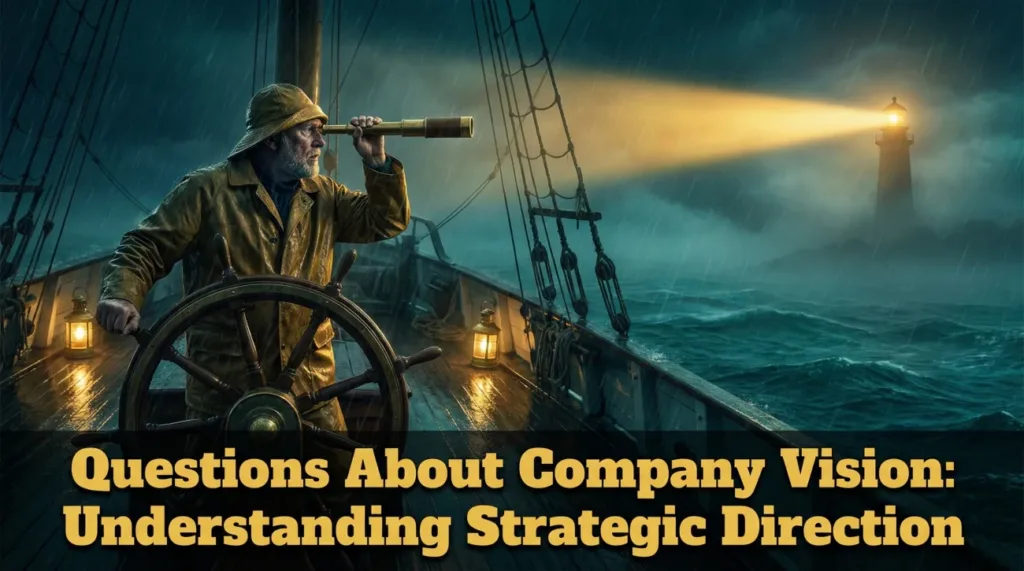
Where Is This Ship Sailing
You’re not just accepting a job. You’re boarding a ship heading somewhere. The direction matters. A company growing into exciting new markets offers different opportunities than one defending declining territory. An organization with clear vision creates different experiences than one drifting without direction.
Asking questions about company vision helps you understand the strategic context you’d be joining. You learn whether leadership has clear plans, whether those plans make sense, and how your potential role connects to the bigger picture.
This isn’t just intellectual curiosity. Strategic direction affects your job security, growth opportunities, and daily work. Companies with clear, credible visions tend to make better decisions and offer more stability. Those without direction often create chaotic, reactive environments where your work might be undone by the next strategic pivot.
Why Vision Matters for Your Career
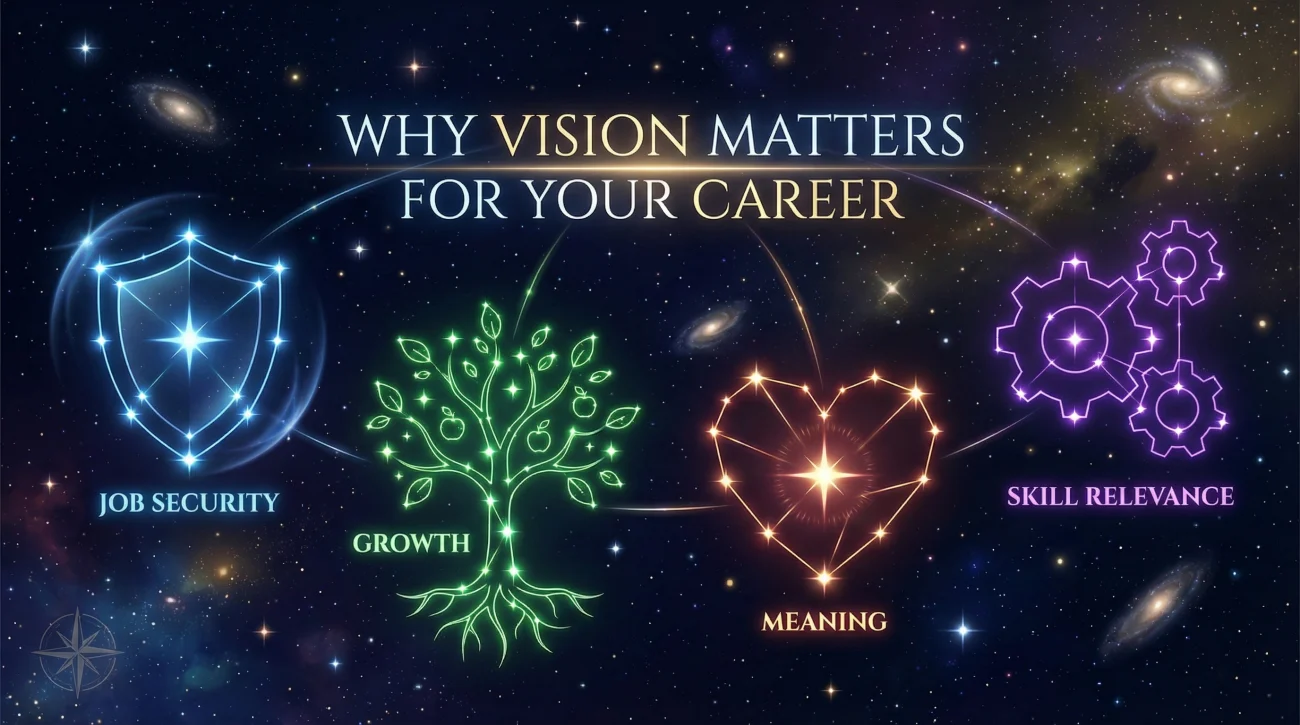
Job Security
Companies with clear, achievable visions are more likely to survive and thrive. Those without strategic direction are more likely to face crises, layoffs, or acquisitions that disrupt your employment.
Growth Opportunities
Growing companies create new roles and advancement paths. Shrinking or stagnant companies have limited opportunities because movement only happens when someone leaves.
Meaningful Work
Understanding how your role contributes to larger goals makes work more satisfying. Without context about where the company is heading, daily tasks can feel disconnected and pointless.
Skill Relevance
The company’s direction affects which skills become more valuable. Joining a company moving in a direction that aligns with skills you want to develop accelerates your career in the right direction.
Essential Questions to Ask
The Direction Question
“Where do you see the company in three to five years? What’s the strategy for getting there?”
This is the fundamental vision question. Listen for clarity, specificity, and realism. Vague aspirations differ from concrete plans. Also notice whether they seem energized by the vision or are just reciting corporate talking points.
The Challenge Question
“What are the biggest challenges or risks to achieving that vision?”
This reveals strategic self-awareness. Leaders who can articulate challenges are thinking realistically. Those who see no obstacles might be overconfident or not thinking critically about execution.
The Role Connection Question
“How does this role contribute to the company’s strategic direction?”
Understanding how your work connects to larger goals helps you assess both the role’s importance and your potential impact. Roles clearly tied to strategic priorities tend to have more resources and visibility.
The Change Question
“How has the company’s direction evolved in the past few years? What drove those changes?”
Understanding strategic evolution tells you about organizational adaptability and stability. Constant pivots might indicate lack of clarity. Thoughtful evolution suggests responsive but stable leadership.
Decoding the Answers
| What They Say | What It Might Mean |
|---|---|
| Specific, detailed strategic plan described | Clear thinking; verify execution reality |
| “We want to be the leader in our space” | Generic aspiration; push for specifics |
| Honest discussion of challenges and risks | Realistic leadership; good sign |
| “We’re still figuring out our direction” | Strategic uncertainty; could be risk or opportunity |
| Different interviewers give different answers | Vision not clearly communicated; possible alignment issues |
| Enthusiasm when discussing vision | People believe in the direction; motivating environment |
When different people describe different visions, the organization lacks strategic alignment. This often creates confusion and competing priorities.
Assessing Vision Quality
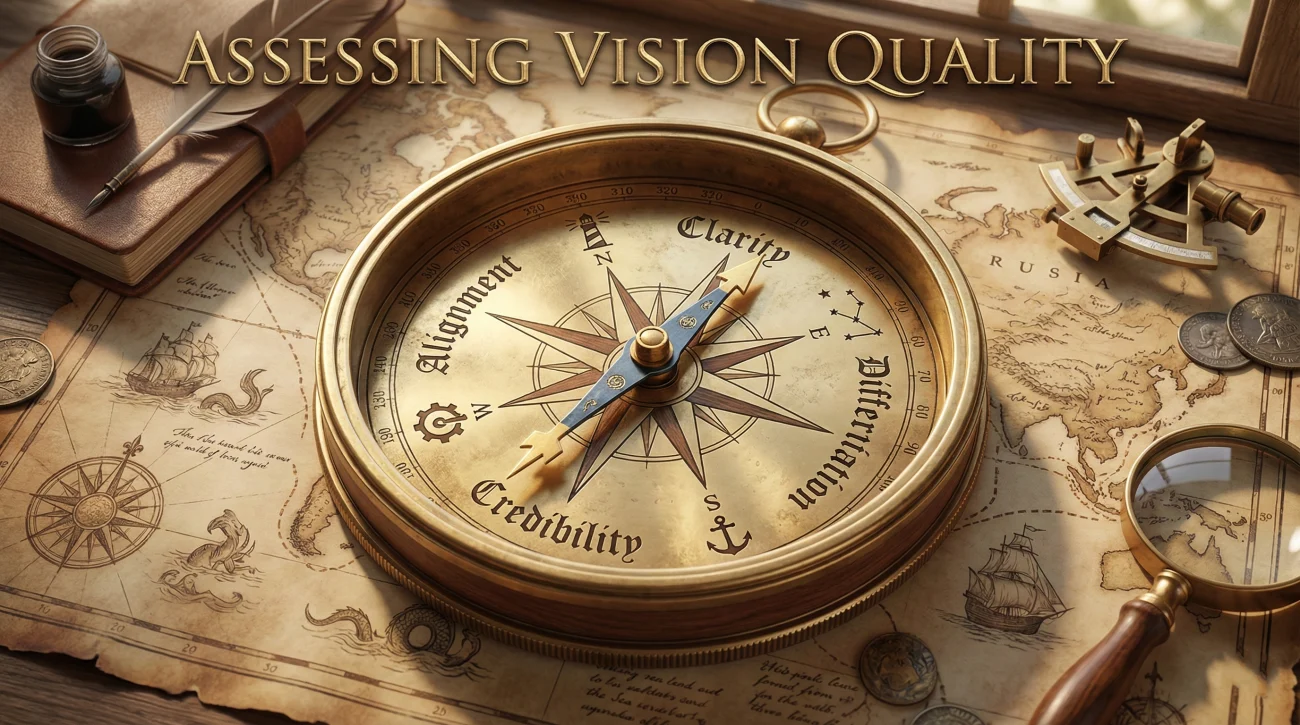
Clarity
Can they explain the vision in simple terms? Complex, jargon-filled explanations often indicate unclear thinking. Good visions are understandable even to outsiders.
Credibility
Does the vision seem achievable given the company’s resources and position? Ambitious is fine; delusional is concerning. The best visions stretch but are grounded in reality.
Differentiation
Does the vision articulate how this company will be different from competitors? Visions that could apply to any company aren’t really guiding decisions.
Alignment
Do different people tell the same story about where the company is heading? Consistent answers across interviewers suggest the vision is well-communicated and shared.
Going Deeper
Market Context
- “How is the market changing, and how is the company responding?”
- “What external factors most affect your ability to execute on the vision?”
- “What competitive threats concern you most?”
Execution Questions
- “What’s the track record of executing on past strategic initiatives?”
- “What recent strategic decisions are you most proud of? Most concerned about?”
- “How are strategic priorities translated into team and individual goals?”
Investment Questions
- “Where is the company investing most heavily right now?”
- “Are there areas where investment is being reduced?”
- “How does my potential area fit into investment priorities?”
For additional strategies on evaluating employers, see our comprehensive interview questions guide.
Research Beyond the Interview
Public Communications
For public companies, earnings calls and investor presentations reveal strategic priorities. For private companies, look at press releases, leadership interviews, and industry coverage.
Industry Analysis
Understand the broader market context. Is this a growing industry or declining one? Is the company well-positioned relative to trends? External context helps you evaluate internal claims.
Track Record
What has the company announced in the past, and did they execute? A history of missed targets or abandoned initiatives suggests execution problems regardless of current vision.
❓ FAQ
🎯 What if the company is small and doesn’t have a formal strategic plan?
Small companies may lack formal planning but should still have direction. Ask founders or leaders where they see the company going and what they’re prioritizing. The formality matters less than the clarity.
💼 Should I be concerned if the vision has changed recently?
It depends on why. Adaptation to market changes is healthy. Constant pivoting suggests lack of direction. Ask what drove the change and whether the current direction feels stable.
⏰ How much should vision influence my decision?
More for longer-term thinking, less for immediate role. If you’re planning a short tenure, vision matters less. If you’re looking for a place to grow long-term, vision significantly affects your opportunities.
📋 What if I disagree with the company’s direction?
That’s useful information. Working toward goals you don’t believe in is demotivating. Either reconsider the opportunity or understand what role you’d play despite disagreement.
✨ How do I assess vision for a department when the company vision is unclear?
Focus on your potential manager’s vision for the team. Strong leaders can create good environments even in unclear organizations. Weak leaders struggle even with clear company direction.
Direction Determines Destination
Asking questions about company vision reveals where the organization is heading and whether that direction makes sense. Look for clarity, credibility, differentiation, and alignment across interviewers. Understand how your potential role connects to strategic priorities. Research beyond the interview using public communications and industry analysis. Your career trajectory is partly determined by the trajectory of the organization you join. A company heading somewhere exciting offers different opportunities than one drifting or declining. Understand the direction before you commit to the journey.
⚠️ Disclaimer: The interview strategies, sample answers, and negotiation tips provided in this guide are for educational purposes only. Hiring decisions are subjective and vary by company and industry. While these strategies are based on professional HR standards, they do not guarantee a specific job offer or result.