Protecting Your Future Self
Burnout doesn’t announce itself on day one. It builds slowly through unanswered evening emails, weekend work that was supposed to be temporary, and boundaries that erode so gradually you don’t notice until you’re exhausted. The time to prevent burnout is before you accept the job, not after you’re already trapped.
Asking questions about work life balance during interviews reveals whether an organization respects boundaries or merely pays lip service to them. Every company claims to value balance in their job postings. The difference between companies that mean it and companies that don’t becomes clear only when you ask the right questions and know how to interpret the answers.
These questions aren’t about being lazy or uncommitted. They’re about sustainability. The most effective professionals maintain their energy over decades, not just months. Understanding what you’re signing up for helps you make informed decisions about where to invest your career.
Why Balance Questions Matter
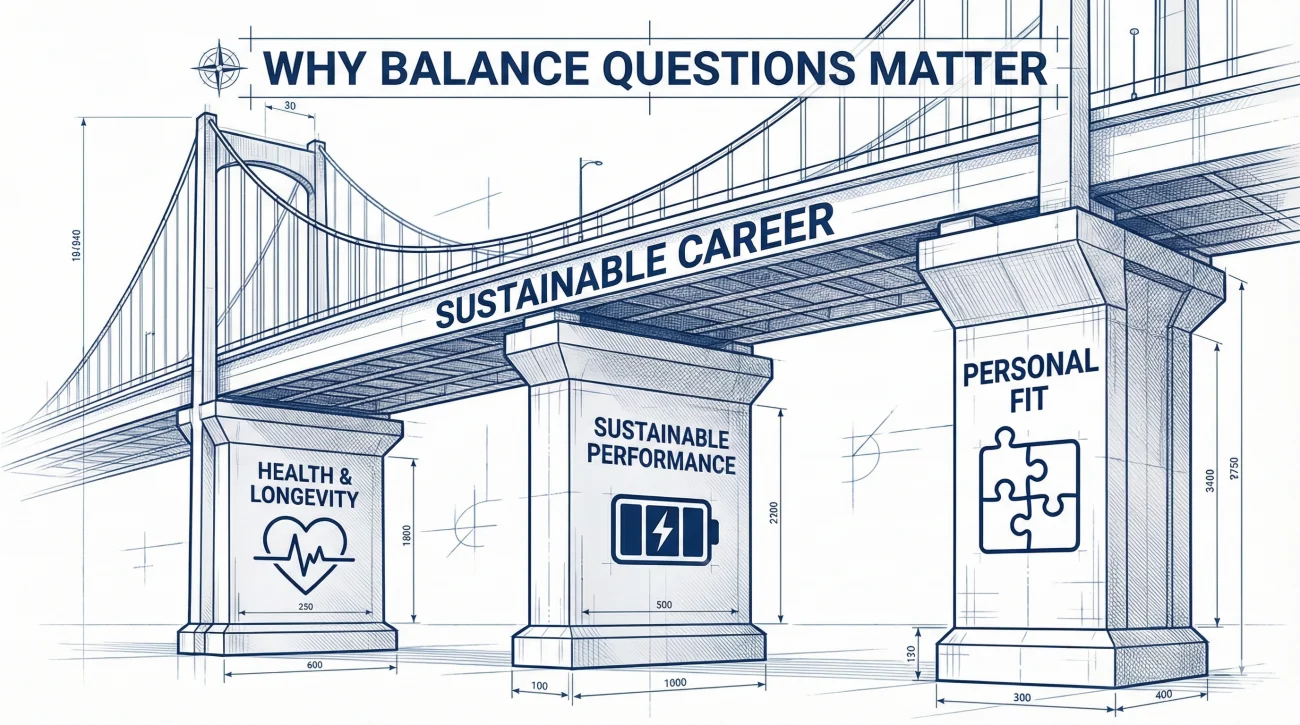
Health and Longevity
Chronic overwork damages physical and mental health in ways that compound over time. Heart disease, anxiety, depression, and relationship problems are all linked to sustained work stress. A job that burns you out isn’t worth whatever it pays.
Sustainable Performance
Ironically, overwork often reduces performance. Fatigued people make worse decisions, produce lower quality work, and take longer to complete tasks. Organizations that understand this create environments for sustainable high performance rather than short-term sprints that lead to crashes.
Personal Fit
Some people genuinely thrive in high-intensity environments. Others need clearer boundaries to do their best work. Neither preference is wrong, but the mismatch between your needs and the environment’s reality will make you miserable. Understanding the actual expectations helps you assess fit.
Essential Questions to Ask
The Hours Question
“What does a typical work week look like in terms of hours? Are there busy seasons when that changes?”
Get specific about expectations. “Normal hours” means different things to different organizations. A typical week at one company might be forty hours; at another, it might be sixty. Ask about variations throughout the year to understand peak periods.
The After-Hours Question
“How does the team handle communication outside of work hours? Are people expected to respond to emails or messages in evenings or weekends?”
This reveals the real culture around boundaries. Some organizations have clear norms about disconnecting. Others expect constant availability even if they won’t say so directly. The answer tells you what your evenings and weekends would actually look like.
The Vacation Question
“How much vacation do people typically take? Is there any difficulty actually using the time off?”
Unlimited vacation policies often result in people taking less vacation due to unclear norms or workload pressure. Ask about actual usage, not just policy. If people rarely take their full allotment, that’s information about the real culture.
The Emergency Question
“How often do true emergencies require work outside normal hours? What constitutes an emergency here?”
Every job has occasional crises. The question is frequency and definition. Some organizations treat everything as urgent. Others reserve emergency expectations for genuine emergencies. Understanding their definition helps you know what to expect.
Decoding the Answers
| What They Say | Possible Reality |
|---|---|
| “We work hard but we play hard too” | Long hours are the norm; occasional fun events compensate |
| “We’re flexible about when you work” | Could mean autonomy, could mean always working |
| “We have unlimited PTO” | Check actual usage; often results in less time off |
| “It depends on the season” | Expect significant variation; clarify the extremes |
| “We respect personal time” | Good sign, but verify with specific examples |
| “Everyone puts in what they need to” | Unclear expectations; could go either way |
Phrases like “fast-paced” and “dynamic environment” often signal high-intensity cultures where boundaries are regularly tested.
Warning Signs to Watch

Deflection or Discomfort
If interviewers seem uncomfortable with balance questions or deflect rather than answer directly, that’s information. Organizations confident in their culture answer these questions easily. Discomfort suggests they know the answers wouldn’t be appealing.
Bragging About Overwork
Comments like “Our team is incredibly dedicated” or stories about all-nighters often signal a culture that glorifies overwork. Pride in excessive hours suggests that’s what they’ll expect from you too.
Vague Answers
Responses like “it varies” or “it depends” without specifics suggest either lack of clear norms or unwillingness to disclose demanding expectations. Push for concrete examples and typical scenarios.
Heavy Spin
If every answer about hours includes phrases like “but it’s worth it” or “people love the work so much they don’t mind,” be skeptical. Heavy justification often accompanies problematic realities.
Going Deeper
Manager-Specific Questions
- “How do you personally approach work-life balance?”
- “When was the last time you took a real vacation?”
- “How do you handle it when someone on your team is overworked?”
Team Culture Questions
- “What time do people typically leave the office?”
- “Is there an expectation to be online during specific hours?”
- “How does the team handle coverage during vacations?”
Policy Questions
- “Is there a formal policy about after-hours communication?”
- “How does parental leave work here in practice?”
- “What flexibility exists for personal appointments or family needs?”
For additional strategies on evaluating workplace culture, see our comprehensive interview questions guide.
Research Beyond the Interview
Employee Reviews
Glassdoor and similar sites often contain honest feedback about work-life balance. Look for patterns in reviews rather than individual comments. Consistent mentions of long hours or poor balance are meaningful signals.
LinkedIn Observations
When do people at this company post? If employees regularly share updates late at night or on weekends, that reveals something about the culture that interviews might not.
Network Conversations
If you know anyone who works or worked there, ask directly about balance. People are often more honest in private conversations than in formal interviews.
❓ FAQ
🎯 Will asking about balance make me seem uncommitted?
Not to reasonable employers. Organizations that react negatively to balance questions are telling you something important about their culture. Those are probably places you don’t want to work anyway.
💼 When should I ask these questions in the interview process?
These questions work best with HR or potential teammates rather than in first-round screens focused on qualifications. Later interviews when you’re evaluating mutual fit are ideal. You can also ask during the offer stage.
⏰ What if the role is genuinely demanding by nature?
Some roles are legitimately intense. That’s fine if you know what you’re signing up for. The goal isn’t to find the easiest job but to understand reality so you can make an informed decision about whether it works for you.
📋 How do I verify what they tell me?
Cross-reference with employee reviews, ask multiple interviewers the same questions, and observe cues like when emails are sent. Consistent stories across sources are more reliable than any single answer.
✨ What if balance varies significantly by team?
This is common in larger organizations. Focus your questions on the specific team you’d join. Ask to speak with people who’d be your direct colleagues and ask them about their actual experience.
Sustainable Success
Asking questions about work life balance protects your future self from environments that would drain you. Get specific about hours, after-hours expectations, vacation reality, and emergency frequency. Learn to decode answers and watch for warning signs. Research beyond the interview to verify what you’re told. The goal isn’t avoiding hard work. It’s finding environments where you can do meaningful work sustainably for years, not just months before burning out. Your long-term career success depends on protecting your capacity to perform, and that starts with understanding what you’re committing to before you sign.
⚠️ Disclaimer: The interview strategies, sample answers, and negotiation tips provided in this guide are for educational purposes only. Hiring decisions are subjective and vary by company and industry. While these strategies are based on professional HR standards, they do not guarantee a specific job offer or result.