The Storyteller of the Store
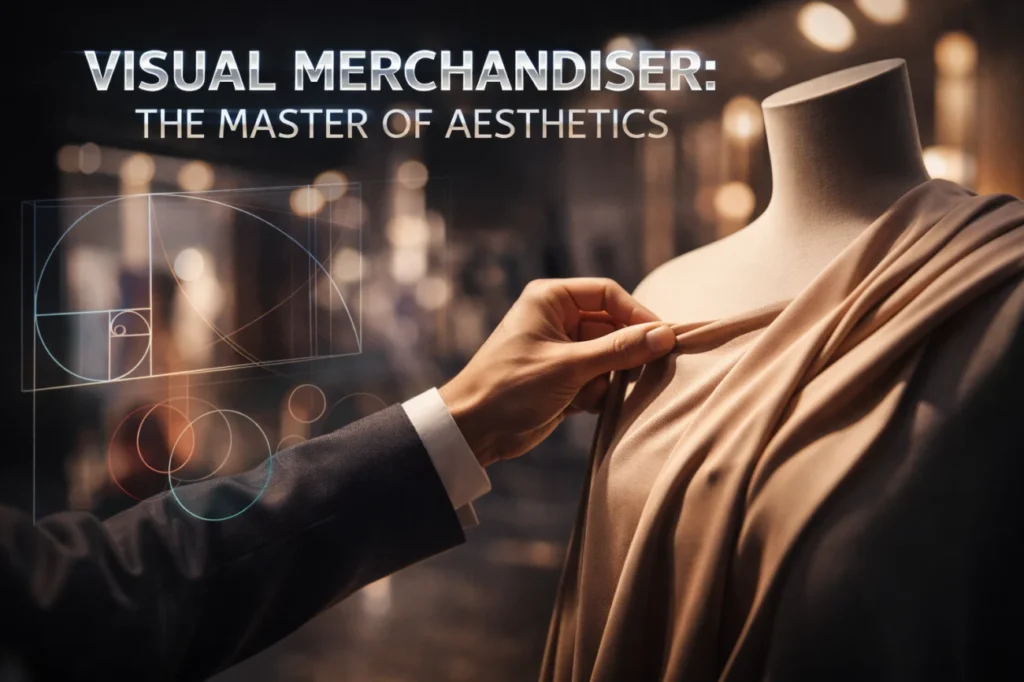
Visual merchandiser interview questions explore the delicate balance between artistic creativity and hard-nosed sales strategy. In the current “Experience Economy,” a Visual Merchandiser (VM) does far more than dress mannequins. You are the director of the customer’s journey, using lighting, color, and layout to subconsciously guide shoppers from the window to the register. Hiring managers are looking for candidates who can create “Instagrammable moments” that drive foot traffic while ensuring the product remains the hero.
The modern VM must also be a master of sustainability and digital integration. How do you repurpose props to reduce waste? How do you incorporate digital signage into a physical display? Can you prove that your window installation actually increased the conversion rate? This guide covers the essential Aesthetics & Strategy questions to help you prove that your designs don’t just look good – they sell.
Design Philosophy & Portfolio
Q: How do you balance artistic creativity with commercial viability?
Why they ask: This is the most critical question. A beautiful display that doesn’t sell product is a failure.
Sample Answer: I follow the “Product-First” rule. My creativity exists to highlight the merchandise, not to overshadow it. If I create an elaborate jungle theme for a window, I ensure the lighting and positioning focus on the new safari jacket collection, not just the fake trees.
I check the sales reports weekly. If a creatively risky display isn’t driving sales for the featured items, I am quick to adjust it. I view my work as “Commercial Art” – its primary purpose is to solve a business problem (selling inventory) using aesthetic tools.
Q: Walk me through your creative process from concept to installation.
Why they ask: They want to see organization and planning skills.
Sample Answer: I start with the “Directive” or the season’s key trends provided by the buyers. I create a mood board to establish the color palette and texture. Next, I sketch the layout, considering the “Sight Lines” from the store entrance.
I then source the props, prioritizing items we can reuse. Before installation, I do a “dry run” or mock-up in the backroom to ensure the mechanics work. Finally, I install, light, and steam the merchandise. The last step is always walking out to the street to view it from the customer’s perspective to ensure it pops.
Q: How do you stay current with visual merchandising trends?
Why they ask: Retail is fashion; it changes fast.
Sample Answer: I look beyond just other retail stores. I draw inspiration from art galleries, architecture, and social media trends (TikTok/Pinterest). Currently, I am focused on the “Phygital” trend – blending physical displays with digital elements like QR codes that launch AR experiences.
I also follow major design blogs like WGSN and VMSD. I visit competitor stores not to copy, but to see what they are missing so we can fill that gap. Staying fresh keeps the brand relevant.
Q: What is the most challenging project in your portfolio and why?
Why they ask: They want to hear about problem-solving under constraints.
Sample Answer: (You should choose a specific project). For me, it was a holiday window with a zero-dollar budget due to cuts. I couldn’t buy new props, so I raided the recycling bin.
I created a winter wonderland using hundreds of painted cardboard shipping boxes cut into geometric snowflake shapes. It required immense manual labor, but it created a stunning, sustainable 3D texture that cost nothing but paint. It ended up winning a district award for creativity and taught me that constraint breeds innovation.
Technical Skills: Lighting, Color & Layout
Q: Explain the “Pyramid Principle” in display.
The Pyramid Principle is a composition technique where items are arranged in a triangular shape, with the tallest item in the center or back and smaller items cascading down. This keeps the eye moving and prevents the display from looking flat.
It creates a focal point. If everything is the same height, the customer’s eye scans right past it. By building height, I stop the eye and force the customer to look at the product at the peak of the pyramid.
Q: How do you use lighting to enhance a display?
Lighting is the most underrated tool in VM. I use “Spotlighting” to create drama and highlight the texture of the fabric. I aim for a high contrast ratio – the merchandise should be significantly brighter than the background.
I also pay attention to color temperature. I use warm light (3000K) for gold jewelry or warm fabrics, and cool light (4000K+) for diamonds, silver, or tech gadgets. Bad lighting can make expensive products look cheap.
Q: What is the “Rule of Three” in styling?
The human brain finds odd numbers more visually interesting than even numbers. The Rule of Three suggests grouping items in threes (e.g., three mannequins, three vases).
It creates asymmetry, which engages the brain. A pair (2) represents balance and can be boring. A group of three creates a dynamic relationship between the objects. I use this constantly when styling table displays or shelf accessories.
Q: How do you determine the “Focal Point” of a store?
The Focal Point is the first thing a customer sees when they enter or turn a corner. It’s usually the “Strike Zone” at the front or a feature wall at the back.
I identify these hotspots by walking the “Customer Path.” I place the highest-margin or newest trend items in these zones. I use brighter lighting and larger signage here to act as a magnet, drawing the customer deeper into the store.
Q: How do you approach Color Blocking?
Color blocking is organizing products by color to create a strong visual impact. I typically follow the color wheel, moving from light to dark (Left to Right) or grouping complementary colors together.
Vertical color blocking (stripes of color from top to bottom shelf) is usually more effective than horizontal, as customers scan shelves horizontally. A strong wall of color stops traffic and makes the store look full and organized.
Q: How do you style mannequins to tell a story?
Mannequins shouldn’t just stand there; they should interact. I group them to imply a social scene – like friends chatting or walking together. This creates a lifestyle narrative.
I layer the outfits completely (shirt, jacket, scarf, bag) to show the customer how to wear the full look. This drives UPT (Units Per Transaction) because the customer buys the whole outfit, not just the shirt.
Situational Scenarios: Budget & Store Ops
The Store Manager hates your new window display, but it follows corporate guidelines. What do you do?
I listen to their specific concerns first. Is it a safety issue? Do they think it hides the product? I validate their perspective because they know their local customer best.
However, I gently remind them of the corporate directive and the brand consistency we need to maintain. I might propose a small tweak that satisfies their concern without breaking the guideline – for example, “I can’t change the theme, but I can swap the jacket on the mannequin to the one you say is selling better.” Collaboration builds trust.
A key prop for the holiday set arrives broken, and you launch tomorrow.
I go into problem-solving mode. I assess if it can be repaired with the tools I have (glue, paint, tape). If not, I look for a substitute. Can I turn the broken side away from the window? Can I use a prop from last year?
If the prop is essential and missing, I redesign the layout to work without it, focusing on density and lighting to hide the gap. I then communicate the issue to HQ to get a replacement, but I never leave the window empty. “The show must go on” is the VM motto.
You notice customers are not walking into the back corner of the store.
That is a “Cold Zone.” I need to heat it up. I would analyze the sight lines – is a tall rack blocking the view? Is it too dark?
I would propose moving a high-demand item (like the clearance section or a destination category like denim) to that back corner. I would also improve the lighting and add a large graphic or mirror on the back wall to pull the eye. I treat the store layout as a fluid puzzle that needs constant adjusting.
Effectiveness & Future Trends
Q: How do you measure the success of a visual merchandising campaign?
Why they ask: They want data, not just feelings. ROI (Return on Investment) matters.
Sample Answer: I look at the “Sell-Through” report for the items featured in the window or focal points. If I put a dress in the window on Monday, did sales for that dress spike by Friday?
I also observe shopper behavior – are people stopping to take photos? Are they touching the display? If people stop but don’t enter, the display is attractive but maybe the pricing is unclear. I use these metrics to refine future installations.
Q: How do you incorporate sustainability into your work?
Why they ask: This is a massive current trend. Brands want to reduce waste.
Sample Answer: I prioritize “Circular Design.” Instead of throwing away props after one season, I repaint, re-cover, or disassemble them for parts. I advocate for using biodegradable materials (like paper or wood) over single-use plastics and Styrofoam.
I also use energy-efficient LED lighting. Sustainability isn’t just eco-friendly; it’s budget-friendly. Reusing a prop saves money that can be spent on better merchandise.
Q: What is the role of digital signage in modern VM?
Why they ask: The future is digital. Static posters are dying.
Sample Answer: Digital signage allows us to change the message instantly based on the time of day or weather. For example, if it starts raining, we can switch the screen to show umbrellas.
I view digital screens as dynamic textures. They add movement to the store, which catches the peripheral vision. However, the content must be high quality. A glitching screen is worse than no screen, so I ensure they are maintained just like physical props.
Visual Merchandising Knowledge Quiz
Take the 20-Question Challenge
1. The “Decompression Zone” is:
- The break room
- The first 5-10 feet inside the entrance where customers adjust to the store
- The fitting room area
- The checkout line
2. A “Sight Line” refers to:
- Reading glasses
- An unobstructed view leading the eye to a focal point
- The security camera angle
- The height of the ceiling
3. In Color Theory, “Monochromatic” means:
- Using every color
- Using variations of a single color (light to dark)
- Black and white only
- Neon colors
4. “Cross-Merchandising” is used to:
- Confuse the customer
- Increase UPT by displaying complementary items together (e.g., shoes + bag)
- Hide old stock
- Cross out prices
5. A “Gondola” is:
- A boat in Venice
- A freestanding shelving unit with two sides
- A hanging sign
- A type of mannequin
6. To make a small space look larger, you should use:
- Dark colors and clutter
- Mirrors, bright lighting, and vertical lines
- Heavy curtains
- Low ceilings
7. “Negative Space” in a display is:
- A bad thing
- Empty space around objects that allows them to “breathe” and stand out
- Space for trash
- The floor
8. Which lighting temperature is best for a cozy, luxury feel?
- Cool White (5000K)
- Warm White (2700K – 3000K)
- Blue Light
- Green Light
9. A “Ghost Mannequin” effect is used in:
- Haunted houses
- E-commerce photography to show the fit without showing the mannequin
- Window displays only
- Stockrooms
10. “Signage” should be:
- Handwritten and messy
- Clear, concise, and consistent with the brand font
- As small as possible
- In 10 different colors
11. A “Planogram” helps maintain:
- Employee schedules
- Brand consistency across multiple store locations
- The cleaning roster
- The music playlist
12. The “Silent Seller” refers to:
- A shy employee
- The Visual Merchandising itself (displays, signage, layout)
- Online shopping
- Security guards
13. Ideally, products should be placed at:
- Ankle height
- Eye level to waist level (The Strike Zone)
- Above reach
- On the floor
14. “Symmetrical Balance” creates a feeling of:
- Chaos and energy
- Stability, formality, and tradition
- Movement
- Unease
15. “Asymmetrical Balance” creates a feeling of:
- Boredom
- Movement, excitement, and informality
- Stiffness
- Mistake
16. “Sensory Branding” involves:
- Only sight
- Engaging multiple senses (Sight, Sound, Smell, Touch)
- Only taste
- Blocking senses
17. A “Pop-Up Shop” is:
- A permanent store
- A temporary retail space designed to create buzz
- An online ad
- A toy store
18. To refresh a display without spending money, you can:
- Leave it empty
- Change the lighting, rearrange props, or re-style existing mannequins
- Close the window
- Turn off the lights
19. “Visual Weight” refers to:
- How heavy an object is in pounds
- How much attention an object attracts in a composition
- The weight of the mannequin
- The thickness of the glass
20. The ultimate goal of Visual Merchandising is to:
- Win art awards
- Increase sales and enhance brand image
- Use up all the props
- Keep the staff busy
❓ FAQ
🎨 Do I need an art degree?
Not necessarily, but a background in Graphic Design, Fine Arts, or Interior Design is highly preferred. Many successful VMs start as sales associates who show a flair for display and learn on the job. A strong portfolio is more important than a specific degree.
🔨 Is the job physically demanding?
Yes. You will be climbing ladders, painting walls, carrying heavy mannequins, and using power tools. It is a very hands-on, active role. You are rarely sitting at a desk unless you are planning a layout.
🌙 Do I work nights?
Often, yes. Major floor resets and window installations usually happen when the store is closed (overnight or very early morning) so customers aren’t disturbed. You need to be flexible with your schedule.
📂 What should be in my portfolio?
Include “Before and After” photos of your work. Show variety: window displays, table styling, and wall merchandising. Include sketches or mood boards to show your process, not just the final result. Quality is better than quantity.
💻 Do I need to know software?
Knowing Adobe Creative Suite (Photoshop/Illustrator) or SketchUp is a huge plus, especially for higher-level roles where you need to mock up designs for approval. For entry-level, being good with your hands is more important.
Final Thoughts
To land a job in this competitive field, your answers to visual merchandiser interview questions must show that you understand the “Why” behind the “What.” Hiring managers want to see that your creativity has a commercial purpose. You aren’t just decorating; you are solving business problems with visual solutions.
By showcasing your technical skills in lighting and composition, your ability to adapt to trends like sustainability, and your resilience in solving operational challenges, you prove that you are the strategic artist they need. Remember, the best Visual Merchandiser is one who makes the customer stop, look, and ultimately, buy.
⚠️ Disclaimer: The interview strategies, sample answers, and negotiation tips provided in this guide are for educational purposes only. Hiring decisions are subjective and vary by company and industry. While these strategies are based on professional HR standards, they do not guarantee a specific job offer or result.