Coaching Is a Curriculum
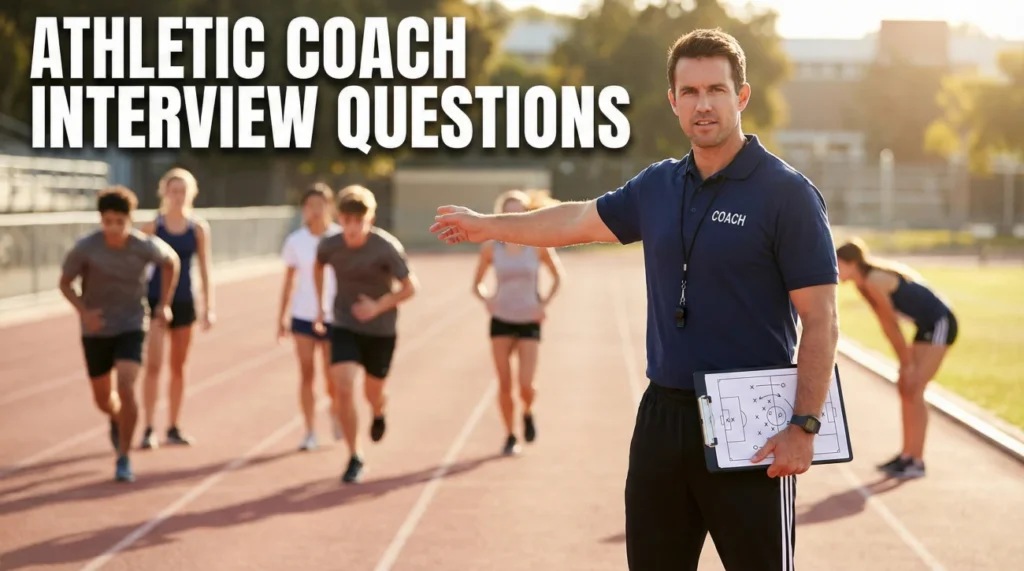
Athletic coach interview questions are not a pop quiz about drills. They are a character check. Schools want a coach who can compete hard, keep students safe, and teach discipline without turning a season into a pressure cooker.
You will be asked how you train, how you correct, and what you do when conflict shows up in the stands, the locker room, or the classroom. Strong answers prove you have a plan for performance and a plan for people. That is team culture in real life, not on a poster.
This guide breaks down season planning, athlete motivation, culture building, parent and administrator communication, and the tough calls that protect students and the program when emotions run high.
Coaching Philosophy & Program Vision
Q: What is your coaching philosophy?
I believe athletics should develop the whole person, not just the athlete. My philosophy centers on effort over outcome. I cannot control whether we win every game, but I can control whether every player improves, learns discipline, and experiences what commitment to something larger than themselves feels like.
I hold high standards for effort, attitude, and sportsmanship. I push athletes to discover what they are capable of while respecting their limits. Winning matters because competing matters, but how we win and how we handle losing matters more. My goal is athletes who leave the program as better people than when they arrived.
Q: How do you measure success as a coach?
Win-loss records tell part of the story but not the whole story. I measure success by player development: are athletes improving their skills, fitness, and understanding of the game? I look at retention: are players coming back season after season? I consider team culture: do players support each other, handle adversity well, and represent the school positively?
I also measure success by what happens after the season. Do players stay connected to the program? Do they apply the discipline and teamwork they learned? Are they prepared for the next level, whether that means college athletics or simply being active, healthy adults? Championships are wonderful, but lasting impact matters more.
Q: Where does winning fit into your coaching approach?
Winning is important because competition is important. I prepare to win every game and expect my athletes to compete fully. Settling for mediocrity teaches nothing valuable. But winning is the result of doing many things right, not the only goal.
I refuse to win through shortcuts: overworking young athletes, ignoring injuries, prioritizing athletics over academics, or tolerating poor sportsmanship. If winning requires compromising player welfare or program integrity, the cost is too high. I want athletes who are fierce competitors and gracious winners and losers.
Q: Why do you want to coach at this school specifically?
I researched this program and community before applying. I understand the school values athletic excellence within an educational framework, which aligns with my philosophy. I know the program’s history and see opportunities to build on existing strengths while addressing areas for growth.
I am drawn to schools that see athletics as character development, not just entertainment. The support structure here, from administration to facilities to community involvement, suggests an environment where I can build something meaningful. I want to be part of a program where success is measured in the people we develop, not just the trophies we collect.
Q: How do you ensure athletes balance sports and academics?
Academics come first, always. I set clear expectations from day one: grades slip, playing time suffers. I communicate regularly with teachers and monitor academic progress throughout the season. If an athlete needs extra help, they are excused from practice to meet with tutors or teachers.
I also teach time management as a core skill. Athletes learn to use study halls effectively, plan ahead for busy weeks, and communicate proactively with teachers about game schedules. The discipline required for athletics should enhance academic performance, not undermine it. Student-athletes are students first.
Q: How would you build or rebuild this program?
First, I assess the current state: talent level, culture, facilities, community support. I identify quick wins that build momentum while developing long-term plans. I establish core values and non-negotiable standards from day one so everyone knows expectations.
Building a program takes patience. I focus on developing underclassmen even when upperclassmen might give immediate results. I create feeder relationships with middle school and youth programs. I invest in assistant coaches and create systems that outlast any individual. Sustainable success requires infrastructure, not just inspiration.
Training Program Design
Q: How do you design a training program for the season?
I work backward from competition schedule. I identify peak performance periods and structure training to build fitness progressively, peaking at the right times. I balance sport-specific skills with general athleticism, injury prevention, and recovery. I plan for variety to prevent burnout and overuse injuries.
I consider individual athlete needs within team training. Some players need more conditioning; others need skill refinement. I build in assessment points to adjust the plan based on how athletes respond. The program is structured but flexible, demanding but sustainable. Overtraining young athletes creates injuries and burnout, not champions.
Q: How do you handle athletes at different skill levels on the same team?
Differentiation is essential. During team practices, I design drills with built-in progression so advanced players are challenged while beginners develop fundamentals. I use small group work where skill-matched athletes train together, then bring everyone together for team concepts.
I am honest with athletes about their roles. Not everyone will be a starter, but everyone can improve and contribute. I find ways for each athlete to experience success and growth, even if their playing time is limited. The backup who improves dramatically deserves recognition alongside the star who carries the team.
Q: Describe your approach to practice planning.
Every practice has clear objectives tied to upcoming competition or seasonal development goals. I start with warm-up that prepares athletes physically and mentally, progressing from general to sport-specific movement. The main body addresses technical skills, tactical concepts, and competitive scenarios. I end with conditioning if needed and always with cool-down.
I vary practice intensity and focus throughout the week based on game schedules. Heavy physical days come early in the week with lighter, more tactical work before competition. I keep practices efficient because teenage attention spans are limited and homework awaits. Quality over quantity always.
Q: How do you prevent injuries in your program?
Prevention starts with proper preparation. I insist on thorough warm-ups and cool-downs. I teach correct technique because poor form causes most non-contact injuries. I monitor training loads to avoid overuse. I ensure adequate rest and recovery between intense sessions.
I also create a culture where athletes report pain honestly. Many young athletes hide injuries to avoid losing playing time. I reward honesty about physical issues and never punish athletes for being hurt. I work closely with athletic trainers and respect their recommendations. A sidelined athlete who heals properly returns stronger than one who plays through damage.
Motivation & Team Culture
How do you motivate athletes through a long season?
I set meaningful short-term goals that create momentum toward long-term objectives. Instead of just focusing on the championship in three months, we celebrate weekly improvements and milestones. I vary training to prevent monotony and inject energy through competitions, challenges, and occasional surprises.
I build intrinsic motivation by helping athletes connect effort to personal growth. External rewards fade; internal drive sustains. I have honest conversations about why they play, what they want to achieve, and how we get there together. When athletes own their goals, motivation becomes self-generating.
How do you build team culture and chemistry?
Culture starts with me. I model the effort, attitude, and respect I expect from players. I establish clear values and reinforce them consistently. Every decision, from playing time to discipline, reflects those values. When athletes see that standards apply equally to everyone, trust builds.
I create opportunities for connection beyond practice: team meals, community service, locker room traditions. I address cliques and exclusion directly because team chemistry cannot survive internal divisions. I give athletes leadership responsibilities and voice in team decisions. The best cultures are player-owned, not coach-imposed.
How do you handle an athlete who is talented but has attitude problems?
Talent does not excuse poor behavior. I have a direct, private conversation first. I explain specifically what behaviors are problematic and why they hurt the team. I listen to understand what might be driving the attitude, whether frustration, personal issues, or misunderstanding expectations.
I give clear expectations and consequences. If behavior does not change, playing time decreases regardless of talent. I have benched star players and lost games because of it. The message to the team matters more than any single win. Usually, talented athletes with attitude problems respond to consistent boundaries. If they do not, they cannot stay.
Describe how you handled a losing season or struggling team.
I coached a team that started the season with eight straight losses. Morale was devastated. I shifted focus from outcomes to process: we celebrated personal bests, effort plays, and improvement even in losses. I reminded them that character is revealed in adversity, not success.
I analyzed what we could control and adjusted strategy to give us better chances. I had honest conversations about our ceiling while maintaining belief in our potential. The team finished with four wins. More importantly, every player improved measurably, and no one quit. That season taught me more about coaching than any championship would have.
How do you address poor sportsmanship from your athletes?
I address it immediately and publicly when necessary. If a player displays poor sportsmanship during a game, they come out. I explain why their behavior was unacceptable and what the consequences are. The team needs to see that these standards are non-negotiable.
After the immediate response, I use it as a teaching moment. We discuss why sportsmanship matters: respect for opponents, officials, and the game itself. I share examples of professional athletes whose careers were damaged by poor conduct. I follow through on consequences consistently because athletes will test whether I mean what I say.
Parents, Administrators & Difficult Situations
Q: How do you handle parents who disagree with playing time decisions?
I establish expectations early, usually at a preseason parent meeting. I explain how playing time decisions are made, what criteria matter, and that I am happy to discuss their child’s development but not to debate playing time in the heat of the moment.
When conflicts arise, I listen first. Sometimes parents have information I lack about their child’s situation. I explain my reasoning without getting defensive. I redirect conversations toward what their child can do to improve. If a parent becomes hostile or unreasonable, I involve the athletic director. I will not be bullied into decisions that are not best for the team.
Q: An athlete reports a possible injury but wants to keep playing. What do you do?
The athlete does not get to make that decision, and neither do I. Any possible injury gets evaluated by the athletic trainer or medical professional. I pull the athlete from activity until cleared. No game is worth risking a young person’s long-term health.
I explain to athletes that hiding injuries is not toughness; it is foolishness that can end careers. I praise athletes who report honestly and never punish them with reduced playing time for being hurt. Creating this culture takes time, but it prevents catastrophic outcomes from athletes playing through serious injuries.
Q: How do you work with school administration and other coaches?
I see myself as part of the school community, not separate from it. I communicate proactively with administrators about program needs, concerns, and successes. I follow school policies and support schoolwide initiatives even when they complicate athletic schedules.
With other coaches, I coordinate to prevent athlete burnout from overlapping seasons and share facilities fairly. I support other programs’ events when I can. Athletic departments function best when coaches collaborate rather than compete for resources and recognition. A rising tide lifts all boats.
Q: How would you handle learning that one of your athletes was bullying a teammate?
Bullying destroys team culture and harms individuals. I investigate immediately, speaking separately with involved parties and witnesses. I document what I learn and involve administration per school policy.
The bullying athlete faces immediate consequences: potential suspension from team activities, mandatory apology, and behavior plan. I make clear to the team that this behavior is incompatible with being part of our program. I also support the targeted athlete and monitor the situation to ensure retaliation does not occur. Some behaviors cannot be tolerated regardless of athletic ability.
Coaching Knowledge Check
20 Practice Questions
1. In education-based athletics, the primary goal is:
- Winning championships
- Developing young people through sports
- Producing college athletes
- Building community pride
2. When an athlete reports a possible injury:
- Let them decide if they can play
- Evaluate it yourself
- Have a medical professional evaluate before returning to play
- Wait until after the game
3. Periodization in training refers to:
- Taking regular breaks
- Structuring training phases to peak at optimal times
- Practicing at the same intensity daily
- Focusing only on competition periods
4. A talented athlete with poor attitude should be:
- Tolerated because winning matters
- Held to the same standards as everyone else
- Immediately removed from the team
- Given special treatment
5. Parent meetings about playing time should:
- Be avoided entirely
- Focus on development rather than debating decisions
- Result in changing decisions if parents are persistent
- Happen immediately after games
6. Team culture is primarily established through:
- Winning games
- Team rules posted on the wall
- Consistent modeling and reinforcement of values
- Selecting only high-character athletes
7. When academics and athletics conflict:
- Athletics take priority during season
- Academics come first always
- Let the athlete decide
- Let parents decide
8. Effective practice planning includes:
- Maximum intensity every day
- Varied intensity based on competition schedule
- Only sport-specific drills
- As much time as possible
9. Poor sportsmanship from athletes should result in:
- A warning for the first offense
- Immediate consequences and teaching
- Discussion after the season
- Letting them learn from natural consequences
10. Injury prevention strategies include:
- Playing through minor pain
- Proper warm-up, technique, and load management
- Avoiding conditioning
- Reducing practice time only
11. When building a program, the coach should prioritize:
- Immediate wins with current talent
- Sustainable systems and underclassman development
- Recruiting transfers
- Replacing all existing staff
12. Athletes at different skill levels should be:
- Trained identically
- Given differentiated training within team structure
- Separated into different teams
- Focused on only during individual sessions
13. Intrinsic motivation is developed by:
- External rewards and punishments
- Connecting effort to personal growth and meaning
- Comparing athletes to each other
- Focusing only on winning
14. Coaches should collaborate with other coaches to:
- Compete for resources
- Prevent athlete burnout and share facilities fairly
- Recruit athletes from other sports
- Minimize communication
15. A preseason parent meeting should establish:
- Which athletes will be starters
- Program philosophy, expectations, and communication guidelines
- Fundraising requirements only
- Nothing, it is unnecessary
16. When a team is losing consistently, the coach should:
- Focus only on winning the next game
- Shift focus to improvement and process while adjusting strategy
- Blame players publicly
- Lower standards to boost morale
17. Playing time decisions should be based on:
- Parent pressure
- Seniority alone
- Clear criteria communicated in advance
- Equal time for all players
18. Bullying on a team should be handled by:
- Letting athletes work it out themselves
- Immediate investigation, consequences, and follow-up
- Only involving administration if it continues
- Punishing the entire team
19. Overtraining young athletes can lead to:
- Better performance
- Injuries, burnout, and dropout
- Faster development
- Increased motivation
20. The 24-hour rule for parent communication means:
- Coaches must respond within 24 hours
- Parents should wait 24 hours after a game before contacting the coach
- Meetings must last less than 24 hours
- All issues must be resolved in 24 hours
❓ FAQ
🏅 Which certifications do school coaches usually need?
Requirements vary by state and sport, but many schools expect CPR and first aid training, concussion awareness, and completion of a coaching education course. Some districts also require background checks, sport-specific credentials, and ongoing continuing education.
📚 Do school coaches need to be teachers at the same school?
Not always. Many schools hire teacher-coaches because schedules align and communication with staff is easier, but districts also hire community coaches when they can meet supervision and eligibility requirements. What matters is reliability, policy compliance, and the ability to support student-athletes academically.
💰 How are coaching jobs typically paid?
Compensation is often a stipend tied to the season, level, and responsibilities, rather than hourly pay. Head coaches usually earn more than assistants, and additional duties like off-season programs, camps, or strength training may add extra pay. Ask how expectations match the stipend so there are no surprises.
⏰ How much time does coaching take during the season?
Expect daily practices, game days, film or planning time, travel, and weekend commitments. Preseason and postseason add hours quickly, and off-season conditioning can be part of the role. A good coach plans early so the workload stays sustainable.
🎓 How can a coach balance coaching responsibilities with teaching duties?
It starts with routines. Use consistent practice plans, clear communication, and boundaries around meeting times and grading. Coordinate with administrators about schedules, protect dedicated academic support time for athletes, and rely on assistants to keep the program running smoothly when teaching demands peak.
Final Thoughts
In athletic coach interview questions, do not sell only your playbook. Sell your standards. Explain how you develop athletes, handle conflict, and keep academics and safety non-negotiable even when the scoreboard feels urgent.
Winning can be a goal, but trust is the foundation. If your answers show preparation, consistency, and respect for students, administrators will believe your program can compete well and represent the school the right way.
⚠️ Disclaimer: The interview strategies, sample answers, and negotiation tips provided in this guide are for educational purposes only. Hiring decisions are subjective and vary by company and industry. While these strategies are based on professional HR standards, they do not guarantee a specific job offer or result.