Teach the Search, Not the Shortcut
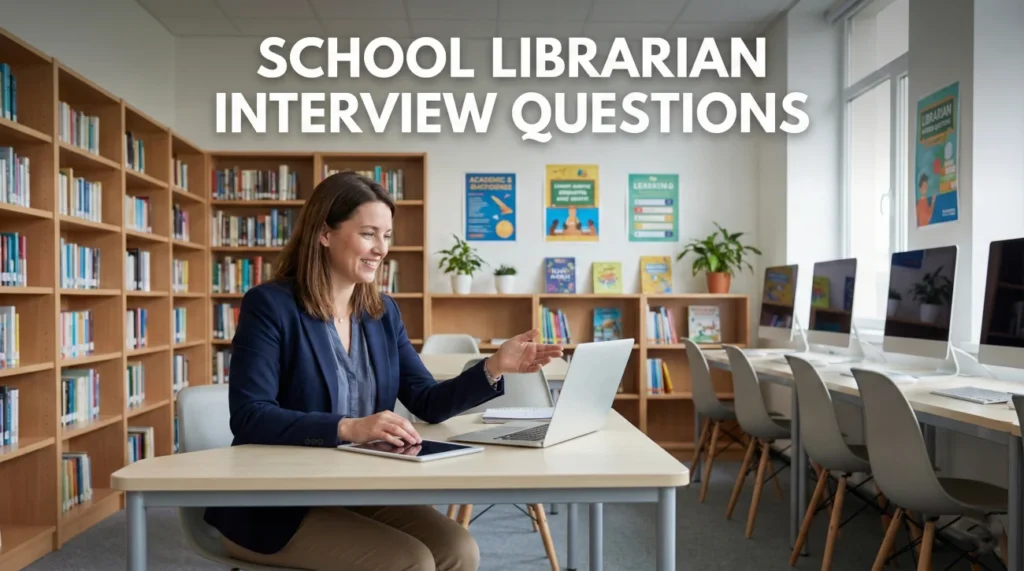
School librarian interview questions now test far more than your ability to organize shelves. Students walk in with a headline, a screenshot, or a confident “I saw it online,” and you are the person who teaches them how to slow down and verify. The library becomes the place where curiosity learns discipline.
Hiring teams want someone who can run a welcoming space and also teach digital literacy with real classroom impact. You may be asked how you build a collection that represents students, handle book challenges without losing professionalism, and partner with teachers so research skills show up across subjects. The best answers sound like a plan, not a wish.
This guide breaks down modern library work: information evaluation, resource curation, tech integration, and reading promotion that feels alive. If you can describe how you move students from “copy and paste” to “think and synthesize,” your interview will land.
Information & Research Skills
Q: How do you teach students to evaluate online sources for credibility?
I use the CRAAP test framework: Currency, Relevance, Authority, Accuracy, and Purpose. But I make it practical, not academic. I start with a fake website exercise where students analyze a convincing-looking site that is completely fabricated. When they realize they were fooled, the lesson sticks.
For younger students, I simplify it: Who wrote this? How do they know? What do they want you to believe? I teach lateral reading, checking what other sources say about this source, rather than just reading deeper into the same site. The goal is creating healthy skepticism without paralyzing distrust of all information.
Q: How do you scaffold research skills for different grade levels?
Elementary students start with guided inquiry. I give them pre-selected, age-appropriate sources and teach basic note-taking. We focus on asking good questions and finding answers, not navigating complex databases. I use graphic organizers to help them structure information.
Middle schoolers learn to search effectively: Boolean operators, keyword refinement, database navigation. They practice comparing sources and identifying bias. High schoolers tackle advanced skills: synthesizing multiple sources, understanding scholarly versus popular sources, proper citation, and detecting misinformation. Each level builds on the previous, creating competent researchers by graduation.
Q: What role does the library play in fostering critical thinking?
The library is where students learn that information is not neutral. Every source has a perspective, a purpose, an agenda. I design activities that require students to analyze conflicting accounts of the same event or compare how different publications cover the same story.
Critical thinking also means knowing when you need more information before forming an opinion. I teach students to sit with uncertainty, to say “I need to research this more” instead of accepting the first answer they find. In a world of instant information, that patience is a radical skill.
Q: How do you handle students who just want to copy from Wikipedia?
First, I acknowledge that Wikipedia is often a reasonable starting point. It provides an overview and its citations can lead to legitimate sources. But I explain why teachers want them to go deeper: Wikipedia summarizes; their job is to analyze. Wikipedia gives facts; their job is to make arguments.
I show them how to use Wikipedia strategically: read the article to understand the topic, then scroll to the references section and follow those links to primary and scholarly sources. I also teach them that copying is not just wrong, it is a missed opportunity to actually learn something. The goal is changing their mindset from “getting the assignment done” to “becoming an expert on this topic.”
Collection Development & Curation
Q: How do you approach collection development on a limited budget?
I prioritize ruthlessly. I analyze circulation data to see what students actually read, not what I think they should read. I survey teachers about curriculum needs and identify gaps. High-demand, high-use items get priority over nice-to-have additions.
I maximize resources through interlibrary loans, consortium memberships, and free digital resources. I write grants for special collections. I weed aggressively because an outdated book on the shelf is worse than no book at all. Every dollar must serve students directly.
Q: How do you ensure your collection reflects diverse voices and perspectives?
I audit the collection systematically. I look at representation across race, ethnicity, gender, disability, family structures, and socioeconomic backgrounds. I check whether marginalized groups appear only in “issue” books or also in everyday stories where their identity is incidental to the plot.
I use resources like “We Need Diverse Books” and professional review journals that highlight diverse titles. I involve students in selection through suggestion boxes and reading committees. The collection should be a mirror where every student sees themselves and a window into lives different from their own.
Q: A parent demands you remove a book from the library. How do you respond?
I listen respectfully and acknowledge their concern. I explain that we have a formal reconsideration process and provide the form. I do not remove the book based on one complaint without following policy. I offer to help them find alternative books for their child if the content concerns them.
If they file a formal challenge, I follow district procedure: the book is reviewed by a committee that includes teachers, administrators, parents, and sometimes students. The committee reads the entire book, not just the objected passages, and evaluates it against selection criteria. I defend intellectual freedom while respecting the process.
Q: How do you balance print and digital resources?
Both have their place. Print works better for leisure reading, picture books, and students who struggle with screen fatigue. Digital excels for research databases, encyclopedias, accessibility features, and simultaneous access. I look at how each format serves learning goals, not which is trendier.
I consider equity: not all students have devices or internet at home. I ensure the library provides access for those who need it while not forcing digital on students who prefer print. The format should serve the student, not the other way around.
Technology & Digital Citizenship
How do you incorporate technology into library instruction?
Technology is a tool, not a goal. I integrate databases, e-books, and digital research tools when they genuinely enhance learning. I teach students to use library catalog systems, subscription databases like EBSCO or Gale, and citation generators. For younger students, I introduce age-appropriate research platforms and safe search strategies.
I also teach creation tools: students might make book trailers, podcasts about authors, or digital presentations. But I am selective. If a paper and pencil activity works better, I use that. The question is always “What helps students learn?” not “What technology can I use?”
What does digital citizenship instruction look like in the library?
Digital citizenship covers online safety, privacy, ethical use of information, and responsible digital behavior. I teach students about their digital footprint, that what they post follows them. I cover cyberbullying, not through scary lectures but through discussions about empathy and consequences.
Copyright and fair use are essential. Students learn the difference between citing a source and stealing work, between using a Creative Commons image and violating copyright. I make it practical: when can you use that image in your presentation? How do you properly credit a quote?
How do you stay current with technology changes?
I follow professional organizations like AASL and ISTE. I participate in webinars, read blogs from practicing school librarians, and attend conferences when possible. I experiment with new tools before recommending them to teachers or students.
But I also recognize I do not need to master every new app. I focus on foundational digital skills that transfer across platforms rather than chasing every trend. Students who understand how to evaluate information will adapt to whatever technology comes next.
Collaboration & Reading Promotion
Q: How do you collaborate with classroom teachers?
I position myself as a teaching partner, not a support service. I meet with grade-level teams to understand their curriculum and identify where library resources and skills fit naturally. If third grade is studying ecosystems, I pull relevant books, prepare a research mini-lesson, and co-teach with the classroom teacher.
I initiate collaboration, not wait to be asked. I send teachers monthly newsletters highlighting new resources tied to their subjects. I offer to co-plan units, create pathfinders for research projects, and provide professional development on information literacy. Teachers are busy; I make collaboration easy.
Q: What strategies do you use to promote reading among reluctant readers?
I start by finding out what they are interested in, not what I think they should read. Video games? There are books about that. Horses? Mysteries? True crime? I become a matchmaker between student and book. Sometimes the right graphic novel or audiobook opens a door that traditional novels cannot.
I create low-pressure opportunities: book tastings where students sample first chapters, displays organized by mood or interest rather than genre, and reading challenges with achievable goals. I never shame students for their reading choices. A kid reading “Captain Underpants” is still a kid reading.
Q: Describe a successful library program you have implemented or would implement.
I organized a “Reading Challenge” where students logged books and earned points toward prizes. The twist: points varied by trying new genres. A fantasy reader earned bonus points for trying nonfiction. This pushed students out of comfort zones while respecting their preferences.
I also ran author virtual visits, connecting students with real writers who answered questions about their creative process. Seeing authors as real people who struggled with drafts and rejection made writing feel accessible. Students left wanting to read more from that author and try writing themselves.
Q: How do you make the library welcoming for all students?
Physical space matters. I create comfortable seating areas, quiet zones and collaborative zones, displays that rotate and feel fresh. I make sure the library does not feel like a place where you get shushed but a place where you belong.
Representation matters too. Students should see themselves in book displays, posters, and programs. I host diverse events: Día de los Niños celebrations, Diwali displays, LGBTQ+ history month book features. I train myself to notice which students never come to the library and reach out to understand why.
Library & Information Literacy Quiz
20 Practice Questions
1. The CRAAP test evaluates sources based on:
- Cost, Reading level, Availability, Appearance, Pages
- Currency, Relevance, Authority, Accuracy, Purpose
- Citations, References, Authenticity, Authorship, Publication
- Credibility, Research, Analysis, Argument, Perspective
2. “Lateral reading” means:
- Reading books from different genres
- Checking what other sources say about a source
- Reading across multiple devices
- Skimming instead of deep reading
3. When a parent challenges a book, the librarian should first:
- Remove the book immediately
- Ignore the complaint
- Listen respectfully and explain the formal reconsideration process
- Defend the book aggressively
4. Collection weeding is important because:
- It saves money on shelf space
- Outdated or damaged materials reduce collection quality and usefulness
- Librarians need something to do
- It is required by law
5. “Windows and mirrors” in collection development refers to:
- Library architecture
- Books that reflect students’ own experiences and show others’ lives
- E-books versus print books
- Fiction versus nonfiction balance
6. Boolean operators in database searching include:
- Plus, Minus, Equals
- AND, OR, NOT
- True, False, Maybe
- Before, After, During
7. Digital citizenship instruction should include:
- Only online safety
- Only typing skills
- Online safety, privacy, ethics, and responsible behavior
- Only social media rules
8. AASL stands for:
- Association of Academic School Libraries
- American Association of School Librarians
- American Academic Standards for Literacy
- Association for Advancing Student Learning
9. When collaborating with teachers, librarians should:
- Wait to be asked for help
- Proactively reach out and offer curriculum integration
- Only provide books when requested
- Avoid classroom instruction
10. For reluctant readers, effective strategies include:
- Requiring classic literature only
- Shaming their reading choices
- Matching books to their interests, including graphic novels
- Assigning longer books to build stamina
11. Fair use allows students to:
- Copy entire books for personal use
- Use limited portions of copyrighted work for educational purposes with attribution
- Download any image from Google
- Share movies with the whole school
12. A pathfinder is:
- A type of database
- A guide to resources on a specific topic
- A reading level assessment
- A library floor plan
13. Circulation data helps librarians:
- Track student grades
- Understand what students actually read and inform purchasing decisions
- Monitor student behavior
- Report to parents
14. When teaching elementary students research skills, start with:
- Complex database navigation
- Pre-selected sources and guided inquiry
- Academic journal articles
- Citation formatting
15. Intellectual freedom in libraries means:
- Librarians can buy any book they want
- Access to information and ideas without censorship
- Free library cards for everyone
- No rules in the library
16. A makerspace in a school library might include:
- Only books about making things
- Tools for creation: 3D printers, coding stations, craft supplies
- A cafe area
- Teacher workrooms
17. Primary sources are:
- The most important sources
- Original, firsthand accounts or evidence from the time period studied
- Sources written for elementary students
- The first Google result
18. Genre-fying a library collection means:
- Removing all genre fiction
- Organizing books by genre instead of Dewey Decimal for easier browsing
- Only buying certain genres
- Creating genre-specific libraries
19. To evaluate a website’s authority, check:
- How pretty the design is
- Who created it and their credentials or expertise
- How many ads it has
- The domain extension only
20. Flexible scheduling for library classes means:
- The library is open whenever
- Classes visit when instruction aligns with curriculum needs, not fixed weekly slots
- Students choose when to visit
- No scheduled library time
❓ FAQ
🎓 What education do schools usually expect for this role?
Expectations vary by district, but many require a library science degree, a school library endorsement, or a teaching license with additional library certification. In your interview, tie your preparation to student outcomes, like research instruction, collaboration, and equitable access.
🧭 Do I need to be a tech expert to be a great school librarian?
You do not need to chase every new tool. You do need comfort with core systems, research databases, and accessibility features, plus the ability to learn quickly. Interviewers listen for mindset: you choose technology that improves learning, not technology that looks impressive.
📺 What is the difference between a librarian and a library media specialist?
Titles vary, but the core idea is similar. The role blends collection management with instruction in research, media, and digital citizenship. A strong answer shows you can both curate resources and teach students how to use them responsibly.
🪑 Will I be teaching classes or mainly managing the space?
Many school librarians do both. You may lead scheduled lessons, co-teach projects, and run flexible support for students and staff throughout the day. In interviews, emphasize how you structure time so the library stays open, organized, and instruction-driven.
📈 How can I show impact beyond circulation numbers?
Use simple evidence. Talk about skill growth, like better citations, stronger source selection, or reduced plagiarism through instruction. Mention teacher feedback, student work samples, and targeted programs that increase engagement. Administrators want to see that the library improves learning, not just activity.
Closing Note
Treat school librarian interview questions as a chance to show how you think, not just what you know. Describe a few repeatable routines: teaching source evaluation, collaborating on research units, and building a collection students actually use.
If your answers make the committee picture a library that is both welcoming and instruction-rich, you will stand out quickly. The goal is a learning hub where students read more, research smarter, and trust the process of finding truth.
⚠️ Disclaimer: The interview strategies, sample answers, and negotiation tips provided in this guide are for educational purposes only. Hiring decisions are subjective and vary by company and industry. While these strategies are based on professional HR standards, they do not guarantee a specific job offer or result.