- Core idea: Parent partnerships decide teaching success because trust and clarity stop small misunderstandings from turning into big conflicts.
- Start early: Make positive initial contact before problems, set expectations, explain how to reach you, and build relationship credit you can spend later.
- When conversations get hard: Lead with strengths, use specific examples, stay calm with defensive parents, and keep the language collaborative so it stays about solutions.
- Meetings that actually work: Prepare evidence and a take-home summary, set shared goals with clear next steps, then follow up within 24 hours so plans do not fade.
- Protect both access and boundaries: Adapt to culture and language needs, never use students as interpreters, and handle unreasonable demands with respectful firmness and admin support when needed.
Why Parent Partnerships Determine Teaching Success
Effective parent-teacher communication proves as essential to teaching success as classroom management or content expertise, yet many educators receive minimal preparation for navigating these complex relationships. Parents arrive with diverse expectations, varying educational backgrounds, different communication preferences, and strong emotions about their children’s experiences. The teachers who thrive build genuine partnerships recognizing parents as valuable allies rather than adversaries to manage or obstacles to avoid.
Strong parent communication prevents small misunderstandings from escalating into major conflicts, secures family support for academic and behavioral interventions, and creates collaborative problem-solving when challenges emerge. Understanding professional communication fundamentals provides foundation, but parent relationships require specific strategies addressing unique dynamics where highly personal stakes meet professional boundaries. The difference between teachers who enjoy productive family partnerships versus those experiencing constant conflict often traces to communication competency rather than teaching ability or student behavior alone.
Establishing Communication Foundation
Understanding effective parent communication begins with proactive relationship building before problems require intervention, creating trust that supports difficult conversations when necessary.
Positive Initial Contact
Reach out to families early in the year with positive introduction establishing your accessibility and genuine care for their children. Share teaching philosophy, communication preferences, and how families can support learning at home. This initial contact shouldn’t wait for problems; instead, it builds relationship capital you’ll need when challenges eventually emerge. Parents who hear from you first during crises question whether you truly care about their child or only contact them when needing something.
| Communication Type | Purpose | Best Practices |
|---|---|---|
| Initial Welcome | Establish relationship, set expectations, build trust | Positive tone, accessibility emphasis, personalization |
| Regular Updates | Maintain connection, share successes, reinforce partnership | Mix of individual and whole-class, balance good news and concerns |
| Progress Reports | Academic transparency, growth celebration, intervention planning | Specific examples, data-backed, solution-focused |
| Concern Discussion | Address issues, seek partnership, develop action plans | Private, respectful, collaborative, documented |
| Positive Recognition | Celebrate wins, build confidence, strengthen relationships | Specific achievements, sincere praise, timely delivery |
Maintaining Regular Connection
Don’t limit parent contact to required conferences or behavior issues. Brief positive messages about student successes, weekly class newsletters, or quick progress updates maintain relationship continuity preventing parents from feeling ignored until problems arise. These regular touchpoints need not be lengthy; even brief acknowledgments of good work, improved effort, or kind actions build goodwill that supports more difficult conversations when challenges emerge requiring collaborative problem-solving.
Balancing Accessibility and Boundaries
Make yourself reasonably accessible while maintaining healthy professional boundaries. Communicate preferred contact methods and realistic response timeframes so parents know when to expect replies without assuming immediate availability. Being accessible doesn’t mean answering emails at midnight or accepting phone calls during dinner, but it does require responding within stated timeframes and demonstrating genuine willingness to communicate about concerns. Clear boundaries prevent burnout while maintaining productive partnerships.
Expert advice: The most successful parent communication emphasizes partnership language like “we” and “together” rather than positioning yourself against parents through adversarial framing that damages relationships before they begin.
Strong teacher parent relationship skills include specific strategies for addressing concerns, managing defensive reactions, and maintaining productive dialogue during emotionally charged conversations.
Delivering Concerns Constructively
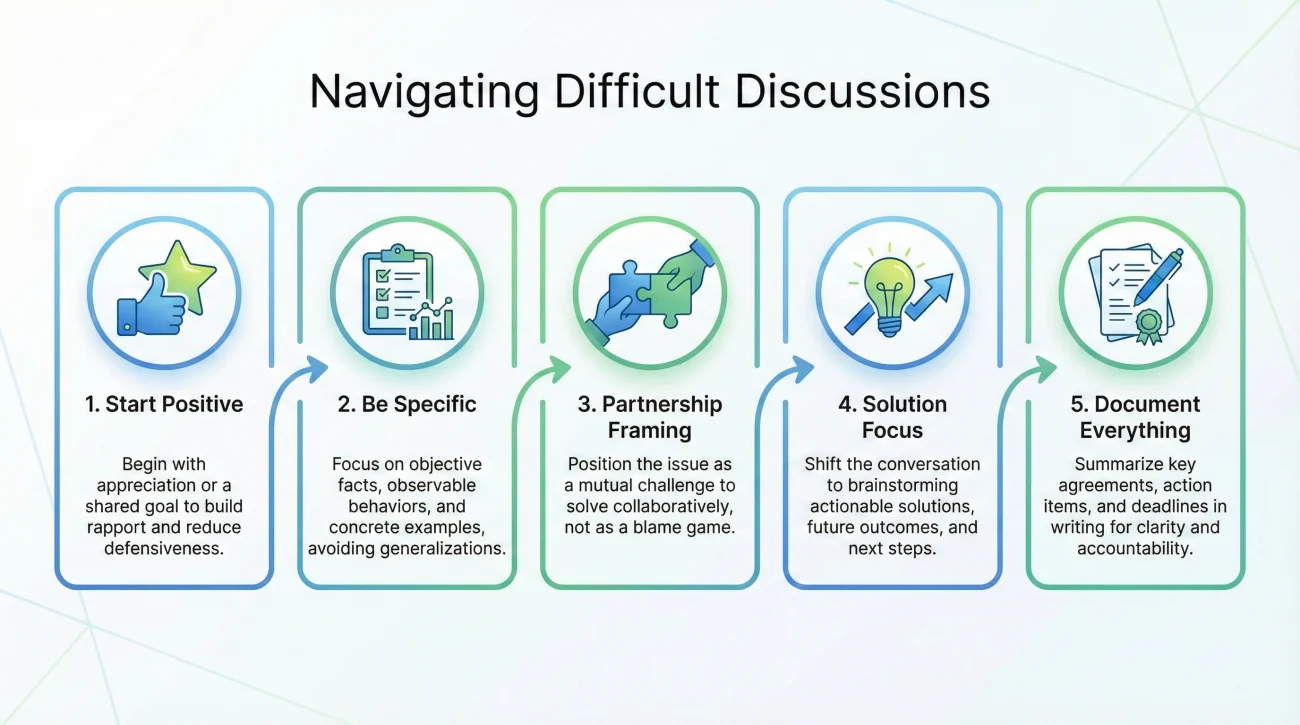
When discussing student struggles, lead with positives demonstrating you see the whole child before addressing challenges. Frame concerns around student needs rather than blaming either student or parents. Use specific examples with dates and contexts rather than vague generalizations parents can dismiss. Focus on solutions and partnership rather than dwelling on problems without offering paths forward. This constructive approach signals genuine care while maintaining honesty about issues requiring attention.
- 🎯 Start positive: Genuine strengths before discussing challenges
- 📊 Be specific: Concrete examples with dates, not vague generalizations
- 🤝 Partnership framing: “Together we can help…” not “Your child needs to…”
- 💡 Solution focus: Action plans, not just problem descriptions
- 📝 Document conversations: Notes, dates, agreements, follow-up plans
Managing Defensive Reactions
When parents respond defensively, resist the urge to argue or prove you’re right. Listen actively to concerns even when you disagree, acknowledging emotions without necessarily accepting blame. Sometimes parents need to vent frustration before they can engage productively in problem-solving. Maintain calm professional demeanor, validate feelings while redirecting toward solutions, and avoid taking criticism personally. Your ability to stay composed when parents escalate often determines whether situations resolve collaboratively or deteriorate into adversarial conflicts.
💡 Pro tip: Before difficult conversations, prepare specific positive examples about the student; this preparation prevents defensive spirals and demonstrates balanced perspective beyond just the problem prompting the discussion.
Conference and Meeting Best Practices
Effective parent conference strategies require thoughtful preparation, structured conversations, and clear follow-through ensuring meetings produce actionable outcomes rather than merely checking required communication boxes.
Thorough Preparation
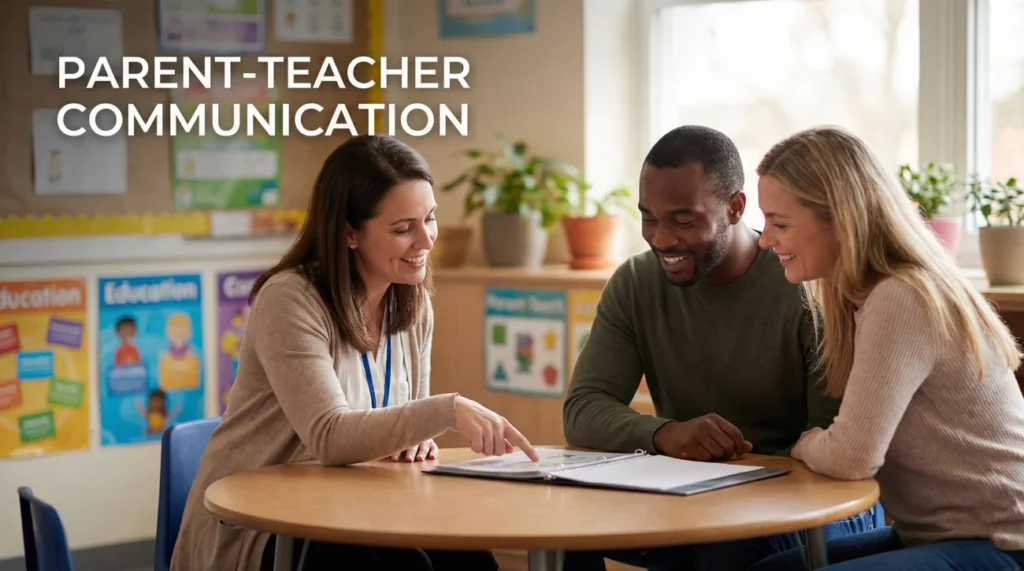
Gather student work samples, assessment data, behavior documentation, and specific examples illustrating points you’ll discuss. Prepare written summary parents can take home rather than expecting they’ll remember everything discussed. Anticipate questions or concerns based on previous interactions and prepare thoughtful responses. This preparation demonstrates professionalism and ensures conversations stay focused on student needs rather than devolving into unproductive tangents or emotional reactions to unexpected information.
| Conference Phase | Key Actions |
|---|---|
| Opening | Welcoming tone, agenda review, positive start, establish partnership |
| Strengths Discussion | Specific examples, celebrate growth, acknowledge effort, build rapport |
| Concerns Addressing | Concrete evidence, objective tone, solution focus, invite input |
| Goal Setting | Collaborative targets, action steps, responsibilities, timelines |
| Closing | Summary, follow-up plan, appreciation, maintain positive relationship |
Including Students Appropriately
Consider whether student presence serves the conference purpose. For progress celebrations and goal-setting, student participation increases buy-in and accountability. For sensitive behavioral or family issues, private parent conversations prove more appropriate. When students attend, prepare them beforehand explaining expectations and supporting their voice in discussions without allowing them to dominate or derail conversations requiring adult focus. Student-led conferences work well for older learners ready to take ownership of their learning.
Ensuring Follow-Through
Document conference outcomes including specific action items, responsible parties, and timelines for follow-up communication. Send written summary within 24 hours reinforcing agreements and maintaining accountability for all parties. Schedule check-ins to assess progress on action plans rather than waiting for next formal conference. This consistent follow-through demonstrates commitment to partnership and prevents good intentions from evaporating without concrete implementation.
Communicating Across Diverse Family Contexts
Strong communicating with parents skills adapt to diverse family structures, cultural backgrounds, language barriers, and socioeconomic circumstances affecting communication dynamics.
Cultural Sensitivity
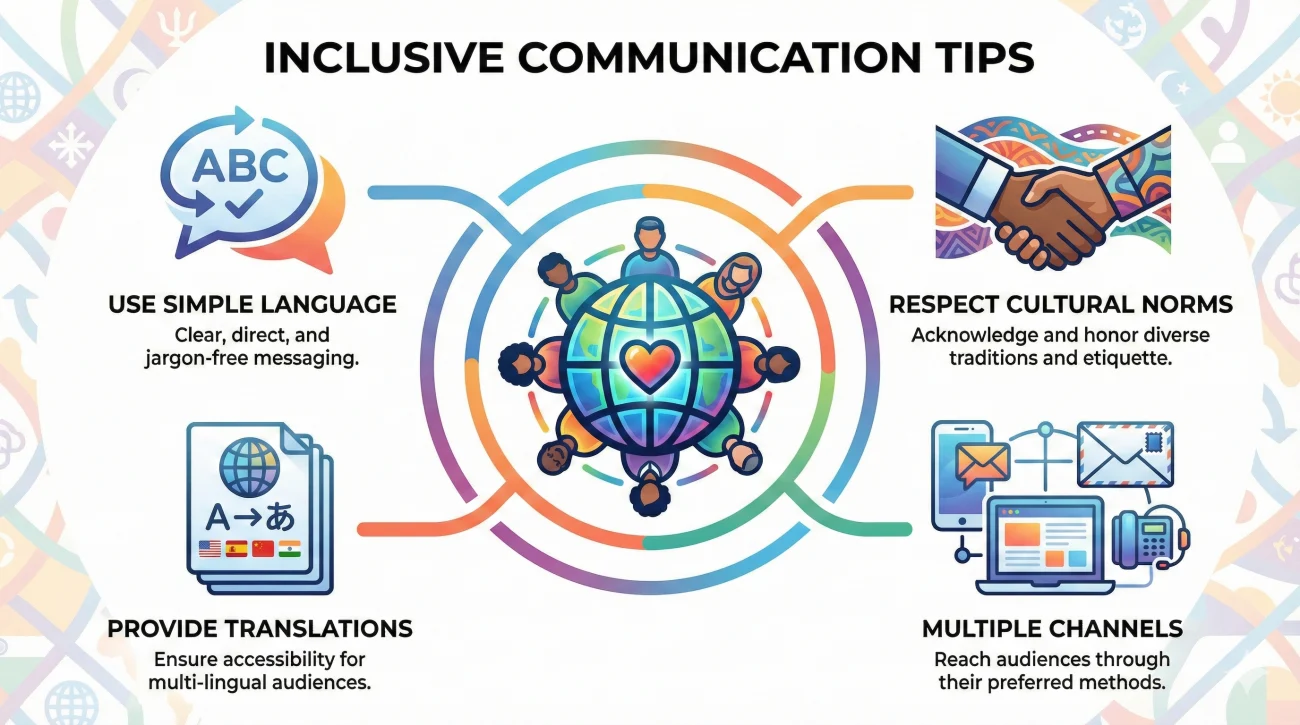
Recognize that cultural backgrounds shape communication preferences, authority perspectives, and educational expectations. Some cultures view teachers as unquestioned experts while others expect collaborative partnerships. Direct communication valued in some contexts feels inappropriately blunt in others. Learn about cultural norms in your community, ask families about their preferences, and adapt your approach accordingly. Avoid assuming your communication style proves universally appropriate or that one approach serves all families equally well.
Addressing Language Differences
Provide translated materials when possible, use interpreter services for important conversations, and speak clearly avoiding idioms or complex education jargon when working with families whose first language isn’t English. Don’t assume English proficiency indicates understanding of American school systems or educational terminology. Visual supports, written summaries, and patient repetition help bridge language gaps without condescension. Building relationships across language differences requires extra effort but remains essential for equitable family engagement.
- Learn basic greetings in languages families speak
- Provide written materials in home languages when feasible
- Use clear simple language avoiding education jargon
- Respect cultural differences in communication norms and authority views
- Offer multiple communication channels accommodating different preferences
Never use students as interpreters for difficult conversations about their own academic or behavioral issues; this inappropriate role reversal creates discomfort and prevents honest adult discussion of concerns.
Managing Boundaries and Unreasonable Demands
Effective parent communication requires maintaining professional boundaries while remaining accessible, and knowing when parental demands exceed reasonable accommodation or professional judgment.
Responding to Inappropriate Demands
Some parents request accommodations contradicting educational best practices, demand preferential treatment undermining classroom equity, or question professional decisions inappropriately. Address these situations with respectful firmness, explaining your rationale grounded in educational research or district policy. When disagreements persist, involve administration rather than fighting battles alone or capitulating to demands you know serve neither student nor classroom community well. Standing firm on professional judgment differs from inflexibility; it means making decisions based on all students’ needs rather than individual parent pressure.
Addressing Communication Overreach
When parents contact you excessively, demand immediate responses to non-urgent issues, or breach boundaries around appropriate timing and topics, address the pattern directly but diplomatically. Restate communication expectations, redirect to appropriate channels or times, and enforce boundaries consistently. Most parents respond well to gentle reminders about professional limits. For persistent boundary violations, document patterns and involve administration in establishing more formal communication protocols protecting your time and wellbeing.
❓ FAQ
🎯 How often should I communicate with parents?
Balance regular updates (weekly class newsletters, monthly progress notes) with individual communication as needed. Don’t wait for problems; brief positive messages build relationships. Frequency depends on student age, parent preferences, and school expectations, but consistent connection matters more than specific schedules.
💼 What if parents disagree with my teaching decisions?
Listen respectfully to concerns, explain your educational rationale, and look for compromise when possible. Stand firm on decisions grounded in best practices or school policy. For persistent disagreements, involve administration. You’re the educational expert, but parents know their children deeply; both perspectives matter.
⏰ How do I handle aggressive or hostile parents?
Stay calm and professional regardless of their tone. Listen without interrupting, acknowledge emotions, avoid defensiveness. If conversations become abusive, end them politely suggesting a later discussion when emotions settle. Always include administration in communications with consistently hostile parents. Document everything.
📋 Should I communicate differently with involved versus uninvolved parents?
Provide consistent communication to all families regardless of involvement level. Uninvolved parents may face barriers like work schedules, language, or past negative school experiences. Persistent positive outreach sometimes breaks through initial distance. Don’t punish students for parent disengagement by reducing communication efforts.
✨ How do I discuss sensitive issues like suspected learning disabilities?
Approach with compassion, leading with student strengths. Present specific observations without diagnosing. Frame as concern for student success, not criticism. Discuss available supports and evaluation processes. Some parents need time processing; follow up after initial conversation. Partner with specialists to ensure appropriate guidance.
Final Thoughts
Parent partnerships fundamentally shape teaching success beyond classroom instruction quality or behavior management skill. The educators who thrive build genuine collaborative relationships recognizing parents as essential allies rather than obstacles to manage or adversaries to defeat. This partnership orientation requires proactive communication establishing trust before problems arise, skilled navigation of difficult conversations maintaining dignity for all parties, and cultural responsiveness adapting approaches to diverse family contexts and communication preferences.
Mastering parent-teacher communication demands equal investment to pedagogical preparation because even brilliant teaching proves insufficient when parent relationships deteriorate into conflict undermining student success. Develop strategies for positive initial contact, maintain regular connection beyond crisis communication, prepare thoroughly for conferences and difficult discussions, and establish clear professional boundaries protecting your wellbeing while remaining genuinely accessible to families. This comprehensive approach to parent communication creates partnerships that support student learning, prevent minor concerns from escalating unnecessarily, and build collaborative problem-solving when challenges inevitably emerge requiring family and school working together toward shared goals.
⚠️ Disclaimer: The interview strategies, sample answers, and negotiation tips provided in this guide are for educational purposes only. Hiring decisions are subjective and vary by company and industry. While these strategies are based on professional HR standards, they do not guarantee a specific job offer or result.