
- Why it matters: A teaching philosophy statement only stands out when it replaces generic claims with real beliefs and real classroom decisions.
- What to include: Core learning beliefs, your teacher role, student centered differentiation, assessment purpose, and a clear equity commitment.
- How to prove it: Connect theory to practice with specific examples, then explain why your instructional choices match what you believe about learning.
- How to write it: Build multiple versions, keep your natural voice, and revise hard by cutting vague lines and adding concrete detail.
- What to avoid: Empty platitudes and theory name dropping, and instead show how experience has refined your philosophy over time.
Why Philosophy Statements Matter Beyond Generic Claims
Every educator claims to care about students, believe in differentiation, and value growth mindset, making these generic assertions worthless for distinguishing candidates. A compelling teaching philosophy statement moves beyond platitudes toward articulating specific beliefs about how students learn, your role facilitating that learning, and concrete strategies you employ based on those convictions. Hiring committees can spot hollow philosophy lacking genuine reflection versus authentic beliefs shaped by actual teaching experience and serious pedagogical thinking.
Strong philosophy statements connect theoretical foundation to practical classroom application through specific examples demonstrating how beliefs translate into daily decisions. Understanding interview fundamentals provides baseline preparation, but articulating coherent educational philosophy separated you from candidates offering vague enthusiasm without substantive pedagogical grounding. The difference between philosophy that impresses committees versus statements they dismiss often traces to authenticity, specificity, and demonstrated connection between theory and practice.
Essential Philosophy Statement Components
Understanding how to write teaching philosophy requires including specific elements that collectively articulate comprehensive yet concise educational beliefs.
Core Learning Beliefs
Articulate fundamental convictions about how students learn most effectively. Do you believe learning happens through discovery, direct instruction, social interaction, or some combination? What role does prior knowledge play? How do you view mistakes and struggle in the learning process? These foundational beliefs should connect to specific pedagogical approaches you employ. Avoid simply naming theories without explaining why they resonate or how they manifest in your teaching decisions.
| Philosophy Component | What to Include | How to Demonstrate |
|---|---|---|
| Learning Beliefs | How students learn, role of challenge, importance of connection | Link beliefs to specific instructional choices you make |
| Teacher Role | Facilitator vs. expert, guide vs. director, balance in your approach | Describe how you position yourself in classroom dynamics |
| Student-Centeredness | Differentiation, voice/choice, individual growth, diverse needs | Concrete examples of adapting to student differences |
| Assessment Philosophy | Purpose of evaluation, formative vs. summative, growth measurement | Explain assessment strategies and how you use data |
| Equity Commitment | Access, inclusion, cultural responsiveness, high expectations | Show how you ensure all students can succeed |
Defining Your Role
Clarify how you view the teacher’s function in facilitating learning. Are you primarily content expert transmitting knowledge, guide helping students construct understanding, or facilitator creating discovery opportunities? Most effective teachers employ all these roles situationally, so explain when each approach serves learning best. Avoid positioning yourself at extremes; pure sage-on-stage or complete guide-on-side rarely represents authentic practice or optimal learning environments.
Student-Centered Approach
Demonstrate genuine commitment to meeting diverse learner needs through differentiation, cultural responsiveness, and high expectations for all students. Committees watch for whether you treat students as passive recipients or active agents in their own learning. Strong philosophies acknowledge that one-size-fits-all instruction fails, explaining specific strategies you use ensuring every student can access challenging content regardless of background, learning style, or starting point.
Expert advice: The most convincing teaching philosophies balance educational idealism with realistic acknowledgment of classroom challenges, showing you understand both the aspirational goals and practical complexities of teaching diverse learners.
Connecting Theory to Classroom Practice
Strong education philosophy examples move beyond abstract beliefs toward demonstrating how theoretical convictions translate into specific instructional decisions and classroom strategies.
Providing Specific Examples
Generic claims about believing in active learning or growth mindset carry no weight without concrete examples showing how these beliefs shape your teaching. If you value student voice, describe specific ways students influence classroom decisions. If you believe in formative assessment, explain particular feedback strategies you employ. If differentiation matters, detail how you adapt instruction for varying needs. These specific examples prove authenticity that abstract assertions cannot establish.
Explaining Instructional Choices
Connect pedagogical decisions to underlying philosophy rather than presenting disconnected teaching strategies. When you choose collaborative learning, inquiry-based approaches, or direct instruction, explain why these methods align with your beliefs about how students learn best. This explicit connection demonstrates intentional practice grounded in coherent philosophy rather than random collection of trendy techniques lacking theoretical foundation.
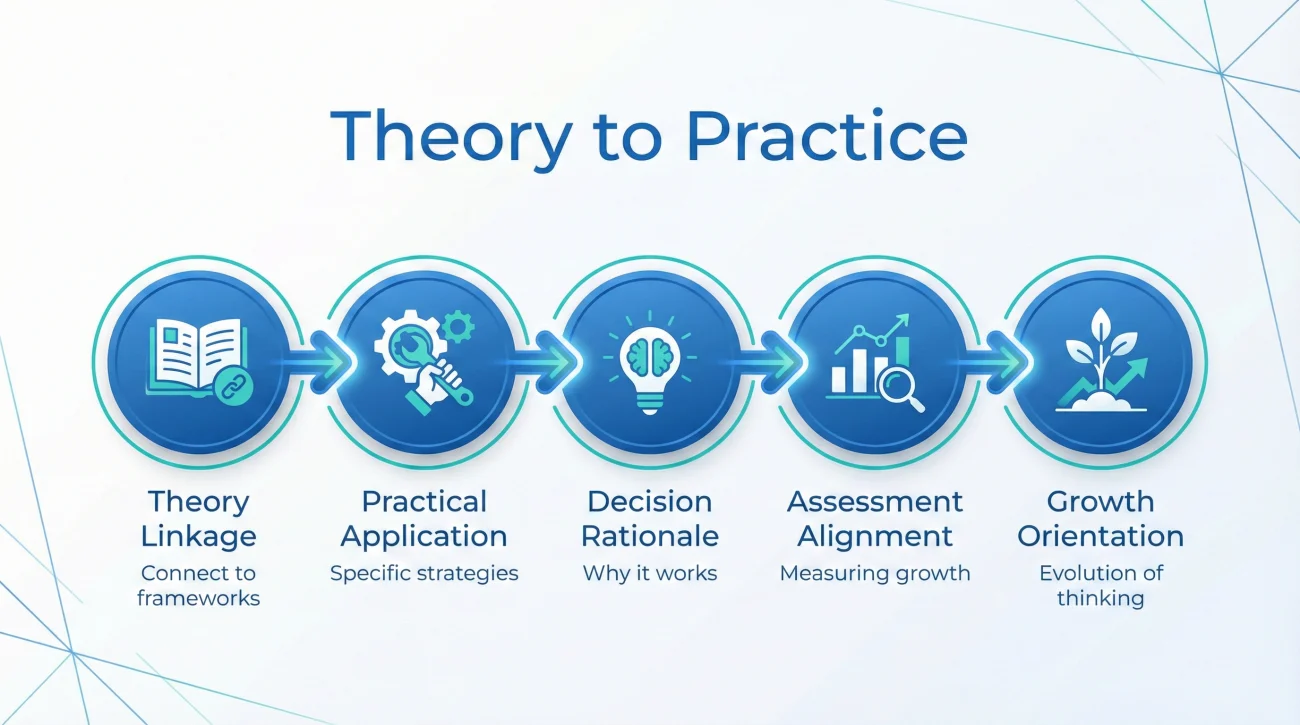
- 📚 Theory linkage: Connect beliefs to recognized educational frameworks or theorists
- 🎯 Practical application: Specific strategies demonstrating philosophy in action
- 💡 Decision rationale: Explain why particular approaches serve your beliefs
- 📊 Assessment alignment: How evaluation methods reflect learning philosophy
- 🌱 Growth orientation: Evolution of thinking through experience and reflection
💡 Pro tip: Draft your philosophy statement, then read it asking “Could any teacher write this?” If yes, add specificity showing what makes your philosophy distinctive based on your unique experiences and convictions.
Strategic Writing Approach
Effective teaching beliefs statement development requires systematic approach ensuring coherence, authenticity, and appropriate length for different contexts.
Preparing Multiple Versions
Develop three versions serving different purposes: comprehensive statement (1-2 pages) for portfolio or tenure documents, interview version (2-3 minutes verbal delivery covering key points), and brief summary (2-3 sentences) for application materials or casual conversation. All versions should express consistent core beliefs but adapt detail level and emphasis to context. Practice verbal delivery until you can articulate philosophy naturally without reading or memorizing rigid scripts.
| Version Type | Length | Use Context |
|---|---|---|
| Comprehensive | 1-2 pages | Portfolio, tenure, detailed application requests |
| Interview | 2-3 minutes verbal | Interview responses, committee presentations |
| Brief Summary | 2-3 sentences | Cover letters, elevator pitch, casual discussion |
| Written Response | 1 paragraph | Application question responses, brief prompts |
Maintaining Authentic Voice
Write in your natural voice rather than adopting formal academic tone that doesn’t represent how you actually think or speak. Committees recognize when philosophy statements sound borrowed from textbooks versus authentic reflection on genuine teaching beliefs. Use first person, express convictions directly, and let personality emerge through writing. Authenticity matters more than impressive vocabulary or extensive theory citation if those elements don’t reflect genuine philosophical grounding.
Iterative Refinement
Initial drafts typically include too much generic content lacking specificity. Revise ruthlessly, cutting vague statements like “all students can learn” without explanation of how you ensure that happens. Add concrete examples replacing abstract assertions. Tighten language eliminating unnecessary words. Share drafts with trusted colleagues who can identify where claims need supporting evidence or where philosophy lacks clarity. Strong statements emerge through multiple revision cycles rather than single draft attempts.
Avoiding Philosophy Statement Pitfalls
Several predictable errors undermine otherwise promising pedagogical philosophy writing, creating doubt about teaching readiness or philosophical depth.
Generic Platitudes Without Specificity
Statements filled with universal truisms every educator claims (students are individuals, learning should be fun, high expectations matter) fail to distinguish you or demonstrate genuine philosophical reflection. These generic claims need either elimination or significant development through specific examples showing how you actually implement beliefs others merely state. Ask yourself whether competing candidates could write identical sentences; if yes, revise toward distinctive specificity.
Theory Name-Dropping Without Understanding
Mentioning constructivism, Bloom’s taxonomy, or growth mindset without demonstrating genuine understanding of these concepts or explaining why they influence your practice signals superficial engagement with educational theory. Only reference theories that genuinely shaped your thinking, explaining specifically how they inform teaching decisions. Better to articulate authentic beliefs in your own words than inappropriately invoke theoretical frameworks you don’t truly understand or apply.
Never claim your philosophy centers on “making learning fun” without substantial additional depth; committees interpret this as naive understanding of education’s purposes suggesting you prioritize entertainment over genuine learning.
Demonstrating Philosophical Growth
Strong philosophy statements acknowledge that beliefs evolve through experience, reflection, and continued learning rather than remaining static since initial teacher preparation.
Experience Shaping Beliefs
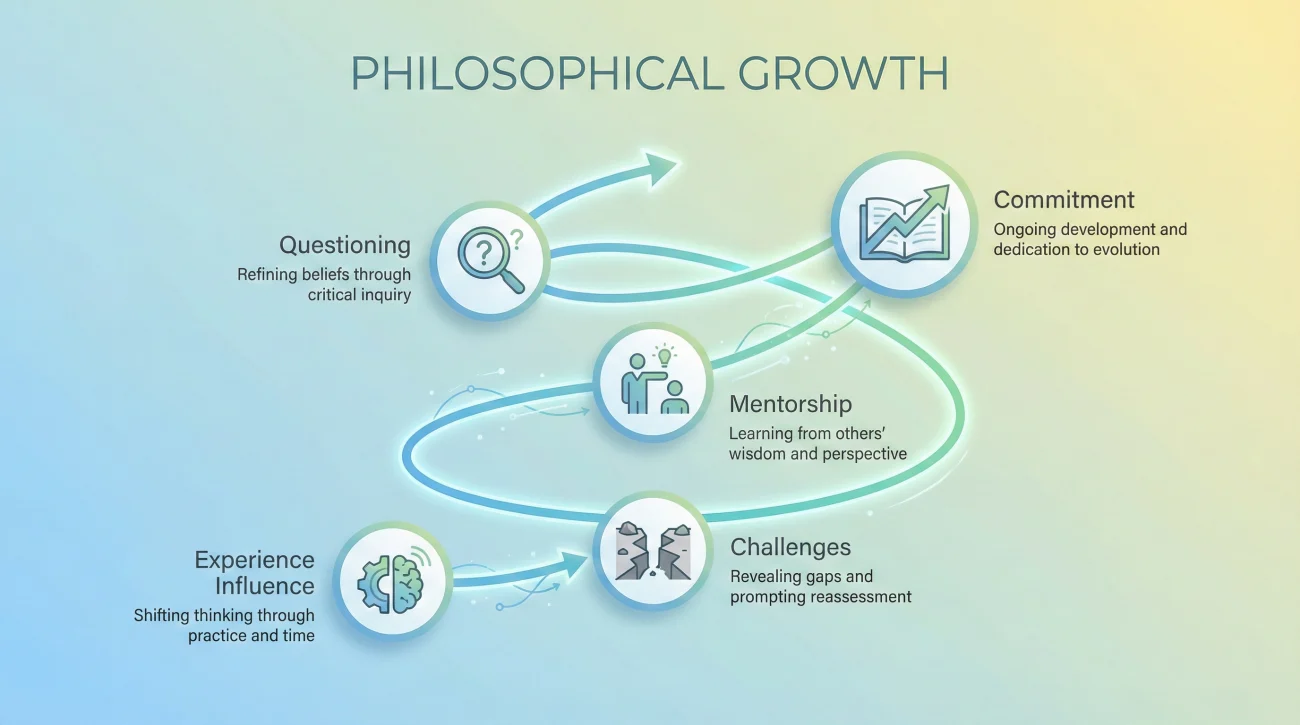
Discuss how specific teaching experiences confirmed, challenged, or refined your philosophy. Perhaps initial belief in pure discovery learning shifted toward recognizing when direct instruction proves more effective. Maybe early focus on content mastery expanded toward equally valuing social-emotional development. This evolution demonstrates reflective practice and willingness to adjust based on evidence rather than rigid adherence to initial assumptions regardless of outcomes.
Commitment to Continued Growth
Express openness to ongoing philosophical development through professional learning, colleague collaboration, and teaching experience. Committees value educators who recognize their philosophy represents current thinking subject to refinement rather than final conclusions immune to new insights. This growth mindset about your own learning signals intellectual humility and professional commitment that claims of philosophical certainty cannot convey.
- Acknowledge specific experiences that shifted your thinking
- Explain how challenges revealed gaps in initial philosophical assumptions
- Describe mentors or professional learning influencing belief evolution
- Show willingness to question and refine beliefs based on evidence
- Express commitment to continued philosophical development through career
❓ FAQ
🎯 How long should my teaching philosophy statement be?
Prepare multiple versions: comprehensive (1-2 pages), interview verbal (2-3 minutes), and brief summary (2-3 sentences). Adapt length to context while maintaining consistent core beliefs across all versions. Practice verbal delivery until natural rather than memorized.
💼 Should I reference educational theorists in my philosophy?
Only if they genuinely influenced your thinking and you can explain specifically how. Avoid name-dropping theorists without demonstrating understanding or connection to practice. Better to articulate authentic beliefs in your own words than inappropriately invoke frameworks you don’t truly apply.
⏰ Can my philosophy change over time?
Yes, and acknowledging evolution demonstrates reflective practice. Strong philosophies show how experience confirmed, challenged, or refined beliefs rather than claiming static convictions unchanged since initial training. Growth mindset about your own learning signals professional maturity committees value.
📋 What if I lack extensive teaching experience?
Draw from student teaching, tutoring, volunteer work, or your own learning experiences. Focus on genuine beliefs about education even if practice examples come from limited contexts. Honest reflection on beginning philosophy proves more compelling than false claims of extensive expertise.
✨ How do I make my philosophy distinctive?
Replace generic claims with specific examples showing how beliefs translate into practice. Describe particular strategies, explain decision rationale, and share experiences shaping your thinking. Ask whether competing candidates could write identical statements; if yes, add specificity making philosophy uniquely yours.
Final Thoughts
Teaching philosophy statements separate candidates who’ve engaged seriously with pedagogical thinking from those offering generic enthusiasm without substantive educational grounding. The most compelling philosophies balance theoretical foundation with practical application, demonstrating how beliefs translate into specific instructional decisions rather than remaining abstract aspirations. Hiring committees recognize authentic reflection versus borrowed platitudes, valuing statements showing genuine engagement with core questions about how students learn and teachers facilitate that learning.
Developing strong teaching philosophy statement requires moving beyond universal claims every educator makes toward articulating distinctive beliefs shaped by your experiences, theoretical influences, and honest reflection on teaching complexities. Connect theory to practice through concrete examples, acknowledge philosophical evolution through experience, and write in authentic voice representing how you actually think rather than formal academic tone divorced from genuine convictions. This investment in philosophical clarity serves your teaching practice alongside interview preparation, helping you make more intentional decisions grounded in coherent beliefs about education’s purposes and your role advancing student learning.
⚠️ Disclaimer: The interview strategies, sample answers, and negotiation tips provided in this guide are for educational purposes only. Hiring decisions are subjective and vary by company and industry. While these strategies are based on professional HR standards, they do not guarantee a specific job offer or result.