Every Challenge Is a Problem-Solving Story
Elon Musk once described how SpaceX nearly died after three consecutive rocket failures. With one rocket left and barely enough money for one more launch, the team dissected every failure, made changes, and succeeded on the fourth attempt. That kind of systematic response to challenge is exactly what interviewers probe for.
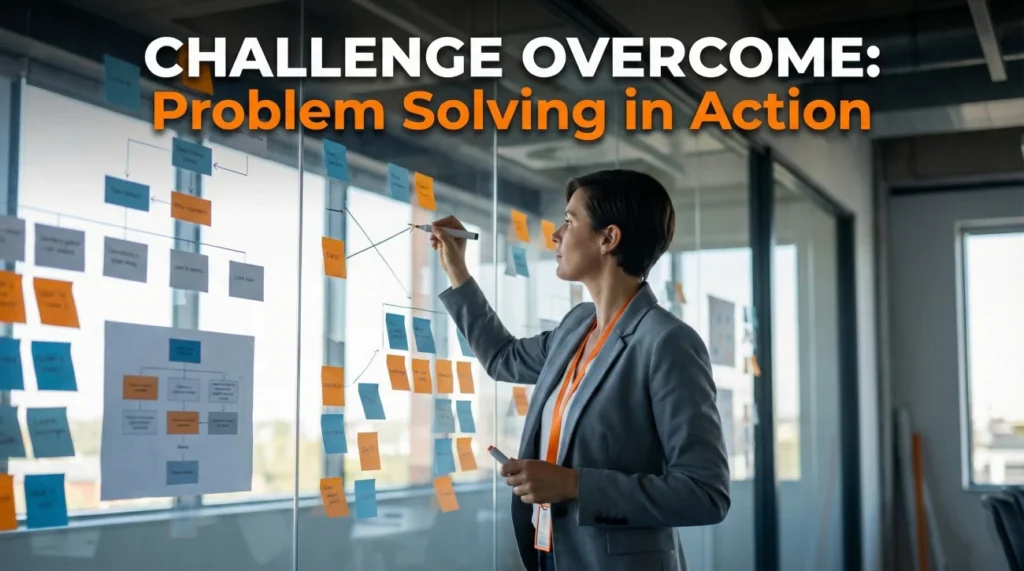
When interviewers ask about a challenge overcome, they want to see your problem-solving process in action. This question tests how you approach obstacles, what strategies you deploy, and whether you can navigate difficulty to reach positive outcomes. The challenge itself matters less than how you addressed it. A moderate challenge handled thoughtfully often impresses more than an extreme situation where you simply survived.
A Problem-Solving Framework
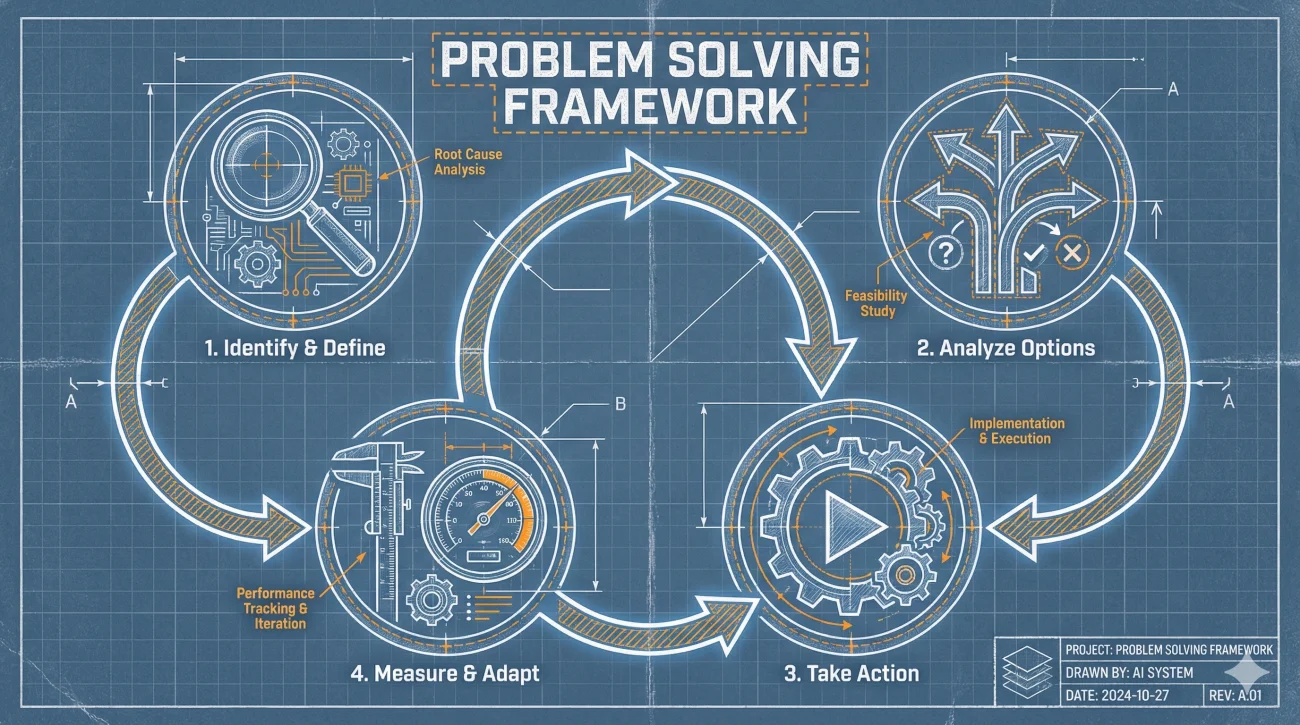
Identify and Define
Strong problem solvers start by clearly understanding what they are facing. Your answer should show you took time to analyze the challenge before jumping to solutions. What specifically was difficult? What made standard approaches insufficient? Understanding the problem drives effective solutions.
Analyze Options
Demonstrate that you considered multiple approaches rather than grabbing the first idea. Even if your initial instinct proved correct, showing that you evaluated alternatives demonstrates thorough thinking. What options did you consider? What tradeoffs did you weigh?
Take Decisive Action
Analysis paralysis is as problematic as impulsive action. Your story should show you moved from thinking to doing at an appropriate point. What specific steps did you take? How did you sequence your approach? What resources did you leverage?
Measure and Adapt
Sophisticated problem solvers check whether their solutions are working and adjust as needed. If your initial approach required modification, include that in your story. Flexibility and willingness to iterate often matter more than getting it right the first time.
Lisa, a operations director at FedEx, shares her most effective interview answer: “I talk about a warehouse reorganization that wasn’t working. My initial plan looked great on paper but created bottlenecks we hadn’t anticipated. Instead of defending the plan, I spent two days on the floor watching what actually happened, then revised our approach completely. Interviewers love that story because it shows I care more about results than being right.”
Challenge Stories That Revealed Problem-Solving Depth
Everyone has faced challenges. What separates strong candidates is the sophistication of their problem-solving approach. Here are real interview stories that demonstrated exceptional thinking.
The Supply Chain Crisis No One Saw Coming
An operations manager named Wei described managing a manufacturing facility when their primary supplier suddenly went bankrupt. They had three weeks of inventory and no backup supplier qualified. Production would halt, affecting downstream customers with contractual penalties.
Wei’s approach impressed me with its structure. First, she bought time by negotiating with customers, explaining the situation honestly and requesting deadline extensions. Most agreed because she had strong relationships and came with solutions, not just problems. Second, she identified four potential alternative suppliers and assigned team members to evaluate each simultaneously rather than sequentially. Third, she found an unconventional solution: a competitor was willing to sell them components at a premium because they had excess capacity.
The facility experienced only a four-day production gap instead of the projected three weeks. Wei told me: “Crisis problem-solving is about parallel paths, not sequential decisions. You can’t afford to wait for option A to fail before exploring option B.”
Rebuilding a Team After Mass Departure
A software engineering manager named Jason inherited a team where four of six engineers had resigned within two months, following a beloved manager who left for a startup. The remaining two were demoralized and considering leaving themselves. Jason had to deliver on existing commitments while rebuilding the team from scratch.
His first move was counterintuitive. Instead of immediately hiring, he spent his first two weeks having deep conversations with the remaining engineers about what went wrong and what would make them stay. He learned that the previous manager had shielded them from organizational politics, given them interesting projects, and advocated for their career growth. The new leadership had done none of that.
Jason started advocating loudly for his team, even before rebuilding it. He renegotiated unrealistic deadlines that his predecessor had agreed to. He identified skill gaps the remaining engineers wanted to fill and created learning opportunities. He involved them in hiring their new colleagues.
Within six months, neither remaining engineer had left, and the new hires were ramping productively. Jason told me: “The challenge wasn’t just hiring people. It was rebuilding trust in leadership. If I’d focused only on filling seats, I would have lost the institutional knowledge and cultural foundation I needed to succeed.”
The Market Pivot That Saved the Product
A product director named Olivia described launching a B2B analytics product that failed to gain traction with its target market: enterprise finance teams. After six months of poor sales, leadership was ready to shut the product down.
Olivia asked for eight weeks to diagnose the problem. She discovered that while enterprise finance rejected the product as not sophisticated enough, mid-market operations teams loved the prototype they had seen during research. The product was solving the wrong problem for the wrong audience.
She proposed a pivot: reposition the product for operations teams at mid-market companies, with adjusted pricing and messaging. Leadership was skeptical but gave her a quarter to prove the concept. She personally closed the first five customers by understanding their specific workflows and demonstrating how the product addressed their pain points.
The pivot worked. The product became profitable within two quarters and eventually expanded back into larger enterprises through the operations door rather than finance. Olivia told me: “Sometimes the challenge isn’t executing your plan better. It’s recognizing that your plan is wrong and having the courage to change direction.”
Types of Challenges to Consider
| Challenge Category | What It Demonstrates |
|---|---|
| Technical problems | Analytical thinking, expertise application |
| Resource constraints | Creativity, prioritization, efficiency |
| Timeline pressure | Time management, focus, composure |
| Stakeholder complexity | Communication, influence, navigation |
| Learning curves | Adaptability, growth mindset, initiative |
Choose a challenge category that aligns with skills important for the role you are interviewing for. Technical roles benefit from technical challenges while leadership roles might emphasize stakeholder or resource challenges.
Sample Answer
Situation
I was leading the implementation of a new inventory system with a non-negotiable deadline tied to our busy season. Midway through the project, our primary vendor told us a key integration would be delayed by six weeks, which would have pushed the overall launch past the deadline.
Task
I needed to keep the project on track for the busy season deadline, limit operational risk, and still deliver the full system capability once the integration became available.
Action
I started by mapping exactly what the delayed integration impacted and what could proceed independently. That analysis showed roughly seventy percent of the system’s core functionality could still go live on schedule without the integration.
Next, I explored options to protect the deadline: building a temporary workaround, finding an alternate vendor for the specific component, and redesigning the rollout so we could phase the highest-risk pieces. I weighed each option by effort, risk, and how it would affect frontline teams during peak season.
Based on that, I proposed a phased plan to leadership. We would launch core functionality on the original date and use a clearly defined manual process for the integration-dependent features during the transition period. In parallel, I negotiated with the vendor for an expedited timeline and had my team build a lightweight temporary bridge so the manual work would be manageable and controlled.
I also worked with operations to document the interim workflow, assign ownership, and set expectations so the peak season teams weren’t surprised by what would be automated now versus later.
Result
We launched phase one on schedule and handled the busy season successfully. The full integration went live six weeks later, and it came with fewer issues than expected because we had already learned from the initial rollout and tightened processes.
Leadership highlighted the solution as an example of creative problem-solving under constraints, and the phased rollout approach became a template for future system implementations. I also took away a lasting lesson about building contingencies into vendor-dependent projects.
What Sets Strong Answers Apart
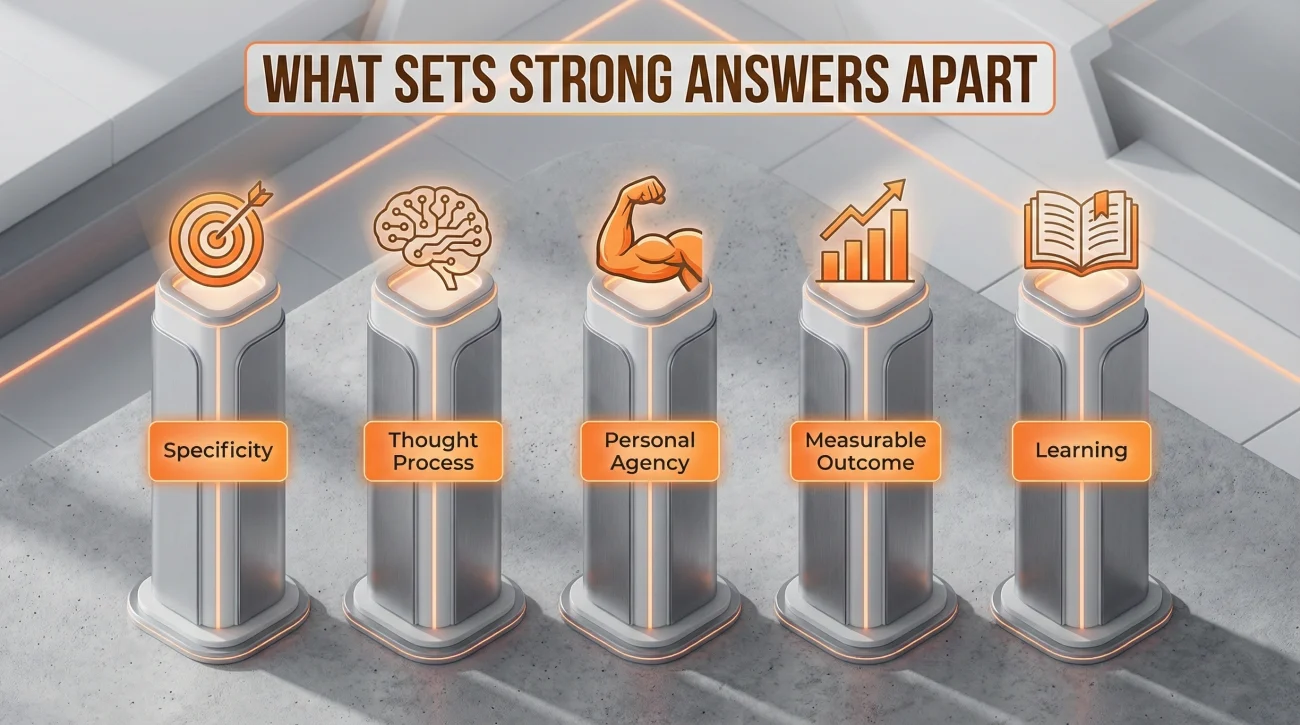
- 🎯 Specificity: Concrete details about the challenge and your approach, not vague generalities
- 🧠 Thought Process: Clear explanation of how you analyzed and decided, not just what happened
- 💪 Personal Agency: Focus on what you did, not circumstances or luck
- 📊 Measurable Outcome: Quantified results or clear evidence of success
- 📚 Learning: Insight gained that made you more effective going forward
Interviewers hear many challenge stories. What distinguishes yours is demonstrating systematic thinking rather than just describing a difficult situation you survived. For more approaches to showcasing problem-solving abilities, explore our detailed guides.
❓ FAQ
🎯 Should I pick my hardest challenge ever?
Not necessarily. Pick a challenge where you demonstrated strong problem-solving skills and achieved a positive outcome. The difficulty level matters less than how clearly you can articulate your approach and what it reveals about your capabilities.
💼 What if the challenge was mainly emotional or personal?
Professional challenges generally work better for interview contexts. If personal challenges significantly affected your work, you can mention them briefly while focusing on how you managed professionally. Keep the emphasis on professional problem-solving.
⏰ Can I describe an ongoing challenge?
Completed challenges with clear outcomes are stronger. If you must use an ongoing situation, focus on progress made and lessons learned so far. Interviewers want to see resolution, not just struggle.
📋 What if the challenge was caused by someone else’s mistake?
Focus on your response rather than blame. You can briefly explain the source of the challenge without dwelling on others’ faults. What matters is how you solved the problem, not who created it.
✨ How detailed should my problem-solving steps be?
Include enough detail to show your thinking process without turning the answer into a lengthy lecture. Two to three specific steps or decision points demonstrate structured thinking. Let follow-up questions draw out more detail if needed.
Challenges Reveal Capabilities
Questions about a challenge overcome give you the opportunity to demonstrate problem-solving skills that predict success in any role. By showing systematic thinking, decisive action, and meaningful results, you prove that obstacles do not stop you. They become opportunities to demonstrate exactly the capabilities interviewers want to see.
⚠️ Disclaimer: The interview strategies, sample answers, and negotiation tips provided in this guide are for educational purposes only. Hiring decisions are subjective and vary by company and industry. While these strategies are based on professional HR standards, they do not guarantee a specific job offer or result.