Walking the Line Between Pushover and Problem
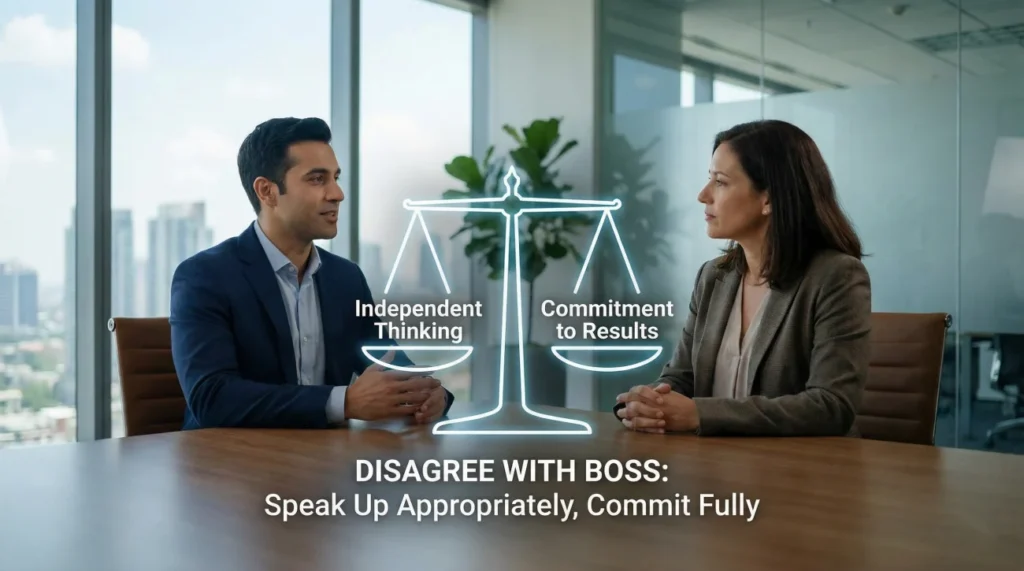
Jeff Bezos famously institutionalized “disagree and commit” at Amazon because he understood that the best ideas often come from constructive friction. Questions about disagreement with boss situations test whether you can navigate the tricky territory between blind compliance and disruptive rebellion.
A VP of Engineering at Stripe shared this insight: “I specifically ask this question to filter out two types. The person who says they’ve never disagreed with a manager is either lying or dangerously passive. The person who sounds proud of fighting with their boss is someone who’ll create chaos on my team.” The sweet spot demonstrates that you think independently, speak up appropriately, and commit fully once decisions are made.
What This Question Really Tests
Independent Thinking
Managers do not want yes-people who agree with everything they say. Valuable team members notice potential problems, offer alternative perspectives, and contribute ideas that improve decisions. Your answer should demonstrate that you think critically rather than simply executing orders.
Professional Courage
Speaking up when you disagree with someone who controls your career takes courage. Interviewers want to know you will advocate for what you believe is right rather than staying silent to avoid discomfort. This quality becomes increasingly important at senior levels.
Respect for Hierarchy
At the same time, organizations function because people ultimately align around decisions even when they disagreed during discussion. The concept of disagree and commit means voicing your concerns, then fully supporting whatever decision is made once the discussion ends.
The best employees express disagreement before decisions are final, then execute wholeheartedly regardless of the outcome.
Cases That Made or Broke Candidates
In over a decade of hiring, I have found that how candidates describe disagreeing with authority figures reveals more about their judgment than almost any other question. Here are real examples that shaped my hiring decisions.
The Budget Battle at a Healthcare Startup
A finance manager named Chen described disagreeing with his CEO about expanding into a new market. The CEO was enthusiastic and ready to commit significant budget. Chen had run the numbers and saw serious risks the CEO was overlooking.
Instead of simply objecting, Chen asked for a week to build a detailed analysis. He modeled three scenarios: aggressive expansion, phased approach, and delayed entry. For each, he showed projected cash flow, break-even timeline, and risk factors. He presented it privately, starting with: “I want this to succeed as much as you do. Here’s what I found that concerns me.”
The CEO chose the phased approach. Two years later, a competitor who went aggressive in that same market ran out of cash and folded. Chen did not tell me this story to say “I was right.” He told it to show how he influences decisions with data rather than opinions. That distinction mattered enormously.
The Timeline Disagreement That Went Wrong
A project manager told me she disagreed with her director about a product timeline. She believed it was too aggressive and said so in a team meeting. Her director dismissed her concerns. She then sent an email to the entire leadership team outlining why the timeline would fail.
The project did miss its deadline. But when I asked what happened to her career there, she admitted she was passed over for promotion and eventually left. She still believed she was right to escalate publicly. I did not hire her.
Being right is not the same as being effective. Her approach embarrassed her director and created an adversarial dynamic. She could have raised concerns privately, built allies gradually, or proposed alternatives rather than just predicting failure. Sometimes the lesson from a disagreement story is that the candidate still does not understand what went wrong.
The Ethical Pushback That Built Trust
A compliance analyst named Maria described a situation where her manager asked her to approve a vendor contract quickly because the CEO was personally connected to the vendor. Maria found issues during her review: missing certifications and ambiguous liability terms.
She told her manager: “I understand the pressure, but I can’t sign off on this as-is. Here are the specific issues. I can work with the vendor to resolve them this week if that helps.” Her manager pushed back, mentioning the CEO again. Maria held firm but offered solutions: “I’ll call the vendor today and see what we can fix immediately.”
She resolved most issues within three days. The contract was signed slightly delayed but properly vetted. Her manager was initially frustrated but later thanked her when another vendor contract without proper review caused problems. Maria showed me that she could push back on authority without being confrontational, and that she offered solutions rather than just obstacles.
Framework for Respectful Dissent
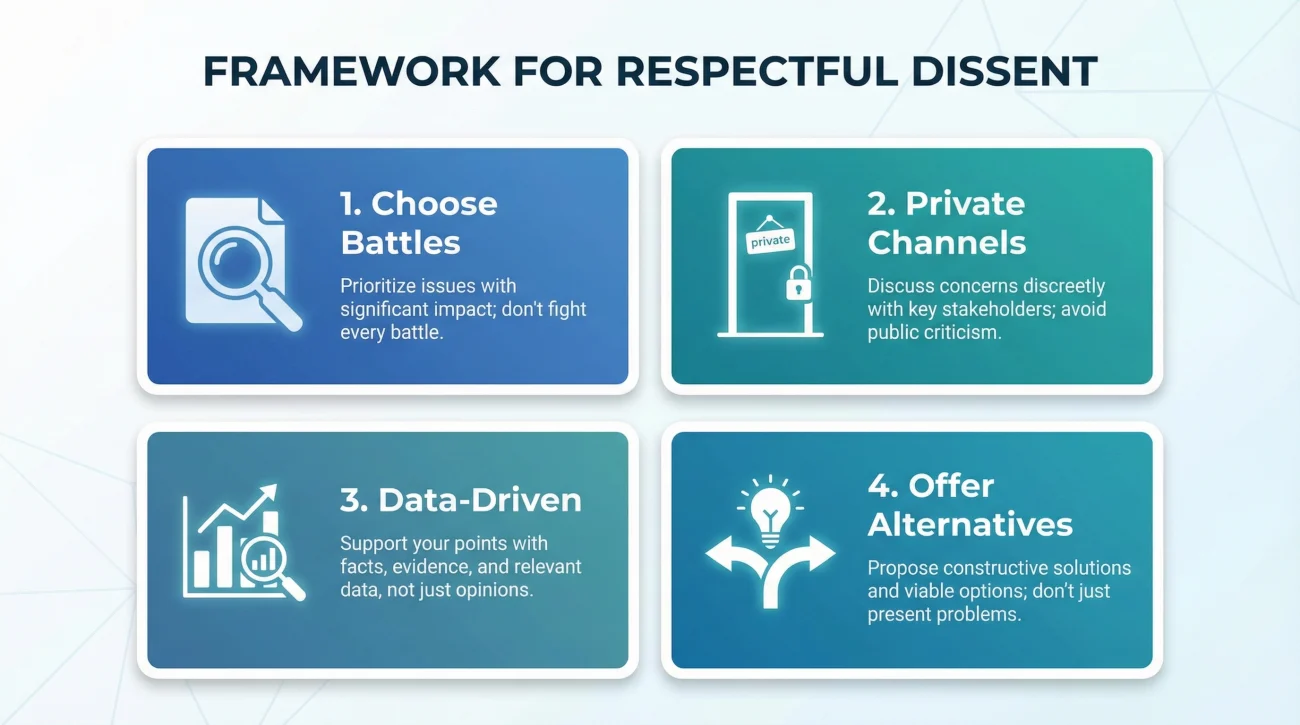
Choose Your Battles
Your answer should show you disagreed about something worth disagreeing about. Trivial matters make you look petty. Issues involving significant risk, ethical concerns, or substantial impact on outcomes demonstrate good judgment about when pushback is warranted.
Use Private Channels
Strong answers typically describe addressing the disagreement privately rather than challenging your boss publicly. Raising concerns in one-on-one settings shows respect while still voicing your perspective. Public disagreement can embarrass managers and damage relationships unnecessarily.
Present Evidence, Not Opinions
Frame your disagreement around data, analysis, or specific concerns rather than just personal preference. “I had concerns about the timeline based on our team’s capacity data” is stronger than “I thought we needed more time.” Evidence-based disagreement is easier to receive and harder to dismiss.
Rachel, an analyst at McKinsey, learned this lesson early. She disagreed with her partner’s recommendation to a client but initially framed it as “I just don’t think that’s right.” Her partner dismissed it. She went back, pulled three years of industry data showing the recommendation had failed in similar situations, and presented again. This time, the partner not only listened but asked her to present the analysis to the client. “Data turned my opinion into an insight worth considering,” she reflected.
Offer Alternatives
Coming to your boss with problems but no solutions signals complaint rather than contribution. Your story should show you brought alternative approaches when you disagreed with the proposed direction. Even if your alternative was not adopted, offering it demonstrates constructive engagement.
Sample Answer
My manager wanted to launch a new feature on an aggressive timeline that I believed would compromise quality. She was under pressure from leadership to show fast progress, but I was worried we’d create technical debt that would hurt us later.
I needed to raise my concerns in a way that was clear and constructive, while respecting her authority and the business constraints she was managing.
I asked for a private meeting instead of bringing it up during team standup. I began by acknowledging the pressure she was facing and asked a few questions to understand the deadline drivers and what leadership specifically needed to see.
Then I shared concrete information rather than opinions. I outlined the technical risks of the current plan, what would likely break or be rushed, and the estimated cost of fixing those issues later. I framed it as a tradeoff: speed now versus rework and instability later.
To keep it solution-focused, I proposed a modified scope that still delivered a meaningful milestone on her timeline, while deferring the highest-risk elements for a more thorough implementation. I also offered a simple plan for how we’d communicate the phased approach and what “done” would look like for the first release.
She appreciated that I came with options instead of just concerns. We aligned on a modified approach that met leadership’s need to see progress while reducing technical risk.
When she later explained the scope adjustment to leadership, she used the data I prepared to support the decision. The project launched successfully, and she noted in my review that she valued my willingness to push back thoughtfully.
Expert advice: This answer shows disagreement that improved the outcome while maintaining a positive relationship with the manager.
Approaches That Backfire
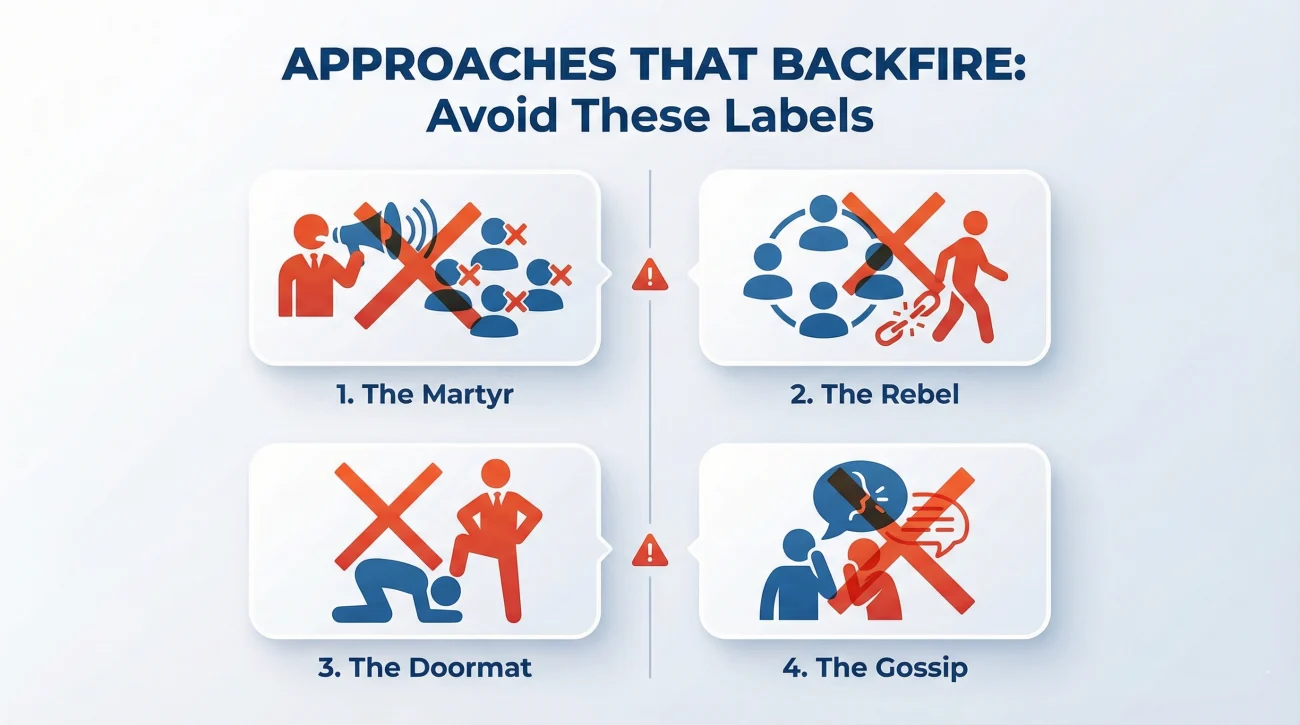
- ❌ The Martyr: “I tried to warn them but nobody listened” positions you as unheard rather than influential
- ❌ The Rebel: Describing ongoing resistance after a decision was made suggests you cannot commit
- ❌ The Doormat: Saying you have never disagreed with a boss sounds either dishonest or passive
- ❌ The Gossip: Describing how you complained to colleagues rather than addressing the manager directly
Even if the disagreement did not end with your preferred outcome, your answer can still be strong. Show that you expressed your view appropriately, then committed to executing the decision professionally. Learning from situations where you disagreed but were overruled demonstrates maturity.
For additional strategies on handling conflict and resilience questions, explore our comprehensive guides.
❓ FAQ
🎯 What if I disagreed and my boss was ultimately wrong?
You can mention the outcome honestly, but avoid sounding smug. Frame it as a learning experience for the team rather than personal vindication. Emphasize what processes improved afterward rather than dwelling on being right.
💼 What if the disagreement damaged our relationship?
Choose a different example. Stories ending with damaged relationships raise concerns about your interpersonal skills. If this is your only example, focus on what you learned about how to disagree more effectively in the future.
⏰ Should I describe disagreeing with a current boss?
Current examples work well because they demonstrate recent behavior. However, be especially careful not to badmouth your current employer or reveal confidential information. Keep details general enough to protect sensitive business information.
📋 What if my boss reacted badly to my disagreement?
Focus on your approach rather than their reaction. If the story involves a manager who reacted poorly, you can briefly mention navigating that challenge, but do not make criticizing your former boss the main theme of your answer.
✨ How significant should the disagreement be?
Choose something meaningful enough to demonstrate professional courage but not so dramatic it raises concerns. Disagreeing about project approach, resource allocation, or strategic priorities works well. Avoid examples involving serious misconduct unless specifically relevant to the role.
Show You Can Push Back and Commit
Handling questions about disagreement with boss effectively demonstrates one of the most valuable professional skills: the ability to voice concerns constructively while remaining a committed team player. The best answer shows you as someone who thinks independently, speaks up appropriately, and executes faithfully once decisions are made.
⚠️ Disclaimer: The interview strategies, sample answers, and negotiation tips provided in this guide are for educational purposes only. Hiring decisions are subjective and vary by company and industry. While these strategies are based on professional HR standards, they do not guarantee a specific job offer or result.