Pressure Reveals Character
Navy SEAL training has a famous saying: “Under pressure, you don’t rise to the occasion. You sink to the level of your training.” This insight explains why questions about working under pressure matter so much in interviews. Interviewers want to see not just that you survived pressure but that you have developed reliable methods for managing it.
A product manager at Airbnb described why this question tops her list: “I’ve seen brilliant people become completely useless when deadlines get tight. And I’ve seen average performers become heroes because they stay calm and prioritize ruthlessly. I’m not just asking if you’ve experienced pressure. I’m asking what happens to your judgment and decision-making when everything is on fire.”
Skills That Matter Under Pressure
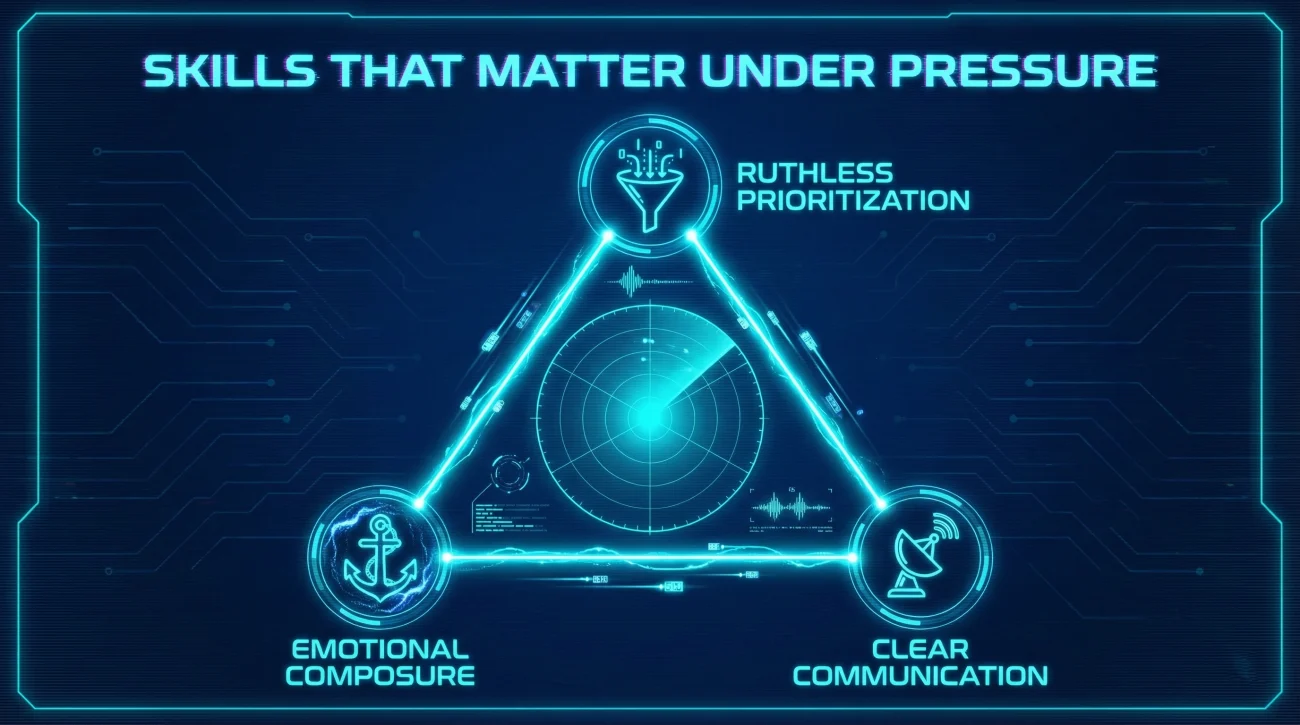
Ruthless Prioritization
Under pressure, everything cannot be equally important. Strong answers demonstrate the ability to distinguish what truly matters from what can wait. Separate urgent from important, and focus energy on what is both. What can be deferred? What can be delegated? What must you do right now?
When time is limited, doing fewer things well beats doing many things poorly.
Emotional Composure
Panic is contagious and counterproductive. Your answer should show you maintained calm even when feeling internal stress. This does not mean pretending pressure does not exist but rather managing your response so you can think clearly and avoid amplifying stress for others.
Clear Communication
Pressure situations often require quick alignment with others. Demonstrating that you communicated proactively about constraints, tradeoffs, and progress shows leadership under stress. Keeping stakeholders informed prevents surprises that create more pressure.
Pressure Stories That Separated Good From Great
Everyone claims they work well under pressure. These interview stories showed me who actually does and who just thinks they do.
The Server Crash on Black Friday
A DevOps engineer named Ravi described the moment their e-commerce platform went down at 10 AM on Black Friday. Traffic was ten times normal levels. Every minute of downtime cost the company hundreds of thousands of dollars. His phone exploded with calls from executives, customer service, and panicking colleagues.
Ravi told me what he did first: he silenced his phone. “I know that sounds crazy, but I couldn’t diagnose the problem while people were screaming in my ear. I sent one message to our CTO: ‘I’m on it. I’ll update every 15 minutes. Please hold everyone off.’ Then I focused.”
He isolated the issue within twenty minutes: a database connection pool that worked fine under normal load but collapsed under Black Friday traffic. He implemented a temporary fix that restored service in forty-five minutes. The permanent fix came the following week.
What impressed me was his discipline under pressure. He managed communication expectations upfront so he could focus on problem-solving. He did not try to be a hero by working while also managing everyone’s anxiety. He recognized that context-switching would slow him down and made a deliberate choice to concentrate.
The Investor Presentation That Almost Collapsed
A CFO at a startup named Michelle described discovering a significant error in their financial projections two hours before a crucial investor meeting. The error was not fraud or misrepresentation, but the methodology used for revenue forecasting was flawed, making their projections look too optimistic.
Michelle had two options: present the flawed numbers and hope no one noticed, or disclose the issue and risk losing investor confidence. She chose a third path. She revised the key slides to show a range of projections using both methodologies, flagged the discrepancy proactively, and explained what additional analysis they were conducting to determine the more accurate approach.
The investors appreciated the transparency. One later told her that the way she handled the discrepancy increased their confidence in her leadership. The company closed the round successfully.
Michelle told me: “Pressure makes people cut corners or hide problems. I’ve learned that pressure is exactly when you need to be most honest. Investors, clients, colleagues, they can handle bad news if you deliver it with clarity and a plan. What destroys trust is finding out you knew and didn’t tell them.”
The Event That Fell Apart
An event manager named Tanya described running a 500-person corporate conference where the keynote speaker canceled four hours before the event due to a family emergency. No backup speaker. Attendees were already arriving. The CEO who had promoted this speaker was expecting a highlight moment.
Tanya spent the first ten minutes in controlled panic. Then she started making calls. She found a senior executive who had presented successfully at smaller events and asked him to adapt his material for the keynote slot. She coordinated with the AV team to adjust the presentation format. She briefed the CEO personally on the change and the recovery plan.
The replacement keynote was different from what was advertised but well-received. Tanya sent a personal apology and explanation to all attendees with the original speaker’s contact information, promising to host a webinar with that speaker in the future (which she delivered on).
Tanya’s answer showed me three things I value: she allowed herself a moment of panic but contained it, she moved to solutions immediately, and she followed through on making it right even after the immediate crisis passed. That combination of emotional honesty, decisive action, and long-term accountability is exactly what I want in my team.
A Pressure Management Framework
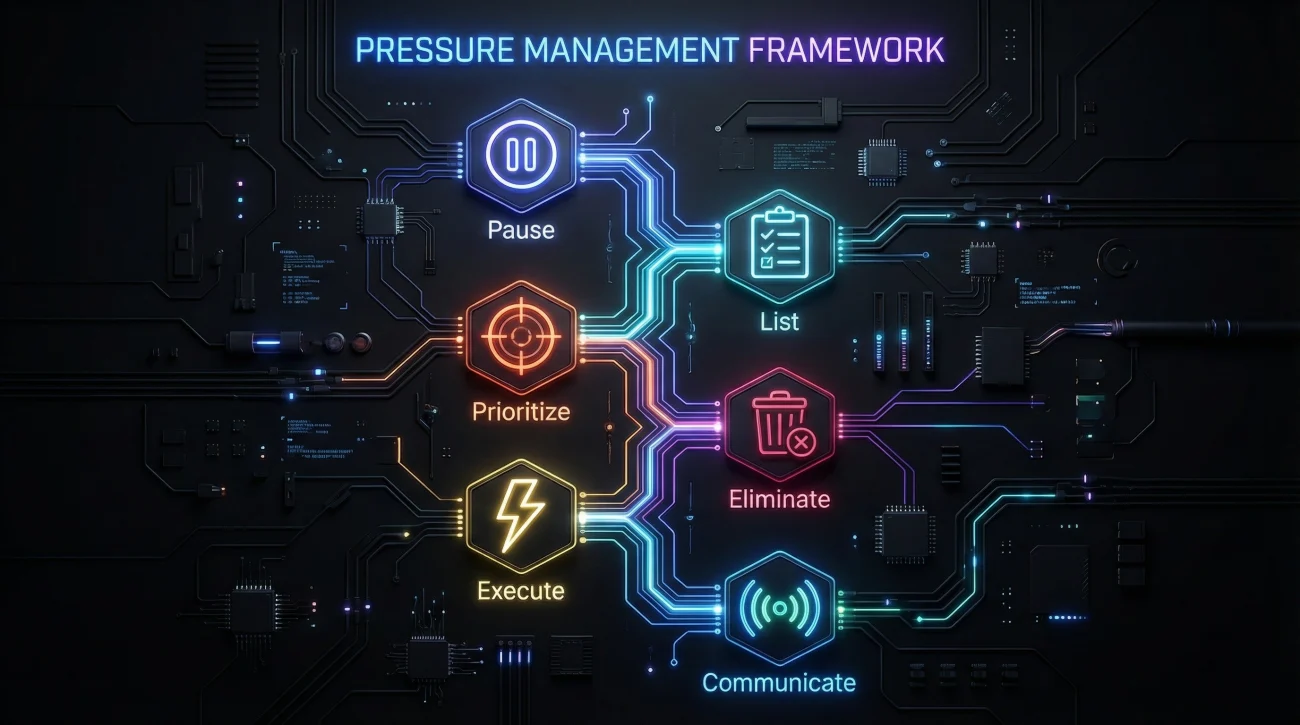
- ⏸️ Pause: Take a moment to assess rather than reacting immediately
- 📋 List: Write down everything demanding attention
- 🎯 Prioritize: Identify what truly must happen versus what can wait
- 🔪 Eliminate: Remove or defer anything non-essential
- ⚡ Execute: Focus completely on the highest priorities
- 📢 Communicate: Keep stakeholders informed of status and tradeoffs
Sample Answer
Two days before a major client presentation, our team discovered a critical data issue. The analysis we had built over three weeks relied on incorrect source data, which meant we needed to redo a large portion of the work before the meeting.
I needed to quickly assess the scope, correct the highest-impact parts of the analysis, and deliver an accurate presentation on time, while keeping both leadership and the client informed in a way that maintained trust.
My first reaction was panic, but I paused for about fifteen minutes to understand the scope before taking action. I mapped what was affected and what was not, and we confirmed that around forty percent of the analysis could be kept as-is.
I then prioritized ruthlessly. I asked, “What are the three most important insights the client needs from this presentation?” and focused our correction work on those sections only. I accepted that secondary analysis would need to be moved into a follow-up session rather than trying to rebuild everything perfectly in forty-eight hours.
To execute fast, I split the critical work across the team based on strengths and ownership, and I set four-hour check-ins to surface issues early and keep everyone aligned. That cadence prevented duplicated work and helped us catch problems before they became last-minute surprises.
In parallel, I communicated proactively. I informed my manager and our client contact that we had identified a data quality issue and were correcting it. I framed it as a rigor and integrity step, explained what we were doing to validate the updated analysis, and outlined what would be delivered in the presentation versus what would come in a follow-up.
We delivered the core presentation on time with accurate data. The client appreciated the transparency and felt more confident in our thoroughness because we surfaced and corrected the issue proactively.
We scheduled a follow-up for the secondary analysis, which the client accepted as reasonable. My manager later cited the situation as an example of effective pressure management and clear prioritization for the team.
What to Avoid
- Claiming you love pressure: Sounds inauthentic. Acknowledge pressure is challenging while showing you handle it well
- Hero narratives: Stories where you saved everything single-handedly often seem exaggerated
- Blaming others: Even if someone else created the pressure, focus on your response
- No strategy: Just saying you “worked harder” does not show skill
For more strategies on demonstrating composure in interviews, explore our comprehensive guides.
❓ FAQ
🎯 What if I do not perform well under pressure?
Everyone has room for growth. Choose an example where you handled pressure better than expected, even if imperfectly. Focus on strategies you used and what you learned. Showing self-awareness about developing this skill can be valuable.
💼 Should I describe extreme pressure situations?
Moderate pressure handled skillfully often works better than extreme situations. Very dramatic scenarios can seem exaggerated or raise questions about why such crises occurred. Choose something significant but believable.
⏰ What counts as working under pressure?
Tight deadlines, high stakes decisions, resource constraints, competing priorities, or unexpected problems all create pressure. The situation should involve meaningful consequences and limited time or resources to address them.
📋 Can I mention that I felt stressed?
Briefly acknowledging internal stress while showing you managed it effectively demonstrates self-awareness. Pretending you felt no pressure seems unrealistic. The key is showing stress did not compromise your performance.
✨ What if the outcome was not perfect?
Imperfect outcomes under pressure can still demonstrate strong skills. Focus on what you achieved given the constraints and what you learned. Sometimes the best possible outcome in a pressure situation is still a compromise.
Thrive When It Matters Most
Questions about working under pressure reveal how you perform when normal conditions do not apply. By demonstrating clear prioritization, emotional composure, and strategic thinking under stress, you show interviewers that deadline crunches and high-stakes moments bring out your best rather than your worst.
⚠️ Disclaimer: The interview strategies, sample answers, and negotiation tips provided in this guide are for educational purposes only. Hiring decisions are subjective and vary by company and industry. While these strategies are based on professional HR standards, they do not guarantee a specific job offer or result.