Mistakes vs. Failures: Understanding the Difference
Howard Schultz, who built Starbucks into a global brand, often talks about the costly mistake of expanding too fast in the mid-2000s, diluting the brand and nearly destroying the company. What made him a great leader was not avoiding that mistake but how he responded: closing 600 stores, refocusing on quality, and openly acknowledging what went wrong.
The biggest professional mistake question differs from general failure questions. While failures often involve projects that did not achieve goals despite reasonable efforts, mistakes involve errors in judgment, execution, or behavior that you could and should have avoided. This question tests whether you can acknowledge genuine errors, take responsibility, and demonstrate that you fix what you break.
Categories of Professional Mistakes
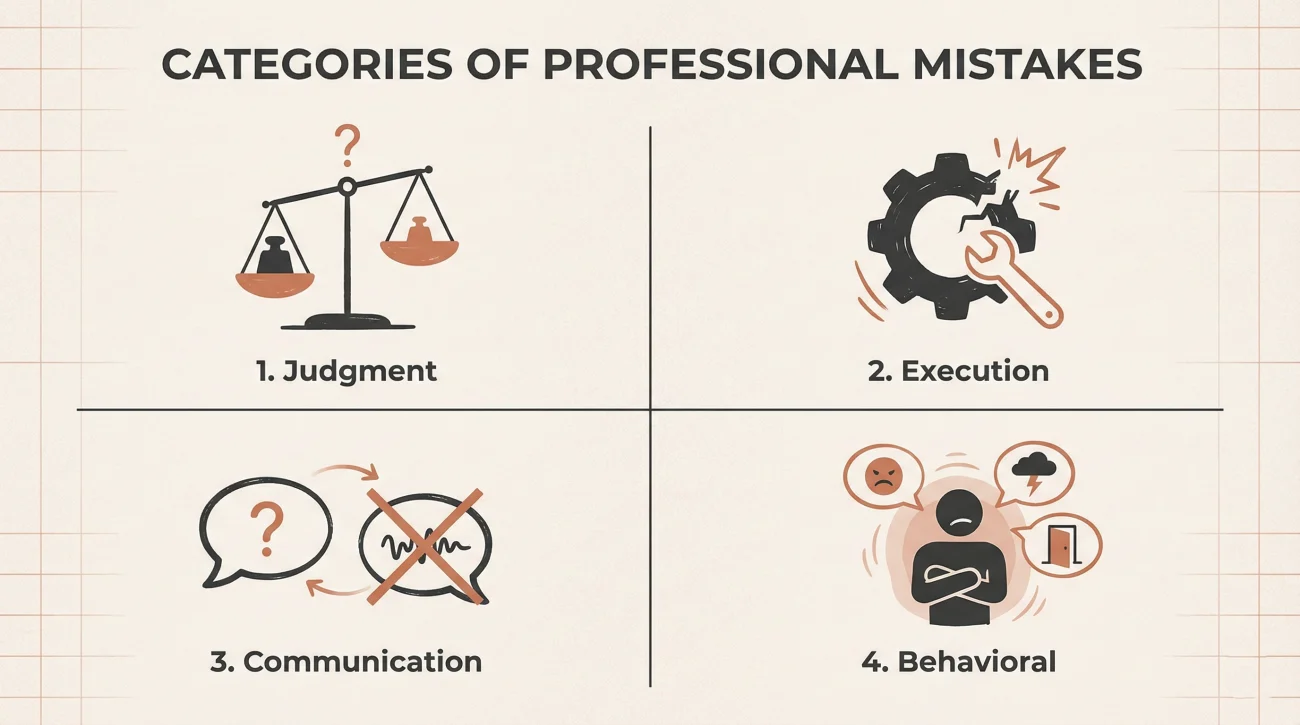
Judgment Errors
Decisions that seemed reasonable at the time but proved wrong: choosing the wrong approach, underestimating risks, or prioritizing incorrectly. These mistakes show that even careful thinking can miss important factors.
Execution Errors
Technical mistakes, missed details, or sloppy work: the calculation error in a presentation, the email sent to the wrong person, or the deadline forgotten. These mistakes often stem from rushing or lack of attention.
Communication Mistakes
Miscommunications that caused problems: unclear instructions, assumptions that proved wrong, or messages that were misinterpreted. These often result from not verifying understanding.
Behavioral Mistakes
Actions that damaged relationships or trust: losing your temper, being dismissive, or handling a situation unprofessionally. These require the most genuine reflection to discuss credibly.
Mistake Stories That Shaped Hiring Decisions
Mistakes differ from failures. Failures can happen despite good decisions. Mistakes are errors you should have avoided. Owning a genuine mistake requires deeper vulnerability. Here are real interview stories that influenced my hiring.
The Email That Should Never Have Been Sent
A marketing director named Alicia told me about sending an internal email criticizing a campaign concept to her entire department. The email was meant for one trusted colleague. She had vented frustration about the creative director’s approach and questioned his competence. The creative director, of course, was on the department distribution list.
Alicia did not hide in her office. Within an hour, she walked to the creative director’s desk and apologized in person. She did not make excuses about hitting the wrong button. She said: “What I wrote was unprofessional regardless of who read it. I’m sorry for what I said and for saying it that way.”
The relationship was damaged for months. But Alicia rebuilt trust through actions: publicly supporting the creative director’s work in meetings, giving credit generously, and asking for his input on her projects. By the time she left that company, they had become genuine collaborators.
Alicia told me: “That mistake taught me to never write anything I wouldn’t say to someone’s face. It also taught me that recovery is possible if you own it completely and do the repair work.”
The Promise He Could Not Keep
A project manager named Thomas described promising a client a delivery date he knew was aggressive, hoping his team could pull it off. They could not. He missed the deadline by two weeks, damaging client trust and putting the account relationship at risk.
The mistake was not the missed deadline. The mistake was the promise. Thomas told me: “I wanted to impress the client and my leadership. I told them what they wanted to hear instead of what was realistic. Then I put my team in an impossible position and blamed them when we failed.”
His recovery started with honesty. He told the client the truth about what happened and took personal responsibility. He worked with his team to rebuild realistic estimation processes. He now adds buffer to every estimate and under-promises rather than over-promises.
Thomas said something that stuck with me: “I’d rather disappoint someone with the truth upfront than earn their trust with a lie and destroy it with failure.”
The Hire She Should Not Have Made
A director named Grace told me about hiring someone despite reservations because she was desperate to fill the role. Red flags appeared during interviews: the candidate badmouthed former employers, could not give specific examples of achievements, and seemed more interested in title than responsibilities. Grace hired her anyway.
Within three months, the problems Grace had ignored became undeniable. The new hire created conflict with teammates, missed deadlines, and blamed everyone but herself. Grace had to terminate her before the six-month mark, setting the search back further than if she had waited for the right candidate.
Grace’s learning was specific: “I now have a rule. If I’m rationalizing away concerns during interviews, that’s a no-hire. My gut notices things my rational brain wants to explain away. I’ve passed on candidates since then that I later heard were problems at other companies. The mistake cost me six months, but the lesson has saved me years.”
I appreciated Grace’s answer because she identified the exact moment of the mistake (ignoring red flags) rather than vaguely blaming the hiring process. She owned a specific decision that she made badly and changed her behavior to prevent repeating it.
The Redemption Arc
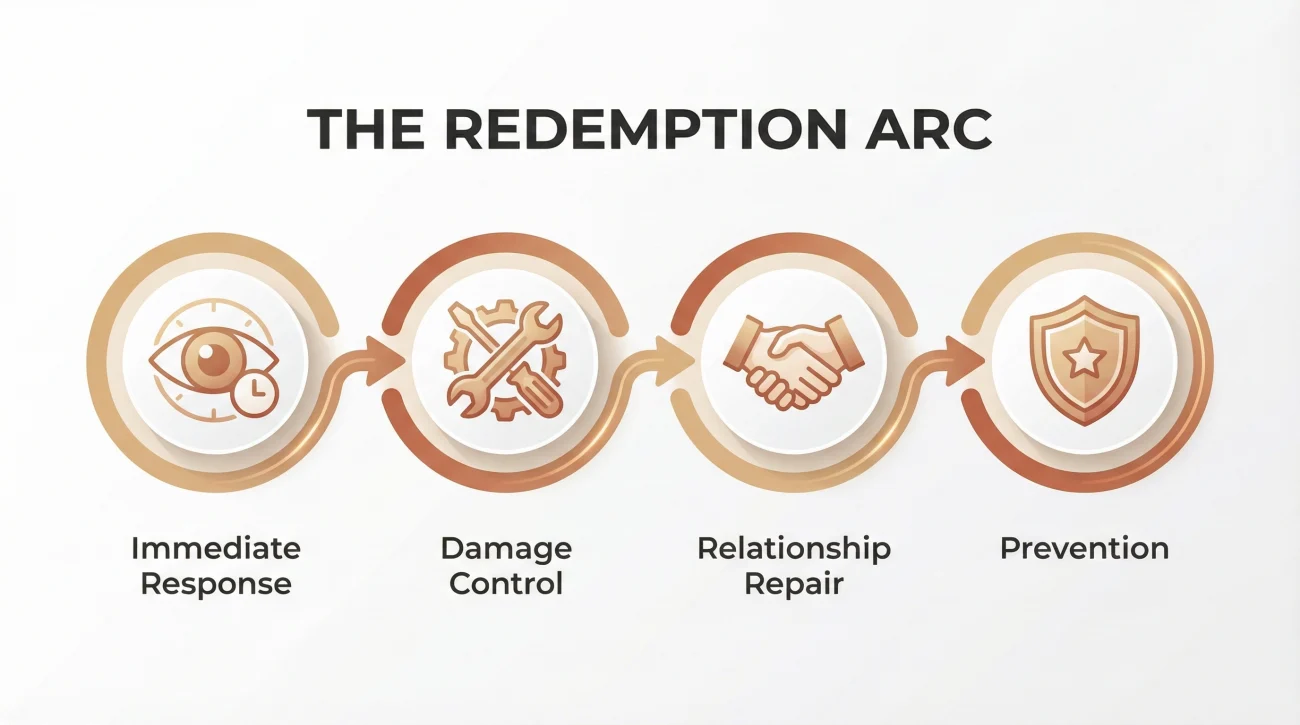
What distinguishes a strong mistake answer is the redemption story. How did you make it right? What did you do to repair damage, rebuild trust, or prevent recurrence? The mistake itself matters less than what followed.
- 🔍 Immediate Response: How quickly did you acknowledge the mistake and take action?
- 🛠️ Damage Control: What did you do to minimize negative impact?
- 🤝 Relationship Repair: How did you rebuild trust with those affected?
- 🔒 Prevention: What changes did you make to prevent similar mistakes?
A quickly acknowledged mistake with strong recovery often earns more respect than an error-free record.
Sample Answer
Situation
I once sent a client presentation that accidentally included internal pricing notes, including our actual margins. It was confidential information that should never have left the company, and I missed it because I didn’t thoroughly review the final document before sending. The client noticed immediately and forwarded it to their procurement team.
Task
I needed to respond quickly and transparently, limit the impact on the client relationship, and put safeguards in place so the mistake wouldn’t happen again.
Action
As soon as I realized what happened, I informed my manager instead of trying to minimize it. We needed to address it strategically, and hiding it would only increase risk. Together, we called the client within the hour to acknowledge the error directly.
On the call, I took personal responsibility and apologized without making excuses. We asked them to delete the document and explained that the internal notes were not meant for external distribution. We were clear that it was an honest mistake, not a deliberate disclosure, and we asked them to confirm they would not circulate it further.
After that, I focused on rebuilding trust through consistent follow-through and extra attention to the account. I also changed my own process immediately by implementing a checklist for external sends involving sensitive documents: a dedicated review for confidential markers, removing internal comments, and adding a short cooling-off step before sending important materials.
Finally, I shared what I learned with the broader team and proposed adopting a similar protocol so the safeguard wasn’t dependent on any single person’s memory.
Result
We addressed the situation quickly and preserved the client relationship, although the negotiation on that deal was impacted because they had more information than they otherwise would have.
More importantly, the mistake led to a lasting process improvement. The checklist approach was adopted by the team, which reduced the risk of similar confidentiality errors across the department going forward.
Delivering Your Answer
Tone Matters
Describe your mistake with appropriate seriousness but without excessive shame or drama. You are demonstrating mature accountability, not performing penance. A measured, professional tone shows you have processed the experience and grown from it.
Kevin, a senior engineer at Tesla, learned this through practice. “My first few times answering this question, I was either too defensive or too self-critical. I found the sweet spot by imagining I was telling a trusted mentor about something that happened years ago. There’s distance, but also honesty. I’m not reliving the embarrassment, but I’m not minimizing it either. That’s the tone interviewers respond to.”
Avoid Minimizing
Resist the urge to soften the mistake with qualifiers like “it was not really a big deal” or “everyone makes this mistake.” If it was not significant, choose a different example. Minimizing suggests you have not truly reckoned with the error.
Show Perspective
End with perspective on how the experience shaped you. The best answers leave interviewers feeling that you turned a painful moment into genuine professional development. For additional guidance on showing growth through adversity, explore our comprehensive resources.
❓ FAQ
🎯 How big should the mistake be?
Significant enough to demonstrate genuine learning but not so catastrophic it raises concerns about your judgment. A meaningful professional error with clear consequences and recovery is ideal. Avoid trivial mistakes that do not show much.
💼 What if my biggest mistake got me fired?
You can discuss it if you handle it well. Be honest about the severity, show genuine ownership, and emphasize significant personal growth. Interviewers respect honesty about serious mistakes more than obvious attempts to hide them.
⏰ Should I choose a recent or older mistake?
Older mistakes allow more time for demonstrated growth and perspective. However, very old mistakes may seem less relevant. Three to seven years ago often works well, showing both learning and recent professional development.
📋 Can I describe a mistake that affected only me?
Mistakes with broader impact are generally stronger because they show how you handle responsibility to others. Self-only mistakes can work if the stakes were high, but interpersonal or organizational impact demonstrates more professional maturity.
✨ What if I cannot think of a significant mistake?
Everyone makes mistakes. If you genuinely cannot identify one, consider whether you are being too hard on yourself to acknowledge errors. Communication missteps, judgment calls that proved wrong, or process failures you contributed to all qualify.
Mistakes Make You Stronger
Questions about your biggest professional mistake test accountability and growth capacity. By choosing an authentic error, demonstrating immediate ownership, and showing how you made it right and prevented recurrence, you transform a potentially negative question into evidence of professional resilience. The ability to recover from mistakes with integrity is exactly what organizations need.
⚠️ Disclaimer: The interview strategies, sample answers, and negotiation tips provided in this guide are for educational purposes only. Hiring decisions are subjective and vary by company and industry. While these strategies are based on professional HR standards, they do not guarantee a specific job offer or result.