
The Colleague Problem Everyone Has Faced
A Gallup study found that one in five employees report having a coworker who makes their work life difficult. Questions about dealing with difficult coworkers go beyond normal disagreements. They probe how you handle genuinely challenging personalities: the blame-shifter, the chronic complainer, the credit-stealer, or the colleague who creates more work than they contribute.
Here’s what makes this question tricky. A hiring manager at Goldman Sachs shared her perspective: “I once had a candidate spend five minutes describing how terrible their coworker was. Very detailed, very specific. All I could think was, ‘what will they say about my team members?’ The candidate who impresses me talks about their strategy for managing the situation, not the other person’s character flaws.”
Common Difficult Behaviors

Understanding what makes someone “difficult” helps you frame your answer appropriately. Different challenging behaviors require different strategies:
| Behavior Type | Challenge | Your Focus |
|---|---|---|
| Blame-shifting | Never takes responsibility, points fingers | Documentation and clear accountability |
| Low effort | Does minimum, others pick up slack | Boundaries around your own workload |
| Credit-taking | Claims others’ work as their own | Visibility and documentation |
| Negativity | Constant complaints, drains morale | Limiting exposure and redirecting conversations |
How Candidates Actually Handle Difficult People
This question separates candidates who manage situations from those who become part of the problem. Here are real interview stories that shaped my hiring decisions over the years.
The Credit Stealer at a Consulting Firm
An associate consultant named Leah described working with a senior colleague who routinely presented her analysis as his own in client meetings. She had documentation: her emails with the analysis attached, timestamped before his presentations. But she was junior and he was well-connected.
Leah’s approach was strategic rather than confrontational. She started including her manager in email threads with her analysis. She began presenting preliminary findings in team meetings before the client presentations. She volunteered to join client calls to “support” the senior colleague’s presentations. Gradually, her contributions became visible without her ever making an accusation.
When a partner eventually noticed the pattern and asked about it, Leah had documentation but did not need to weaponize it. She simply said: “I’ve been trying to contribute more visibly to client work. Here’s what I’ve been working on.” The partner connected the dots himself.
What impressed me was her patience and strategic thinking. She did not let the situation make her bitter or drive her to quit. She changed the system so her work became visible, and she let the facts speak for themselves.
The Chronic Complainer in Operations
A warehouse supervisor named Marcus told me about a team member who complained constantly: about management, about policies, about other team members. The negativity was affecting team morale and Marcus found himself dreading interactions with this person.
Marcus tried a technique he called “redirect and bound.” When the colleague started complaining, Marcus would acknowledge briefly (“That sounds frustrating”) and then redirect to something actionable (“What could we do about that?”). If the person just wanted to vent without solutions, Marcus would bound the interaction: “I’ve got about two more minutes before I need to get back to the floor. What’s the most important thing you need from me?”
Over time, the colleague learned that Marcus was not a receptive audience for pure negativity. Their interactions became more functional. Marcus told me: “I couldn’t change her personality. But I could change how much of my energy she consumed.”
The Slacker Who Had a Reason
A team lead named Jessica described a colleague whose performance had declined sharply. Deadlines missed, quality dropped, engagement disappeared. Jessica’s first instinct was frustration, especially when she had to cover the gaps.
Instead of complaining to their manager, Jessica asked the colleague to grab coffee. She did not lead with criticism. She asked: “You seem like you’re dealing with a lot. Is everything okay?” The colleague broke down and revealed she was going through a divorce and custody battle. She was barely sleeping and could not concentrate.
Jessica helped her colleague talk to HR about temporary accommodation and offered to take on specific tasks that required deep focus while the colleague handled more routine work. Within three months, the colleague was back to full performance and remained one of Jessica’s strongest advocates in the company.
This story taught me something important. Jessica’s first instinct was to assume good intent and understand before judging. That quality is rare and valuable. Not every difficult coworker is a bad person. Sometimes they are a good person having a terrible time.
Professional Boundaries That Work
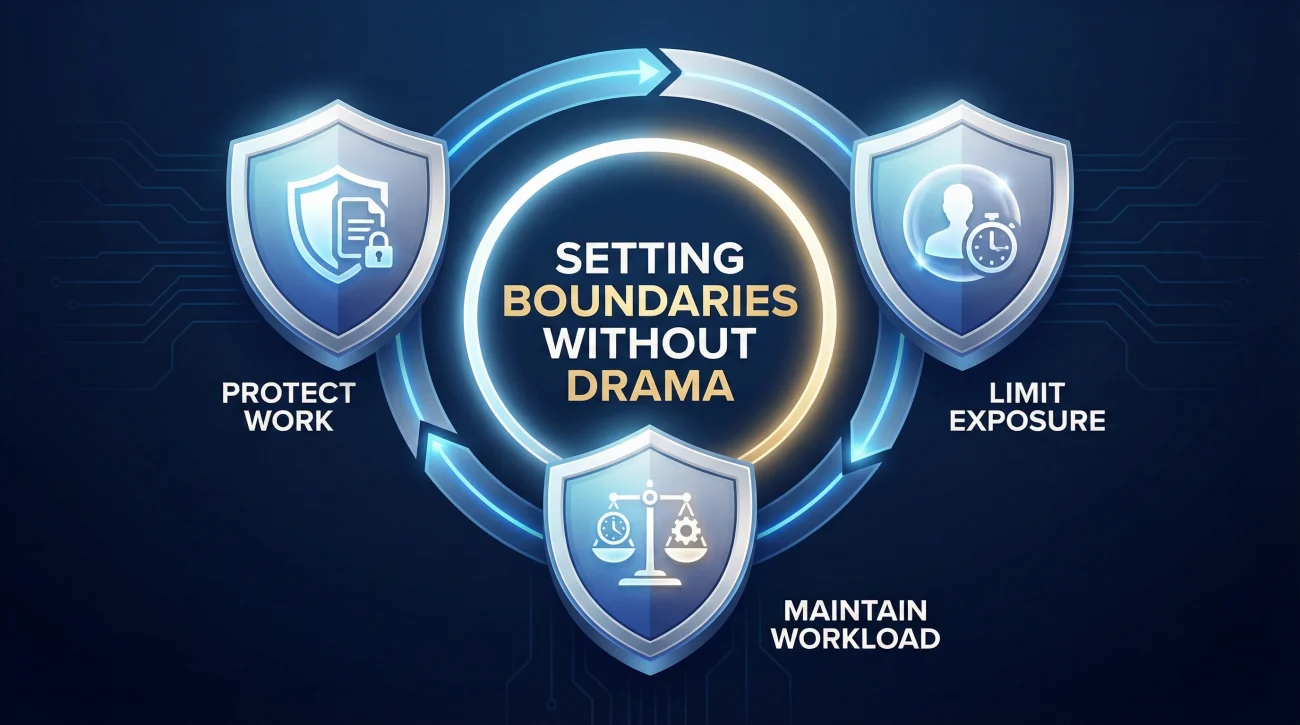
Protect Your Work Without Drama
When dealing with blame-shifters or credit-stealers, documentation becomes essential. Strong answers show you maintained records, communicated in writing, and ensured visibility for your contributions without making accusations. The key is protection through process rather than confrontation.
Sending summary emails after meetings creates natural documentation without appearing adversarial.
Maintain Workload Boundaries
With colleagues who underperform, the temptation is to pick up their slack to keep projects on track. Your answer should show you found sustainable solutions rather than becoming a martyr. This might mean clarifying responsibilities, involving management when appropriate, or establishing what you would and would not cover.
David, a project manager at IBM, learned this the hard way. “I spent six months covering for a teammate who consistently underdelivered. I thought I was being a team player. In my review, my manager said I had enabled the problem instead of surfacing it. The teammate never improved because there were no consequences. I burned myself out, and I made the situation worse for everyone.” His interview answer now focuses on how he learned to document issues factually and let natural consequences become visible.
Limit Negative Exposure
For chronically negative colleagues, boundaries often mean managing your own exposure. You cannot fix someone else’s attitude, but you can control how much time you spend absorbing their complaints. Strong answers show redirecting conversations productively or limiting unnecessary interaction while maintaining professional courtesy.
Sample Answer
I worked with a colleague who repeatedly missed deadlines and then blamed unclear requirements or other team members. It started to affect our team’s delivery, and I kept scrambling to fill the gaps to protect the project.
I needed to protect my own work quality and manage my workload, while keeping the relationship professional and avoiding unnecessary conflict.
I changed how I handled project ownership from the start. At the beginning of each phase, I clarified responsibilities and documented them, then sent a short follow-up message summarizing who owned which deliverables and deadlines.
When his handoffs were late or incomplete, I kept my responses factual. I updated our project tracking system with clear notes about what was missing and how it impacted the timeline, instead of having emotional back-and-forth conversations.
I also stopped automatically covering the gaps. Rather than quietly overworking to hide the issue, I flagged it to our project manager with specific documentation, so the impact was visible and could be addressed properly.
At the same time, I tried to understand whether there was an underlying reason. In one conversation I learned he was dealing with family challenges that hurt his focus. That didn’t excuse the pattern, but it helped me approach the situation with less frustration. I suggested he speak with our manager about workload adjustments or clearer support.
The documentation made the pattern visible to leadership without me having to complain. Our manager introduced clearer accountability structures across the team, and the colleague later moved into a role with fewer dependencies.
On my side, my workload became more predictable, my work quality stayed consistent, and I maintained a civil working relationship without being perceived as difficult or confrontational.
What to Avoid in Your Answer
- Character assassination: Describing someone as lazy, toxic, or incompetent reflects poorly on you
- Victim narrative: Positioning yourself as constantly put-upon by this terrible person
- Revenge stories: Describing how you got the person fired or publicly embarrassed them
- Ongoing resentment: Sounding bitter or angry even now when telling the story
- Immediate escalation: Going straight to HR without attempting any direct resolution
The tone matters as much as the content. Deliver your answer with measured professionalism rather than barely-contained frustration. Interviewers pay attention to how you describe difficult people because it predicts how you might describe them someday.
For strategies on navigating other interpersonal interview scenarios, explore our comprehensive guides.
❓ FAQ
🎯 What if the difficult behavior was truly egregious?
Serious issues like harassment or ethics violations are different from difficult personalities. For those situations, describe appropriate escalation to HR or management. For typical difficult coworkers, focus on professional coping strategies rather than extreme responses.
💼 How do I avoid sounding like I am complaining?
Focus more on your actions and strategies than on the person’s faults. Brief context about the behavior is necessary, but spend most of your answer on what you did to handle the situation productively. Results and learning matter more than grievances.
⏰ Should I pick the most difficult person I have worked with?
Pick an example where you handled the situation well, not necessarily the most extreme case. A moderate challenge handled skillfully is better than a dramatic situation where you struggled or behaved imperfectly.
📋 What if the person is still at my current company?
Be especially careful with details that could identify the person. Use general descriptions and focus on your strategies rather than their specific failings. You want to protect confidentiality and avoid seeming like someone who badmouths current colleagues.
✨ Is it okay to mention if the person was eventually fired?
You can mention outcomes briefly, but do not gloat. If your documentation contributed to management taking action, present it neutrally. The focus should be on your professional approach rather than satisfaction at someone’s downfall.
Rise Above Without Sinking Down
Questions about dealing with difficult coworkers test whether you can maintain professionalism when others make that difficult. The best answers demonstrate that you set appropriate boundaries, focused on what you could control, and handled challenging situations without becoming difficult yourself. That balance is exactly what every manager hopes to find when building a team.
⚠️ Disclaimer: The interview strategies, sample answers, and negotiation tips provided in this guide are for educational purposes only. Hiring decisions are subjective and vary by company and industry. While these strategies are based on professional HR standards, they do not guarantee a specific job offer or result.