
Everyone Claims It. Almost Nobody Proves It.
Nine out of ten candidates mention communication skills somewhere in their interview. They say “I’m a great communicator” and wait for the next question. That’s like a chef claiming “I cook good food” without letting you taste anything.
Candidates who actually get hired for communication-dependent roles do something different. They demonstrate communication skills as a strength by communicating brilliantly in the interview itself, and they prove past success with specific outcomes: deals closed, conflicts resolved, audiences persuaded, relationships saved.
Which Type Is Actually Yours?
“Communication” is too broad to be meaningful. Narrow down to your specific superpower:
| Type | You Excel At | Proof Looks Like |
|---|---|---|
| Persuasion | Changing minds, closing deals | Contracts signed, budgets approved |
| Simplification | Making complex ideas accessible | Executives understood, training succeeded |
| Written | Proposals, documentation, emails | Bids won, clarity achieved at scale |
| Listening | Hearing what’s unsaid | Problems uncovered, relationships rescued |
| Facilitation | Running productive discussions | Decisions made, deadlocks broken |
Pick one and own it completely. Claiming excellence at “all communication” means you’re memorable for none of it.
Negotiation: Turning a Lost Deal Around
An account manager described her persuasion skills this way:
“Our largest client threatened to leave for a competitor offering thirty percent lower pricing. My manager wanted to match the discount immediately. I asked for one meeting with the client first.”
“In that meeting, I didn’t talk about price at all. I asked questions about their business challenges for the next year. Turns out price wasn’t their main concern. They felt we weren’t responsive enough to support requests. Price was just the leverage they had.”
“I negotiated internally to assign them a dedicated support contact. Cost us far less than the thirty percent discount would have. The client stayed, renewed for three years, and actually increased their spend because improved service changed their perception of our value.”
This answer works because it shows strategic communication that changed an outcome, not just pleasant conversation.
Presentation: Changing Executive Minds
A product manager described his approach to executive communication:
“Our engineering team wanted to rebuild our core platform. Two million dollar investment. Six months of delayed features. The executive team was skeptical and had rejected similar proposals twice before.”
“Previous presenters had shown technical architecture diagrams. Executives glazed over. I took a different approach. I created a simple visual analogy: ‘We’re currently adding rooms to a house with a crumbling foundation. We can keep adding rooms and hope it holds, or fix the foundation now while it’s manageable.'”
“Then I showed the cost of technical debt in business terms: delayed features, customer churn risk, engineering turnover. The CEO approved the project in that meeting. Same technical reality. Different communication approach. Completely different outcome.”
Key insight: Great presenters don’t just deliver information. They translate complexity into the language their audience actually speaks.
Listening: Hearing What Isn’t Said
An HR director described her listening abilities:
“We had sudden turnover on our engineering team. Exit interviews were generic. ‘Found a better opportunity.’ ‘Ready for a change.’ But I noticed patterns in what people weren’t saying. Nobody mentioned their manager directly, but everyone mentioned ‘process frustrations’ and ‘feeling unheard.'”
“I set up confidential conversations with remaining team members. Not to gather evidence against anyone. Just to understand. Turns out the manager was dismissing every suggestion without consideration. People felt invisible.”
“We provided the manager with coaching on listening and feedback. Established a mechanism for ideas that bypassed the immediate dismissal. Turnover stopped. We retained four people who had been updating their resumes.”
Listening is the most underrated communication skill. This answer demonstrates that hearing what isn’t said often matters more than eloquent speaking.
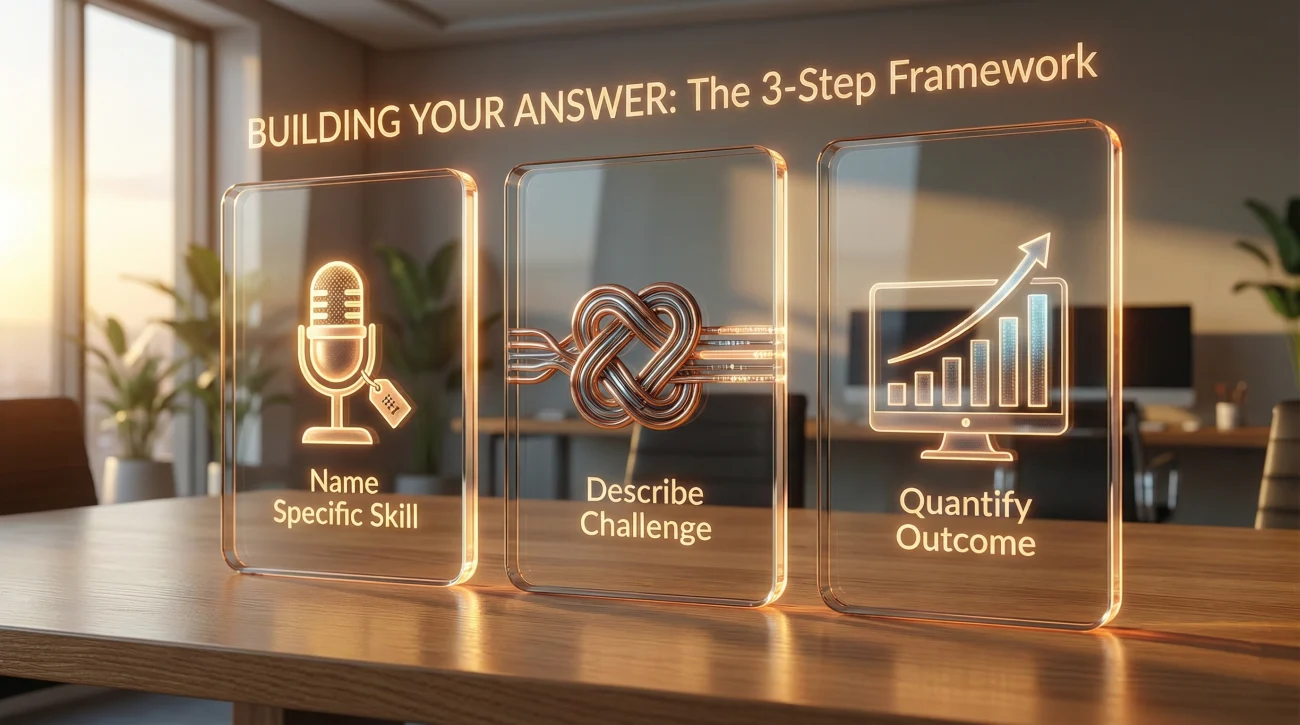
Building Your Answer
Name Your Specific Skill
Don’t say “I have strong communication skills.” Say “I simplify complex technical concepts for executive audiences” or “I facilitate decisions when teams are deadlocked” or “I write proposals that win competitive bids.”
Describe a Challenging Situation
Easy communication proves nothing. Find an example where the stakes were high, the audience was difficult, or the message was complex. The challenge is what makes your skill impressive.
Quantify the Outcome
Communication success is measurable: contracts signed, decisions made, relationships preserved, conflicts resolved. End with what your communication actually achieved, not just how well you spoke.
For more on demonstrating skills effectively, explore our behavioral interview resources.
❓ FAQ
🎯 Is communication too common a strength to claim?
Only if you claim it generically. “I communicate well” is forgettable. “I turn hostile stakeholders into project advocates” is specific and memorable.
💼 What if the role doesn’t seem communication-focused?
Every role involves communication. Technical roles require explaining complexity. Individual contributor roles need cross-functional collaboration. Frame your skill for what this specific role requires.
⏰ How do I prove soft skills like communication?
Through outcomes, not descriptions. Describe a situation where your communication achieved something measurable: a deal saved, a conflict resolved, a decision made.
📋 Should I mention certifications like Toastmasters?
Briefly, if relevant. But results beat credentials. A story about persuading a difficult audience demonstrates capability better than listing training programs.
✨ What if I’m introverted?
Introversion and communication skill are unrelated. Many excellent communicators are introverted. Emphasize written communication, thoughtful listening, or one-on-one influence rather than high-volume social interaction.
Prove It By Doing It
Presenting communication skills as a strength only works when you demonstrate those skills in the answer itself. Be specific about which type of communication you excel at. Prove it with a story that shows measurable impact. The best way to show you’re a strong communicator is to communicate your strength clearly, concisely, and memorably right there in the interview.
⚠️ Disclaimer: The interview strategies, sample answers, and negotiation tips provided in this guide are for educational purposes only. Hiring decisions are subjective and vary by company and industry. While these strategies are based on professional HR standards, they do not guarantee a specific job offer or result.