The Most Universally Accepted Weakness
Surveys consistently show that public speaking ranks among the top fears globally. When you mention public speaking as a weakness, interviewers immediately relate because most people share some version of this anxiety. More importantly, for most roles, presentation skills are valuable but not core to daily success. This makes it a weakness you can admit honestly while demonstrating growth.
What separates good answers from forgettable ones is the specificity of your improvement plan. Saying “I get nervous speaking publicly” means nothing. Describing a structured approach to overcoming it demonstrates the self-awareness and initiative interviewers actually want to see.
The Engineer Who Joined Toastmasters
A software engineer told me:
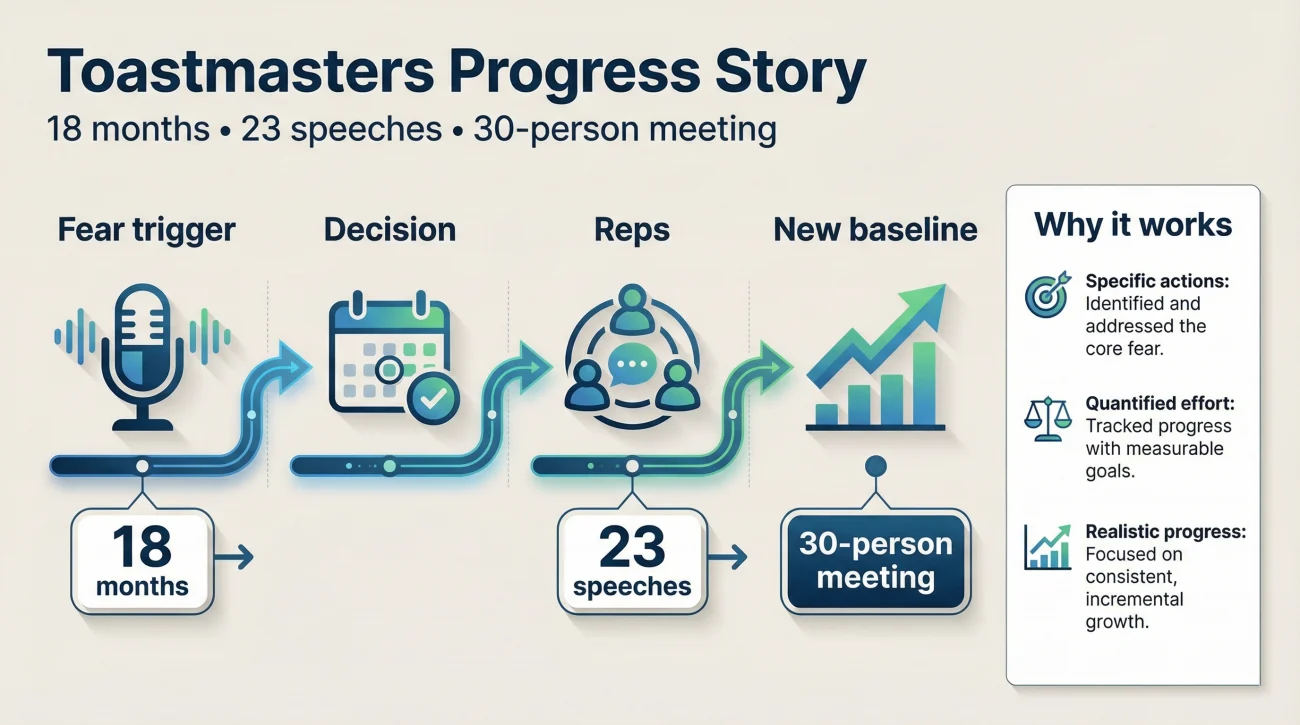
“My greatest weakness is public speaking. I’m confident in technical discussions and small meetings, but presenting to larger groups triggers anxiety that affects my delivery. My voice speeds up, I forget key points, and I struggle to connect with the audience.”
“I recognized this was limiting my career growth, so I joined Toastmasters eighteen months ago. I’ve given twenty-three speeches since then, each evaluated by peers. I also volunteered to present at our monthly engineering reviews, which terrified me at first but has gotten much easier.”
“I’m not a natural presenter yet, but I can now handle a thirty-person meeting without the anxiety controlling me.”
This answer works because it names specific actions, quantifies effort, and acknowledges realistic progress.
The Analyst Who Practiced Deliberately
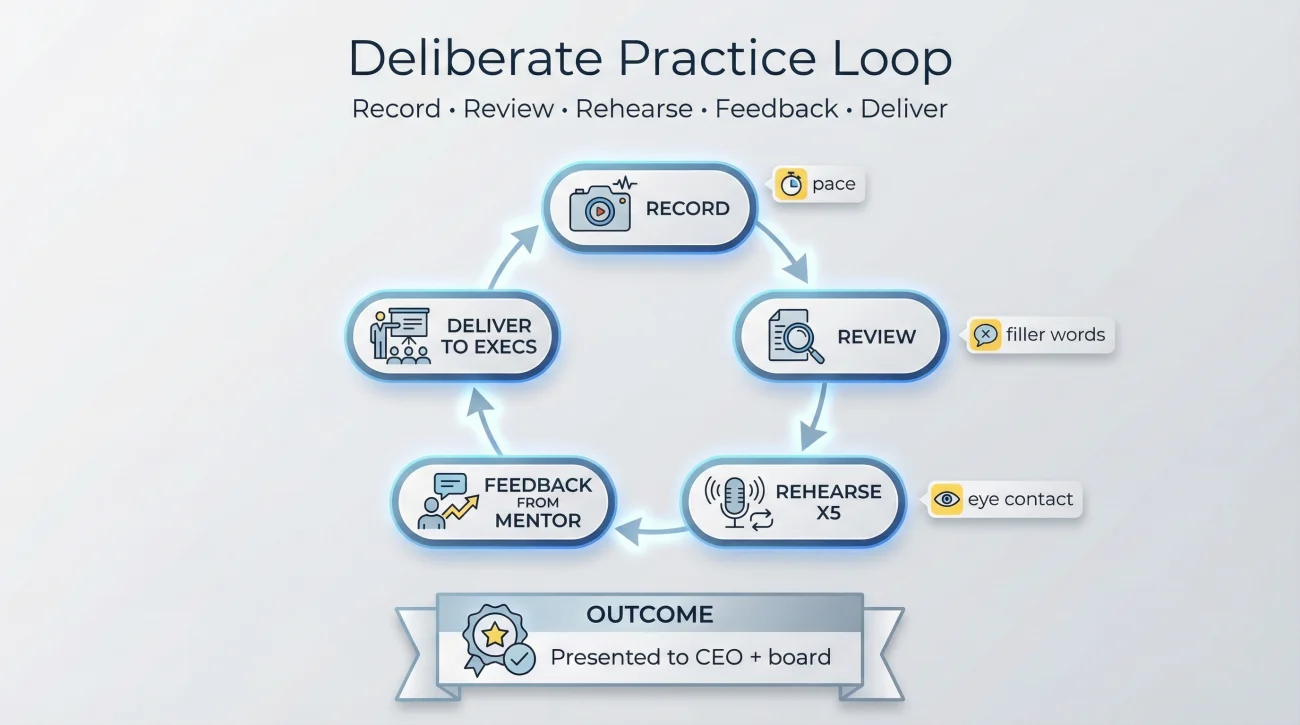
A business analyst described her approach differently:
“Public speaking is my greatest weakness. I once had a panic attack before presenting quarterly results to executives. That moment forced me to address this seriously because I knew it would limit everything I wanted to achieve.”
“I created a systematic practice plan. I record every presentation I give and review it for specific habits: filler words, pace, eye contact. I practice new presentations at least five times before delivering them. I also asked a mentor to give me brutally honest feedback.”
“Last month, I presented to our CEO and board, something I never could have done two years ago. It wasn’t perfect, but I delivered the message clearly and handled questions confidently.”
This answer shows deliberate, measurable improvement efforts.
Building a Credible Improvement Plan
Interviewers want structured effort, not vague intentions:
- 🎤 Toastmasters: Structured speaking practice with peer feedback
- 📹 Self-recording: Review your presentations for specific improvements
- 🙋 Volunteering: Take opportunities to present even when not required
- 👥 Practice audiences: Rehearse with trusted colleagues before important talks
- 📚 Training courses: Public speaking workshops or online courses
Quantify Your Progress
“I’ve given twelve presentations this year” beats “I present more often.” Track number of speeches, audience sizes you’re comfortable with, or specific feedback improvements.
Stay Realistic
Claiming complete transformation sounds dishonest. More credible: “I’ve improved significantly but still work on this” or “I can now handle X confidently, though Y still challenges me.”
Key principle: The goal is demonstrating improvement trajectory, not claiming the weakness is fully resolved.
When This Weakness Works
| Role Type | Appropriateness | Notes |
|---|---|---|
| Technical individual contributor | Excellent choice | Presentations secondary to core work |
| Operations / back-office | Excellent choice | Large presentations rarely required |
| Management roles | Good with strong improvement story | Some presentation expected; show capability |
| Sales / client-facing | Use cautiously | Distinguish client meetings from large presentations |
| Executive / spokesperson | Not recommended | Public speaking is core to the role |
For more guidance on weakness selection, explore our behavioral interview resources.
❓ FAQ
🎯 Is public speaking too common a weakness?
It’s common, which makes it relatable. What differentiates your answer is the specificity of improvement efforts. A detailed plan with measurable progress stands out from generic nervousness claims.
💼 What if the job occasionally requires presentations?
Occasional presentations are manageable with preparation. Emphasize you can handle required presentations effectively, even if they require more preparation than someone naturally comfortable.
⏰ Do I need to have joined Toastmasters?
No, but you need some structured improvement effort. Self-recording, deliberate practice, volunteering for opportunities, or working with a coach all demonstrate serious effort.
📋 Should I mention physical symptoms like shaking?
Brief mention is fine to establish authenticity, but don’t dwell on symptoms. Focus more on the improvement journey and current capability.
✨ What if I haven’t improved much yet?
Start improving now so you have something to discuss. Even beginning efforts demonstrate initiative. You need at least some improvement story to tell.
Turn Anxiety Into a Growth Story
Using public speaking as a weakness effectively requires more than admitting nervousness. Describe specific improvement activities, quantify your progress, and show realistic self-assessment. When interviewers see structured effort to address a common fear, they see someone who takes development seriously. That initiative often matters more than natural presentation talent.
⚠️ Disclaimer: The interview strategies, sample answers, and negotiation tips provided in this guide are for educational purposes only. Hiring decisions are subjective and vary by company and industry. While these strategies are based on professional HR standards, they do not guarantee a specific job offer or result.