Work Ethic Is Not About Hours. It’s About Trust.
When candidates tell me their greatest strength is work ethic, I immediately wonder: do they mean they work long hours, or do they mean people can count on them? These are very different things.
I’ve worked with people who stayed late every night but missed deadlines constantly. I’ve worked with others who left at five but delivered everything they promised, on time, every time. The second person has a strong work ethic as a strength. Work ethic isn’t about visible effort. It’s about reliability that people can build plans around.
Proving Work Ethic Through Patterns
A project manager described her reliability with a track record, not a single story:
“In seven years managing projects, I have never missed a committed deadline. Not once. When I commit to a date, teams and stakeholders know they can schedule the next phase without worrying.”
“I achieve this through conservative commitments and aggressive execution. I build buffers into timelines upfront, identify risks early, and escalate blockers immediately rather than hoping they resolve. When unexpected issues arise, I do whatever is needed to honor my commitment, whether that means working late or finding creative solutions.”
“My reliability has become my brand. When critical projects need a guarantee, I’m the one who gets assigned.”
This answer proves work ethic through a verifiable pattern, not just effort description.
Ownership: The Deeper Work Ethic
A software engineer described a different dimension of dependability:
“My work ethic shows up in ownership, not hours. I don’t consider something done when I finish my part. I consider it done when it actually works in production and achieves the intended result.”
“Last year, I shipped a feature that passed all tests but caused intermittent issues for some users. I could have marked it deployed and let support handle the tickets. Instead, I spent the weekend monitoring logs, identified an edge case our tests missed, and pushed a fix before most users noticed.”
“My manager later told me that level of ownership is why I get the highest-impact projects. People trust that I won’t hand things off until they actually work.”
Key distinction: Working hard on assigned tasks is baseline. Taking responsibility for outcomes beyond your technical scope is work ethic that stands out.
Five Dimensions of Work Ethic
| Dimension | What It Means | How to Prove It |
|---|---|---|
| Reliability | Commitments are honored consistently | Track record of on-time delivery |
| Ownership | Problems solved completely, not handed off | Stories of following through beyond requirements |
| Initiative | Acting without being asked | Improvements made without assignment |
| Persistence | Continuing when things get difficult | Obstacles overcome, not abandoned |
| Quality Focus | Work done right, not just done | Error rates, rework avoidance, attention to detail |
Choose the dimension that best describes your actual strength and build your story around it.
Making Work Ethic Measurable
An account manager showed how consistent delivery translates to business outcomes:
“My work ethic shows up in how clients trust me. I respond to client emails within two hours during business days, even if just to acknowledge receipt. I follow up on every action item before they have to ask. I remember details about their business that matter to them.”
“One client told me I’m the only vendor contact who actually does what she says she’ll do. That reliability has led to every major account renewal I’ve managed and three significant upsells. Clients expand relationships with people they trust.”
This answer connects work ethic directly to business results: renewals and upsells don’t happen without trust, and trust comes from consistent follow-through.
What Work Ethic Answers Should Avoid
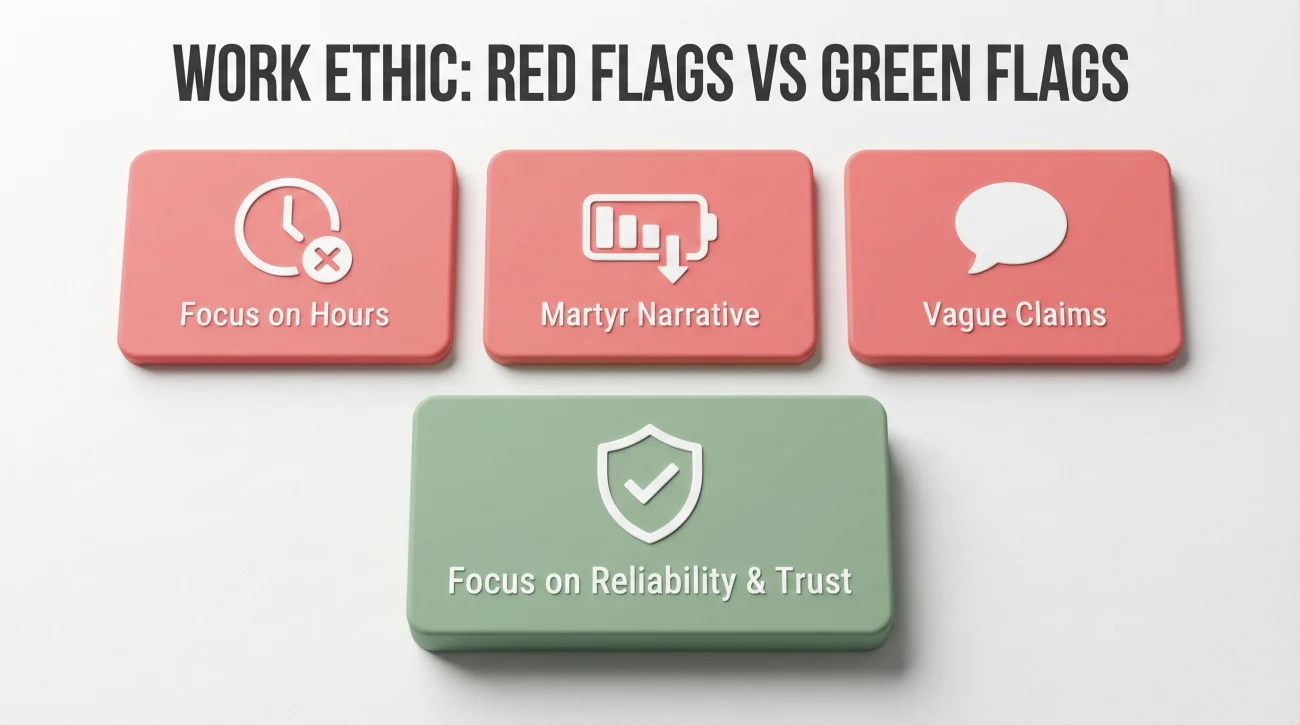
Avoid: Hours as Evidence
“I regularly work sixty-hour weeks and am always available on weekends.”
This suggests poor boundaries or inefficiency, not strong work ethic. It also raises sustainability concerns.
Avoid: Martyr Narratives
“I sacrifice my personal life to make sure work gets done.”
This suggests you can’t manage workload effectively or that the company will burn you out.
Avoid: Generic Claims
“I’m a hard worker who always gives one hundred percent.”
Everyone claims this. It’s meaningless without specific proof.
For more on authentic strength presentation, explore our behavioral interview resources.
❓ FAQ
🎯 Is work ethic too generic as a strength?
Only if you describe it generically. A hundred percent on-time delivery rate over seven years is not generic. Quantified reliability patterns differentiate you from vague “hard worker” claims.
💼 How do I prove work ethic without sounding like I have no boundaries?
Focus on outcomes and systems, not hours. Describe discipline, planning, and commitment that enable reliability rather than stories of constant overwork.
⏰ Isn’t work ethic just expected, not exceptional?
Basic work ethic is expected. Exceptional reliability that becomes your competitive advantage is not common. If your track record is genuinely distinctive, it exceeds normal expectations.
📋 How do I quantify work ethic?
On-time delivery percentages, client satisfaction scores, error rates, retention of at-risk accounts. Numbers make subjective claims verifiable.
✨ What separates work ethic from perfectionism?
Work ethic delivers reliably on time. Perfectionism often delays delivery endlessly. Work ethic means doing quality work within commitments, not endlessly refining at the expense of deadlines.
Make Reliability Your Reputation
Demonstrating a strong work ethic as a strength means showing patterns of trustworthy delivery, not just willingness to work hard. Quantify your reliability record. Show ownership beyond assigned tasks. Connect your commitment to business outcomes. When interviewers believe they can count on you completely, they’ve found something genuinely valuable. That trust, proven through results rather than hours worked, is the work ethic worth demonstrating.
⚠️ Disclaimer: The interview strategies, sample answers, and negotiation tips provided in this guide are for educational purposes only. Hiring decisions are subjective and vary by company and industry. While these strategies are based on professional HR standards, they do not guarantee a specific job offer or result.