
Map the Territory
Who you work with shapes your experience as much as what you work on. A role can look perfect on paper but feel miserable in practice if you’re surrounded by dysfunction, unclear reporting lines, or organizational chaos.
Smart questions about team structure reveal the human landscape you’d be entering. You learn who your colleagues would be, where you’d sit in the hierarchy, who has power over your success, and how information flows through the organization.
This isn’t just organizational curiosity. The answers affect your daily life profoundly. A flat team with collaborative peers feels different from a hierarchical one with strict reporting chains. Understanding the structure helps you assess whether you’d thrive or struggle in this environment.
Why Structure Matters
Your Boss Defines Your Experience
Your direct manager has more influence on your job satisfaction than almost any other factor. They determine your assignments, evaluate your performance, approve your time off, and advocate for your promotions. Understanding who this person is and how they operate is essential.
Peers Shape Your Days
The people you collaborate with regularly affect your productivity and enjoyment. A team of competent, supportive colleagues makes work pleasant. Dysfunctional team dynamics make even interesting work miserable.
Skip-Level Relationships Matter
Your boss’s boss has power over your career trajectory even without direct interaction. Understanding who this person is, what they value, and how they make decisions helps you navigate advancement.
Cross-Functional Connections
Most roles require working across team boundaries. Understanding which teams you’d collaborate with and how those relationships work reveals how easy or difficult getting things done would be.
Essential Questions to Ask
The Reporting Question
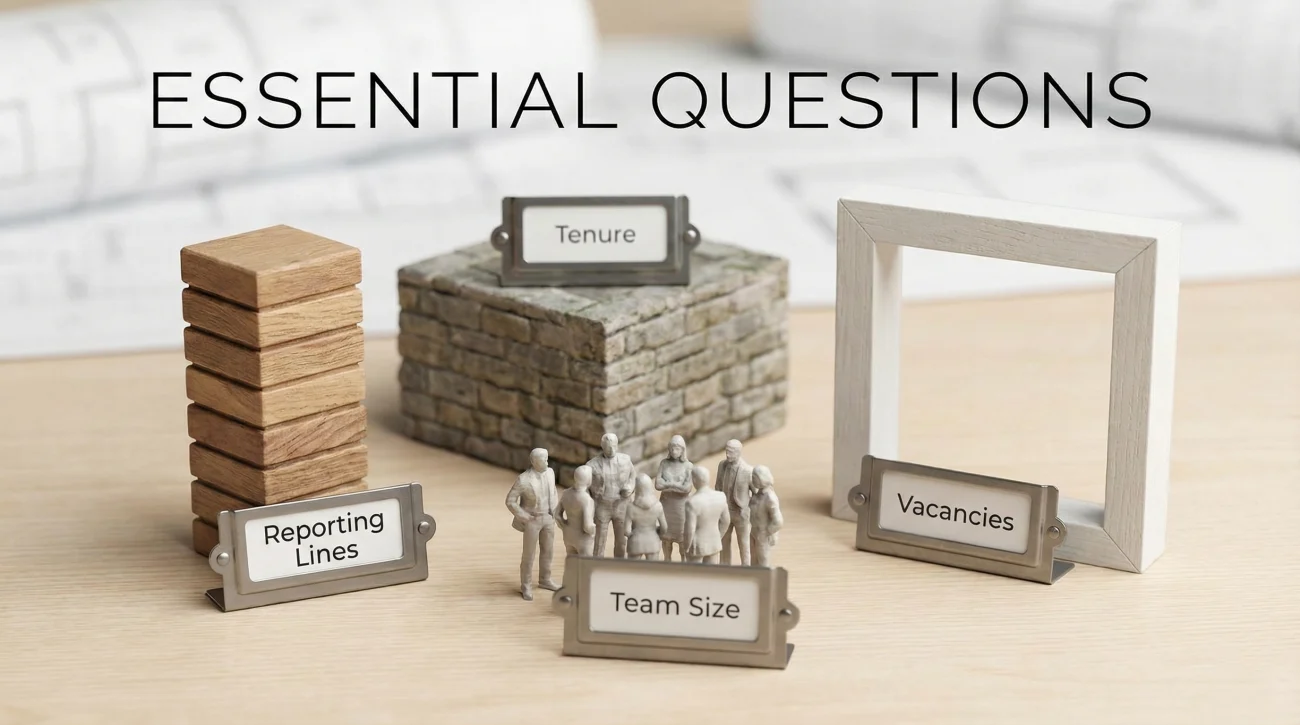
“Who would I report to directly, and who would they report to?”
This establishes the chain of command. If the interviewer can’t answer clearly, that’s a sign of organizational confusion. If you’d report to someone you haven’t met yet, request an interview with that person before accepting.
The Team Size Question
“How many people are on the immediate team? What are their roles?”
Team size affects dynamics significantly. Small teams mean more responsibility but less redundancy. Large teams offer more support but can mean more politics and slower decisions. Neither is inherently better; what matters is which environment suits you.
The Tenure Question
“How long have most team members been in their roles?”
A team where everyone is new suggests either rapid growth or high turnover. A team where everyone has been there for years suggests stability but potentially resistance to new ideas. Both have implications worth considering.
The Vacancy Question
“Are there other open positions on the team right now?”
Multiple vacancies might mean growth, but they might also mean exodus. Ask follow-up questions to understand whether people are being added or replaced, and why.
Going Deeper
Cross-Functional Collaboration
- “Which other teams would I work with most frequently?”
- “How do handoffs between teams typically work?”
- “Where do cross-team conflicts usually arise, and how are they resolved?”
Decision-Making Authority
- “What kinds of decisions would I make independently versus need approval for?”
- “How are disagreements typically resolved on this team?”
- “Who makes final calls when there’s no consensus?”
Communication Patterns
- “How does information flow within the team and across teams?”
- “What communication tools does the team use primarily?”
- “How visible is the team’s work to leadership?”
For additional strategies on evaluating employers, see our complete interview questions guide.
Decoding the Answers
| What You Hear | What It Might Mean |
|---|---|
| “We’re a very flat organization” | Could mean autonomy, or could mean unclear authority and chaos |
| “Everyone pitches in on everything” | Collaborative culture or unclear role definitions |
| “The team is going through changes” | Instability, reorganization, or turnover happening now |
| Clear description with names and roles | Organized structure, clear responsibilities |
| “It depends on the project” | Matrix structure or loosely defined reporting |
| Hesitation about who you’d report to | Uncertainty about the role or organizational confusion |
If they can’t clearly explain who you’d report to and who your teammates would be, consider that a warning sign about organizational clarity.
Common Scenarios to Understand
New Team Being Built
If you’d be among the first members of a new team, understand who’s building it and what their vision is. You’d have more influence on culture but also less established support and processes.
Recent Reorganization
If the team recently reorganized, understand why and whether things have stabilized. You don’t want to join during chaos and find the structure changes again in six months.
Matrix Structure
If you’d report to multiple managers or work across multiple teams, understand how priorities are set when demands conflict. Matrix structures can be productive or frustrating depending on how well they’re managed.
Distributed Team
If team members work in different locations or time zones, understand how that affects collaboration. Communication across distance requires more intentionality and can change team dynamics significantly.
Meeting the Team
Request Introductions
For roles where team fit matters significantly, ask to meet potential teammates before accepting. This is especially important for your direct manager if you haven’t interviewed with them yet.
What to Observe
- How do team members interact with each other?
- Do they seem stressed, engaged, or checked out?
- How do they describe their experience on the team?
- What do they say about leadership and direction?
Questions for Future Peers
- “What’s the best part about working on this team?”
- “What’s most challenging about the team dynamics?”
- “What do you wish you’d known before joining?”
Understanding Team Dynamics
Structure tells you the official hierarchy. Dynamics tell you how things actually work.

Influence vs. Authority
Some people have titles without real influence. Others have enormous impact despite modest positions. Ask who the key decision-makers are and whether formal authority matches actual influence. The org chart shows one picture; reality might be quite different.
Conflict Resolution
“When people on the team disagree, how is it typically resolved?”
The answer reveals whether the team has healthy debate or avoids conflict, whether a single person dominates decisions, and how comfortable people are with disagreement.
Collaboration Patterns
“Do people on this team mostly work independently or collaboratively?”
Some teams are collections of individuals. Others genuinely collaborate. Neither is wrong, but your preference matters. Understanding the actual collaboration pattern helps you assess fit.
Support Culture
“What happens when someone on the team is struggling?” The answer reveals whether teammates help each other or compete against each other, whether problems are addressed openly or hidden, and whether the environment is supportive or sink-or-swim.
❓ FAQ
🎯 What if I haven’t met my potential direct manager?
Request a meeting before accepting an offer. Your manager relationship is too important to leave to chance. If they won’t arrange this, consider it a warning sign about either the role’s organization or the company’s hiring process.
💼 How do I ask about team turnover without sounding suspicious?
Frame it positively: “How long have most team members been here? I’m curious about the team’s stability and development opportunities.” This sounds like interest in growth rather than suspicion about problems.
⏰ Is it bad if the team is all new?
Not necessarily. New teams can be exciting opportunities to shape culture and make impact. But understand why it’s new. Growth is different from rebuilding after departures. The context matters.
📋 What if the reporting structure seems complex?
Complex structures aren’t automatically bad, but they require more navigation skill. Ask how priorities are set when reporting lines conflict, and understand who has ultimate authority over your performance evaluation.
✨ How much does team structure change in typical organizations?
It varies widely. Some companies reorganize constantly; others maintain stable structures for years. Ask about recent changes and planned future changes to understand how much stability to expect.
Know Your Landscape
Thoughtful questions about team structure reveal the human ecosystem you’d be joining. Learn who you’d report to and work alongside. Understand team size, tenure, and dynamics. Explore cross-functional relationships. Request meetings with key people before committing. The organizational structure you join shapes your daily experience, your ability to succeed, and your opportunities for growth. Map the territory before you enter it.
⚠️ Disclaimer: The interview strategies, sample answers, and negotiation tips provided in this guide are for educational purposes only. Hiring decisions are subjective and vary by company and industry. While these strategies are based on professional HR standards, they do not guarantee a specific job offer or result.