The 24/7 Operational Anchor
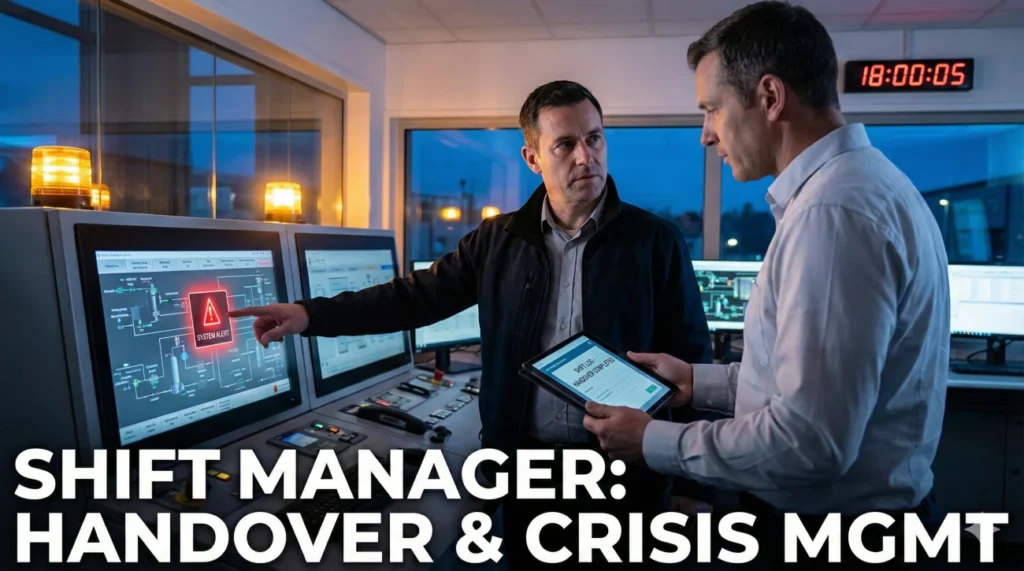
In the relentless rhythm of modern manufacturing, the Shift Manager is the ultimate owner of the “now.” While the Plant Manager focuses on next month’s P&L and the Production Manager plans next week’s schedule, you are the one ensuring the factory runs safely and efficiently right this second. Whether it is 2:00 PM or 2:00 AM, when you are on the floor, the buck stops with you.
Hiring managers for this role are not looking for mere supervisors; they need decisive leaders who can operate autonomously. They need to know that when a machine fails in the middle of the night, or when a safety incident occurs on a weekend, you have the judgment to handle the crisis without waiting for approval from a sleeping executive. They are testing your ability to maintain continuity between crews, ensuring that the “baton pass” during handovers is flawless so that production never stumbles.
This comprehensive guide delves into shift manager interview questions that test your operational command. We explore the critical mechanics of shift handovers, the psychology of managing diverse teams under fatigue, and the tactical decisions required to save a shift when everything seems to be going wrong.
Shift Handovers & Operational Continuity
Q: What specific information do you prioritize during a shift handover?
I focus on the “Three Ms”: Manpower, Machinery, and Materials. First, I check staffing levels for the incoming shift, noting any call-outs or training needs. Second, I review the current status of key equipment, specifically any active downtime or maintenance interventions that are in progress. Third, I verify that the necessary raw materials are staged for the next 8-12 hours of production.
Beyond these basics, I prioritize safety incidents and quality alerts. If a safety near-miss occurred on the previous shift, my team needs to know immediately so they do not repeat the hazard. If a quality defect was found, I need to know the containment status. I believe a handover is not just a data dump; it is a transfer of responsibility and situational awareness.
Q: How do you handle a situation where the previous shift left the floor in a mess?
I address this immediately but professionally. I take photos of the condition to document the standard deviation, not to “tattle,” but to have objective data for a conversation. I then gather my team to clean and reset the standard before starting production, because running in a messy environment invites accidents and defects.
After the shift, I speak with the outgoing Shift Manager privately. I show the evidence and ask, “What barriers prevented the team from performing the 5S shutdown?” Often, it is a deeper issue like a late rush order or a breakdown. We agree on a corrective action plan to prevent recurrence. If it becomes a pattern of negligence, I escalate it to the Production Manager, but my first instinct is peer-to-peer accountability.
Q: Describe your process for starting a shift effectively.
I start with a “Gemba Walk” 30 minutes before the official start time to sense the pulse of the floor. I look at the production boards, talk to the outgoing operators, and physically inspect the bottleneck machines. This gives me the ground truth before I look at any computer report.
Then, I hold a short, high-energy stand-up meeting with my supervisors and leads. We review the safety topic of the day, the production targets, and any specific quality alerts. I assign resources to cover any absenteeism gaps immediately. The goal is to ensure that when the buzzer rings, everyone knows exactly where to go and what to do, eliminating the “start-up drag” that kills efficiency.
Q: How do you ensure consistent communication across all three shifts?
I use a standardized digital logbook where all critical events are recorded in a structured format, preventing the “telephone game” where details get lost. I also advocate for an overlap period where incoming and outgoing leads can walk the line together.
I also implement a weekly cross-shift meeting where all Shift Managers meet face-to-face to discuss systemic issues. We align on policy interpretation – for example, ensuring that “late” is defined and penalized the exact same way on the night shift as it is on the day shift. Consistency in leadership prevents crews from playing managers against each other.
Crisis Management & Decision Making
Q: A critical machine breaks down at 2 AM. Maintenance says it will take 4 hours to fix. What do you do?
First, I verify the diagnosis and the estimated repair time with the maintenance technician directly to ensure it is accurate. Then, I immediately calculate the impact on our ability to meet the shipment deadline. If the downtime puts a customer order at risk, I notify the on-call Operations Manager or Scheduler immediately – bad news must travel fast.
Operationally, I do not let the crew stand idle. I immediately redeploy labor to other value-added tasks: running a secondary line, performing deep cleaning (5S), or repackaging off-line inventory. I might also split breaks to ensure we can run continuously once the machine is back up. My goal is to minimize the total labor cost variance caused by the mechanical downtime.
Q: Two employees get into a heated argument on the shop floor. How do you handle it?
I intervene immediately to separate the parties, prioritizing physical safety. I remove them from the production floor to a neutral, private office area, instructing them to cool down. I do not attempt to resolve the conflict in front of the rest of the crew, as that creates a spectacle.
I interview each person separately to get their statement, having a witness (usually HR or another supervisor) present. I focus on facts: what happened, not who is “wrong.” Depending on the severity (e.g., threats of violence), I may send them home pending investigation. I enforce the zero-tolerance policy for workplace aggression strictly. A safe culture cannot exist if intimidation is tolerated.
Q: You suspect an employee is under the influence of drugs or alcohol during a night shift. What is your protocol?
I approach the situation with extreme caution but decisive action, focusing on “Reasonable Suspicion.” I observe specific behaviors – slurred speech, unsteady gait, odor – and document them immediately, preferably with a second supervisor to corroborate.
I remove the employee from any safety-sensitive task immediately. I invite them to a private area and explain my observations. I then follow the company’s specific protocol, which typically involves escorting them to a testing facility or waiting for a mobile collection unit. I never let them drive themselves home. Safety is the absolute priority here; I would rather be wrong and apologize than be right and clean up an accident.
Q: How do you handle a quality crisis where a large batch of product is suspected to be defective?
I immediately issue a “Stop Work” order to contain the potential defect. I quarantine all suspect inventory – both what is on the floor and what has recently been moved to the warehouse – tagging it clearly so it cannot be shipped. I do not let production resume until we have identified the root cause or established a robust inspection method.
I then work with the Quality Technician to define the scope. Is it just this hour, or the whole shift? I mobilize the team to perform 100% inspection if necessary to salvage good product. I document everything in the Non-Conformance Report (NCR) so the day shift engineers have data to solve the problem permanently.
Q: You are short-staffed by 20% due to a flu outbreak. How do you hit your targets?
I accept that I cannot run everything, so I prioritize ruthlessly based on the production schedule’s “hot list.” I shut down the lowest-priority line or work center and move those operators to the critical bottleneck processes. I ensure the most experienced operators are on the key machines to maximize speed.
I also communicate the capacity reduction to the planning team immediately so they can manage customer expectations. I might ask for volunteers to stay over from the previous shift or come in early from the next shift (overtime), but I focus on optimizing the resources I have first.
Q: A fire alarm triggers in the middle of a production run. Walk me through your actions.
My role shifts instantly from Production Manager to Incident Commander. I verify that the evacuation alarm is sounding and ensure all machinery is in a safe stop state if possible (Emergency Stop). I proceed to the designated assembly point, ensuring no one goes back for personal items.
At the assembly point, I conduct a 100% headcount using the shift roster. I am the primary point of contact for the fire department, informing them of any missing persons and the location of hazardous materials. I do not release the crew to return until the “All Clear” is given by the Fire Chief, regardless of how much production time we lose.
Culture, Discipline & Night Shift Dynamics
How do you keep the night shift motivated and engaged when they feel disconnected from “Corporate”?
I over-communicate to bridge the gap. I print out company newsletters, positive customer feedback, and day-shift announcements and read them during our pre-shift meetings. I make sure they feel part of the bigger picture, not just a separate “ghost crew.”
I also advocate for them. If the cafeteria stops serving hot food at 10 PM, I fight to get vending machines stocked or food trucks arranged. If HR only visits during the day, I request late-night office hours. When I show I care about their basic needs, they repay me with engagement and effort.
How do you handle a veteran operator who refuses to follow a new safety procedure?
I approach them privately to understand the resistance. Often, they think the new way is slower or harder. I listen to their feedback – they might have a valid point. However, I make it clear that while I welcome input on *how* to improve the process, compliance with the current safety rule is non-negotiable.
I explain the “why” behind the rule – perhaps a recent injury at another plant. If they still refuse, I move to progressive discipline. I cannot allow seniority to become a license for unsafe behavior, as it sets a dangerous precedent for the newer employees watching.
Describe how you manage the fatigue factor on 12-hour rotating shifts.
I monitor the team closely during the critical “slump” hours (usually 3 AM – 5 AM). I increase my presence on the floor during these times, engaging people in conversation to keep them alert. I encourage micro-breaks for stretching and ensure lighting levels are adequate.
I also rotate tasks more frequently during night shifts to prevent monotony, which induces sleepiness. If I see an operator nodding off, I intervene immediately – not necessarily to discipline them initially, but to wake them up, offer coffee/water, or move them to a more active station. We discuss sleep hygiene as a team to help them manage their off-work rest.
Technical & Administrative Duties
Q: How do you track and improve OEE (Overall Equipment Effectiveness) during your shift?
I track OEE in real-time, focusing on its three components: Availability, Performance, and Quality. If Availability drops, I push for faster response times from maintenance. If Performance lags, I look for micro-stops or slow operator cycles. If Quality dips, I stop to fix the process.
I use the hourly production board to visualize this. We write the target vs. actual output every hour. If we miss an hour, the operator writes the reason why. This granular data allows me to attack the specific 10-minute loss that happens every day at 10 AM, rather than guessing why the shift failed.
Q: What is your approach to disciplinary documentation?
I believe in “Fact, Impact, Expectation.” I document the specific fact (e.g., “Arrived 15 minutes late”), the impact (“Line 3 started late, losing 500 units”), and the expectation (“Must be at the workstation by 6:00 AM”).
I document conversations immediately, even informal coaching. This creates a paper trail that protects the company and ensures fairness. If I have to terminate someone later, I have the evidence to show that we gave them every opportunity to correct the behavior. Documentation is not about being mean; it is about being professional and consistent.
Q: How do you manage the training matrix for your shift?
I maintain a visible skills matrix board that shows who is qualified for which station. My goal is to have “3-deep” coverage for every critical position – meaning three people on my shift can run the bottleneck machine.
I use slower production days to cross-train. I pair a high-potential junior operator with a veteran for shadowing. This not only builds flexibility for when people call out sick but also keeps the staff engaged by offering them a path to learn new skills and potentially earn a higher pay grade.
Q: How do you handle a visit from a regulatory inspector (OSHA/EPA) when the Plant Manager is away?
I act as the professional face of the company. I greet the inspector politely, verify their credentials, and ask the purpose of the visit. I immediately notify the Plant Manager and Safety Manager by phone. I escort the inspector, taking notes of everything they say and photos of everything they look at.
I answer questions honestly but briefly – I do not volunteer unnecessary information or speculate. If I don’t know an answer, I say, “I will have our Safety Manager follow up with that document.” My job is to be cooperative but careful, ensuring we facilitate the audit without creating confusion.
Shift Leadership Knowledge Check
20 Practice Questions
1. The most critical part of a shift handover is:
- Cleaning the breakroom
- Transferring situational awareness and responsibility
- Complaining about upper management
- Checking email
2. During a fire alarm, the Shift Manager’s first priority is:
- Saving the expensive raw materials
- Ensuring 100% personnel accountability
- Calling the Plant Manager
- Shutting down computers
3. “Reasonable Suspicion” training is used for:
- Suspecting theft of tools
- Identifying potential drug or alcohol impairment
- Predicting machine failures
- Evaluating quality defects
4. When two employees are fighting, you should first:
- Determine who started it immediately
- Separate them to ensure physical safety
- Ask other employees to vote on who is right
- Ignore it if they are still working
5. OEE stands for:
- Overall Employee Energy
- Overall Equipment Effectiveness
- Operational Efficiency Estimate
- Only Equipment Errors
6. A “Gemba Walk” involves:
- Walking to the parking lot
- Going to the actual place of work to observe processes
- Sitting in the office reviewing spreadsheets
- Having a meeting in the conference room
7. If a machine breaks down, you should redeploy labor to:
- The breakroom for a nap
- Value-added tasks like cleaning or other lines
- Go home immediately without pay
- Stand and watch the mechanic
8. To prevent “shift wars” (conflict between shifts), you should:
- Blame the other shift for all problems
- Enforce policies consistently across all hours
- Let your shift leave early
- Hide tools from the other shift
9. A “Skills Matrix” is used to:
- Track employee vacation days
- Identify who is qualified to operate which machine
- Calculate payroll bonuses
- Record disciplinary actions
10. When handling a regulatory inspection (OSHA), you should:
- Refuse to let them in
- Be cooperative, take notes, and stick to the facts
- Guess answers if you don’t know them
- Leave the building immediately
11. The best way to combat night shift fatigue is:
- Allowing sleeping on the job
- Task rotation, interaction, and adequate lighting
- Ignoring it and hoping for the best
- Providing limitless sugary energy drinks
12. If a safety guard is missing from a machine, you must:
- Lock out the machine and stop production
- Run the machine carefully
- Put a piece of cardboard over it
- Tell the operator to be extra careful
13. “Call-outs” refer to:
- Yelling across the factory floor
- Employees notifying they will be absent
- Ordering pizza for the crew
- Calling customers for sales
14. When documenting discipline, focus on:
- The employee’s personality flaws
- Facts, Impact, and Expectations
- Rumors you heard from others
- How angry you are feeling
15. A “Stop Work” authority allows:
- Managers to fire anyone instantly
- Any employee to halt unsafe work immediately
- Production to stop only for lunch
- Only the CEO to stop the line
16. Cross-training is important because:
- It makes the manager’s job harder
- It provides flexibility during absenteeism
- It increases the union dues
- It slows down production
17. If you find a quality defect, you should first:
- Ship it and hope nobody notices
- Quarantine the product to contain the issue
- Blame the operator immediately
- Ignore it if it’s a small batch
18. Managing by “Walking Around” helps you:
- Get your daily step count in
- Identify issues early and build rapport
- Spy on employees secretly
- Avoid doing paperwork
19. In a union environment, a “Weingarten Right” is:
- The right to free coffee
- An employee’s right to union representation during investigation
- The right to refuse overtime
- The right to choose your shift
20. The primary goal of a Shift Manager is to:
- Make friends with everyone
- Ensure safe, efficient execution of the production plan
- Sit in the office and relax
- Change the production plan daily
❓ FAQ
🌙 Is shift management experience transferable between industries?
Yes, highly transferable. The core skills of managing people, ensuring safety, and handling crisis situations are universal. Whether you are running a bottling line or an injection molding shop, the machinery changes, but the leadership challenges remain the same.
⚖️ How do I prepare for the “conflict” questions?
Prepare specific STAR stories (Situation, Task, Action, Result) involving peer-to-peer conflict and disciplinary action. Hiring managers want to see that you are fair but firm, and that you do not shy away from the “uncomfortable conversations” required to maintain standards.
📈 What is the career path for a Shift Manager?
Successful Shift Managers often promote to Production Manager, Operations Manager, or specialized roles like Continuous Improvement Manager. The role is an excellent training ground because it exposes you to every facet of the business under high pressure.
⏱️ How do I answer questions about handling stress?
Focus on your process for prioritization. Explain how you triage problems: Safety first, Quality second, Production third. Show that you remain calm to keep your team calm, using data rather than emotion to make split-second decisions.
🎓 Do I need a degree to be a Shift Manager?
It varies. Many Shift Managers rise through the ranks based on experience and leadership ability. However, larger corporations often prefer a bachelor’s degree in Operations Management, Engineering, or Business for external hires.
Final Thoughts
Securing a role as a Shift Manager requires more than just technical knowledge; it demands the presence of a leader. Your interview is your opportunity to prove that you can be the calm in the storm, the decisive voice when machines fail, and the fair judge when personnel issues arise.
To prepare effectively, review these shift manager interview questions and practice articulating your decision-making process. Show the hiring manager that you treat the factory as your own business during your shift, protecting their assets and their people with unwavering vigilance.
⚠️ Disclaimer: The interview strategies, sample answers, and negotiation tips provided in this guide are for educational purposes only. Hiring decisions are subjective and vary by company and industry. While these strategies are based on professional HR standards, they do not guarantee a specific job offer or result.