
Every Opening Has a Story
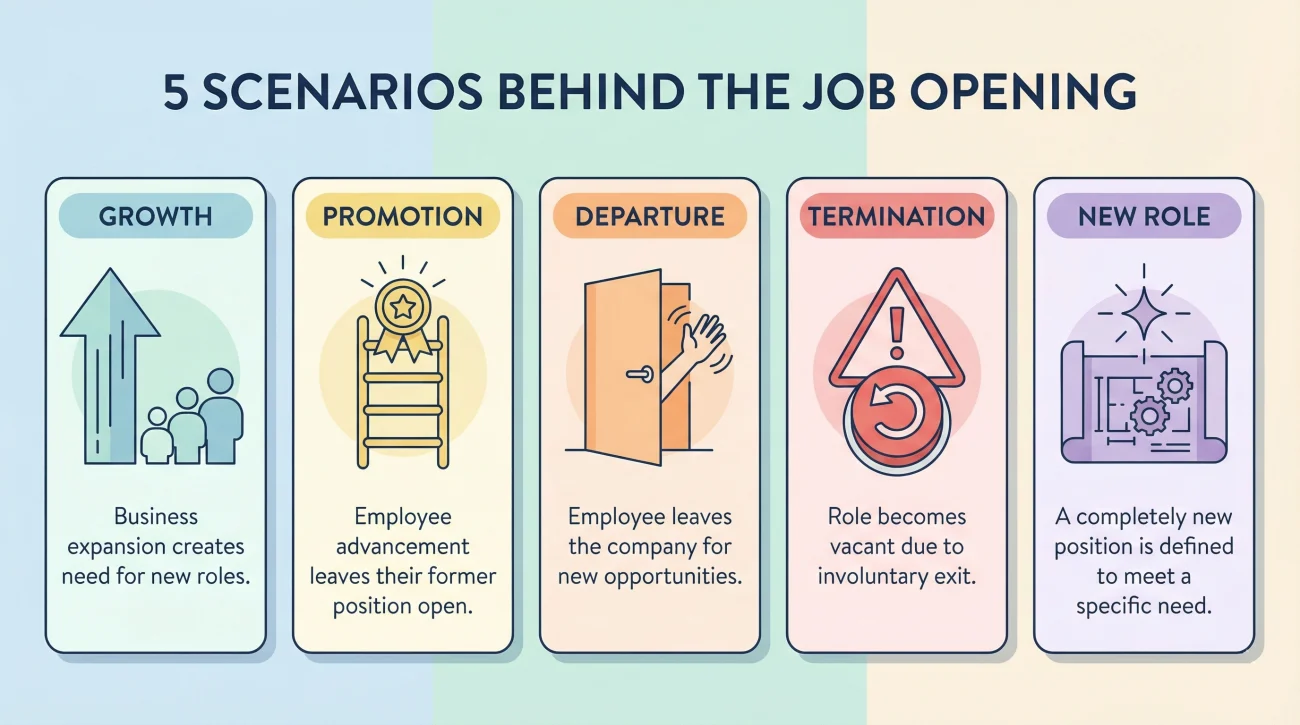
A job posting exists because something happened. Either the company is growing and needs more capacity, someone left and needs to be replaced, or the role was newly created to address a specific need. Each scenario has different implications for you.
Asking why is this position open reveals that story. The answer tells you whether you’re joining an expanding success story, inheriting someone else’s failure, stepping into an impossible situation, or pioneering something new. Same job title, wildly different realities.
This is one of the most revealing questions you can ask, but you need to know how to interpret the answers. What sounds positive might be concerning, and what sounds concerning might actually be fine with context.
The Possible Scenarios
Growth and Expansion
“We’re adding to the team because of growth.” This is generally positive. The company is doing well enough to invest in more people. You’d be joining success rather than trying to create it from scratch.
Questions to ask: What’s driving the growth? Is it sustainable or a temporary spike? What would my specific focus be versus existing team members?
Internal Promotion
“The person was promoted to another role.” Also positive. It suggests the company develops people and promotes from within. The role can lead to advancement.
Questions to ask: Where was the person promoted to? How long were they in the role? What did they do that led to their promotion?
Voluntary Departure
“The previous person left the company.” Neutral, but dig deeper. People leave for many reasons. Some are personal, some are about better opportunities, and some are about problems with the role or company.
Questions to ask: How long were they in the role? Would it be possible to understand why they left? How many people have been in this role in the past few years?
Termination
“We had to make a change.” This could mean the person wasn’t right for the role, or it could mean the role is impossible. Understand whether the failure was the person or the position.
Questions to ask: What would success have looked like that wasn’t achieved? Were there factors beyond the person’s control? What’s being done differently this time?
Newly Created Role
“This is a new position we’re creating.” Exciting but risky. You’d be defining the role rather than filling established shoes. Less precedent means more freedom but also more ambiguity.
Questions to ask: What triggered the decision to create this role now? Who was doing this work before? How will success be measured for a new role?
Decoding the Answers
| What They Say | Green Flag | Red Flag |
|---|---|---|
| “Growth role” | Sustainable expansion, clear scope defined | Vague scope, growth might not continue |
| “Person promoted” | Internal mobility exists, role leads somewhere | Promoted quickly might mean high turnover |
| “Person left” | Long tenure, left for clear positive reasons | Short tenure, vague about reasons |
| “Had to make a change” | Clear accountability, learning from mistake | Blaming the person, no reflection on role |
| “New position” | Clear vision, executive sponsorship | Vague purpose, undefined success metrics |
The Turnover Pattern
One departure could be anything. A pattern of departures suggests a systemic problem.
The Critical Follow-Up
“How many people have been in this role over the past three years?”
If three people have held the role in three years, something is wrong. Either the role is structured poorly, the manager is problematic, or expectations are unrealistic. Whatever the cause, you’d likely become departure number four.
Understanding the Pattern
If turnover is high, ask directly: “What do you think has contributed to the turnover in this role? What’s being done differently this time?” Their self-awareness about the problem matters as much as the problem itself.
High turnover in a role is one of the strongest predictors that you’ll also leave unhappily. Take it seriously.
Follow-Up Questions
About the Previous Person
- “How long were they in the role?”
- “What did they do particularly well?”
- “What could have gone better?”
- “Are they still with the company?”
About the Vacancy
- “How long has the position been open?”
- “What’s been happening with the work while it’s been vacant?”
- “Is there urgency to fill it, or flexibility to find the right person?”
For New Roles
- “Who currently handles these responsibilities?”
- “What triggered the decision to create this role now?”
- “How does leadership view this role’s importance?”
For more evaluation strategies, see our comprehensive interview questions guide.
Getting Honest Answers
Phrasing Matters
Direct questions sometimes get guarded answers. Try framing as curiosity rather than investigation: “I’m curious about the history of this role” sounds less suspicious than “Why did the last person leave?”
Multiple Sources
Ask the same question to different interviewers. Consistent answers suggest honesty. Conflicting answers suggest either confusion or spin. Pay attention to variations in how different people describe the same situation.
External Research
LinkedIn can reveal the previous person in the role. Glassdoor reviews might mention specific role issues. Sometimes external research reveals what internal sources won’t say directly.
Research Beyond the Interview
Don’t rely solely on what they tell you. External research can reveal information they might not share directly.

LinkedIn Investigation
Search for people who previously held the role. How long did they stay? Where did they go? Patterns of short tenures followed by departures to similar roles might indicate role problems. Long tenures followed by promotions suggest a healthy position.
Glassdoor and Review Sites
Look for reviews that mention the specific team or role you’re considering. Patterns in complaints about management, expectations, or turnover provide context you won’t get in interviews. Take individual reviews with appropriate skepticism, but pay attention to patterns.
Network Connections
If you know anyone who works or worked at the company, ask about the role and team. Insider perspective is invaluable. Even tangential connections might know something about the department’s reputation or the manager’s style.
News and Press
Recent layoffs, reorganizations, or leadership changes might explain why the position is open. Company news provides context that interviewers might not volunteer but that significantly affects what you’d be walking into.
❓ FAQ
🎯 Is it rude to ask why the position is open?
Not at all. This is standard due diligence. Any reasonable hiring manager expects and respects this question. How they answer reveals a lot about organizational honesty and self-awareness.
💼 What if they won’t tell me why the previous person left?
Some organizations have policies against discussing departures. This isn’t necessarily suspicious. Ask about tenure and turnover patterns instead, which gives you useful information without requiring them to discuss specific individuals.
⏰ Should I contact the previous person in the role?
This can provide valuable perspective but requires discretion. If they’re still at the company in another role, a conversation might be appropriate. If they’ve left, LinkedIn outreach can work but may not always get responses.
📋 What if the role has been vacant for a long time?
Long vacancies might mean high standards, specialized requirements, or a role that’s hard to fill for negative reasons. Ask what they’ve been looking for and why previous candidates weren’t chosen.
✨ Is a new role better or worse than a replacement role?
Neither is inherently better. New roles offer more freedom but less clarity. Replacement roles offer clearer expectations but potentially comparisons to predecessors. What matters is whether the specific situation matches your preferences and strengths.
Know the History
Understanding why is this position open reveals crucial context about what you’d be walking into. Growth roles, promotions, departures, terminations, and new creations each have different implications. Ask follow-up questions to understand turnover patterns and get specific about what happened with previous occupants. The story behind the opening often predicts your likely experience in the role. A job with a history of successful, long-tenured people is fundamentally different from one that churns through people quickly. Know which you’re considering before you commit.
⚠️ Disclaimer: The interview strategies, sample answers, and negotiation tips provided in this guide are for educational purposes only. Hiring decisions are subjective and vary by company and industry. While these strategies are based on professional HR standards, they do not guarantee a specific job offer or result.