When Good Stories Go Wrong
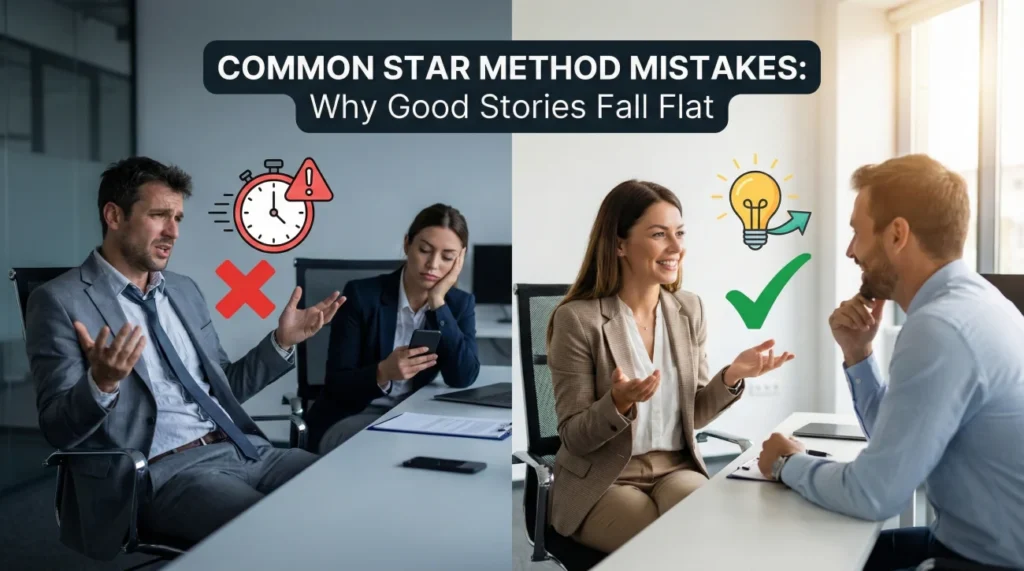
You know the STAR framework. You have prepared your stories. Yet something goes sideways during the actual interview, and answers that seemed solid in practice fall flat with interviewers. Common star method mistakes often have nothing to do with lacking good experiences. They stem from how you structure and deliver your answers under pressure.
Understanding these pitfalls before your interview lets you catch yourself when habits start creeping in. Most mistakes are fixable with awareness and targeted practice.
Mistakes I Have Seen Sink Interviews
After conducting thousands of behavioral interviews over twelve years, I have watched talented candidates lose opportunities through avoidable errors. Here are real examples that show how these mistakes play out.
The Director Who Lost His Audience
I interviewed a director-level candidate for a senior operations role. When I asked about leading change, he started with a promising story about digital transformation. Then he spent nearly four minutes on context: the company’s history, the competitive landscape, the organizational structure, every stakeholder involved, and the political dynamics of the leadership team.
By the time he got to what he actually did, I had mentally moved on. When I asked a follow-up question, he could not understand why I seemed disengaged. His story was genuinely impressive, but he buried the value in unnecessary setup. I had to pass on him because if he communicated like that with executives, he would lose their attention too.
The fix was simple. That same story could start with: “Our company needed to digitize core operations within eighteen months or risk losing market position. I was brought in to lead that transformation.” That is two sentences instead of four minutes. Everything else is detail for follow-up questions.
The Team Player Who Disappeared
A product manager candidate told me a story about launching a successful new feature. She used “we” in almost every sentence. “We identified the opportunity. We designed the solution. We managed the stakeholders. We launched on time.” After three minutes, I genuinely could not tell what she personally contributed.
I asked directly: “What was your specific role in this?” She seemed surprised by the question and struggled to articulate her individual contribution. Either she was taking credit for team work she observed, or she was so modest that she erased herself from her own accomplishment. Neither interpretation helped her candidacy.
Strong candidates balance team acknowledgment with individual clarity. Something like: “Our team collaborated on the design, but I specifically owned the stakeholder alignment piece, which meant convincing three skeptical VPs to fund the project.”
The Engineer Who Could Not Stop Complaining
A senior engineer told me about a failed project. Good topic, since failure questions reveal character. But his version was essentially a list of other people’s mistakes: the product manager did not understand technical constraints, the designer kept changing requirements, leadership set unrealistic deadlines, QA did not catch obvious bugs.
When I asked what he would do differently, he said he would “push back harder” against all these people. Not once did he mention anything he personally could have done better. His technical skills were strong, but I knew exactly what would happen if I hired him: every problem would be someone else’s fault.
Compare that to another candidate with a similar story who said: “The project failed for multiple reasons, but looking at my own contribution, I should have raised concerns about the timeline earlier instead of hoping we could make it work. I also should have built a closer relationship with the designer so we could work through changes more efficiently.” Same failure, completely different impression.
The Perfect Answer That Felt Empty
One candidate delivered technically flawless STAR answers. Perfect structure. Clear situation. Specific actions. Quantified results. But something felt off. Her delivery was completely flat. No variation in tone. No moments of genuine reflection. It sounded like she was reading from a script, even though she clearly was not.
I asked about a challenge that was emotionally difficult, and she described navigating a layoff with the same monotone delivery she had used for her achievement stories. There was no indication that the experience had affected her. Either she was not being authentic, or she was so disconnected from her own experiences that I worried about her emotional intelligence.
Your stories should sound like you actually lived them. The moment where you solved a hard problem should feel different from the setup. A genuine failure story should include a moment of reflection that sounds human, not rehearsed.
Structural Mistakes That Derail Answers
Spending Too Long on Situation
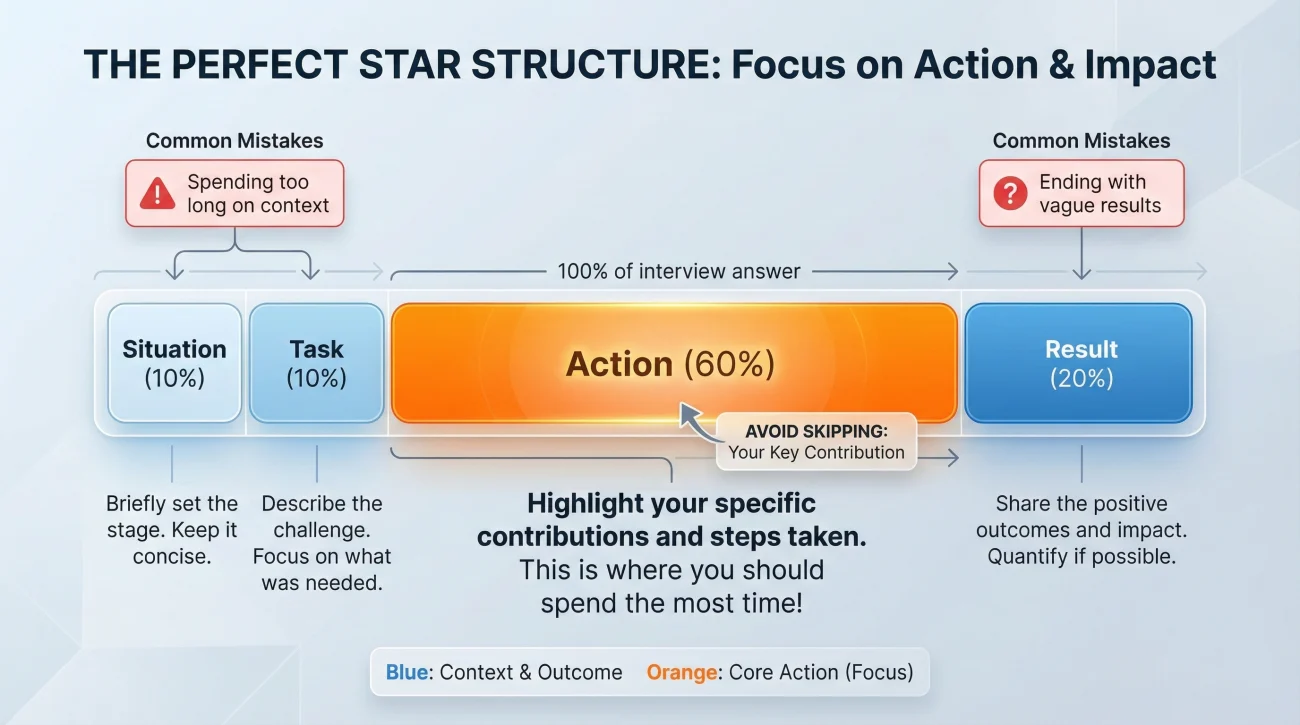
The most common structural error is front-loading your answer with excessive context. Candidates spend two minutes describing the company, the team, the project history, and every person involved before getting to what they actually did. By then, interviewers have mentally checked out.
Your situation should be two to three sentences. Provide just enough context for the listener to understand what made the challenge difficult. If you are describing the org chart, you have gone too far.
I worked at XYZ Corp, which is a mid-sized technology company founded in 2005 that specializes in enterprise software solutions…
Our software team faced a critical bug two days before a major product launch.
Skipping the Action Details
Some candidates describe the situation thoroughly, state what needed to happen, then jump straight to results. They skip the action section entirely or summarize it as “we fixed it.” This leaves interviewers wondering what you personally contributed.
The action section should be the longest part of your answer, roughly sixty percent of your total response time. Detail the specific steps you took, decisions you made, and obstacles you navigated. This is where you prove your capabilities.
Ending with Vague Results
Finishing with “it worked out well” or “everyone was happy” wastes the opportunity to demonstrate impact. Weak results make your entire story forgettable because interviewers cannot measure what you actually achieved.
Quantify whenever possible. If exact numbers are not available, describe relative improvement, stakeholder feedback, or subsequent opportunities that resulted from your success. Something specific beats something general every time.
Content Problems That Weaken Stories
Overusing “We” Instead of “I”
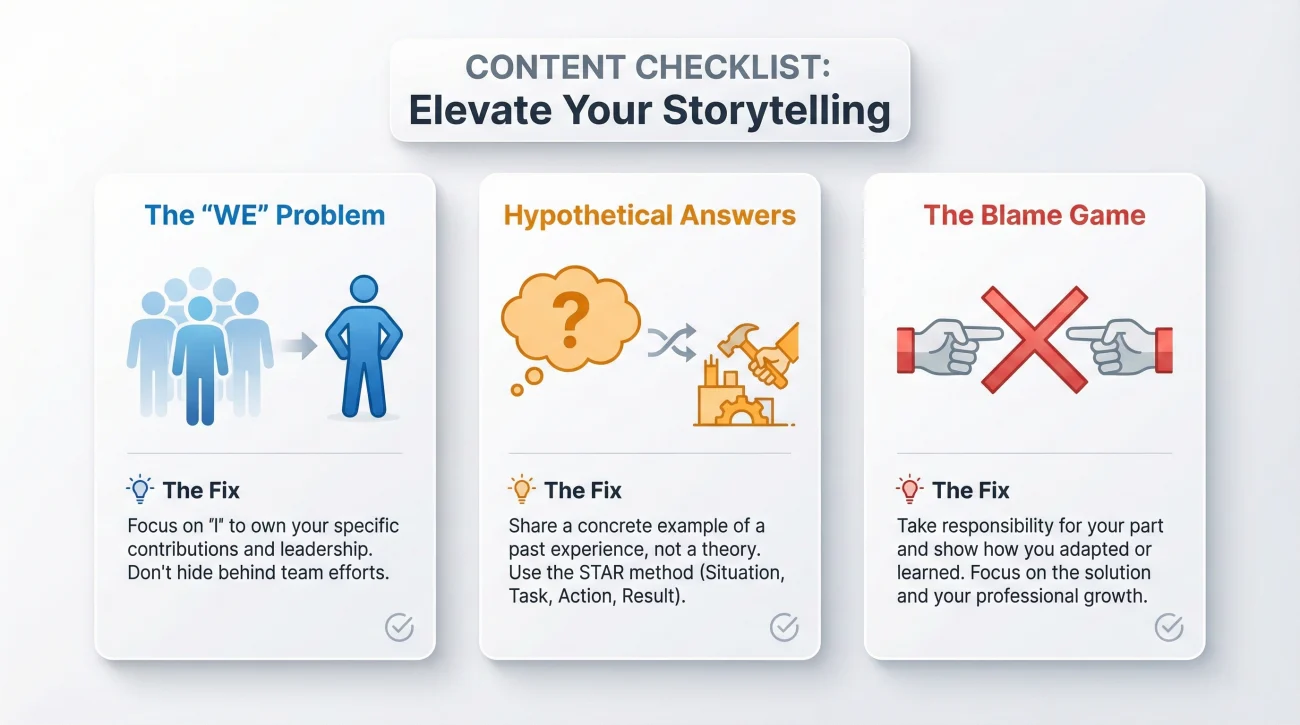
Teamwork matters, but interviewers are evaluating you, not your former colleagues. When every sentence starts with “we decided” or “we implemented,” it becomes unclear what you personally contributed versus what you witnessed others doing.
Shift to “I” statements for your specific contributions. You can acknowledge team context while still highlighting your individual role: “Our team faced the challenge together, but I specifically took responsibility for coordinating with the client and restructuring the timeline.”
Giving Hypothetical Instead of Real Examples
When asked about conflict resolution, some candidates respond with “I would approach the person privately and try to understand their perspective.” This theoretical answer reveals nothing about your actual behavior. Interviewers want evidence of what you have done, not speculation about what you might do.
If you lack a direct example, adapt an adjacent experience rather than going hypothetical. A story about resolving a customer complaint demonstrates similar skills to resolving a colleague conflict, even if not a perfect match.
Blaming Others or Complaining
Stories about difficult colleagues, unreasonable managers, or incompetent team members put interviewers on alert. Even when blame is justified, focusing on others’ failures makes you sound like someone who does not take ownership and might create drama on their team.
Reframe challenges as situations you navigated rather than problems others caused. Focus on your response rather than cataloging what went wrong. You can acknowledge difficulty without assigning blame: “The project timeline kept shifting due to changing priorities” rather than “My manager could not make up his mind.”
Delivery Mistakes That Hurt Impact
Rambling and Going Off Topic
Nervous energy often manifests as verbal wandering. You start answering a question about leadership and somehow end up discussing a completely different project. By the time you circle back, you have lost both the interviewer and your main point.
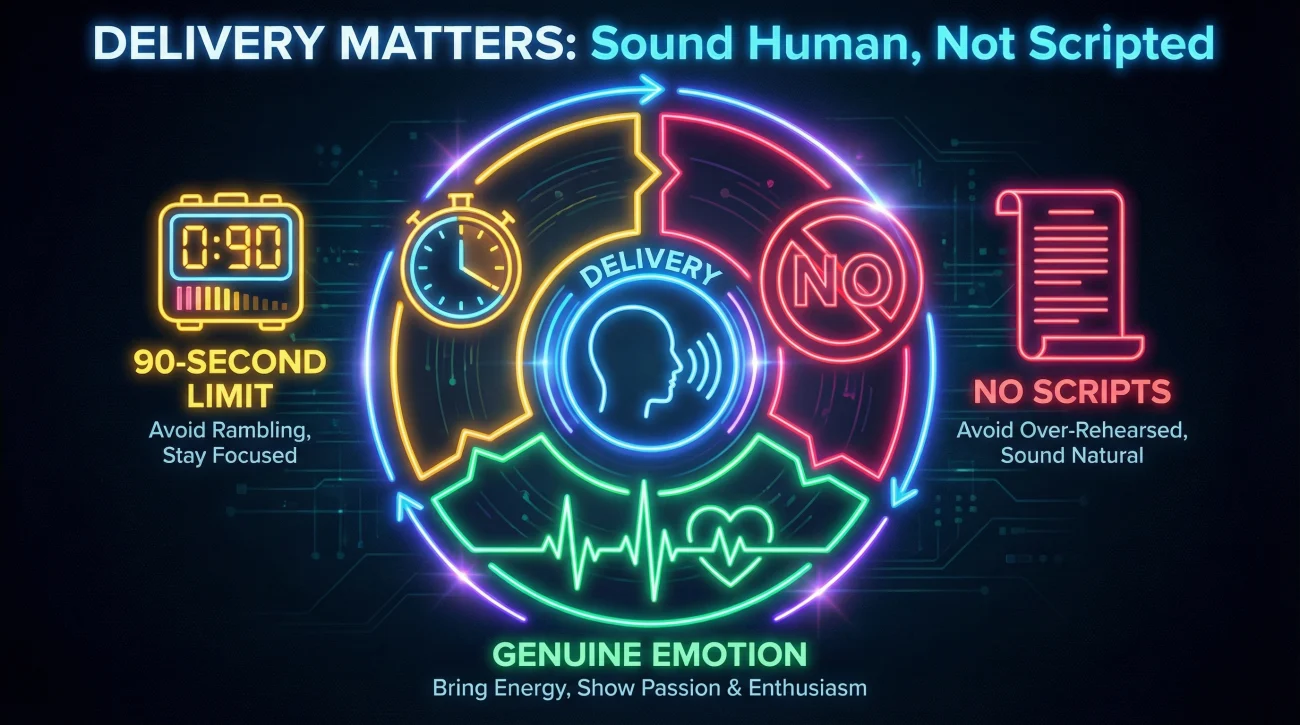
Combat rambling by practicing with a timer. Most behavioral answers should be ninety seconds to two minutes. If you consistently run longer, you are including unnecessary detail. Use transition phrases like “the key action I took was” to keep yourself anchored.
Sounding Over-Rehearsed
There is a difference between prepared and scripted. Memorizing answers word for word makes delivery mechanical and prevents natural adaptation when questions have slight variations. Interviewers notice when candidates are reciting rather than conversing.
Memorize key points and transitions, not full scripts. Practice telling your stories in different words each time. This builds flexibility while maintaining structure. You want the confidence of preparation without the rigidity of recitation.
Telling Stories Without Energy
Monotone delivery makes even impressive accomplishments sound boring. If you do not seem excited about your own achievements, why should interviewers be? Flat affect suggests either that the story is fabricated or that you lack genuine engagement with your work.
Let your natural enthusiasm show. Vary your pace and tone. The moment in your story where you solved the problem should feel different from the setup. Practice in front of others who can give feedback on whether your delivery matches the content’s significance.
Advanced Mistakes Experienced Candidates Make
Mismatching Story Complexity to Role Level
Senior candidates sometimes share stories from early in their careers that do not demonstrate the strategic thinking expected at their current level. Conversely, junior candidates sometimes describe situations where they had minimal actual authority or impact.
Choose stories that match the role you are interviewing for. Leadership positions require examples of strategic decision making and organizational influence. Entry level roles should show initiative and growth potential rather than pretending to executive-level impact.
Not Actually Answering the Question
You have a great story about project success, so you use it for every question. But when asked specifically about handling failure, pivoting to your success story misses the point entirely. Interviewers notice when candidates avoid questions rather than answering them.
Listen carefully to what is actually being asked. If you do not have an example for that specific situation, acknowledge the gap briefly and offer the closest relevant experience rather than ignoring the question entirely.
| Mistake | Quick Fix |
|---|---|
| Too long on Situation | Limit to 2-3 sentences of essential context |
| Skipping Action details | Spend 60% of answer on specific steps you took |
| Vague Results | Include numbers, percentages, or specific outcomes |
| Too much “we” | Use “I” for your specific contributions |
| Rambling | Practice with 90-second timer |
❓ FAQ
🎯 How do I know if my answers are too long?
Record yourself and time your responses. Most behavioral answers should be ninety seconds to two minutes. If you consistently exceed two minutes, identify which section is bloated. Usually it is the situation setup or unnecessary tangents in the action section.
💼 What if I genuinely cannot think of an example?
Acknowledge the gap honestly rather than forcing a weak fit. Say something like “I have not faced that exact situation, but here is a related experience that demonstrates similar skills.” Authenticity beats a fabricated or clearly mismatched example.
⏰ How do I practice without sounding rehearsed?
Practice the key points and structure rather than exact wording. Tell each story differently every time you practice. Focus on remembering what happened and why it mattered rather than memorizing specific sentences.
📋 Is it ever okay to discuss failures or mistakes?
Yes, especially when specifically asked. The key is demonstrating what you learned and how you improved. A failure story with clear growth and subsequent success often impresses more than a story where everything went perfectly.
✨ How can I make my results more quantifiable?
Before interviews, review your past work for any metrics: percentages improved, time saved, revenue generated, costs reduced, people trained, projects completed. Even estimates are better than nothing. If numbers are impossible, describe specific feedback or subsequent opportunities that resulted.
Awareness Prevents Most Errors
Simply knowing the common star method mistakes puts you ahead of candidates who stumble into them unknowingly. Record your practice sessions, listen critically, and actively watch for these patterns. With targeted correction, your behavioral answers become clearer, more compelling, and far more likely to land the job.
⚠️ Disclaimer: The interview strategies, sample answers, and negotiation tips provided in this guide are for educational purposes only. Hiring decisions are subjective and vary by company and industry. While these strategies are based on professional HR standards, they do not guarantee a specific job offer or result.