What Cybersecurity Analyst Interviews Test
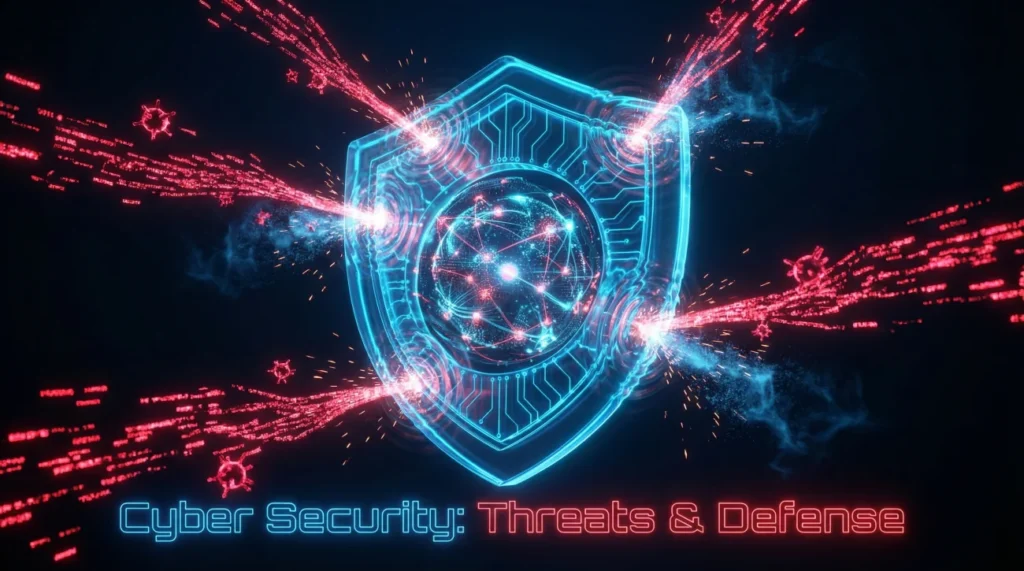
Cybersecurity analyst interviews test defensive capabilities through threat hunting interview questions requiring proactive threat identification, SOC analyst interview scenarios testing alert triage and incident escalation, and MITRE ATT&CK interview questions mapping adversary tactics to defensive controls. Companies probe how you detect Advanced Persistent Threats (APTs), analyze SIEM alerts distinguishing true positives from false alarms, and respond to security incidents minimizing damage while preserving forensic evidence. For comprehensive technical interview preparation, visit our complete IT interview guide.
These cyber security analyst interview questions cover threat intelligence integration identifying Indicators of Compromise (IOCs), log analysis revealing suspicious patterns, the Cyber Kill Chain framework disrupting attacks at early stages, and incident response analyst procedures containing breaches. Modern security analyst roles emphasize defense-in-depth layering multiple controls, threat hunting proactively searching for undetected threats, and blameless postmortems learning from incidents to improve detection capabilities.
Threat Hunting & Detection
Q: What is threat hunting and how does it differ from traditional security monitoring?
Threat hunting is proactive searching for threats that evaded existing security controls rather than reactive response to alerts. Traditional monitoring waits for signatures or rules to trigger alerts. Threat hunting assumes breaches already occurred and actively searches for Indicators of Compromise (IOCs) through hypothesis-driven investigations. Hunters analyze baseline normal behavior identifying anomalies suggesting compromise. This reduces dwell time (duration attackers remain undetected) from months to days. Effective hunting combines threat intelligence, behavioral analytics, and security tool telemetry uncovering Advanced Persistent Threats (APTs) hiding in networks.
Q: Explain the MITRE ATT&CK framework and its use in threat hunting.
MITRE ATT&CK is a knowledge base mapping adversary tactics and techniques based on real-world observations. It provides common language describing attack behaviors independent of specific malware. The framework covers 14 tactics (Initial Access, Execution, Persistence, Privilege Escalation, Defense Evasion, Credential Access, Discovery, Lateral Movement, Collection, Command and Control, Exfiltration, Impact) with hundreds of techniques underneath. Threat hunters use ATT&CK to design detection hypotheses (“are there signs of Credential Dumping?”), map observed behaviors to techniques, and prioritize defensive gaps based on prevalent techniques attackers use against similar organizations.
Q: How do you distinguish between Indicators of Compromise (IOCs) and Indicators of Attack (IOAs)?
IOCs are forensic artifacts proving compromise occurred like malicious file hashes, known-bad IP addresses, registry keys malware creates, or specific file paths. IOCs are reactive identifying known threats. IOAs are behavioral patterns indicating attack in progress like unusual process creation chains, abnormal network connections, or privilege escalation attempts. IOAs detect unknown threats through suspicious behavior. Combine both: IOCs for quick wins blocking known threats, IOAs for detecting novel attacks and zero-days. Modern threat hunting emphasizes IOAs since adversaries easily change IOCs but attack techniques remain consistent.
Q: Describe your approach to hypothesis-driven threat hunting.
Start with threat intelligence identifying techniques targeting your industry. Form hypothesis based on ATT&CK framework (“Adversaries are using WMI for lateral movement”). Identify data sources needed to validate hypothesis (Windows event logs, network traffic, endpoint telemetry). Build detection logic querying for evidence (abnormal WMI process creation, connections to multiple hosts). Analyze results distinguishing legitimate admin activity from malicious behavior. Document findings whether hypothesis proved true or false since negative results still provide value. Iterate creating new hypotheses based on discoveries. Prioritize hypotheses by likelihood and potential impact.
💡 Pro tip: Cybersecurity interviews test practical thinking over theoretical knowledge. Describing hunting for “unusual PowerShell execution” without explaining how you baseline normal admin activity versus malicious scripts reveals surface-level understanding. Demonstrate depth explaining context matters.
SOC Operations & Alert Triage
Q: Walk through your process for triaging a SIEM alert.
First, assess alert severity and scope determining if this requires immediate escalation. Gather context from SIEM including source/destination IPs, user accounts, timestamps, and related events. Check threat intelligence feeds verifying if IPs or file hashes are known malicious. Analyze logs surrounding the alert understanding what happened before and after. Determine if this is true positive (actual threat), false positive (benign activity triggering rule), or requires more investigation. For true positives, contain the threat and escalate. For false positives, document and tune detection rule. Track metrics on alert accuracy improving signal-to-noise ratio.
Q: How do you reduce false positives while maintaining detection coverage?
Establish baseline normal activity understanding legitimate use cases before creating alerts. Tune detection rules adding context like excluding known admin accounts or specific timeframes. Use allowlists for validated benign activity but review regularly ensuring compromised accounts don’t get allowlisted. Implement tiered alerting where low-confidence detections aggregate rather than generating individual alerts. Leverage machine learning identifying patterns humans miss while reducing noise. Continuously review false positive patterns adjusting rules. Balance reducing noise against missing threats, accepting some false positives for critical detections worth investigating.
Q: Explain the difference between HIDS and NIDS.
Host-based Intrusion Detection Systems (HIDS) monitor individual endpoints analyzing system calls, file integrity, registry changes, and local logs. HIDS detects host-specific threats like rootkits, unauthorized file modifications, or suspicious process behavior. Network-based Intrusion Detection Systems (NIDS) monitor network traffic analyzing packets for malicious patterns, protocol anomalies, or known attack signatures. NIDS detects network-level threats like port scans, DDoS attacks, or lateral movement. Use both: HIDS for endpoint visibility including encrypted traffic NIDS can’t see, NIDS for network-wide threat detection HIDS might miss.
Q: What is SIEM and what role does it play in SOC operations?
Security Information and Event Management (SIEM) aggregates logs from diverse sources (firewalls, servers, endpoints, cloud services) enabling centralized security monitoring. SIEM correlates events across systems detecting complex attack patterns no single log reveals. It normalizes different log formats making analysis possible. SIEM provides real-time alerting, historical analysis for investigations, compliance reporting, and dashboards for security posture visibility. Effectiveness depends on quality of log sources, detection rules, and analyst expertise interpreting alerts. SIEM is data lake requiring skilled analysis not magic threat detector.
Incident Response & Containment
Describe the Cyber Kill Chain and its relevance to defense.
The Cyber Kill Chain maps attack stages: Reconnaissance (target research), Weaponization (creating exploit), Delivery (sending to target), Exploitation (triggering vulnerability), Installation (malware deployment), Command and Control (C2 channel establishment), Actions on Objectives (data theft, destruction). Defenders can disrupt attacks at any stage preventing progression. Early-stage disruption (blocking delivery) is cheaper than late-stage response (recovering from data exfiltration). Each stage presents detection opportunities: unusual reconnaissance traffic, weaponization through email filtering, delivery via endpoint protection, exploitation through patch management, installation via application allowlisting, C2 through network monitoring, exfiltration via data loss prevention.
Walk through your incident response process.
Preparation includes having playbooks, tools, and team ready before incidents. Detection occurs through alerts, user reports, or threat hunting. Analysis determines scope, affected systems, and attack techniques. Containment limits damage through network segmentation, account disabling, or system isolation balancing business continuity with security. Eradication removes malware, closes vulnerabilities, and eliminates attacker access. Recovery restores systems from clean backups verifying no persistence mechanisms remain. Post-incident activity includes lessons learned documentation, detection improvements, and sharing threat intelligence. Document everything maintaining chain of custody for potential legal action.
How do you prioritize security incidents requiring simultaneous response?
Assess criticality of affected systems (payment processing versus dev environment), scope of compromise (single workstation versus domain controller), attacker sophistication (automated malware versus targeted APT), and business impact (revenue generation, regulatory compliance, reputation). Data breach affecting customer information takes priority over isolated malware infection. Active exfiltration requires immediate containment over completed historical breach. Consider resource constraints assigning appropriate skill levels to each incident. Communicate priorities to stakeholders managing expectations. Reassess continuously as situations evolve potentially shifting priorities.
Defense Strategies & Architecture
Q: Explain defense-in-depth and give examples of layered controls.
Defense-in-depth implements multiple security layers so single control failure doesn’t cause breach. Physical security controls facility access. Network security includes firewalls, IDS/IPS, and network segmentation. Endpoint security deploys antivirus, EDR, and application allowlisting. Identity controls enforce MFA, least privilege, and privileged access management. Data security uses encryption at rest and in transit. Application security includes secure coding, WAFs, and API gateways. Monitoring and response provide detection and containment. Training addresses human element. No single layer is perfect but combined defenses significantly raise attacker cost and detection likelihood.
Q: What is Zero Trust architecture and how does it improve security?
Zero Trust assumes breach has occurred, eliminating implicit trust based on network location. Core principles include verify explicitly (always authenticate and authorize), use least privilege access (grant minimum permissions needed), and assume breach (minimize blast radius through segmentation). Implement through identity verification for every access request, micro-segmentation limiting lateral movement, continuous monitoring detecting anomalies, and encrypted communications protecting data in transit. Zero Trust replaces perimeter-focused security acknowledging attackers infiltrate networks requiring internal defenses. Particularly effective against insider threats and compromised credentials.
Q: How do you measure SOC effectiveness?
Track Mean Time to Detect (MTTD) measuring how quickly threats are identified, Mean Time to Respond (MTTR) measuring containment speed, and Mean Time to Remediate measuring complete resolution. Monitor alert accuracy calculating true positive rate and reducing false positive burden. Measure threat hunting effectiveness through findings and reduced dwell time. Track coverage verifying logs from all critical systems flow to SIEM. Assess skill development through training completions and certifications. Conduct tabletop exercises testing incident response capabilities. Compare against industry benchmarks understanding relative performance. Focus on continuous improvement not perfect metrics.
Q: Explain the difference between encryption, hashing, and encoding.
Encryption transforms data using keys making it unreadable without decryption key, protecting confidentiality (AES, RSA). Encryption is reversible with proper key. Hashing creates fixed-size output from variable input through one-way function, used for integrity verification and password storage (SHA-256, bcrypt). Hashing is irreversible; you can’t recover original from hash. Encoding transforms data format for compatibility without security (Base64, URL encoding). Encoding is easily reversible by anyone. Use encryption for protecting secrets, hashing for verifying integrity and storing passwords, encoding for data transmission or storage format conversion.
⚠️ Common mistake: Treating all security tools as equal detection sources. EDR provides deep endpoint visibility SIEM aggregates but network monitoring reveals lateral movement EDR misses. Understanding each tool’s strengths and blind spots demonstrates maturity versus assuming more tools equals better security.
Cybersecurity Defense Practice
20 Practice Questions
1. Threat hunting is primarily?
- Reactive response to alerts
- Proactive search for undetected threats
- Automated malware scanning
- Firewall rule management
2. MITRE ATT&CK framework maps?
- Vulnerability severities
- Adversary tactics and techniques
- Compliance requirements
- Network topologies
3. What’s the first stage of Cyber Kill Chain?
- Reconnaissance
- Weaponization
- Delivery
- Exploitation
4. SIEM primary purpose is?
- Antivirus protection
- Log aggregation and correlation
- Network firewall
- Data backup
5. IOCs are?
- Behavioral attack patterns
- Forensic artifacts proving compromise (IPs, hashes)
- Security policies
- Threat intelligence reports
6. HIDS monitors?
- Network traffic
- Individual host/endpoint
- Cloud services
- Email gateway
7. Zero Trust principle is?
- Trust but verify
- Never trust, always verify
- Trust internal network
- Verify once, trust forever
8. Defense-in-depth means?
- Single strong security layer
- Multiple layered security controls
- Deep packet inspection only
- Physical security focus
9. What distinguishes APT from regular malware?
- More viruses
- Sophisticated, targeted, persistent
- Faster spreading
- Louder alerts
10. True positive alert means?
- Alert fired correctly but benign
- Alert fired and threat is real
- No alert when threat present
- False alarm
11. Hashing is used for?
- Encrypting data
- Integrity verification, password storage
- Data compression
- Network routing
12. MTTR measures?
- Threat severity
- Mean Time To Respond/Remediate
- Malware count
- Network speed
13. Lateral movement occurs during which Cyber Kill Chain stage?
- Reconnaissance
- Delivery
- After installation, before exfiltration
- Weaponization
14. EDR provides?
- Network firewall
- Endpoint detection and response
- Email filtering
- Web proxy
15. Incident containment goal is?
- Immediate complete eradication
- Limit damage, prevent spread
- Identify root cause
- Restore all systems
16. Threat intelligence helps by?
- Replacing security tools
- Providing context on adversaries and TTPs
- Automatically blocking threats
- Eliminating false positives
17. Dwell time measures?
- Attack duration
- Time attacker remains undetected
- Response speed
- System uptime
18. Red team simulates?
- Attackers testing defenses
- Defenders responding
- Network administration
- Compliance auditing
19. C2 (Command and Control) happens after?
- Reconnaissance
- Delivery
- Installation
- Exfiltration
20. Forensic analysis should preserve?
- System performance
- Evidence integrity and chain of custody
- User productivity
- Network speed
❓ FAQ
🎯 What certifications help for cybersecurity analyst roles?
Security+ validates foundational knowledge required for most entry-level roles. CySA+ (Cybersecurity Analyst) specifically targets SOC analyst skills. GIAC certifications (GCIA for intrusion analysis, GCIH for incident handling) demonstrate advanced capabilities. CEH (Certified Ethical Hacker) helps understanding attacker perspectives. Combine certifications with hands-on practice through labs, CTFs, and home lab environments demonstrating practical skills beyond test-taking ability.
🔍 How much coding do security analysts need to know?
Basic scripting (Python, PowerShell, Bash) for automation and log analysis is essential. You don’t need software development expertise but should write scripts parsing logs, automating repetitive tasks, and interacting with APIs. Understanding how applications work aids threat analysis. SQL for querying logs and databases. Regular expressions for pattern matching. Focus on practical scripting over complex programming.
📊 How do I prepare for scenario-based SOC questions?
Practice walking through alert triage systematically: assess severity, gather context, check threat intelligence, analyze surrounding events, determine true/false positive, document findings. Use STAR method (Situation, Task, Action, Result) describing past investigations even from labs or home environments. Understand common attack patterns and how you’d detect them. Explain your thinking process demonstrating systematic approach over perfect answers.
🛡️ What’s the difference between Tier 1, 2, and 3 SOC analysts?
Tier 1 analysts triage alerts, perform initial investigation, and escalate complex cases. They handle high volume using playbooks. Tier 2 analysts conduct deeper investigations, tune detection rules, and handle escalated incidents requiring more expertise. Tier 3 analysts (threat hunters) proactively search for threats, develop detection logic, and handle most sophisticated incidents. Career progression typically flows through tiers as skills develop.
🎓 Can I become a security analyst without a security background?
Yes, many analysts transition from IT support, system administration, or networking roles. Strong foundation in networking, operating systems, and IT fundamentals transfers well. Self-study through online courses, certifications, and hands-on practice bridges knowledge gaps. Build home lab practicing log analysis and threat detection. Contribute to security communities demonstrating passion. Entry-level SOC positions often value enthusiasm and foundational IT skills over pure security experience.
Final Thoughts
Mastering cyber security analyst interview questions requires combining theoretical knowledge with practical defensive thinking. The best preparation includes understanding threat actor motivations and techniques, practicing log analysis and alert triage in lab environments, and learning frameworks like MITRE ATT&CK and Cyber Kill Chain guiding systematic defense. Focus on explaining your analytical process rather than memorizing specific tool features since security tools change but defensive principles remain constant.
Companies value security analysts who think like attackers while defending networks, systematically investigate alerts separating noise from threats, and continuously learn adapting to evolving attack techniques. Your preparation should include hands-on practice analyzing real malware samples, building detection rules, and investigating simulated incidents rather than just reading about cybersecurity. Demonstrate both technical depth in threat detection and communication skills explaining complex security concepts to non-technical stakeholders requiring incident response coordination.
⚠️ Disclaimer: The interview strategies, sample answers, and negotiation tips provided in this guide are for educational purposes only. Hiring decisions are subjective and vary by company and industry. While these strategies are based on professional HR standards, they do not guarantee a specific job offer or result.