Skip the Name Tag
In an internal interview, your internal interview introduction has one advantage and one trap: everyone already knows who you are. They have context, impressions, maybe even opinions. So the usual “here’s my background” opener can land like filler.
What matters instead is the upgrade. What you have delivered inside this company, what you have learned about how things really work here, and why that combination makes you a smart bet for the next role.
Treat the intro like a highlight reel plus a plan. Anchor it in credible internal outcomes, then pivot quickly to what you would do differently, better, or next if you step into this position.
How Internal Interviews Differ
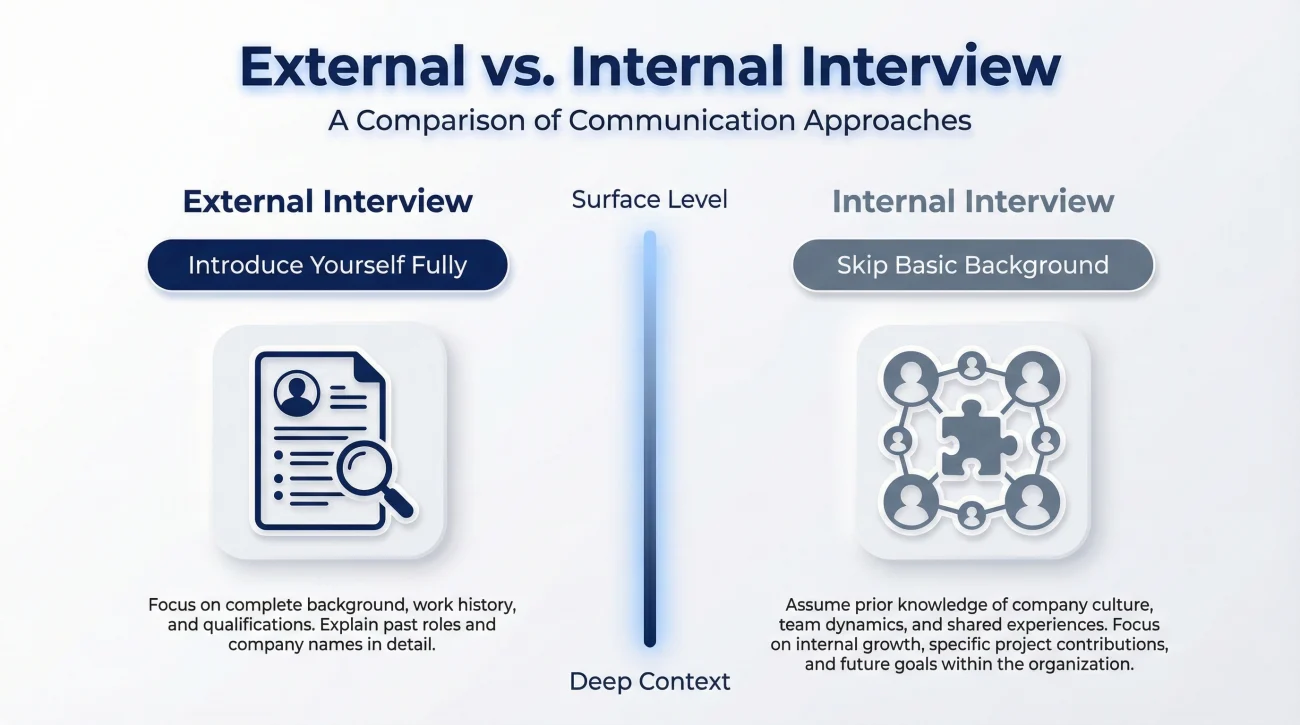
Your History Is Known
Interviewers have access to your performance reviews, your reputation, and potentially direct experience with your work. You can’t reinvent yourself. Your introduction must be consistent with what they know while adding perspective they might not have.
Competition Dynamics
You may be competing against colleagues. You may be competing against external candidates who don’t carry organizational history. The interview assesses not just capability but also whether promoting you serves the organization better than other options.
Ongoing Relationships
Whatever happens, you’ll likely continue working at this company. The way you handle the process affects relationships regardless of outcome. Professionalism and grace matter even more than usual.
Inside Knowledge
You understand the role’s context in ways external candidates can’t. You know the team, the challenges, and the politics. This knowledge is an advantage if you use it appropriately.
| External Interview | Internal Interview |
|---|---|
| Introduce yourself fully | Skip basic background |
| Explain your experience | Reference shared knowledge |
| Present your best face | Acknowledge known history |
| Learn about the company | Demonstrate inside knowledge |
| Fresh start possible | Reputation precedes you |
Structuring the Internal Introduction
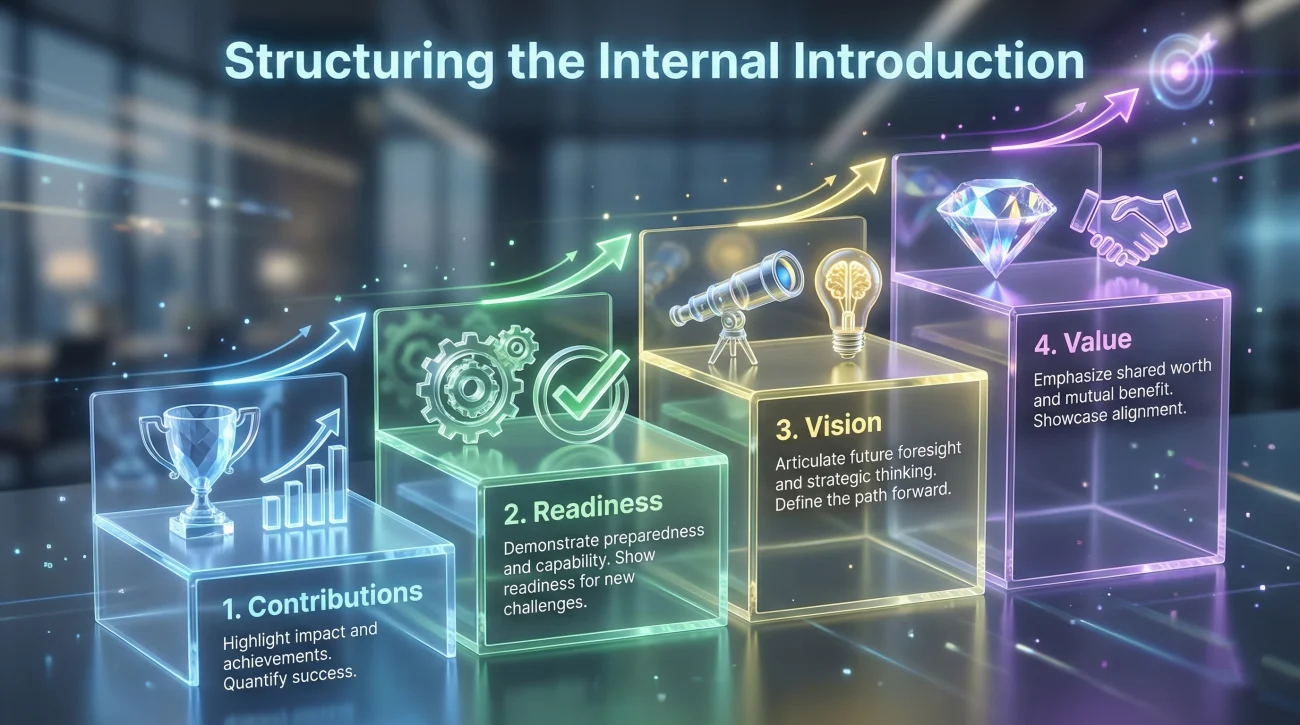
Your Contributions
Lead with what you’ve accomplished for this organization. This is your credibility foundation. Select achievements most relevant to the role you’re pursuing. Don’t assume they know everything you’ve done.
“Over the past three years in product marketing, I’ve led launches for our four most successful products and built the competitive intelligence function that the team now relies on.”
Why You’re Ready
Connect your experience to the new role’s requirements. Show you’ve thought about what the position demands and how your background prepares you for it. Address any capability gaps proactively.
Your Vision
Share how you’d approach the role. Your inside knowledge lets you discuss specific plans that external candidates couldn’t articulate. Show you’ve thought beyond getting the job to succeeding in it.
Value of Choosing Internal
Articulate why promoting from within benefits the organization. Your existing relationships, cultural knowledge, and organizational context are advantages. Make sure interviewers see that value.
Sample Internal Introductions
Individual Contributor to Manager
“Thanks for considering me for this opportunity. You know my work as a senior analyst over the past four years, but I want to share why I believe I’m ready to lead the team.
Beyond my individual contributions, I’ve informally mentored three junior analysts who’ve all progressed successfully. I’ve led our largest cross-functional projects, including the market expansion analysis that shaped our growth strategy. And I’ve worked to improve team processes, including the reporting templates we now use across the department.
For this manager role, I’ve thought carefully about how I’d approach team development, workflow optimization, and stakeholder management. I have specific ideas about improving our delivery timelines and developing team capabilities that I’d love to discuss.”
Lateral Move to New Function
“I appreciate the opportunity to discuss this transition. While I’ve spent five years in sales, my interest in moving to customer success comes from seeing how critical post-sale relationships are to our retention numbers.
In my sales role, I’ve consistently maintained relationships with customers well past handoff because I found that work rewarding. Several of my accounts have become our highest retention customers because of that continued engagement.
I know this function from a sales partner’s perspective, and I’ve built relationships across the customer success team through our collaboration. I believe I can bring customer insight from the sales side that would help bridge our handoff challenges.”
Senior Leadership Promotion
“Thank you for including me in this process. In my seven years here, I’ve progressed from individual contributor through manager to my current director role, so you know my trajectory and capabilities in detail.
What I want to emphasize is what I’ve learned about leading at scale. My team has grown from five to twenty-two people. I’ve navigated two reorganizations. I’ve built partnerships across every function in this company.
For this VP role, I’ve developed specific perspectives on where our function needs to go and how to get there. I know the opportunities, I know the challenges, and I know the people. That institutional knowledge has real value for navigating the strategic shift you’re planning.”
For the complete introduction framework, explore our self-introduction guide.
Internal Interview Pitfalls
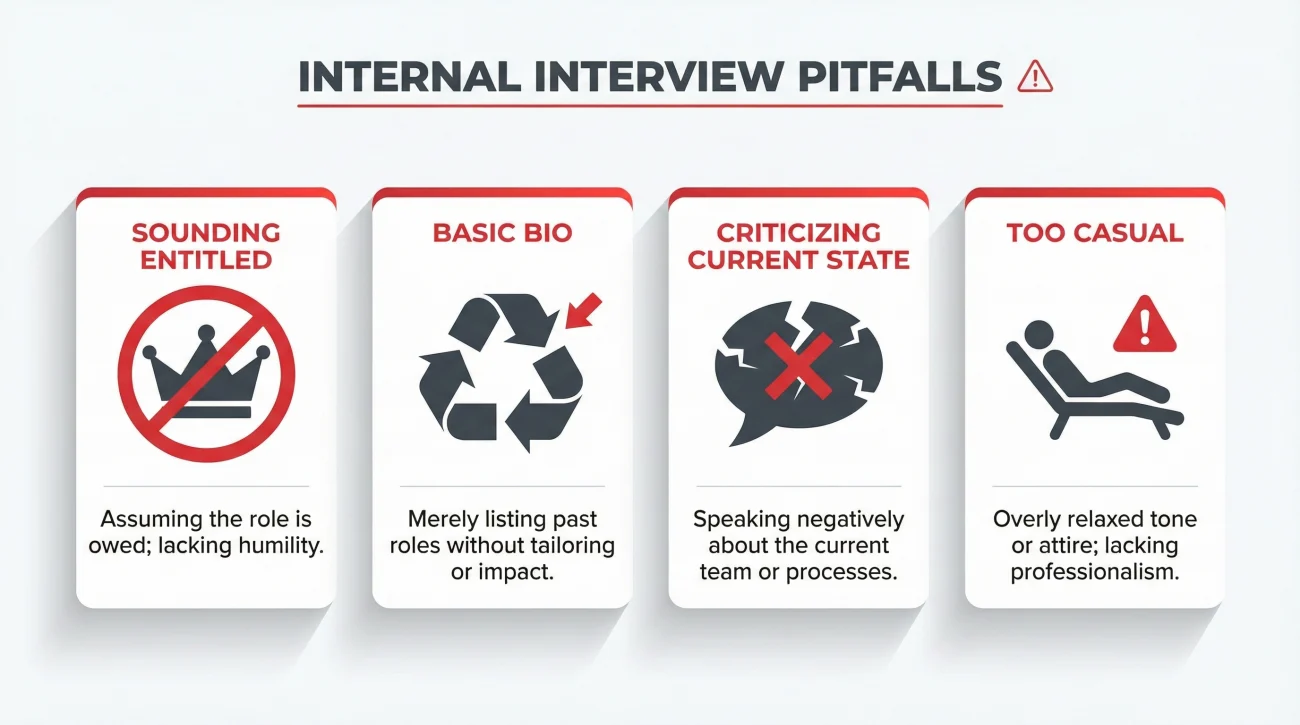
Sounding Entitled
“I’ve been here for years and paid my dues, so I deserve this promotion.”
Tenure doesn’t equal readiness. Make the case for your capabilities and fit, not your time served. The organization owes you a fair consideration, not a guaranteed outcome.
Giving the External Candidate Intro
Don’t waste time on basic background they already know. Jump to substance. Acknowledge the shared context and use it to go deeper than an external candidate could.
Criticizing Current State
Avoid suggesting the current team or leadership is doing poorly. Even if true, it can come across as arrogant or difficult. Frame improvements as opportunities rather than criticisms.
Being Too Casual
Familiarity can lead to informality that undermines your candidacy. Treat the internal interview with the same professionalism as an external one. The comfortable dynamic shouldn’t make you sloppy.
Internal advantage: You can reference specific situations, people, and outcomes that external candidates can’t. Use concrete internal examples to demonstrate your capabilities in ways that resonate with interviewers who share that context.
❓ FAQ
🎯 How do I handle competing against a colleague?
Focus entirely on your own candidacy. Never speak negatively about colleagues. Assume anything you say could get back to them. Make your case on its merits, not in comparison to others.
💼 Should I address known weaknesses?
If significant weaknesses are known, briefly acknowledge them and explain how you’ve addressed them. Pretending they don’t exist when interviewers know otherwise damages credibility. Show self-awareness and growth.
⏰ How do I prepare when I know the interviewers?
Prepare as thoroughly as for an external interview. Knowing the people doesn’t mean knowing what they’ll ask or how they’ll evaluate. Research the role, prepare examples, and practice your introduction.
📋 What if I don’t get the role?
Handle the outcome gracefully. Ask for feedback. Support whoever does get the role. Your response to not being selected affects future opportunities. People remember professionalism in disappointment.
✨ Can I discuss what I’d change?
Carefully. Frame changes as building on current success, not fixing failures. “I’d like to build on our strong foundation by…” works better than “Here’s what’s wrong that I’d fix.”
Make Your Case, Not Your Bio
Your internal interview introduction should start where the external script ends: with proof. Lead with the internal results you’re proud of, connect them directly to what this role needs, then share a clear vision that only someone on the inside could offer. Familiarity is your shortcut, use it to go deeper, not longer.
⚠️ Disclaimer: The interview strategies, sample answers, and negotiation tips provided in this guide are for educational purposes only. Hiring decisions are subjective and vary by company and industry. While these strategies are based on professional HR standards, they do not guarantee a specific job offer or result.