Make Them See How You Lead, Fast
Managers get judged on outcomes and on how they produce them. In tell me about yourself for managers, open with your management scope in plain words, then anchor it to one concrete result that happened because of your leadership.
Choose moments that show your approach: how you set priorities, coach people, unblock execution, and handle conflict without drama. The goal is to make your leadership style feel familiar and safe.
A simple rule helps: mention the team, the mission, and the impact. If any of those are missing, the answer can accidentally read like an individual contributor highlight reel.
Management Introduction Elements
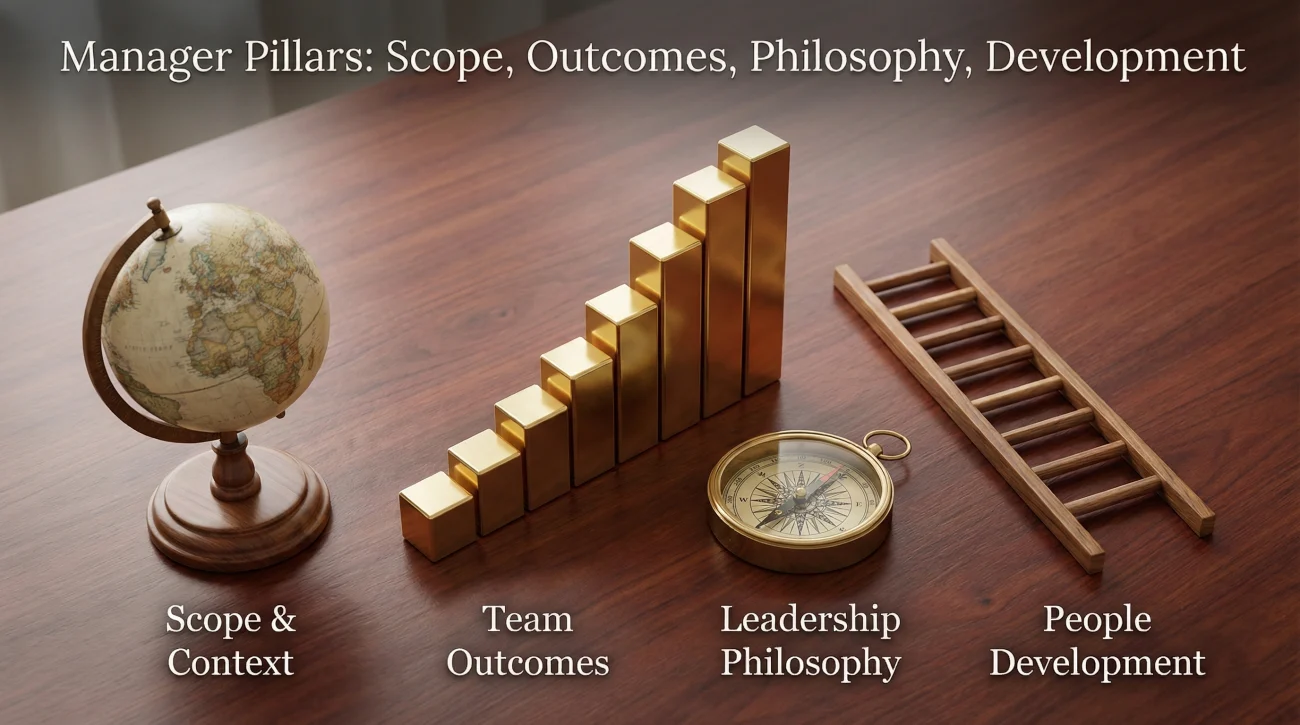
Team Scope and Context
Establish the scale of your leadership. How many people report to you? What functions do they represent? What’s the budget you manage? These facts give interviewers context for evaluating your accomplishments.
“I lead a product management team of eight, spanning three product lines with combined annual revenue of forty million dollars.”
Team Outcomes
Describe what your team has accomplished, not just what you personally did. The shift from personal achievements to team achievements signals you’ve internalized what management means.
Leadership Approach
Interviewers want to understand how you lead, not just what results you’ve achieved. Your style, philosophy, and approach to managing people matters because they’re assessing cultural fit alongside capability.
People Development
Strong managers develop their people. Mentioning promotions you’ve enabled, skills you’ve built in your team, or people you’ve developed into future leaders demonstrates this crucial aspect of management.
| IC Focus | Manager Focus |
|---|---|
| I completed the project | My team delivered the project |
| I developed this skill | I built this capability in my team |
| I solved this problem | I created the environment for my team to solve problems |
| I received this recognition | My team members were promoted and recognized |
Building Your Management Introduction
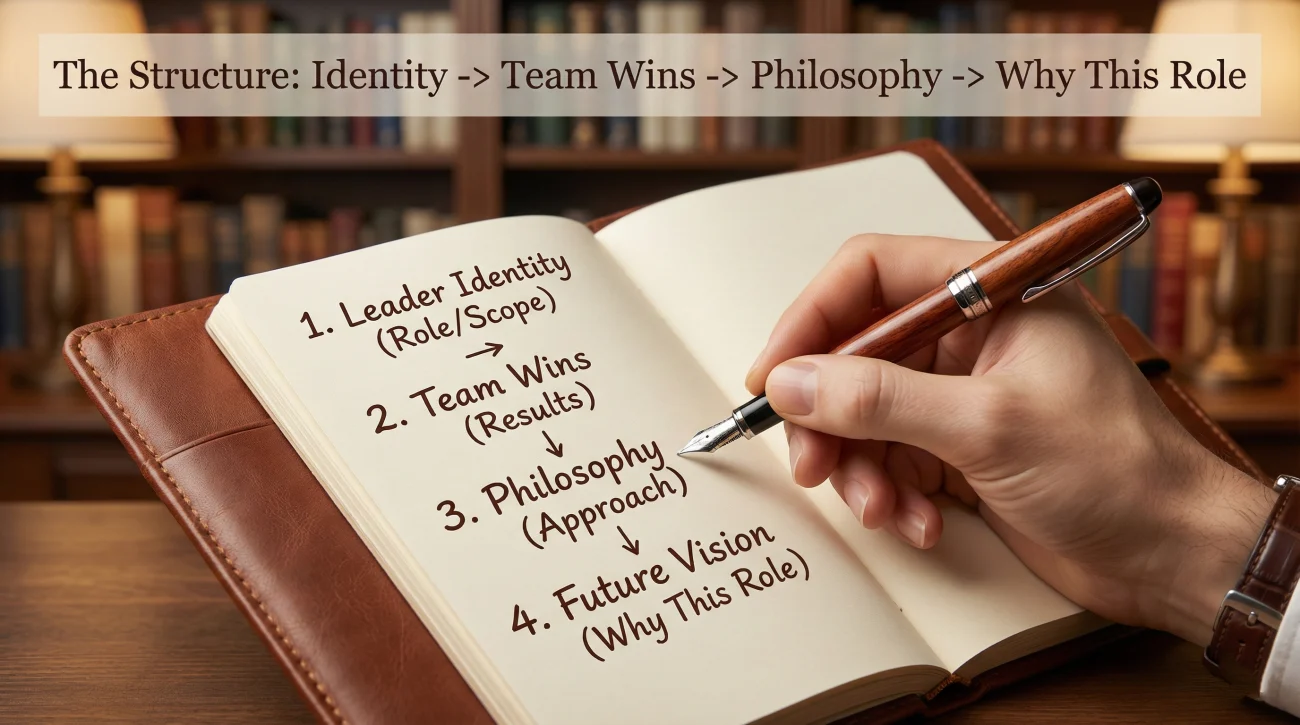
Leadership Identity
Open with your current management role and scope. This immediately establishes you as a leader rather than an individual contributor.
“I’m an engineering manager at TechCorp, leading a team of twelve developers responsible for our core platform infrastructure.”
Team Accomplishments
Highlight what your teams have achieved under your leadership. Use specific metrics when possible. Frame these as team accomplishments while making your role in enabling them clear.
Leadership Philosophy
Briefly articulate how you approach management. This gives interviewers insight into cultural fit and helps them picture you in their organization.
“I believe in giving people clear goals and autonomy to achieve them. My job is removing obstacles and developing capabilities, not directing every decision.”
Why This Leadership Opportunity
Explain what attracts you to this specific management role. The challenges, the team, the organization’s needs. Show you’re pursuing this role intentionally.
Sample Management Introductions
First-Time Manager
“I’m currently a team lead at FinTech Inc, managing four analysts on our risk modeling team. I was promoted into this role a year ago after five years as an individual contributor, and it’s confirmed that leadership is where I want to focus my career.
In my first year managing, I’ve focused on building a collaborative team culture and developing my people’s technical skills. Two of my team members have completed certifications, and our team’s models are now the standard used across the department.
I’m pursuing this senior manager role because I’m ready for a larger team and more strategic responsibility. I want to shape how risk management works at an organizational level rather than just within one team.”
Experienced Manager
“I’m a marketing director at Consumer Goods Co, leading a team of fifteen across brand management, digital marketing, and consumer insights. I’ve been in marketing leadership for eight years, progressing from managing three people to my current scope.
The accomplishment I’m most proud of is building my current team nearly from scratch. When I joined three years ago, it was a group of five struggling with retention. I rebuilt the team, established clear career paths, and created a culture where people want to stay and grow. We’ve had four internal promotions and almost no unwanted turnover since.
I’m interested in this VP role because I want to lead marketing at a company going through significant growth. The challenges you’re facing with expanding into new markets match exactly where I want to apply my experience.”
Senior Leader
“I’m VP of Operations at Manufacturing Corp, responsible for all production across three facilities and about four hundred employees. My scope includes plant management, supply chain, quality, and continuous improvement.
Over the past five years, I’ve led our operational transformation from a traditional manufacturer to a lean operation. We’ve reduced costs by eighteen percent while improving quality metrics and increasing capacity. More importantly, I’ve built a leadership team that can sustain these improvements independently.
I’m exploring this COO opportunity because I want to influence operations at an enterprise level, not just within manufacturing. Your company’s integration of technology into traditional operations aligns with where I see the future of the field.”
For more guidance on leadership introductions, see our interview preparation resources.
Management Interview Pitfalls
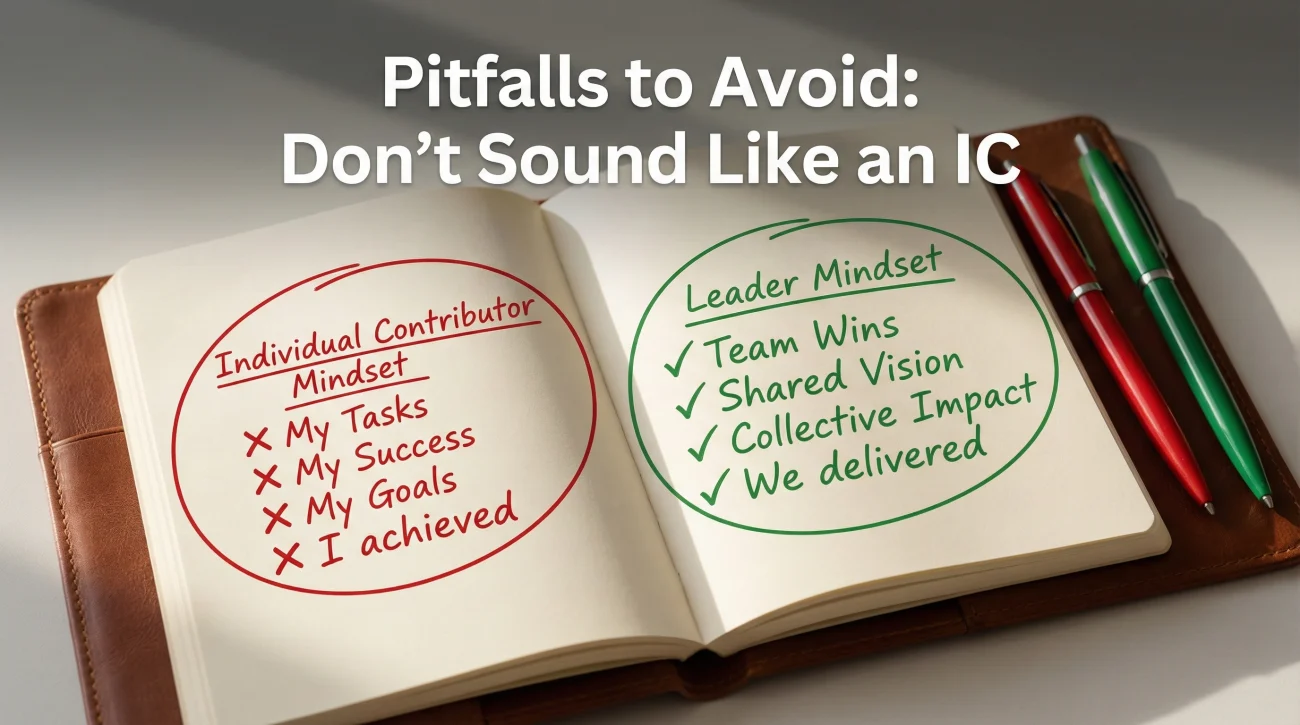
Sounding Like an Individual Contributor
If your introduction focuses entirely on personal achievements without mentioning team leadership, you’re presenting yourself as an IC who happens to have a management title. Shift the focus to what you enabled rather than what you personally did.
Vague Leadership Claims
“I’m a collaborative leader who empowers my team.”
Generic leadership statements are meaningless without evidence. Instead of claiming to be collaborative, describe specific ways you collaborate. Instead of claiming to empower, share an example of empowerment in action.
Taking All Credit
If everything in your introduction is “I achieved” and “I delivered” without acknowledging your team, interviewers wonder if you actually function as a manager or just do everything yourself. Good managers share credit generously.
Missing Scale Indicators
Numbers matter for management roles. Team size, budget responsibility, revenue scope, and similar metrics help interviewers calibrate your experience. Managing three people is different from managing thirty. Both are valid, but the context matters.
The manager test: Would your team members recognize themselves in your description? If your introduction sounds like you did everything alone, something’s off.
❓ FAQ
🎯 How much should I discuss my pre-management experience?
Briefly establish your functional foundation, then focus on management experience. Your IC background provided expertise, but the interview is about your leadership capability. A sentence or two on your foundation is usually sufficient.
💼 Should I describe my management style?
Yes, briefly. Interviewers want to understand how you lead, not just what results you’ve achieved. A sentence articulating your approach helps them assess cultural fit. Be genuine rather than saying what you think they want to hear.
⏰ What if I’m interviewing for my first management role?
Focus on informal leadership experience: leading projects, mentoring colleagues, coordinating teams without formal authority. Explain why you want to move into management and what leadership capabilities you’ve already demonstrated.
📋 How do I discuss team failures?
In your introduction, focus on positives. Save failure discussions for when specifically asked. When those questions come, take responsibility as the leader while explaining what you learned. Blaming your team for failures is always wrong.
✨ Should I mention specific people I’ve developed?
You can reference development outcomes without names. “Two of my direct reports have been promoted to management themselves” demonstrates people development without requiring personal details. This evidence is powerful for management interviews.
Close Like the Person Who Will Run the Team
In tell me about yourself for managers, your finish matters as much as your opener. Wrap by stating the kind of team environment you build and the kind of results you drive through others.
Then connect it directly to the role you are interviewing for, using their language: the team, the stakeholders, and the outcomes. That final link makes you feel like the default choice.
⚠️ Disclaimer: The interview strategies, sample answers, and negotiation tips provided in this guide are for educational purposes only. Hiring decisions are subjective and vary by company and industry. While these strategies are based on professional HR standards, they do not guarantee a specific job offer or result.