Say Hello to Every Pair of Eyes
A panel interview introduction is less like a chat and more like a short presentation. You are not building rapport with one person, you are earning trust from several people at once, often with different priorities.
That is why panel intros feel harder. One person cares about culture, another about execution, another about technical detail, another about leadership. Your opening has to give each of them a reason to lean in.
If you handle the room well in the first ninety seconds, you signal something bigger than credentials: you can communicate under pressure, manage stakeholders, and stay composed when attention is divided.
Panel Interview Challenges
Divided Attention
With multiple interviewers, you can’t focus on one face. You must distribute eye contact while maintaining cohesive delivery. This feels unnatural because normal conversation involves sustained attention to one person.
Multiple Interests
A panel typically includes people from different functions: perhaps an HR representative, the hiring manager, a peer, and a skip-level leader. Each evaluates through their own lens. Your introduction must have something for everyone.
Group Dynamics
Panelists may have their own dynamics: hierarchy, interpersonal relationships, or differing opinions about what the role needs. You’re entering a pre-existing group with invisible complexities.
Amplified Pressure
More evaluators mean more judgment. Some candidates find panels intimidating because every moment has multiple witnesses. The pressure to perform well compounds.
| One-on-One Interview | Panel Interview |
|---|---|
| Single relationship to manage | Multiple relationships simultaneously |
| Sustained eye contact natural | Eye contact must be distributed |
| One person’s interests to address | Diverse interests in one introduction |
| Conversational pacing | More presentation-like delivery |
| Private interaction | Performance with audience |
Panel Presentation Technique
Eye Contact Distribution
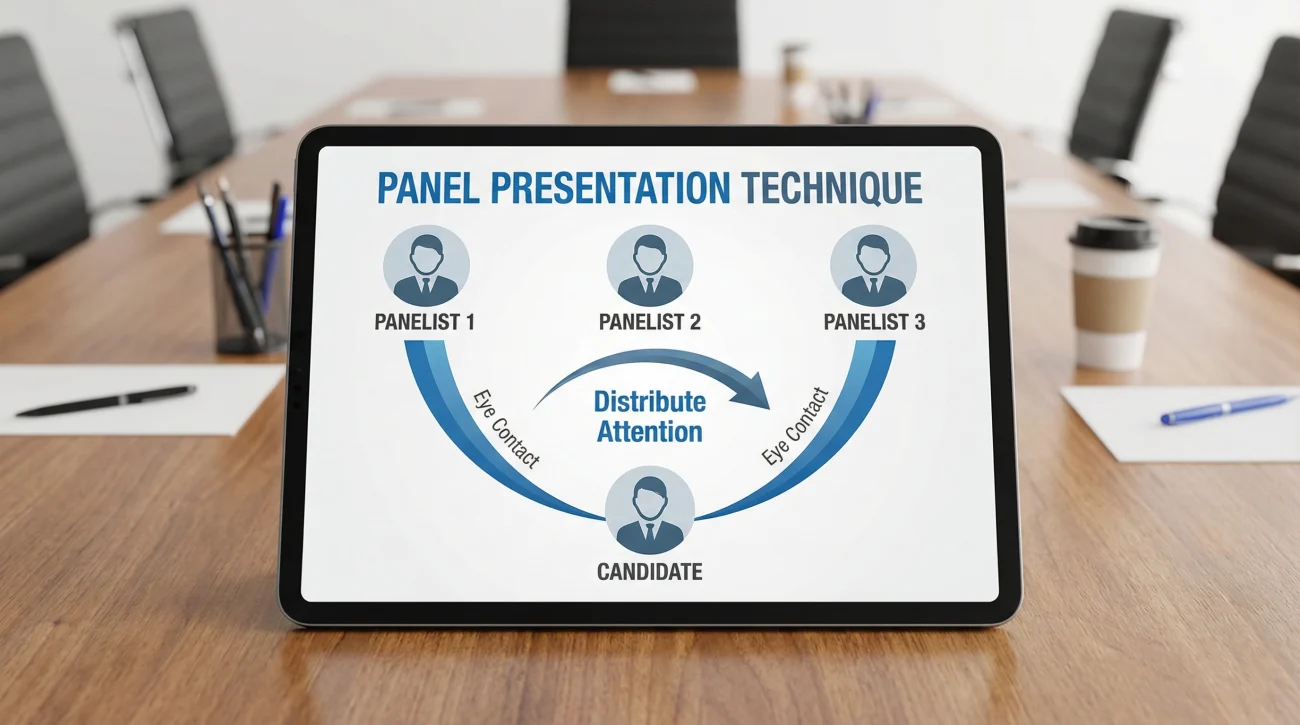
Don’t fixate on one person, especially not just the senior leader. Rotate your gaze naturally around the panel. Spend a few seconds with each person, completing thoughts while looking at different faces. This creates connection with everyone and avoids alienating panelists you ignore.
Start with whoever asked the question, then move around the room as you develop your answer. Return to the questioner to conclude, but ensure everyone received attention.
Address the Room
Speak to the group, not to individuals. Your energy should fill the space. Project slightly more than in one-on-one conversations. Think of it as presenting to a small audience rather than chatting with a colleague.
Acknowledge All Panelists
Use introductory moments to acknowledge everyone. “Thank you all for meeting with me” or “I appreciate the opportunity to speak with each of you” establishes you recognize this as a group interaction.
Universal Content
Structure your introduction with something for each function represented. If you know a technical lead is present, include technical relevance. If HR is there, touch on culture fit. If the executive is attending, address strategic contribution.
💡 Pro tip: When possible, learn who will be on the panel beforehand. Research each person briefly. Understanding their roles helps you include content that resonates with each.
Structuring for Multiple Audiences
Universal Opening
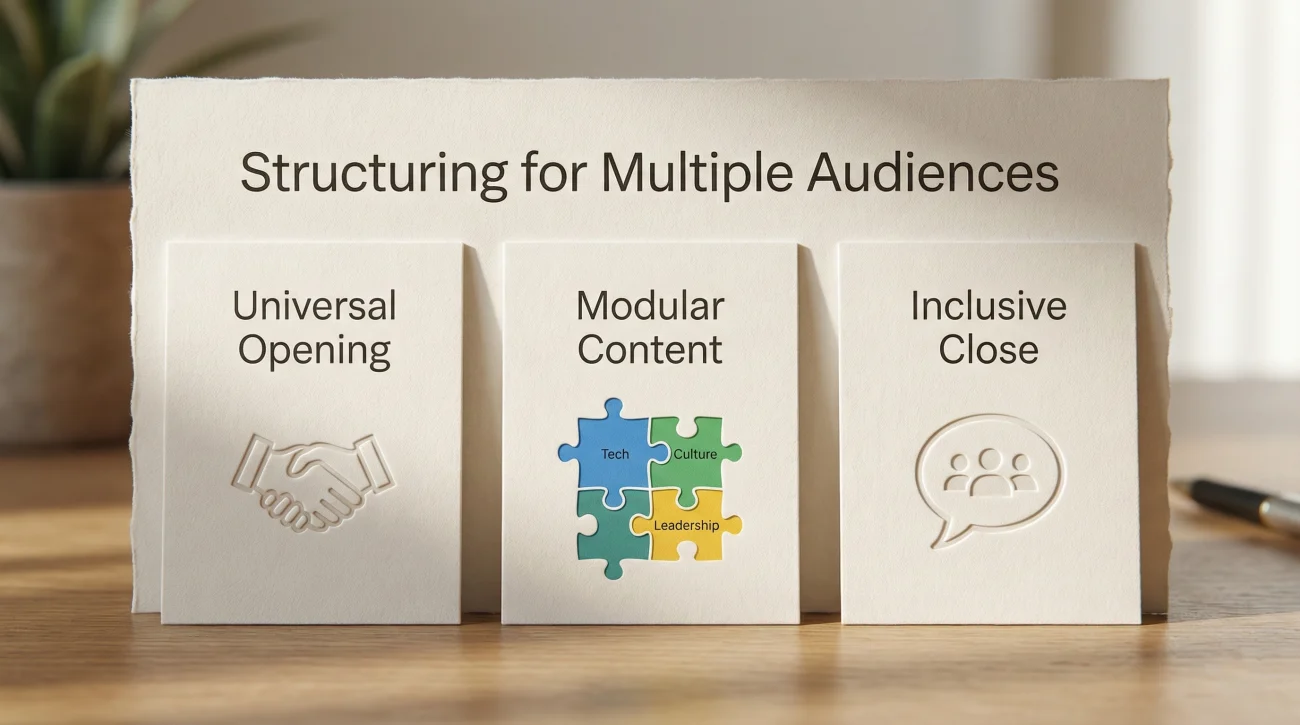
Start with something that works for everyone: your core professional identity and a statement that acknowledges the group setting.
“Thank you for taking time to meet with me. Let me give you an overview that addresses what I understand each of you might be interested in.”
Modular Content
Include distinct elements that address different perspectives. Perhaps one section on technical capability, one on leadership approach, one on cultural fit. Each panelist should hear something directly relevant to their evaluation criteria.
Inclusive Close
End with something that invites engagement from anyone. “I’d welcome questions from any of you about how I could contribute” opens the floor to all panelists rather than directing to one person.
Sample Panel Introductions
Mixed Panel
“Thank you all for meeting with me today. Let me share a bit about my background in a way that hopefully addresses what each of you might be evaluating.
I’m a marketing director with ten years of experience, currently leading a team of eight at a mid-sized technology company. On the strategic side, I’ve developed go-to-market approaches for three major product launches that collectively added about forty million in revenue. On the team side, I’ve built and developed a high-performing group with strong retention and two internal promotions this year.
From a cross-functional perspective, I’ve worked closely with sales, product, and finance to align marketing activities with broader business goals. I believe marketing works best when it’s integrated rather than siloed.
I’m excited about this opportunity because your company is at a stage where marketing can significantly impact growth, and I’d love to be part of that. I’m happy to dive deeper into any area that’s most relevant to your questions.”
Technical Panel
“Thanks for having me. I’ll give you a quick overview that covers both the technical and the collaborative aspects of how I work.
I’m a senior engineer with seven years of experience in distributed systems, currently working on data infrastructure at scale. My technical strengths are in system design and performance optimization. I designed the data pipeline that processes about two billion events daily at my current company.
Beyond the technical work, I’ve mentored four junior engineers and led the architecture review process for our team. I believe good engineering includes teaching and elevating others, not just building things.
I’m interested in your company because the technical challenges you’re solving around real-time processing align with my expertise and interests. I’d be glad to discuss specific technical details or answer questions about my approach.”
Executive Panel
“I appreciate meeting with all of you. Let me share context that spans both strategic contribution and operational execution.
I’m a VP of Operations with fifteen years of experience, currently overseeing manufacturing and distribution for a four hundred million dollar division. My focus has been operational transformation: reducing costs while improving quality and speed. Under my leadership, we’ve improved margins by eight percentage points over three years.
I lead through empowerment and accountability. I build strong teams, set clear expectations, and give people room to execute. My direct reports have been promoted at higher rates than company averages because developing leaders is part of how I create sustainable improvement.
I’m drawn to your company because you’re at a scale where operational excellence directly impacts competitive position. I believe my experience could accelerate the transformation you’re planning. I’m open to any direction you’d like to take this conversation.”
For a complete self-introduction framework, visit our interview preparation guide.
Panel Interview Mistakes
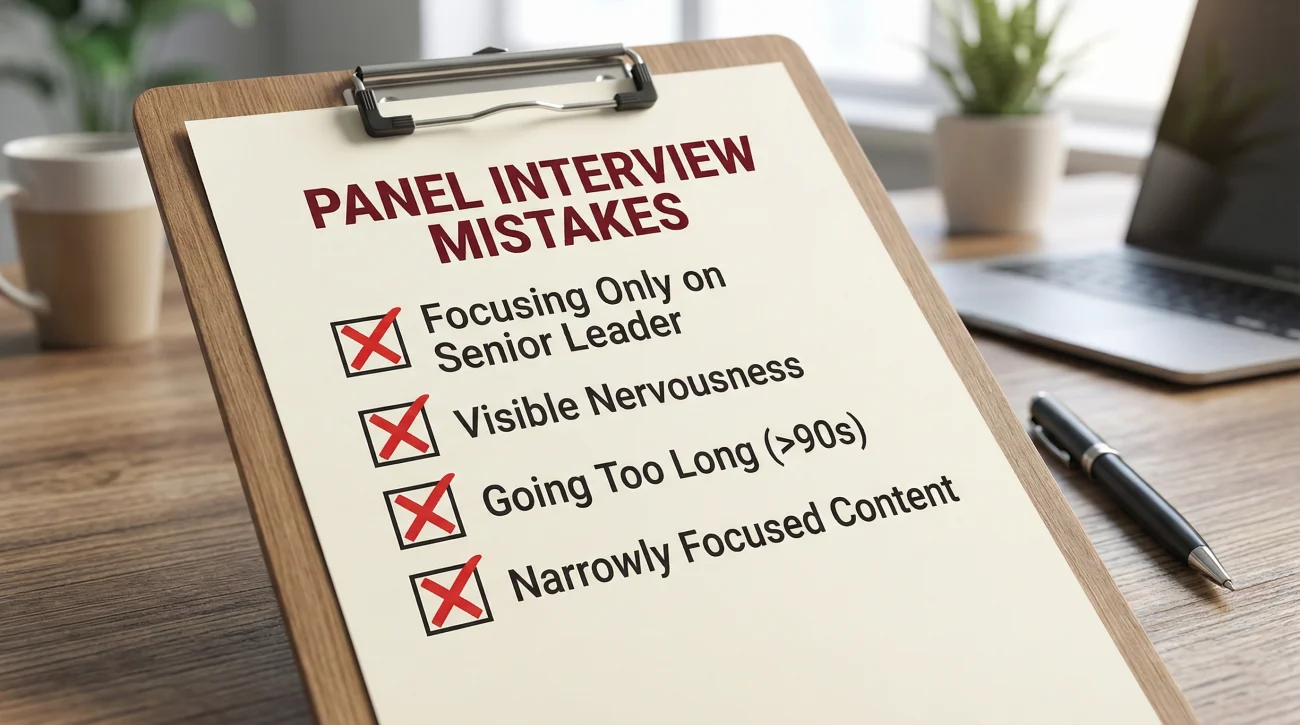
Focusing Only on the Senior Person
Directing your entire introduction to the highest-ranking panelist
Everyone on the panel has a voice in the decision. Ignoring junior panelists or peers signals you only care about hierarchy. Distribute attention equitably.
Visible Nervousness
Panels amplify pressure, and nervous candidates sometimes show it more visibly: fidgeting, rushing, or seeming overwhelmed. Practice panel scenarios until you’re comfortable with the format.
Going Too Long
With multiple people waiting to ask questions, time pressure increases. Panel introductions should be tight. Aim for ninety seconds maximum. Leave room for the varied questions a panel will generate.
Narrowly Focused Content
If your introduction only addresses one function’s concerns, panelists from other areas have nothing to evaluate. Ensure your introduction touches multiple dimensions that resonate with the diverse panel.
Panel power: Panels observe things individual interviewers miss. They see how you handle pressure, manage multiple stakeholders, and present to groups. Perform well, and you demonstrate skills beyond just qualifications.
❓ FAQ
🎯 How do I know who to look at when?
Start with whoever asked the question. Then rotate naturally through the panel as you develop your answer, spending a few seconds with each face. Return to the questioner to conclude. This feels awkward initially but becomes natural with practice.
💼 What if I don’t know who’s on the panel?
Ask beforehand when possible. During the interview, introductions usually reveal roles. If unclear, prepare content that works across functions: results, approach, and cultural fit resonate with most audiences.
⏰ How do I handle one dominant interviewer?
If one panelist dominates, still make eye contact with others when appropriate. Answer the dominant person’s questions while ensuring others don’t feel ignored. They may be quieter but still evaluating.
📋 Should I ask who I’m meeting with?
Yes. It’s appropriate to ask your scheduler who will be on the panel and their roles. This preparation is expected and helps you tailor your approach appropriately.
✨ How do I practice for panels?
Recruit multiple friends or colleagues to simulate a panel. Practice distributing eye contact and addressing varied interests. Record yourself if possible. Solo practice doesn’t fully replicate panel dynamics.
Hold the Center
Your panel interview introduction should be concise, inclusive, and modular. Share a core identity, add one or two results that matter, and include a line that speaks to different lenses in the room. Distribute eye contact, keep your pacing steady, and invite questions from anyone. In a panel, how you present is part of what they are hiring.
⚠️ Disclaimer: The interview strategies, sample answers, and negotiation tips provided in this guide are for educational purposes only. Hiring decisions are subjective and vary by company and industry. While these strategies are based on professional HR standards, they do not guarantee a specific job offer or result.