Three Words, Zero Wiggle Room
When you are asked to describe yourself in three words, it is a compression test. Anyone can talk for five minutes. The point is whether you can choose what matters, and resist the urge to cover everything just in case.
Most people fail by picking generic traits and hoping confidence does the rest: “hardworking, friendly, motivated.” The interviewer hears the same trio all day, and there is nothing to verify.
A better approach is to treat the words like headlines. Pick three that match the job’s core needs, then be ready to earn each one with a tiny proof. Three words is not the answer, it is the doorway into your evidence.
Selecting Your Words
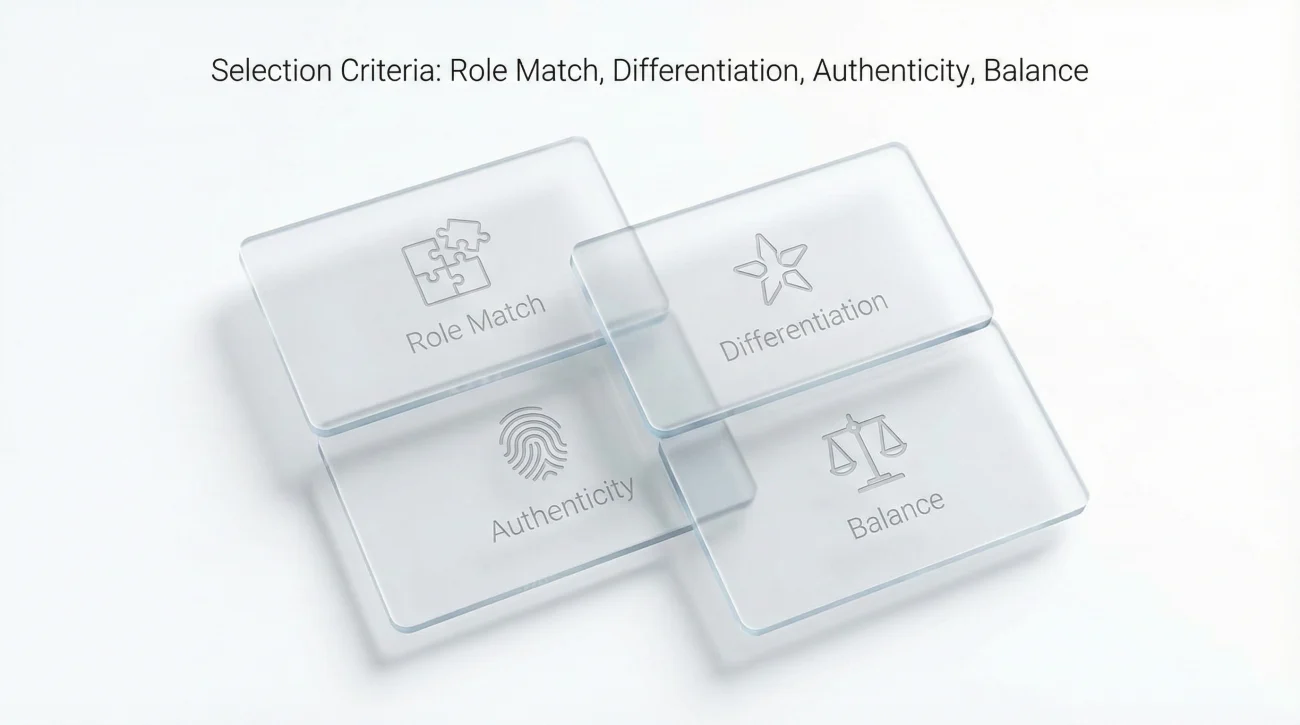
Match the Role
Your three words should align with what this specific role requires. A creative position calls for different descriptors than an analytical one. A leadership role emphasizes different qualities than an individual contributor position.
Research the role and company to understand what qualities they value, then select words that genuinely describe you while addressing their priorities.
Differentiate Yourself
Avoid words everyone uses. “Hardworking” describes almost every candidate. “Detail-oriented” appears on countless resumes. Consider what makes you distinctive. What would former colleagues say about you that they wouldn’t say about others?
Stay Authentic
Only use words you can genuinely support with evidence. Claiming to be “innovative” when you’ve never created anything new will fall apart under follow-up questions. Your words must reflect reality, not aspiration.
Consider Balance
Think about selecting words that show different dimensions: perhaps one about how you work, one about how you think, one about how you interact with others. This provides a more complete picture than three words covering similar ground.
| Category | Overused Words | More Distinctive Options |
|---|---|---|
| Work ethic | Hardworking, dedicated | Persistent, disciplined, tenacious |
| Thinking style | Detail-oriented, analytical | Methodical, curious, systematic |
| Interpersonal | Team player, friendly | Collaborative, diplomatic, candid |
| Problem-solving | Creative, innovative | Resourceful, pragmatic, inventive |
| Character | Honest, reliable | Principled, dependable, consistent |
Supporting Your Words
The words alone aren’t enough. You need brief evidence for each one. The pattern is simple: state the word, then immediately provide a supporting example or explanation.
Evidence Types
- Specific stories: Brief examples from your experience
- External validation: What others have said about you
- Behavioral patterns: Consistent ways you approach work
- Results: Outcomes that demonstrate the quality
Answer Structure
For each word, spend about twenty to thirty seconds: state it clearly, provide supporting evidence, and transition to the next word. Your total answer should be sixty to ninety seconds.
Word + Why you chose it + Brief evidence = Complete point
Sample Answers
For an Analytical Role
“I’d describe myself as methodical, curious, and persistent.
Methodical because I approach problems systematically. When I analyze data, I follow a structured process that ensures I don’t miss patterns others might overlook.
Curious because I genuinely want to understand why things work the way they do. I’m the person who keeps asking questions until I really understand the root cause.
And persistent because I don’t give up when analysis gets difficult. Some of my best insights came from pursuing threads that seemed unpromising at first but turned out to be significant.”
For a Leadership Role
“I’d choose decisive, empathetic, and accountable.
Decisive because I make decisions and move forward rather than getting stuck in analysis paralysis. My teams know I’ll make the call when it needs to be made.
Empathetic because I work to understand what motivates each person on my team. People perform better when they feel genuinely understood.
And accountable because I own results, both good and bad. When my team succeeds, they get the credit. When we fall short, I take responsibility and figure out how to improve.”
For a Creative Role
“The three words I’d choose are resourceful, observant, and collaborative.
Resourceful because I find creative solutions within constraints. Some of my best work came from tight budgets or limited time that forced unconventional approaches.
Observant because good creative work starts with noticing things others miss. I pay attention to how people actually behave, not just what they say.
And collaborative because the best ideas get better when other people push back on them. I actively seek feedback and genuinely incorporate it rather than defending my first instinct.”
For the broader “tell me about yourself” framework, visit our complete self-introduction guide.
Words and Approaches to Avoid
Generic Descriptors
“Hardworking, dedicated, motivated”
These describe almost everyone who applies for jobs. They don’t differentiate you or reveal anything interesting about how you work.
Claims Without Evidence
Saying “innovative” without any example of innovation rings hollow. Only choose words you can immediately support with concrete evidence.
Accidental Negatives
Some words can come across negatively depending on context. “Perfectionist” can sound like you’ll be slow or difficult. “Intense” can suggest you’re hard to work with. Choose words with clearly positive connotations.
False Modesty
“I don’t like to brag, but I guess I’d say…”
This question asks for self-assessment. Answer it confidently without unnecessary hedging or false humility.
The real test: Would your former colleagues agree with your three words? If you describe yourself as collaborative but past teammates would say you work alone, there’s a disconnect that will eventually surface.
❓ FAQ
🎯 Should I prepare this answer in advance?
Yes. This question requires genuine reflection you can’t do on the spot. Think about your words in advance, gather supporting examples, and practice delivering them naturally. Preparation shows, and so does its absence.
💼 What if they ask for more than three words?
Have backup words ready. If they ask for five, you should be able to add two more without struggling. Keep a short list of qualities you can genuinely support with evidence.
⏰ How long should my answer be?
About sixty to ninety seconds total. Each word gets a brief explanation, not a long story. The constraint of three words suggests they want concise communication.
📋 Can I use phrases instead of single words?
Stick to single words unless you genuinely need a short phrase. “Results-oriented” is acceptable. “Always willing to go the extra mile” is not three words. Respect the spirit of the constraint.
✨ What if I can’t think of three distinctive words?
Ask people who know your work. Colleagues and managers often see qualities you take for granted. Their observations can reveal distinctive characteristics you wouldn’t identify yourself.
Choose Words You Can Defend
To land describe yourself in three words, pick words that are specific, job-relevant, and provable. Say the three, then immediately attach one concrete moment to each, even if it is just a sentence. That structure makes you sound decisive, and it prevents the answer from floating into vibes. The goal is not to be clever, it is to be memorable for the right reason.
⚠️ Disclaimer: The interview strategies, sample answers, and negotiation tips provided in this guide are for educational purposes only. Hiring decisions are subjective and vary by company and industry. While these strategies are based on professional HR standards, they do not guarantee a specific job offer or result.