Lead With Your Pattern, Not Your Timeline
You are not trying to sound impressive here, you are trying to sound obvious. With tell me about yourself for experienced professionals, start by naming the professional you are today in one clean line, then give the listener a reason to trust that label.
Pick two or three chapters that show a consistent pattern: the kinds of problems you solve, the people you work with, and the results you tend to repeat. Keep the details light and the signal heavy.
If you feel the urge to begin with school or your first job, pause. The interviewer is hiring the current version of you, so your story should begin where your value became predictable.
The Experience Advantage
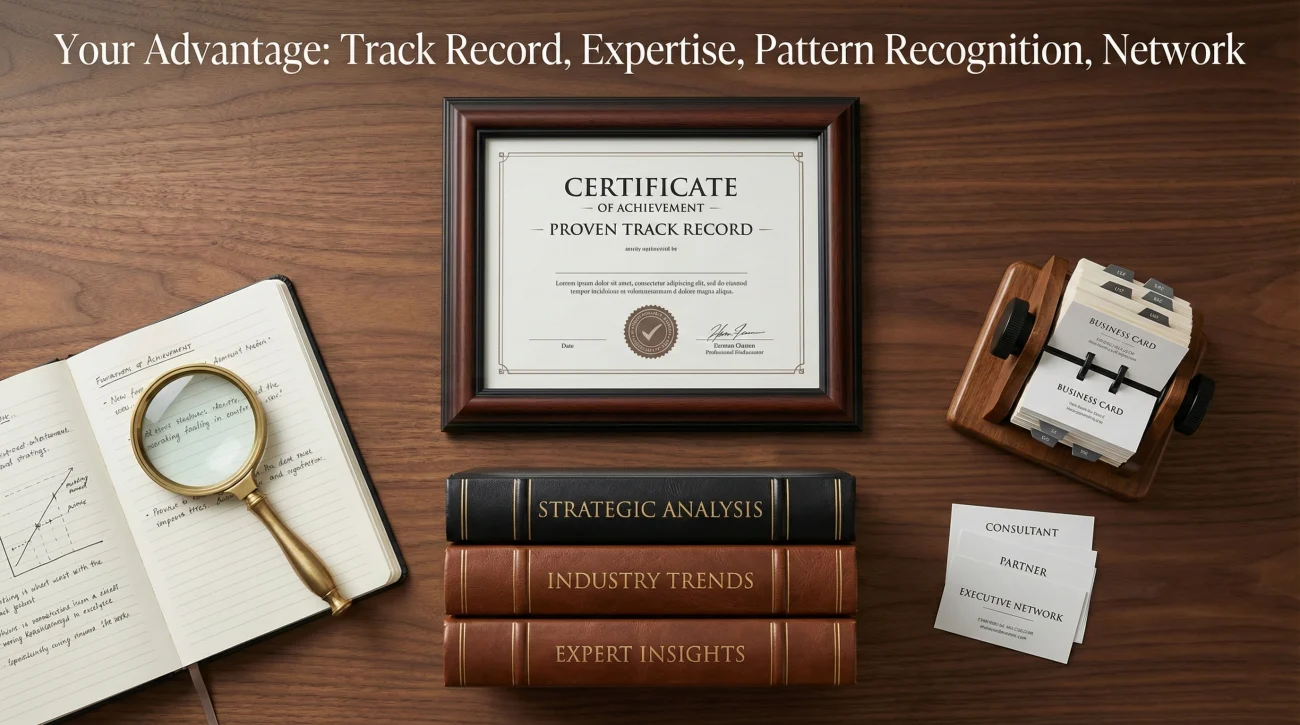
Experienced professionals have advantages that entry-level candidates lack. Your introduction should leverage these rather than simply listing job history.
Proven Track Record
You’ve delivered results over multiple years and situations. Unlike new graduates who promise potential, you can point to actual achievements. Select the most impressive and relevant outcomes from your career.
Developed Expertise
Years of practice have built deep knowledge in your field. You understand nuances, common pitfalls, and best practices that only come from experience. This expertise is valuable if you communicate it effectively.
Pattern Recognition
Having seen multiple situations, you recognize patterns faster than those with limited experience. You’ve learned what works, what doesn’t, and how to navigate organizational complexity.
Professional Network
Years in an industry build relationships that have value. You know people, understand how different organizations work, and can tap expertise beyond your own.
| Experience Level | Focus Your Introduction On |
|---|---|
| 3 to 5 years | Specific skills developed, notable achievements, career direction |
| 5 to 10 years | Expertise areas, leadership examples, impact at scale |
| 10+ years | Strategic contributions, major accomplishments, why this role now |
Structuring the Experienced Introduction
Current Professional Identity
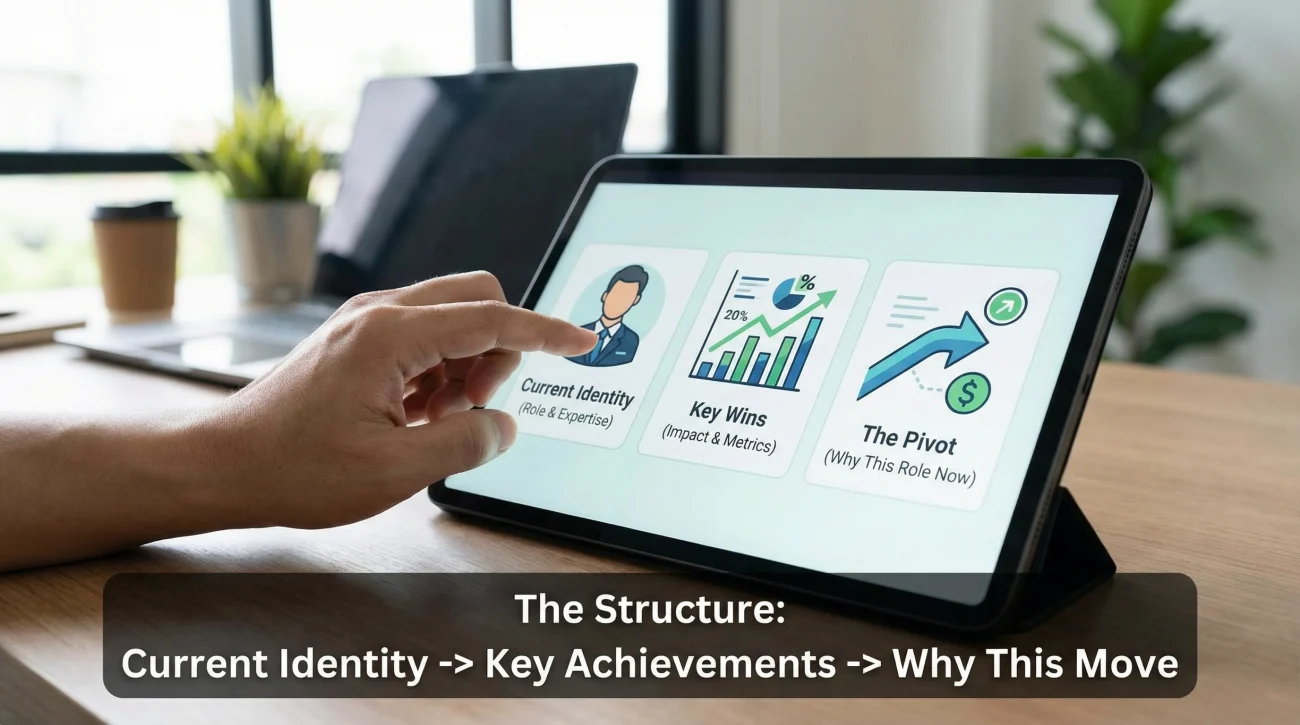
Start with who you are now, not where you started. Your current role, expertise area, and what you’re known for. This immediately positions you at your highest level rather than building up to it.
“I’m a product manager with eight years in B2B software, specializing in platform products and developer tools.”
Key Achievements
Select two or three achievements most relevant to the target role. These should be recent enough to be credible and significant enough to be impressive. Quantify impact whenever possible.
Don’t list every accomplishment. Choose strategically based on what this interviewer will find most compelling for this specific role.
Career Trajectory Theme
Rather than listing every job, identify a theme that connects your career. What have you consistently focused on? How have your responsibilities grown? What thread runs through your experience?
“Throughout my career, I’ve focused on taking complex technical products and making them accessible to non-technical users.”
Why This Move
Experienced candidates need to explain why they want this particular role. Are you seeking new challenges? Specific industry exposure? Different scale? Leadership opportunities? The “why now, why here” is especially important mid-career.
Sample Introductions
Finance Professional
“I’m a finance director with twelve years of experience in manufacturing, currently leading a team of eight at a mid-sized automotive supplier. My expertise is in operational finance, particularly connecting financial metrics to production decisions.
In my current role, I built the financial planning systems that supported our expansion from three plants to seven, and I led the financial integration of two acquisitions. Before that, I spent six years at a larger manufacturer where I rose from analyst to senior manager.
I’m interested in this CFO role because I’m ready to own the entire finance function rather than just operations. Your company’s size and growth stage match where I want to be, and the manufacturing focus means my industry expertise applies directly.”
Marketing Leader
“I’m a marketing executive with fifteen years building brands in consumer products. Most recently, I was VP of Marketing at a food company where I led brand strategy for a portfolio generating over two hundred million in annual revenue.
The work I’m proudest of there was repositioning our flagship brand when consumer preferences shifted toward healthier options. We reformulated products, changed packaging, and rebuilt our messaging. The result was reversing a three-year sales decline and returning to growth.
I’m exploring this opportunity because I want to work with brands at earlier stages. I’ve spent my career at established companies. I’m curious about building brand equity from scratch at a company like yours that’s just starting to scale.”
Technology Professional
“I’m a senior software architect with ten years in enterprise systems, focused on the intersection of data infrastructure and application development. Currently at a financial services firm, I designed the data platform that processes over fifty million transactions daily.
My career has consistently involved building systems that need to be both highly reliable and highly scalable. I’ve worked at companies ranging from startups to Fortune 500, which gives me perspective on how technical decisions differ based on organizational context.
I’m interested in this role because you’re building the kind of data infrastructure at scale that I find most interesting, and the greenfield nature of the project means I could shape architecture decisions rather than inheriting legacy systems.”
For additional frameworks on presenting your experience, visit our interview introduction guide.
What Experienced Candidates Get Wrong
Chronological Resume Recitation
“I started my career as an analyst at XYZ in 2010, then moved to ABC in 2013…”
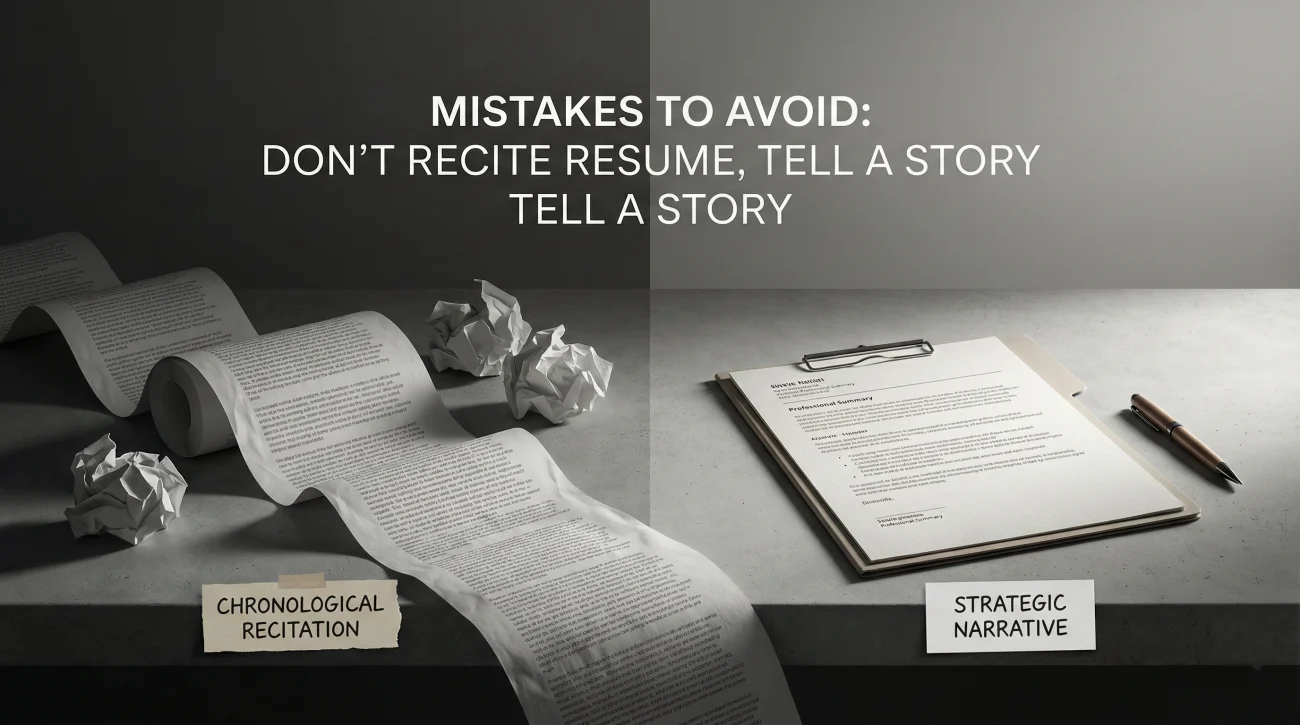
Walking through every job chronologically wastes time and bores interviewers. They can read your resume. Present a narrative organized by relevance, not timeline.
Emphasizing Ancient History
What you did fifteen years ago matters less than what you’ve done recently. Keep distant history brief unless it’s directly relevant. Recent accomplishments are more credible indicators of current capability.
Title Listing
“I’ve been a coordinator, then manager, then senior manager, then director.”
Titles mean different things at different companies. Focus on what you actually did and accomplished rather than the labels you held.
Missing the “Why This” Question
Experienced candidates absolutely must explain why they want this particular role. Without this, interviewers wonder: Are they running from something? Are they desperate? Do they even know what this job involves? Have a clear, positive reason for your interest.
The experienced advantage: You can choose from a wealth of accomplishments to craft exactly the narrative this interviewer needs to hear. Use that advantage by being strategic rather than comprehensive.
❓ FAQ
🎯 How far back should I go?
Focus primarily on the last five to ten years. Earlier experience can be summarized in one sentence if it provides important context. “I started my career in consulting before moving into industry” is sufficient for ancient history.
💼 Should I mention every job?
No. Select the roles most relevant to this position and your narrative. If you’ve had many jobs, focus on the pattern or theme rather than listing each one. Your resume has the complete list.
⏰ How do I explain job changes?
Don’t over-explain every transition in your introduction. Frame your career positively. If you’ve moved frequently, identify a growth theme that connects the moves. Save detailed explanations for when specifically asked.
📋 What if I’m making a significant change?
Address it directly. Explain why you’re pursuing a different direction and what transferable experience you bring. Changes are more common mid-career than entry-level. A clear rationale makes the change seem intentional rather than desperate.
✨ How long should my answer be?
About ninety seconds to two minutes. Experienced professionals often go longer than necessary because they have so much to share. Edit ruthlessly. Cover the essentials and save details for follow-up questions.
End With a Credible Next Step
Treat tell me about yourself for experienced professionals like a two minute highlight reel: clear identity, selective evidence, then a forward facing bridge to this job.
Close by linking your pattern to their needs in one sentence, then stop. If the last thing they hear is relevance, your experience lands as focused and intentional.
⚠️ Disclaimer: The interview strategies, sample answers, and negotiation tips provided in this guide are for educational purposes only. Hiring decisions are subjective and vary by company and industry. While these strategies are based on professional HR standards, they do not guarantee a specific job offer or result.