Round Two Is Not a Replay
A second interview introduction is a continuation, not a reset. By now, the company has your resume, your first round notes, and a basic sense of who you are. Repeating the exact same opener makes you feel stuck on one track.
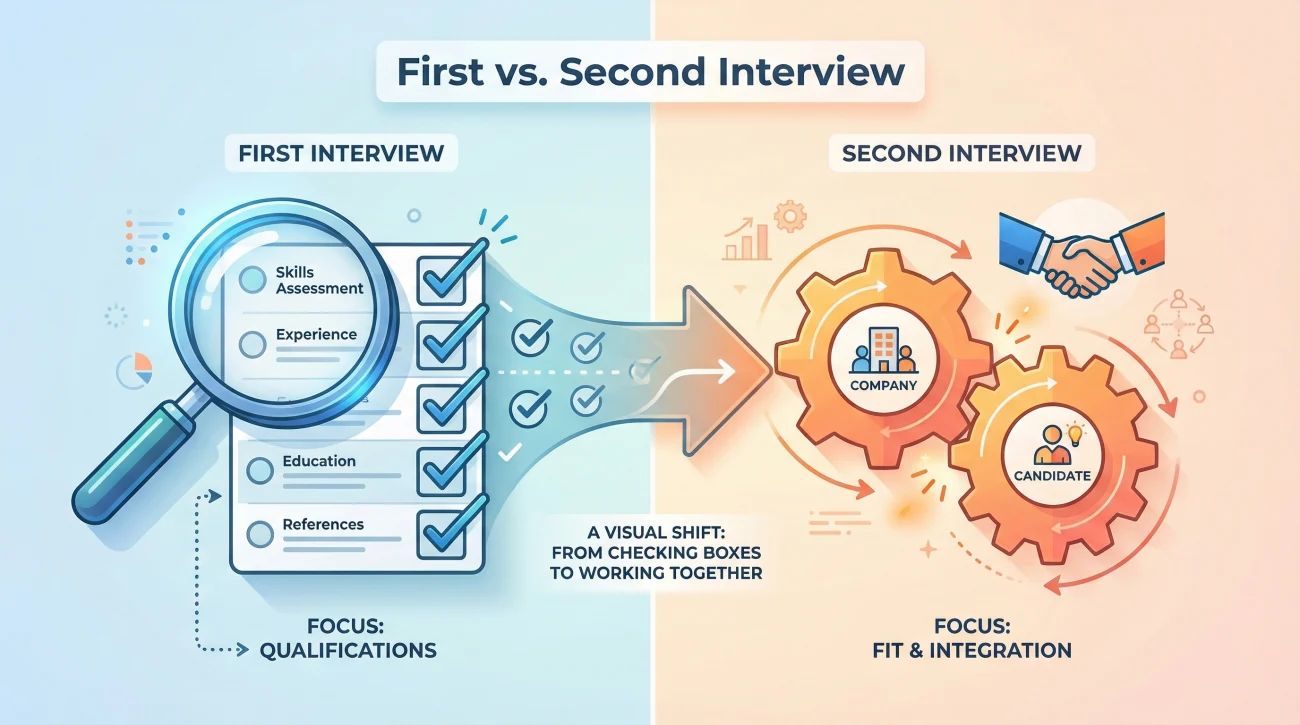
Second rounds are where interviews shift from “Are you qualified?” to “How would you actually work here?” You’re meeting new stakeholders, testing deeper claims, and confirming the fit on both sides.
Your job in the first minute is to show progression: what you understood from round one, what you thought about afterward, and why that reflection makes you an even stronger match today.
Second Interview Context
Different Audience
Second interviews often involve different interviewers: senior leaders, team members, cross-functional stakeholders, or executives. Each audience has different interests. Adjust your introduction based on who you’re speaking with.
Deeper Evaluation
First rounds filter. Second rounds select. Interviewers are assessing at a deeper level. They want to understand nuances, test specific claims, and evaluate how you’d actually function in the role.
Mutual Assessment
By round two, you’ve also learned more about the role. The interview is increasingly mutual. You’re evaluating them while they evaluate you, and your introduction can reflect that two-way dynamic.
Higher Stakes
Second interviews often determine offers. The organization has invested time getting you here. They’re looking for confirmation, not just exploration. Demonstrate you’re worth that investment.
| First Interview | Second Interview |
|---|---|
| Establish baseline qualifications | Confirm and deepen assessment |
| General introduction | Tailored to specific audience |
| Present your background | Build on what’s already known |
| Learning about the role | Demonstrating fit with insights gained |
| Making initial impression | Confirming and strengthening impression |
Second Round Strategy
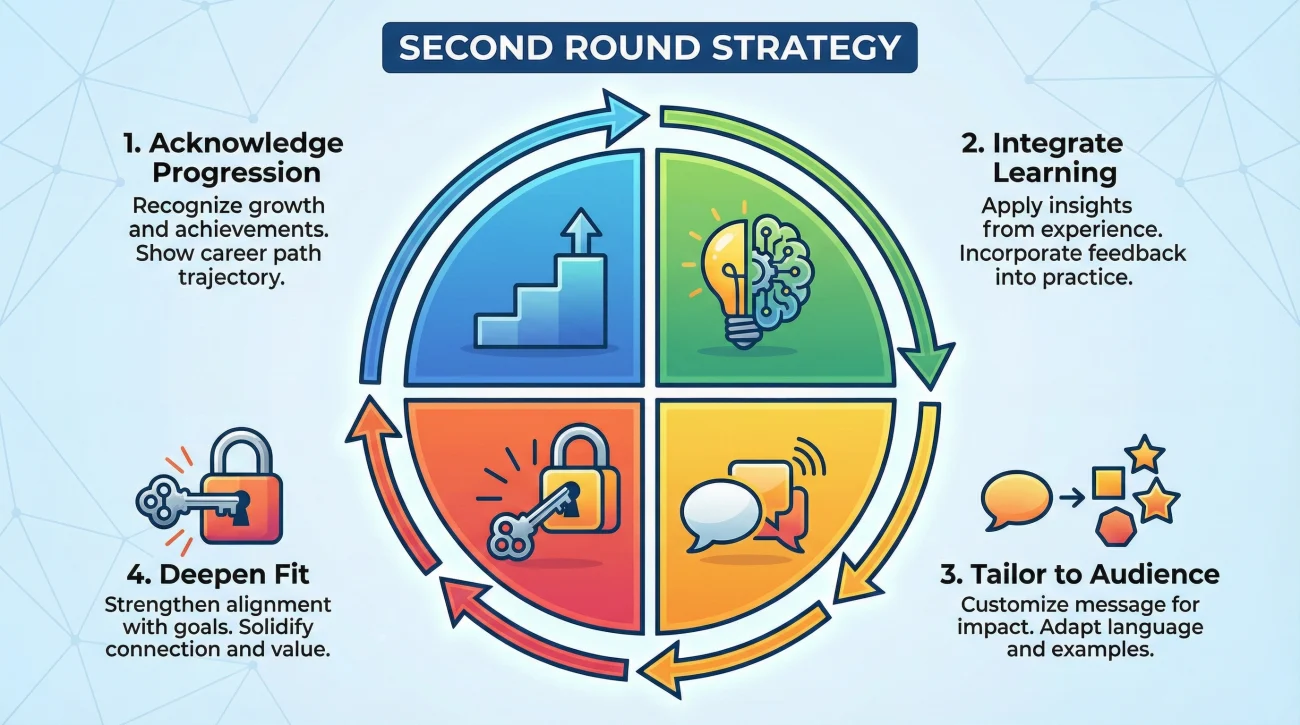
Acknowledge the Progression
Signal that you’re aware this is a continuation, not a fresh start. This shows awareness and prevents repeating what’s already been covered.
“I know you’ve seen my background from the first round, so I’d like to build on that with some thoughts that have developed since our last conversation.”
Integrate New Learning
Reference what you learned in round one. This demonstrates engagement and shows you’ve processed the information rather than treating interviews as isolated events.
Tailor to This Audience
If you’re meeting different people, emphasize aspects of your background most relevant to their perspective. A technical lead cares about different things than an executive.
Go Deeper on Fit
First-round introductions establish qualification. Second-round introductions should emphasize fit: cultural alignment, specific role requirements, and how you’d actually approach the work.
Sample Second Interview Introductions
Meeting Senior Leadership
“Thank you for having me back. I appreciated learning about the role in our first conversation, and it confirmed my interest in this opportunity.
Since we last spoke, I’ve thought more about how my experience scaling operations at my current company connects to the challenges you described. The growth trajectory you’re planning is similar to what I navigated two years ago, and I’ve been thinking about how those lessons would apply here.
I’m particularly interested in discussing the organizational structure questions you’re facing. Building the right team infrastructure during rapid growth is something I’ve done before and genuinely enjoy.”
Meeting the Team
“It’s great to meet the team. I’ve heard good things about your work from my conversation with your manager, and I’m excited to learn more about how you operate day-to-day.
A bit more about me: beyond what’s in the initial screening, I’m someone who values collaboration over hierarchy. In my current role, I work closely with cross-functional partners and believe the best solutions come from diverse perspectives.
I’m curious to understand how the team works together and where someone with my background could contribute most. I have specific ideas based on what I learned in round one, but I’d love to hear your perspective first.”
Final Round
“I appreciate reaching this stage, and I want to start by saying my interest has only grown through this process. Each conversation has reinforced that this role aligns with where I want to take my career.
What I’ve learned about your challenges with market expansion connects directly with the work I led last year. Since our first meeting, I’ve thought carefully about how I’d approach the first ninety days, and I have specific ideas about quick wins and longer-term initiatives.
I’m confident I can deliver value quickly while building toward the strategic goals you’ve outlined. I’d love to discuss what success looks like in year one and how my experience positions me to achieve it.”
For the foundational introduction framework, visit our complete self-introduction guide.
What to Include
Reference Round One
Mention something specific from the first interview. A challenge they described, a question that intrigued you, or an aspect of the role you’ve thought more about. This continuity shows engagement.
New Information
Add something that wasn’t in your first introduction. A different angle on your experience, a relevant example you didn’t mention, or thoughts that developed since round one.
Confirmed Interest
Express that your interest has been validated or strengthened by what you’ve learned. This reassures interviewers that you’re genuinely engaged, not just going through motions.
Preparation Evidence
Show you’ve done additional preparation. Research conducted after round one, questions you’ve developed, or specific thoughts about how you’d approach the role.
Evolution signal: Your second introduction should feel like a sequel, not a rerun. It builds on established foundation rather than rebuilding from scratch.
Second Round Mistakes
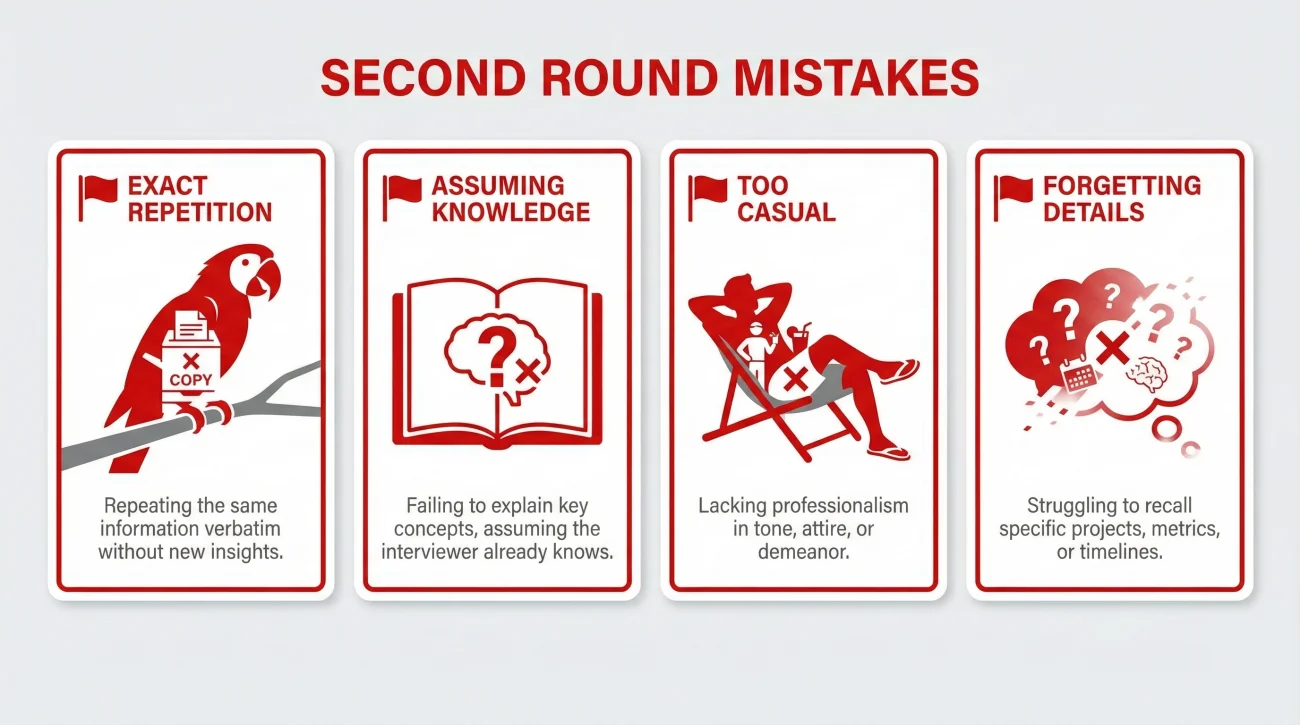
Exact Repetition
Giving the identical introduction from round one
This suggests you haven’t thought about the process or are operating on autopilot. Even if meeting new people, adapt rather than recite.
Assuming They Know Everything
If meeting new interviewers, provide enough context. They may have received notes but don’t assume comprehensive briefing. Strike the balance between fresh introduction and acknowledged progression.
Becoming Too Casual
Familiarity from round one shouldn’t breed informality. Maintain professionalism. The stakes are higher, not lower, in later rounds.
Forgetting Round One Details
If you can’t remember what you discussed or who you met, it signals disengagement. Take notes after interviews. Review them before subsequent rounds.
❓ FAQ
🎯 What if I’m meeting the same person again?
Acknowledge it directly. “Since we last spoke, I’ve thought more about…” or “Building on our previous conversation…” Then go deeper rather than repeating basics they already know.
💼 How much should I change my introduction?
Keep the core message consistent but adjust framing, emphasis, and details. Your professional identity remains the same. How you present it to different audiences and contexts should evolve.
⏰ Should I mention concerns from round one?
If you sensed hesitation about specific qualifications, you can proactively address them. “I wanted to expand on my experience with X, which we touched on briefly last time.” This shows self-awareness and follow-through.
📋 What if there was a long gap between interviews?
Provide slightly more context since memories fade. You might briefly reestablish key points while still evolving rather than repeating. Acknowledge the gap if appropriate: “It’s been a few weeks, so let me briefly recap…”
✨ How do I show increased enthusiasm without seeming desperate?
Be specific about what increased your interest rather than making general statements. “Learning about your approach to customer success made me more excited because…” is better than “I really really want this job.”
Move the Story Forward
A strong second interview introduction does three things quickly: it acknowledges this is round two, it adds something new, and it aims at fit, not biography. Reference what you learned, adjust your emphasis for the audience in front of you, and show you’ve already started thinking like the person who will do the job.
⚠️ Disclaimer: The interview strategies, sample answers, and negotiation tips provided in this guide are for educational purposes only. Hiring decisions are subjective and vary by company and industry. While these strategies are based on professional HR standards, they do not guarantee a specific job offer or result.