Borrowed Credibility
The question how would your boss describe you is a third-person mirror. It is not about what you wish were true, it is about what your work caused other people to believe after watching you perform.
It also tests whether you live in feedback. People who regularly ask for input can answer with calm specifics: patterns, behaviors, and outcomes. People who avoid feedback usually reach for vague compliments, and the vagueness shows.
In other words, this is a trust question. If you can quote the themes your manager repeats, and connect them to real results, you come across as self-aware and coachable, not rehearsed.
Drawing From Real Feedback
Performance Reviews
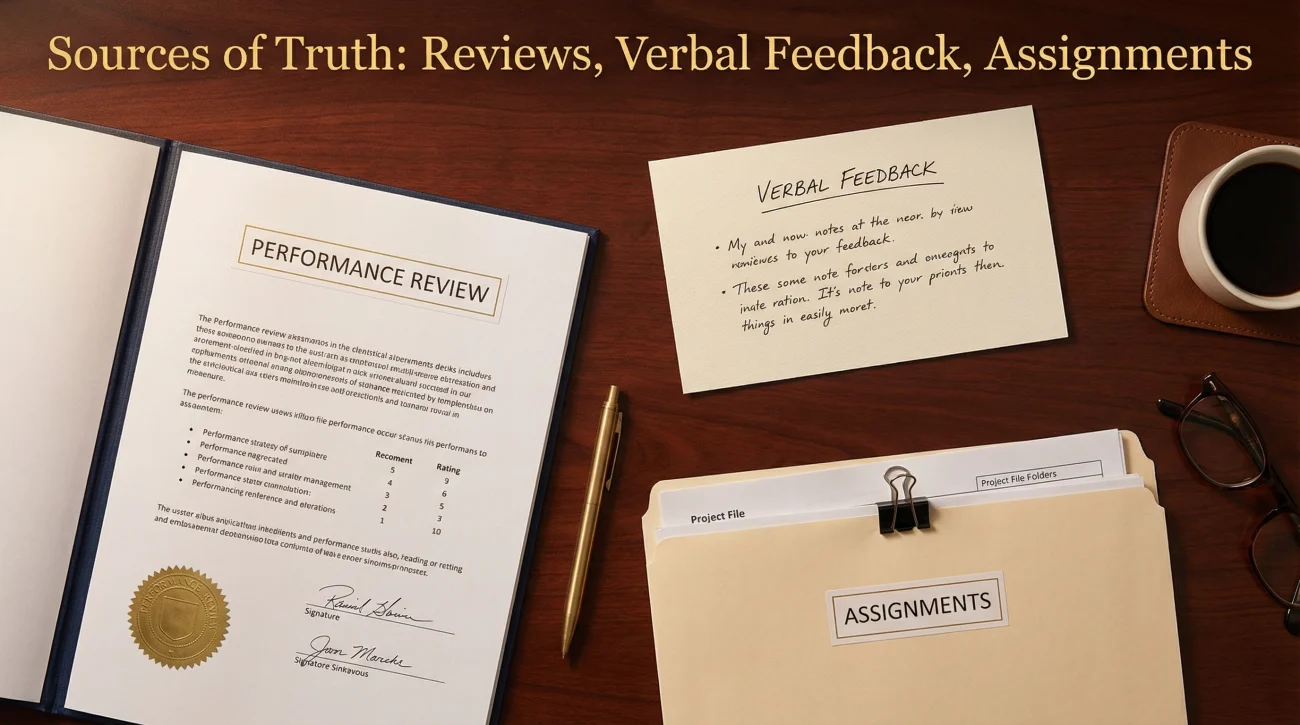
Your most credible source is actual performance review feedback. What did managers write about your strengths? What themes appear across multiple reviews? These documented observations carry weight because they were serious assessments, not casual comments.
Before interviews, review your past performance evaluations. Note recurring themes and specific phrases managers used. These become the foundation of your answer.
Verbal Feedback
Comments from one-on-ones, project debriefs, or casual conversations also count. “My manager mentioned after the product launch that she appreciated how I kept the team calm under pressure” is valuable even without formal documentation.
Reference Conversations
If past managers have served as references, you might know what they’ve said about you. This provides direct insight into how they would describe you to others.
Behavioral Evidence
What responsibilities were you given? Were you trusted with high-visibility projects? Were you asked to mentor others? These assignments reveal what your manager believed about your capabilities.
| Evidence Source | Credibility Level | How to Reference It |
|---|---|---|
| Written performance review | Highest | “In my last review, she wrote that…” |
| Direct verbal feedback | High | “She told me after the project that…” |
| Reference conversations | High | “When he served as a reference, he mentioned…” |
| Assignments given | Medium | “She consistently gave me X, which suggests…” |
Structuring Your Answer

Lead With Main Themes
Identify two or three consistent themes from manager feedback. These become the core of your answer. Start with the theme, then provide supporting evidence.
“I think she’d describe me as reliable and thorough. In my reviews, she’s consistently mentioned that she can hand me complex projects and trust they’ll be done right.”
Include Specific Quotes
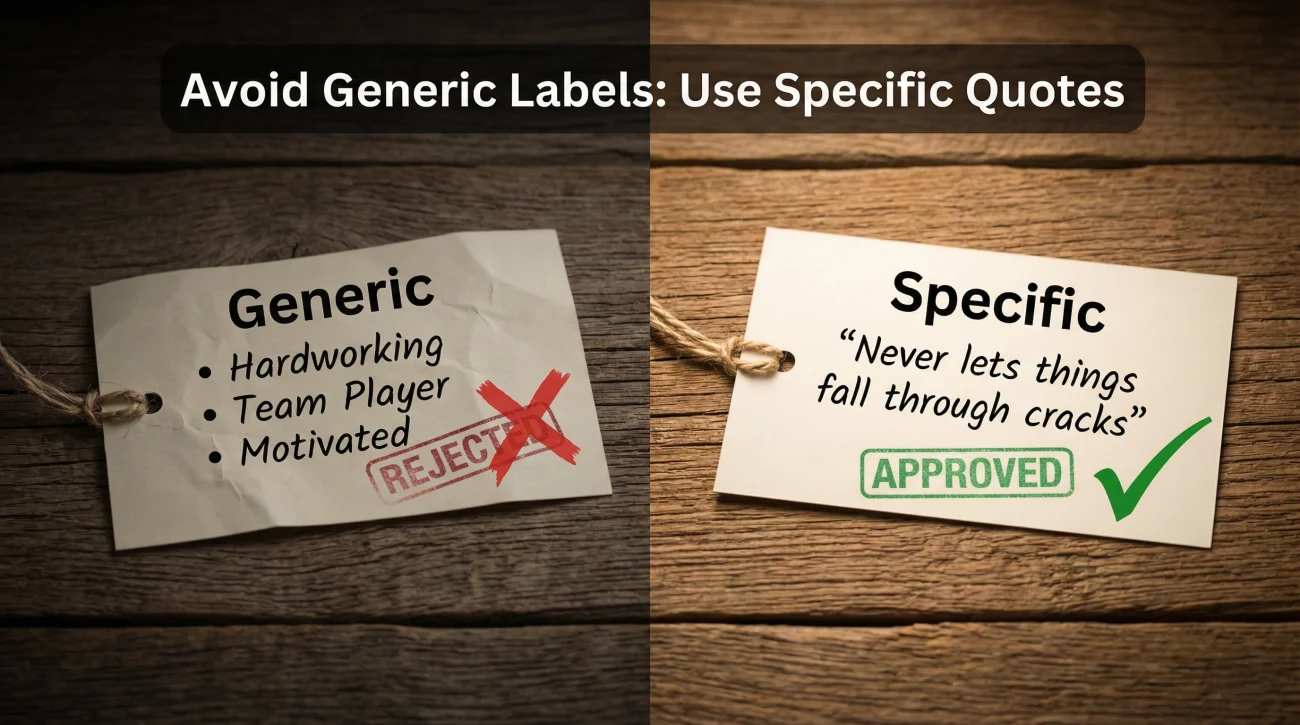
Direct quotes from reviews or feedback conversations add credibility. “She actually wrote in my review that I ‘never let things fall through the cracks'” is more convincing than general claims.
Consider Balance
You might include a development area if you can frame it constructively. “She’d probably also mention that I sometimes take on too much because I have trouble delegating” shows self-awareness while still being positive.
Address Multiple Managers
If you’ve had several managers, consider whether themes are consistent across them. “Across three managers at this company, the consistent feedback has been…” strengthens your case.
Sample Answers
Detail-Oriented Professional
“Based on my performance reviews and our conversations, I think my current manager would describe me as meticulous and dependable.
She’s mentioned multiple times that she appreciates how I catch errors that others miss. In my last review, she specifically wrote that my ‘attention to detail has saved the team from several potentially costly mistakes.’
She’d probably also say I’m someone who follows through. She’s told me she can assign me something and not worry about checking in because she trusts it will get done correctly and on time.”
Team Leader
“I believe my manager would describe me as someone who develops people and delivers results.
On the people side, he’s told me he values how I invest in my team’s growth. Two of my direct reports have been promoted in the past year, and he mentioned in my review that this reflects my coaching abilities.
On results, he’d say I’m accountable. When I commit to something, I deliver it. He actually used the phrase ‘she does what she says she’ll do’ in my last performance discussion, which I took as high praise.”
Balanced Perspective
“I think my manager would say I’m a strong problem-solver who takes initiative. She’s mentioned that she appreciates how I identify issues and propose solutions rather than just flagging problems.
She’d probably also note that I’m direct. In her words, ‘you always know where you stand with him.’ She’s said she values that I give honest feedback even when it’s uncomfortable.
If she were being complete, she might mention that I’m still developing patience with processes that seem inefficient. I’ve been working on that based on her feedback.”
For the foundational self-introduction framework, explore our interview preparation guide.
Pitfalls to Avoid
Fabricating Feedback
Don’t invent quotes or feedback you never received. Reference checks happen. Past managers get contacted. Fabrication creates serious risk and demonstrates exactly the kind of dishonesty employers fear.
Generic Self-Description
“She’d say I’m hardworking and a team player.”
This doesn’t demonstrate external perspective at all. Anyone could say this without any actual manager feedback. Ground your answer in specific, documented observations.
Revealing Conflict
If you had difficult relationships with managers, don’t air that conflict. Find something positive they would say, even if the overall relationship was strained. This question isn’t the place to discuss management problems.
Being Too Perfect
If your answer is entirely glowing with no development areas, it lacks credibility. Consider including one area of growth to show self-awareness and that you’ve received real, complete feedback.
Credibility marker: Specific quotes and examples signal truth. Vague generalities signal you’re making things up. Real feedback has texture and detail that invented feedback lacks.
❓ FAQ
🎯 What if I had a bad relationship with my boss?
Focus on a different manager if possible. If you must reference the difficult relationship, find something they would genuinely say that’s positive, even if overall the relationship was strained. Every manager appreciates something.
💼 Should I mention weaknesses they’d note?
A brief, constructively-framed development area can add credibility. “She’d also say I’m still working on slowing down and being more patient” shows you receive and act on feedback. Keep it minor and show progress.
⏰ How do I answer if I’ve only had one boss?
That’s fine. Focus on their feedback deeply. You can also mention how other senior colleagues or stakeholders would describe you to supplement limited manager feedback.
📋 What if I don’t remember specific review feedback?
Before interviews, review your past performance documents. If you don’t have access, think about verbal feedback and what responsibilities you were trusted with. These provide indirect evidence of how you were perceived.
✨ Should I use the same answer as “describe yourself in three words”?
The themes can overlap, but this question specifically asks for external perspective. Lead with what others have said about you rather than how you see yourself. The sourcing is the difference.
Ground It in Real Feedback
The safest way to close how would your boss describe you is to anchor it in evidence: a phrase they used, a metric they praised, or a responsibility they kept giving you because you handled it well. Keep it balanced, include one growth note if it feels natural, and you will sound credible instead of self-promotional. Done well, the answer signals strong manager relationships and a track record other people will happily stand behind.
⚠️ Disclaimer: The interview strategies, sample answers, and negotiation tips provided in this guide are for educational purposes only. Hiring decisions are subjective and vary by company and industry. While these strategies are based on professional HR standards, they do not guarantee a specific job offer or result.