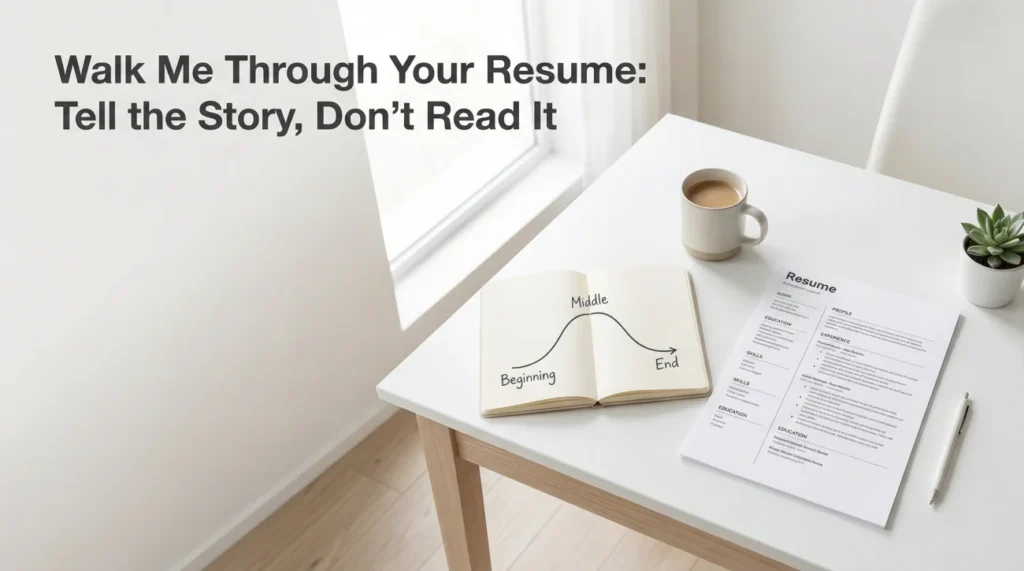
They Want the Plot, Not the PDF
When someone asks walk me through your resume, they are not asking for a live audiobook. They already skimmed the dates and titles. What they want is the story behind the moves, and whether your judgment matches the role they are hiring for.
Think of it as a highlight reel with context. Which choices were intentional, which were reactions, and what did you learn that changed how you work? The best answers turn each job into a reason, not a list.
If you can connect the dots, your resume becomes a narrative: progress, scope, impact, and momentum toward this next step. That is what makes the interviewer lean in, because it shows you understand your own career, not just your bullet points.
Two Valid Approaches

Chronological Approach
Moving through your career in order, from earliest relevant experience to now. This approach makes sense when your progression is clear and logical, when each role built naturally on the previous one, and when the chronological story itself demonstrates growth.
Works well for: Linear careers with clear progression, technical roles where skills accumulated over time, situations where the growth trajectory is the point.
Risk: Can become a boring recitation of dates and titles. Avoid by focusing on transitions and achievements rather than just listing positions.
Highlights Approach
Leading with what’s most relevant to this role, then providing context. This approach makes sense when your career has twists that need explanation, when your most recent role isn’t your most relevant, or when you want to control attention toward specific experiences.
Works well for: Career changers, people with diverse backgrounds, situations where the most relevant experience isn’t the most recent.
Risk: Can seem like you’re hiding something or avoiding your actual history. Balance highlights with enough chronological context to show you’re not being evasive.
| Approach | Best For | Watch Out For |
|---|---|---|
| Chronological | Linear progressions, clear growth stories | Becoming a boring timeline recitation |
| Highlights | Diverse backgrounds, career changes | Seeming evasive about your history |
| Hybrid | Most situations | Losing coherence trying to do both |
What to Include
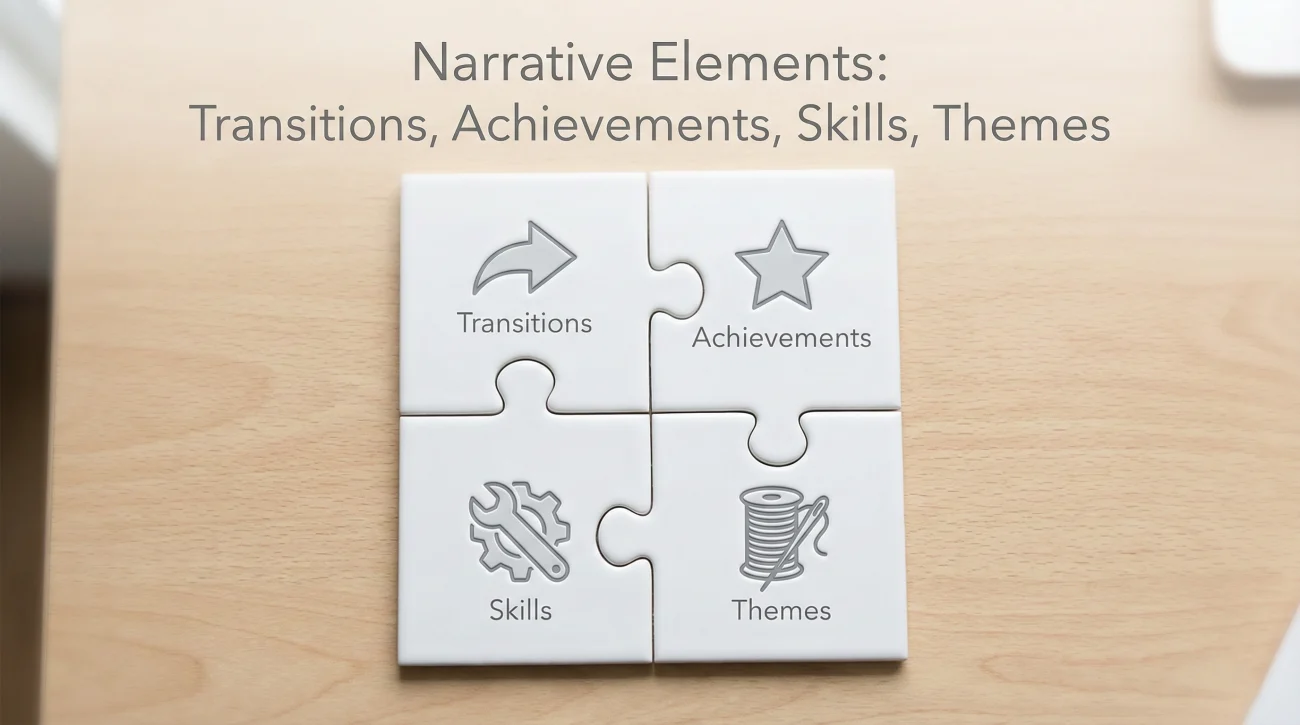
Transition Logic
Don’t just list roles. Explain why you moved from one to the next. “After three years mastering individual contributor work, I wanted to move into leadership, which led me to…” connects your jobs into a story rather than a list.
Key Achievements
For each significant role, include one or two notable accomplishments. Don’t list everything. Select what’s most impressive or most relevant to the role you’re interviewing for.
Skills Development
Show how your capabilities grew across your career. Each role should have added something. “That role is where I developed my expertise in…” ties your history to your current value.
Connecting Themes
Identify threads that run through your career. “Throughout my career, I’ve consistently gravitated toward…” or “A common theme has been…” helps interviewers see coherence even in diverse experiences.
Sample Resume Walkthroughs
Linear Career Progression
“I’ll walk you through my progression in finance. I started as a financial analyst at a manufacturing company right out of college, where I learned the fundamentals of corporate finance and FP&A. After three years, I was promoted to senior analyst managing forecasting for two business units.
I moved to my current company for a manager role, which gave me my first direct reports and broader scope. Over five years here, I’ve progressed to director, now leading a team of eight covering all of North American FP&A. The consistent thread has been building FP&A capabilities and developing people along the way.
I’m now ready for a VP role where I can shape financial strategy at an enterprise level, which is what brings me here.”
Diverse Background
“My background might look diverse on paper, but there’s a consistent thread: I’ve always worked at the intersection of technology and business communication.
I started in technical writing at a software company, then moved into product marketing where I translated technical capabilities into customer value. My most recent role as a product manager combines both: I work with engineering to build products and with marketing to position them.
Rather than being scattered, each move has expanded how I can bridge technical and business perspectives. That’s the capability I’d bring to this product leadership role.”
Career With Gaps
“I’ll give you the overview, and I’m happy to go deeper on any part. I spent my first eight years building expertise in operations at two logistics companies, reaching operations manager.
I took two years away from traditional employment to care for family, though I did consulting work during that time to stay connected to the field.
I returned eighteen months ago to my current role, where I’ve been applying everything I learned before with renewed energy. The time away actually gave me perspective that makes me a better operator.
I’m now looking for a director-level operations role where I can have broader impact.”
For the foundational “tell me about yourself” framework, see our complete introduction guide.
Common Mistakes

Actually Reading the Resume
“So, as you can see on my resume, from 2015 to 2018 I was at Company A as a coordinator…”
They can read. You need to interpret, contextualize, and add the story the document doesn’t tell.
Including Everything
You don’t need to mention every job, especially early-career or irrelevant positions. Focus on what matters for this interview. Brief summaries work for less relevant periods.
Equal Time for All Roles
Your most recent and most relevant experience deserves more airtime than a job you held briefly a decade ago. Allocate your time proportionally to relevance.
Negative Transition Explanations
“I left because my boss was terrible and the company was dysfunctional.”
Even if true, negative explanations raise red flags. Find positive framing for transitions: seeking growth, new challenges, better alignment with goals.
Key insight: The resume walkthrough is your chance to be the narrator of your career rather than letting the document speak for itself. The same facts can tell very different stories depending on how you present them.
❓ FAQ
🎯 How long should the walkthrough be?
Two to three minutes for most careers. Longer for senior executives with extensive histories, shorter for early-career candidates. Give enough context to tell a story without going into excessive detail on every role.
💼 Should I start from the beginning or present?
Either can work. Starting from the present ensures you cover your most relevant experience if time is cut short. Starting chronologically is more traditional and works well for linear progressions. Choose based on your specific story.
⏰ How do I handle employment gaps?
Acknowledge them briefly and move on. “I took time for family responsibilities” or “I used that period to pursue additional education” is sufficient. Don’t dwell unless the interviewer asks follow-up questions.
📋 What if I’ve had many short-term jobs?
Group them thematically if possible. “During that period, I did several contract roles in healthcare IT” summarizes without detailing each one. Be prepared to explain patterns if asked, ideally with positive framing.
✨ How is this different from “tell me about yourself”?
The resume walkthrough is explicitly tied to your work history document and typically expects more chronological coverage. “Tell me about yourself” is broader and can emphasize current identity and future goals more heavily than historical detail.
Narrate Decisions and Outcomes
Your strongest finish for walk me through your resume is simple: tie the timeline to a single theme, then land on why this role is the logical next chapter. Mention one standout result from the most relevant job, keep the rest as short signposts, and end with intent: “This is where my skills compound.” If you sound like you chose your path on purpose, you stop being a candidate with history and become a candidate with direction.
⚠️ Disclaimer: The interview strategies, sample answers, and negotiation tips provided in this guide are for educational purposes only. Hiring decisions are subjective and vary by company and industry. While these strategies are based on professional HR standards, they do not guarantee a specific job offer or result.