Connect the Dots Before They Try
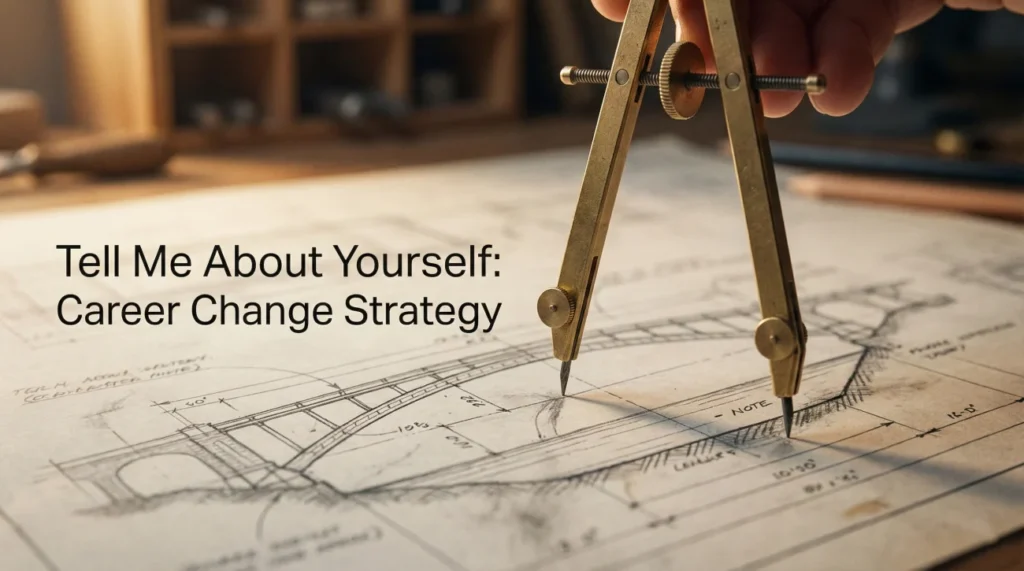
A career change is a story problem: the facts might be true, but the meaning is not obvious yet. In tell me about yourself for career changers, lead with the role you are moving toward, then immediately translate your past into skills that belong there.
Pick one or two past situations that look different on paper but match the same underlying work: solving messy problems, influencing people, shipping outcomes, or owning a metric.
Finally, name the bridge clearly: what you have already done, what you are learning now, and why this role is the logical next step. When you do that, the switch feels intentional, not random.
The Career Changer Approach
Own Your Story
Don’t apologize for your background or act embarrassed about changing directions. Career changes are increasingly common and often indicate adaptability, courage, and self-awareness. Present your path as intentional, not accidental.
Explain the Why
Interviewers need to understand your motivation. Why are you making this change? What draws you to this new field? Without a compelling answer, they’ll assume you’re either running from failure or making an impulsive decision.
The strongest motivations combine genuine interest in the new field with recognition that your previous path wasn’t the right fit. “I discovered that what I loved about teaching was helping people understand complex ideas, and I realized I could do that in a corporate learning role while building a more sustainable career.”
Highlight Transferable Skills
Every career builds skills that transfer to other contexts. Project management, communication, analysis, problem-solving, client relationships, leadership. Identify skills from your previous career that apply to this new direction and make those connections explicit.
Address the Gap
Acknowledge what you don’t have and explain how you’re addressing it. Have you taken courses? Built projects? Gotten certifications? Volunteered in the new field? Evidence that you’re actively building relevant capability strengthens your case.
| From This Field | Transferable Skills |
|---|---|
| Teaching | Communication, curriculum design, presentation, patience |
| Military | Leadership, operations, discipline, working under pressure |
| Hospitality | Customer service, problem-solving, multitasking, composure |
| Healthcare | Attention to detail, patient communication, crisis management |
| Journalism | Research, writing, deadline management, interviewing |
Structuring the Pivot Introduction
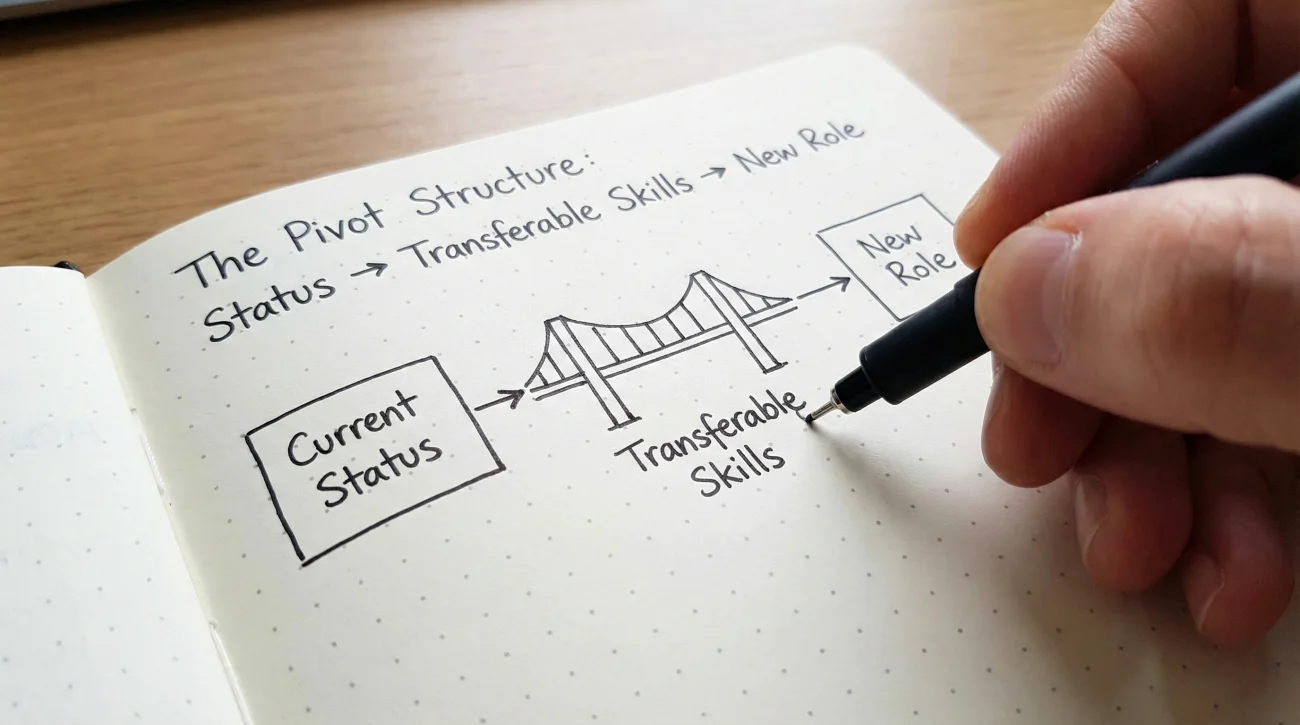
Where You Are Now
Start with your current situation, including that you’re making a career transition. Be direct about the change rather than hiding it.
“I’m transitioning into product management after eight years as a high school science teacher.”
Relevant Background
Share your previous experience with emphasis on transferable elements. Connect your past work to requirements of the new role.
Transition Motivation
Explain why you’re making this change. What attracted you to the new field? What realization prompted the pivot? Make the motivation genuine and compelling.
Bridge Building
Describe what you’ve done to prepare for this transition. Courses, certifications, side projects, volunteering, informational interviews. Show active investment in your new direction.
Unique Value Proposition
Explain why your different background is actually an asset. What perspective do you bring that traditional candidates lack?
Sample Career Change Introductions
Teacher to Corporate Training
“I’m making the transition from classroom teaching to corporate learning and development after ten years teaching high school biology. I loved teaching but realized that what I most enjoyed was designing how people learn, not the specific context of a high school classroom.
In my teaching career, I developed curriculum that improved student test scores by twenty percent, mentored new teachers, and led professional development workshops for our district. These are essentially instructional design and facilitation skills applied in an education setting.
Over the past year, I’ve completed a certificate in instructional design, volunteered to create training materials for a nonprofit, and done extensive informational interviews with L&D professionals. I’m confident the transition makes sense, and I believe my deep experience with learning and adult education brings value that traditional corporate trainers might not have.”
Military to Project Management
“I recently left the Army after twelve years as a logistics officer, and I’m pursuing project management in the private sector. My military career was essentially project management at scale: coordinating complex operations, managing resources, leading teams, and delivering under pressure.
My last assignment involved managing supply chain operations for a brigade of three thousand soldiers. I oversaw a team of forty, managed a budget of several million annually, and coordinated across multiple organizational units with competing priorities.
I’ve earned my PMP certification to translate my military experience into civilian terms, and I’ve spent the past few months learning how project management works in corporate environments. I’m drawn to your company because you value operational excellence, which aligns with my background, and I’m excited to apply my skills in a new context.”
Creative Professional to UX Design
“I’m a graphic designer transitioning into UX design after seven years in branding and marketing. I’ve always been interested in how people interact with design, not just how design looks, and UX lets me focus on that human-centered approach.
In my design career, I’ve developed strong visual skills, learned to understand client needs through research, and become comfortable presenting and defending design decisions. These skills directly apply to UX work.
To prepare for this transition, I completed a UX certification, built a portfolio of case studies including a redesign of a local nonprofit’s website, and have been doing freelance UX projects for the past six months. I bring both the visual design foundation that some UX designers lack and genuine enthusiasm for user research and testing.”
For more frameworks on career transitions, visit our introduction guide.
Addressing Interviewer Concerns
Commitment Questions
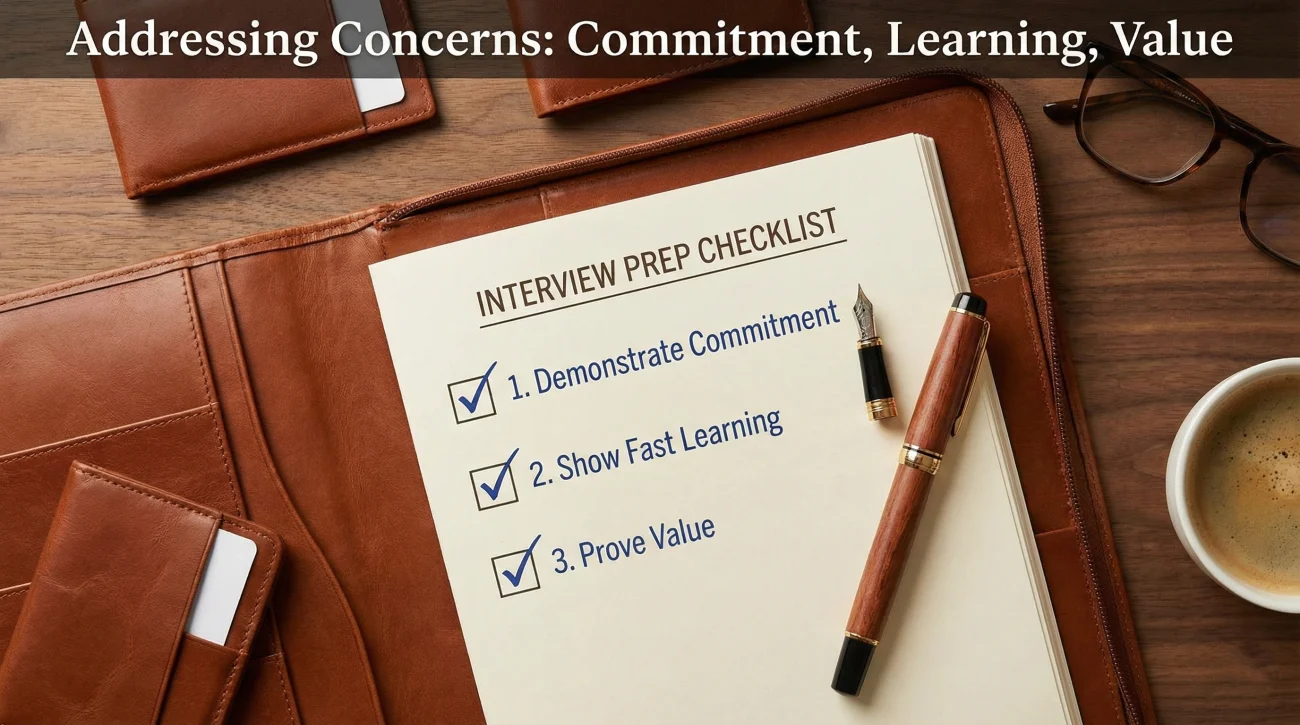
Interviewers wonder if you’ll stick with this new direction or change again soon. Address this by demonstrating serious investment: time spent preparing, research conducted, skills built. Show this isn’t a whim.
Learning Curve Concerns
Acknowledge that you have things to learn while emphasizing transferable skills that accelerate your development. “I’ll need to learn your specific tools and processes, but my analytical skills and project management experience mean I’ll pick them up quickly.”
Compensation Expectations
Career changers sometimes need to accept lower compensation initially. Be prepared to address this if it comes up, showing you’ve thought realistically about the transition.
The pivot advantage: Career changers who successfully make the case often beat traditional candidates. You bring diverse perspective, demonstrated adaptability, and genuine enthusiasm that sometimes exceeds candidates who’ve been on a linear path.
❓ FAQ
🎯 How do I explain leaving a stable career?
Focus on what you’re moving toward, not what you’re leaving. “I’m excited to apply my skills in an environment where I can see direct business impact” is better than “I was burned out and needed a change.” Positive framing matters.
💼 What if my reasons for changing are negative?
Find the positive framing. Even if you’re escaping burnout or a bad situation, there should be something pulling you toward the new field. Lead with attraction to the new direction rather than rejection of the old one.
⏰ How much previous experience should I include?
Include enough to establish credibility and demonstrate transferable skills, but don’t dwell on irrelevant details. Every element of your previous career you mention should connect to why you’re qualified for this new direction.
📋 What if I have no direct experience in the new field?
Emphasize preparation activities: courses, certifications, side projects, volunteer work, informational interviews. These demonstrate serious commitment and help build relevant experience even while still in your previous career.
✨ Should I address the career change upfront?
Yes. The change is obvious from your resume, so addressing it directly shows confidence. Trying to hide or minimize it seems evasive. Own your pivot story from the beginning.
Make Your Switch Sound Deliberate
A strong tell me about yourself for career changers finishes by removing doubt. Name the bridge one more time: what transfers, what you have already proven, and why this move fits now.
End with a sentence that points forward to this exact role. When the future sounds concrete, your unconventional path becomes a feature, not a risk.
⚠️ Disclaimer: The interview strategies, sample answers, and negotiation tips provided in this guide are for educational purposes only. Hiring decisions are subjective and vary by company and industry. While these strategies are based on professional HR standards, they do not guarantee a specific job offer or result.