Same You, Two Dialects
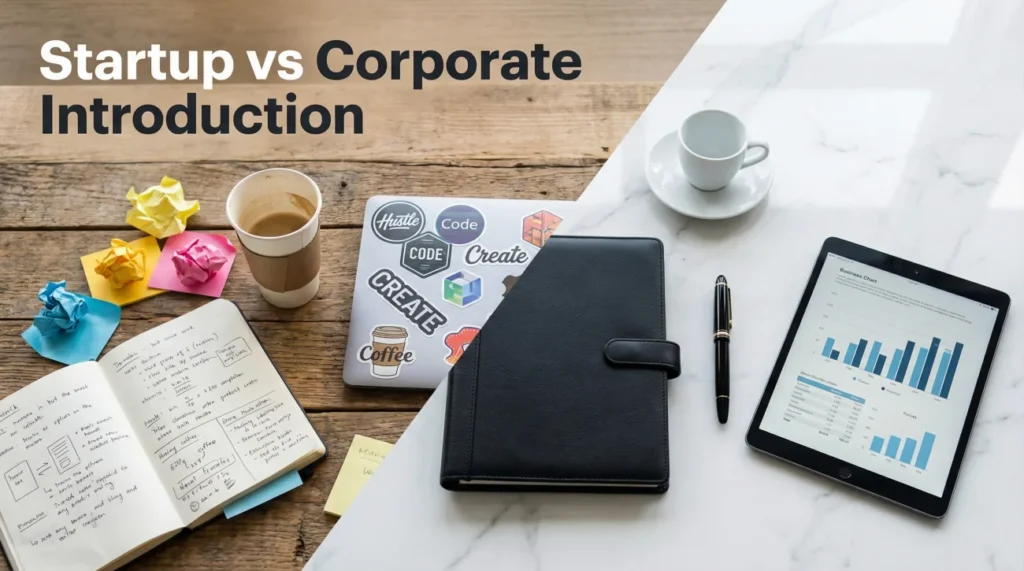
The difference in a startup vs corporate introduction is not about changing your personality. It is about choosing the parts of your story that translate. A startup hears one set of signals. A corporation hears another.
Startups often listen for ownership, speed, and comfort with messy problems. Large companies often listen for depth, stakeholder navigation, and confidence inside complex systems. The same achievement can be framed as scrappy impact or scalable process.
The goal is alignment, not acting. You are still you, you are just speaking in a way that matches the environment you are stepping into.
The Startup Introduction
Tone and Energy
Startups typically appreciate direct, energetic communication. Less formality, more personality. Show genuine enthusiasm for the mission, not just the job. Passion matters because startup work is hard and passion sustains effort.
Emphasize Versatility
Startups need people who wear multiple hats. Highlight times you went beyond your job description, learned new skills quickly, or handled responsibilities outside your comfort zone. Specialists who can only do one thing struggle in startup environments.
Ambiguity Tolerance
Startups operate with incomplete information and constant change. Show that you can function without perfect clarity. Examples of navigating uncertainty or building things from scratch resonate.
Direct Impact
At startups, individual contribution is visible. Emphasize situations where your work directly moved the needle. Skip stories about influencing large organizations and focus on tangible personal impact.
Mission Connection
Startup work is often grueling. People sustain effort because they believe in what they’re building. Articulate genuine connection to this company’s mission, not just interest in having a job.
| Startup Values | How to Show It |
|---|---|
| Versatility | Examples of wearing multiple hats |
| Speed | Stories of quick execution and iteration |
| Ownership | Taking responsibility beyond job description |
| Scrappiness | Doing more with less, creative solutions |
| Mission alignment | Genuine enthusiasm for what they’re building |
The Corporate Introduction
Tone and Professionalism
Large companies generally expect more polished, formal communication. This doesn’t mean stiff or boring, but it does mean measured and professional. Demonstrate you can represent the company in formal contexts.
Emphasize Scale Experience
Corporations operate complex systems with many stakeholders. Highlight experience working within large organizations, managing complex processes, and navigating matrix structures. Small company experience alone may raise fit questions.
Process Appreciation
Large companies have processes for reasons. Show you understand why structure exists and can work effectively within it. Candidates who seem allergic to process worry corporate interviewers.
Depth of Expertise
Unlike startups that need generalists, corporations often hire for specialized roles. Emphasize depth in your specific area. Show you’re an expert in your function, not a generalist doing many things adequately.
Stakeholder Management
Corporate work involves influencing without authority, managing up, and navigating political dynamics. Examples of stakeholder alignment, cross-functional collaboration, and organizational influence resonate.
| Corporate Values | How to Show It |
|---|---|
| Expertise depth | Deep specialization in your function |
| Process capability | Working effectively within systems |
| Scale experience | Operating in large, complex organizations |
| Stakeholder skills | Cross-functional influence and alignment |
| Professionalism | Polished communication and presence |
Side-by-Side Examples
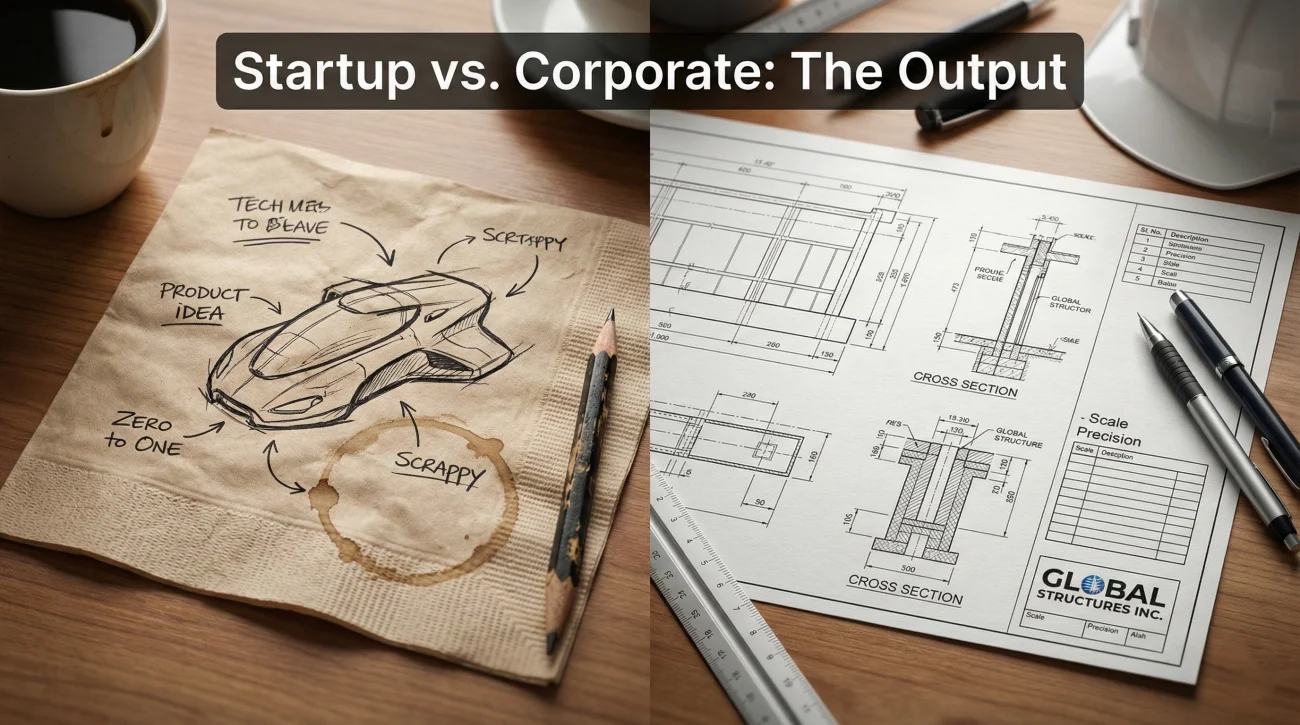
Startup Version
“I’m a product person who loves building things from zero to one. For the past four years, I’ve been at a series B company where I’ve done a bit of everything: product strategy, user research, even writing help documentation when we were short-staffed.
What I enjoy most is the ambiguity of early-stage work. My best project was building our mobile app when we had no mobile expertise. I learned React Native in a month and shipped a working product that eventually drove thirty percent of our signups.
I’m drawn to what you’re building because I’ve experienced the problem you’re solving firsthand. I’d love to be part of figuring out how to make this work at scale.”
Corporate Version
“I’m a product manager with eight years of experience in enterprise software, specializing in platform products. Currently I lead a team of four PMs at TechCorp, where we own products generating approximately fifty million in annual revenue.
My expertise is managing complex technical products with multiple stakeholder groups. I’ve developed strong relationships with engineering, sales, and customer success, and I’m experienced at aligning diverse interests around product priorities.
I’m interested in your company because the scale of your platform and the complexity of your enterprise customer base match where I want to apply my experience. I’m ready to contribute to products that impact millions of users.”
For a complete self-introduction framework, explore our interview preparation guide.
Reading the Culture
Culture Signals
Before interviewing, research culture signals. Job descriptions using casual language suggest startup energy. Formal postings with extensive requirements suggest corporate culture. Look at company communications, social media, and Glassdoor reviews.
Interview Process Itself
The interview process reveals culture. Startups often move fast with fewer rounds. Corporations typically have structured, multi-stage processes. The format tells you something about how they operate.
The Middle Ground
Many companies fall between pure startup and massive corporation. Scale-ups, mid-sized companies, and corporate innovation groups blend characteristics. Read each situation individually rather than forcing binary categories.
Authenticity matters: Adapting isn’t pretending. If you genuinely hate process, don’t pretend to love it for a corporate role. If you need structure, don’t fake startup flexibility. The adaptation should emphasize real aspects of yourself that fit each environment.
Making the Transition
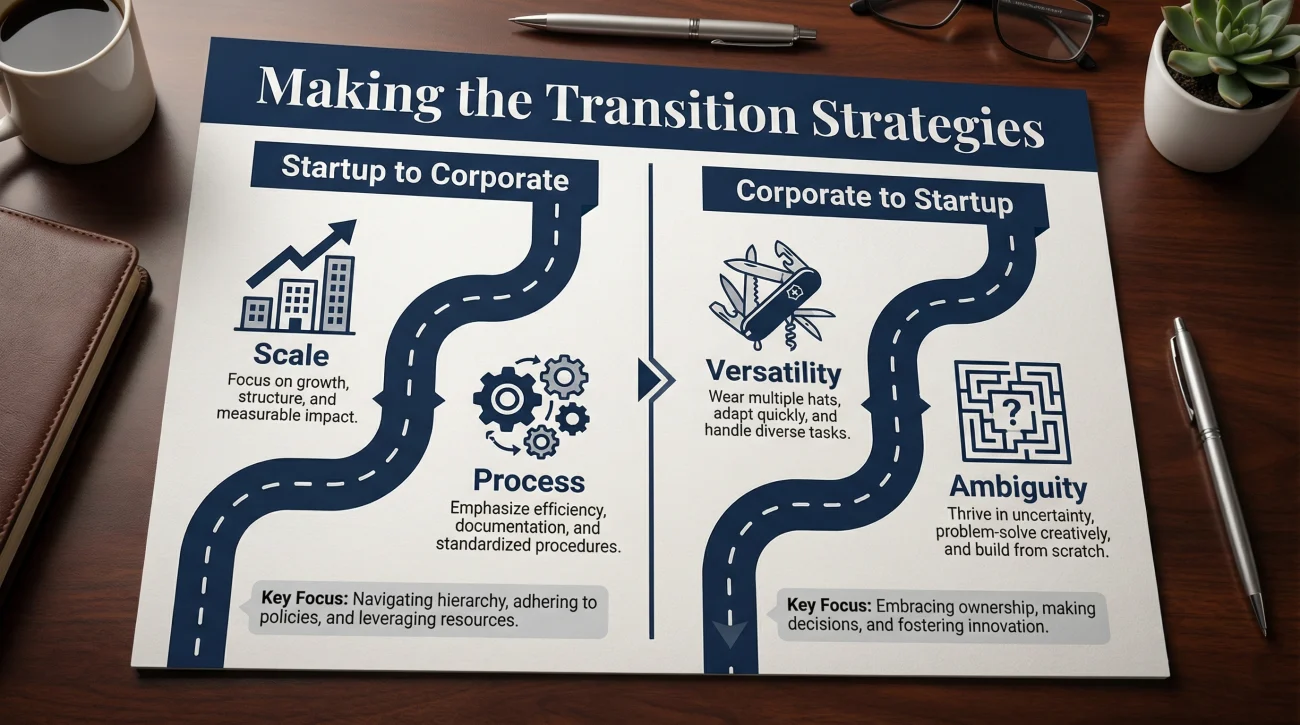
Startup to Corporate
Emphasize that you’re ready for more structure and scale. Highlight any experience working with larger organizations as partners or customers. Address concerns about process tolerance directly.
“After five years in startups, I’m looking for an environment where I can go deeper on product craft rather than constantly context-switching. I’ve realized I want to build expertise at scale.”
Corporate to Startup
Emphasize versatility and willingness to operate without support systems. Highlight any entrepreneurial experiences, side projects, or times you functioned with ambiguity.
“While I’ve been at large companies, I’ve always sought the most ambiguous, greenfield projects. I started our innovation lab with no playbook and built it from scratch within the corporate structure.”
❓ FAQ
🎯 How formal should I be in startup interviews?
Match their energy. If interviewers are casual, you can be too. If they’re more formal, adjust accordingly. When uncertain, start slightly more professional and calibrate based on their communication style.
💼 What if I have only corporate experience for a startup role?
Find the most startup-like experiences within corporate: new initiatives, turnaround situations, innovation projects, working with limited resources. Everyone has examples of ambiguity and scrappiness if they look for them.
⏰ How do I know which culture is right for me?
Reflect honestly on what energizes and drains you. Do you thrive in structure or feel constrained? Do you enjoy ambiguity or find it stressful? Your honest preferences should guide where you focus your search.
📋 Should I mention startup experience to corporations?
Yes, but frame it appropriately. Emphasize skills that transfer: ownership, resourcefulness, cross-functional work. Address potential concerns about adjusting to structure. Show you understand the differences.
✨ What about mid-sized companies?
Research each company individually. Many mid-sized companies blend characteristics. Scale-ups may have startup energy with growing structure. Established mid-market companies may feel quite corporate. Don’t assume based on size alone.
Tune for the Room
Mastering startup vs corporate introduction choices comes down to emphasis. For startups, spotlight adaptability, direct impact, and mission pull. For corporations, spotlight specialization, scale, and stakeholder fluency. If you keep your examples true and your tone culturally aware, you will sound natural, not rehearsed, in either setting.
⚠️ Disclaimer: The interview strategies, sample answers, and negotiation tips provided in this guide are for educational purposes only. Hiring decisions are subjective and vary by company and industry. While these strategies are based on professional HR standards, they do not guarantee a specific job offer or result.