The Transition Moment
You’ve spent years preparing for this moment. Coursework completed. Degree earned. And now someone asks tell me about yourself as a fresh graduate and you’re suddenly unsure what to say. You’re not a student anymore, but you’re not quite a professional yet either. You exist in the uncomfortable space between identities.
This transition is actually your advantage if you frame it correctly. Fresh graduates bring current knowledge, recent training, and adaptability that experienced professionals sometimes lack. You haven’t developed bad habits or outdated approaches. You’re eager to learn, open to feedback, and willing to work hard to prove yourself.
The hiring manager interviewing you knows exactly what a fresh graduate looks like. They’re not expecting a senior professional. They’re looking for someone who demonstrates potential, professionalism, and readiness to contribute while learning.
What Fresh Graduates Can Leverage
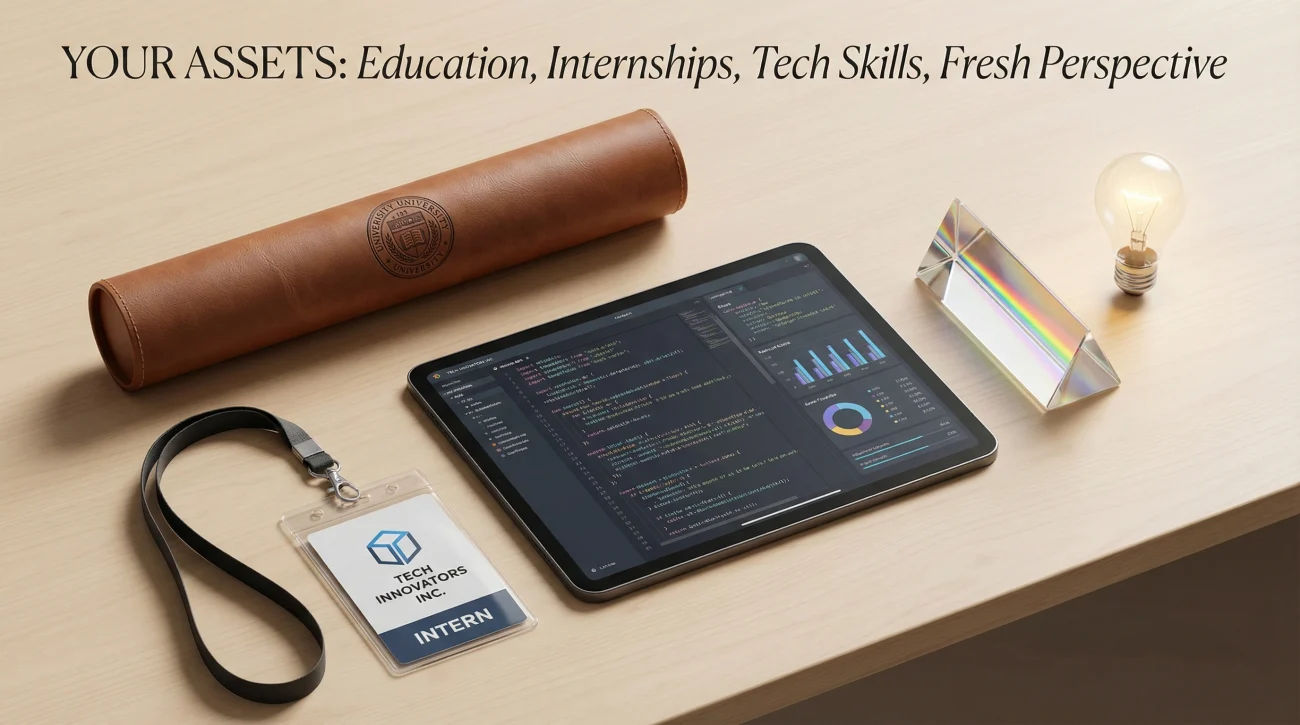
Education as Foundation
Your degree represents years of focused study. Rather than simply naming your major, demonstrate how your education prepared you for this role. Mention relevant coursework, capstone projects, or research that connects directly to the position.
This is especially powerful when you can show depth beyond basic requirements. “I majored in marketing but took additional statistics courses because I wanted to understand the data-driven side of modern marketing” shows initiative and intentional skill-building.
Internships and Practical Experience
Internships are your bridge between academic and professional worlds. If you completed internships, treat them as seriously as any job experience. Describe responsibilities, contributions, and what you learned. Quantify achievements when possible.
Even brief internships matter. “During my summer internship at the accounting firm, I assisted with audit preparation for three clients and developed Excel models that the team continued using after I left” demonstrates real contribution.
Technical and Soft Skills
Recent graduates often have current technical skills that experienced workers may not. You’ve learned the latest software, programming languages, or methodologies. Combine these with soft skills developed through group projects, presentations, and campus activities.
Fresh Perspective
You haven’t been doing things “the usual way” for years. This fresh perspective is valuable. Companies hire new graduates partly because they bring new ideas and question assumptions that long-tenured employees no longer notice.
| Fresh Graduate Asset | How to Present It |
|---|---|
| Recent education | Connect specific coursework to role requirements |
| Internship experience | Describe contributions and achievements with specifics |
| Current technical skills | Mention specific tools, languages, or methodologies |
| Adaptability | Show willingness to learn and take direction |
| Energy and enthusiasm | Express genuine excitement without overdoing it |
Building Your Introduction
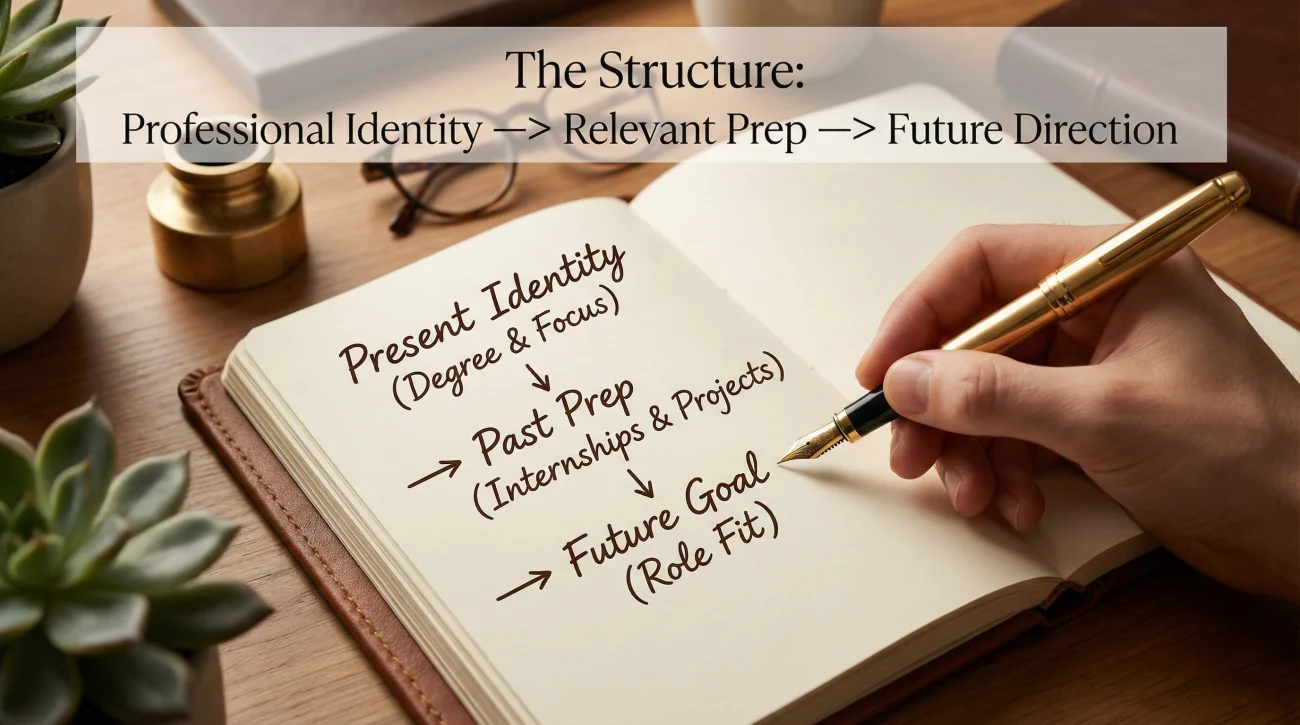
Present: Your Professional Identity
You’re no longer a student. Present yourself as a professional who recently completed their education. Lead with your degree and field, then immediately pivot to what you’re pursuing.
“I recently graduated from State University with a degree in finance and I’m focused on beginning my career in investment analysis.”
Past: Relevant Preparation
Select experiences that demonstrate readiness for this specific role. Internships are primary if you have them. Academic projects, relevant coursework, and campus leadership fill gaps if internship experience is limited.
Connect experiences explicitly to the role rather than just listing them. “My internship at XYZ Company taught me the basics of financial modeling, and my senior project involved analyzing market trends, both of which apply directly to what this analyst role requires.”
Future: Clear Direction
Show you’ve thought about your career trajectory and how this role fits. Fresh graduates who demonstrate career intentionality stand out from those who seem to be applying randomly.
“I want to build expertise in equity research over the next several years, and this junior analyst position would give me the foundation to develop in that direction.”
Sample Introductions
Business Graduate With Internship
“I graduated last month from State University with a degree in marketing and a minor in data analytics. During my final two years, I completed two marketing internships that gave me hands-on experience with campaign management and customer research.
At my most recent internship with a consumer goods company, I helped run social media campaigns that reached over fifty thousand users and conducted customer surveys that informed our product positioning. I learned how to translate data into actionable recommendations, which I understand is central to this brand manager role.
I’m excited about this opportunity because your company’s approach to data-driven marketing aligns with how I think about the field, and I want to develop my skills in an environment that takes analytics seriously.”
Technical Graduate
“I just completed my computer science degree at Tech University with a focus on software development. My senior capstone project was building a mobile application for campus event management that’s actually being used by our student activities office now.
I interned last summer at a startup where I worked on their backend API and learned how software development works in a real production environment. The experience taught me how different it is to write code that needs to scale and be maintained by others versus code that just needs to work for a class project.
I’m applying here because I want to join a larger engineering team where I can learn best practices and contribute to products with significant user bases.”
Limited Experience
“I graduated from Community College with my associate degree in business administration, and I’m now finishing my bachelor’s online while looking for full-time work. I didn’t have traditional internships, but I’ve worked throughout college in retail management.
Managing a store team of eight people while taking classes taught me how to handle scheduling, resolve customer issues, and keep operations running smoothly. I’ve processed inventory, managed budgets, and dealt with difficult situations under pressure.
I’m interested in this operations coordinator role because it would let me apply the organizational and people skills I’ve developed in retail to a corporate environment where I can continue growing professionally.”
For a complete framework on structuring your answer, visit our interview introduction guide.
Pitfalls to Avoid

Still Identifying as a Student
“I’m a student at State University…”
If you’ve graduated, you’re no longer a student. Present yourself as a professional who recently completed their education. This mindset shift matters.
Reciting Your Resume
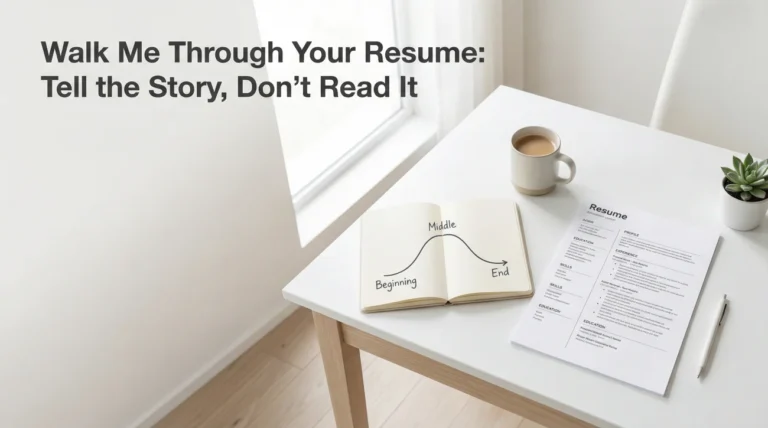
Your interviewer has your resume in front of them. They don’t need you to read it aloud. Select highlights and weave them into a narrative rather than listing chronologically.
Sounding Desperate
“I really need a job and I’ll do anything.”
Employers want candidates who chose them specifically, not someone who would take any offer. Even if you’re anxious to start working, present yourself as selective and intentional.
Overclaiming Expertise
Fresh graduates sometimes overstate their capabilities to compensate for limited experience. This backfires. Interviewers can tell when you’re exaggerating, and it damages trust. Be confident about what you know while acknowledging you have much to learn.
Balance to strike: Project confidence in your potential and preparation while showing genuine humility about what you still need to learn. This combination is exactly what employers want from entry-level candidates.
❓ FAQ
🎯 Should I mention graduation date?
Yes, briefly establish when you graduated to give context. “I graduated last May” or “I just completed my degree this semester” is sufficient. Don’t dwell on it.
💼 What if my degree doesn’t match the job?
Focus on transferable skills and explain your interest in this field. Many successful professionals work outside their degree area. Emphasize relevant coursework, skills, or experiences that connect to the role.
⏰ How much should I emphasize being new?
Acknowledge it briefly without dwelling on it. Being new is obvious. What matters is demonstrating readiness to contribute and grow. Focus more on what you bring than on what you lack.
📋 Should I talk about career goals?
Yes, showing intentional direction is valuable. Keep goals realistic and connected to the role. “I want to develop expertise in financial analysis over the next few years” is better than “I want to be CFO within five years.”
✨ How do I stand out from other fresh graduates?
Be specific rather than generic. Instead of “I’m a hard worker,” describe what you actually accomplished. Show genuine knowledge of and interest in the company. Demonstrate self-awareness about your development areas.
Launch Your Career Story
Answering tell me about yourself as a fresh graduate marks the beginning of your professional narrative. Lead with your completed education, highlight internships and relevant experiences that demonstrate readiness, and connect clearly to why this role fits your direction. You’re not apologizing for being new. You’re presenting someone prepared, capable, and ready to contribute while continuing to learn. That combination is exactly what employers hiring for entry-level positions want to find.
⚠️ Disclaimer: The interview strategies, sample answers, and negotiation tips provided in this guide are for educational purposes only. Hiring decisions are subjective and vary by company and industry. While these strategies are based on professional HR standards, they do not guarantee a specific job offer or result.