Talk Like an Owner, Not a Candidate
At the executive level, the room is doing risk math. With tell me about yourself for executives, start with your operating thesis, what you tend to build or fix, and the scale you have done it at.
Then choose two proof points that show you can steer: a strategic shift you led, a growth or efficiency lever you pulled, a crisis you stabilized, or a transformation you sustained beyond a quarter.
Keep the story tight and directional. They do not need a biography; they need confidence that you can set direction, align stakeholders, and deliver business value.
Executive-Level Elements
Strategic Vision
Executives are hired for where they’ll take the organization, not just what they’ve done before. Your introduction should convey that you think strategically about the future, not just tactically about execution.
Enterprise Scale Impact
Quantify your impact at the organization level. Revenue responsibility, P&L ownership, budget scale, employee counts across your purview. These numbers establish the scope at which you’ve operated.
Transformation Capability
Most executive hires involve change. Organizations hire senior leaders to transform underperforming functions, lead through transitions, or build capabilities that don’t yet exist. Demonstrate that you’ve done this before.
Stakeholder Navigation
Executives manage up to boards, across to peers, and down through organizations. Your ability to navigate complex stakeholder environments matters as much as functional expertise.
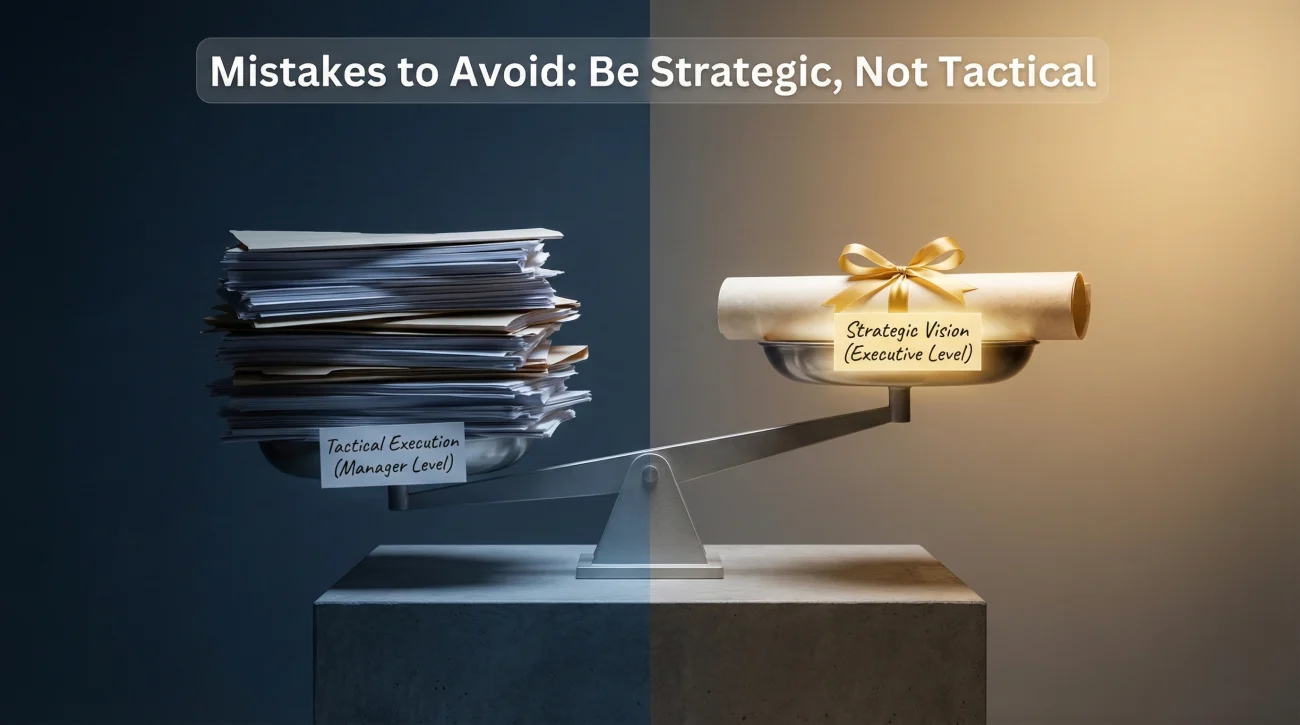
| Manager Level | Executive Level |
|---|---|
| Team accomplishments | Enterprise transformation |
| Project outcomes | Strategic initiatives |
| Budget responsibility | P&L ownership |
| Managing teams | Building organizations |
| Executing strategy | Setting strategy |
Executive Introduction Structure

Organizational Scope
Establish the scale at which you operate. Revenue, employees, geographic spread, complexity. This immediately positions you at an executive level.
“I’m the Chief Operating Officer at Manufacturing Corp, a six hundred million dollar industrial company with operations across twelve countries and about three thousand employees.”
Strategic Impact
Describe not just what you’ve done, but how you’ve changed the organization’s trajectory. Transformation narratives resonate more than steady-state management stories.
Career Thread
Connect your career with a theme that positions you for this role. What have you consistently done at an executive level that makes you right for this opportunity?
Strategic Interest
Explain why this organization and this role at this time. Executives have options. Interviewers want to understand why you’re specifically interested in their challenge.
Sample Executive Introductions
Chief Financial Officer
“I’m a CFO with twenty years in financial leadership, the last eight at the C-suite level. Currently I lead finance, accounting, and FP&A for a billion-dollar healthcare services company, managing a team of sixty and serving as a key advisor to the CEO and board on capital allocation and strategic planning.
The transformation I’m most proud of was rebuilding our financial infrastructure to support scaling from three hundred million to over a billion in revenue through a combination of organic growth and acquisitions. We integrated four acquisitions while upgrading our systems, building an FP&A function that barely existed, and improving reporting to the board.
I’m interested in your CFO role because you’re at an inflection point where the finance function needs to evolve from managing the business to enabling strategic growth. That’s exactly the kind of transformation I’ve led before and want to do again.”
Chief Marketing Officer
“I’ve spent twenty-five years building brands, the last decade in CMO roles at consumer companies. Currently I lead global marketing for a household products company with three billion in sales across forty countries, managing a team of two hundred and a marketing budget of about four hundred million.
My focus has been digital transformation in traditional CPG marketing. At my current company, I rebuilt how we approach media, shifting from eighty percent traditional to majority digital while improving marketing efficiency by about thirty percent. More importantly, I built the capabilities, data infrastructure, and talent base that allow us to compete with digitally native brands.
Your company’s challenge of revitalizing legacy brands for younger consumers is exactly what I find most interesting. I believe there’s a path to making traditional brands relevant again, and I’d love to lead that effort.”
Chief Executive Officer
“I’m a CEO with a background in operational transformation, currently running a five hundred million dollar industrial services company with about two thousand employees. I’ve been CEO for six years after rising through operations roles at larger companies.
When I took over, the company was breaking even with a declining market share. Today we’re at fifteen percent EBITDA margins, we’ve grown revenue by sixty percent, and we’ve established market leadership in our core segments. We did this by rebuilding the operations function, investing in technology, and changing how we approach customers from transactional to consultative.
I’m exploring this opportunity because you’re facing challenges similar to what I inherited six years ago, but at larger scale. I believe my playbook for operational transformation and growth could create significant value here.”
For broader introduction frameworks, explore our self-introduction guide.
Executive Interview Mistakes
Being Too Tactical
Executives who describe their work at a manager level signal they haven’t made the transition to strategic thinking. Discuss initiatives, not tasks. Discuss transformation, not execution.
False Modesty
At the executive level, confidence matters. Being overly modest about significant achievements suggests you either didn’t really drive them or aren’t comfortable operating at this level. Own your impact clearly.
Generic Leadership Talk
“I’m a transformational leader who builds high-performing teams.”
Every executive says this. What distinguishes you? Specific transformation stories, unique approaches, and concrete results differentiate you from generic leadership claims.
Excessive Length
Even with more to share, executives should be concise. Board members and senior leaders have limited patience. Make your points crisply and trust that follow-up questions will explore details.
The executive test: Does your introduction sound like someone ready to address a board, lead an organization through change, and make decisions with enterprise-wide impact? If it sounds like a manager describing team projects, recalibrate.
❓ FAQ
🎯 How specific should financial metrics be?
Be specific enough to establish credibility and scale. Revenue ranges, margin improvements, growth percentages. Round numbers are fine. If exact figures are confidential, ranges or relative improvements work. Vague claims without numbers lack impact.
💼 Should I mention board experience?
If you have board experience, briefly mention it. This signals you can operate at that level. “I’ve presented regularly to our board and served on two advisory boards” establishes relevant experience without dwelling on it.
⏰ How far back should I go?
Focus on executive-level experience. Earlier career can be summarized in one sentence to show your foundation. “I rose through finance roles at Fortune 500 companies before becoming CFO” provides context without detail.
📋 What about discussing challenges or failures?
Save these for when asked. Your introduction should be positive and forward-looking. When failure questions come, answer them honestly with lessons learned. Executives who claim never to have struggled lack credibility.
✨ How do I convey executive presence?
Speak with confidence, not arrogance. Use clear, direct language. Show comfort with ambiguity and complexity. Discuss enterprise-level concepts naturally. Executive presence comes through in how you communicate as much as what you say.
Leave Them With Your Executive Thesis
The best tell me about yourself for executives ends with a thesis, not a summary. State what you are here to deliver at this level and the lever you are most confident pulling.
If your closing sentence sounds like direction, scale, and value creation, they will remember you as someone who can steer the business, not someone who needs steering.
⚠️ Disclaimer: The interview strategies, sample answers, and negotiation tips provided in this guide are for educational purposes only. Hiring decisions are subjective and vary by company and industry. While these strategies are based on professional HR standards, they do not guarantee a specific job offer or result.