What IT Project Manager Interviews Test
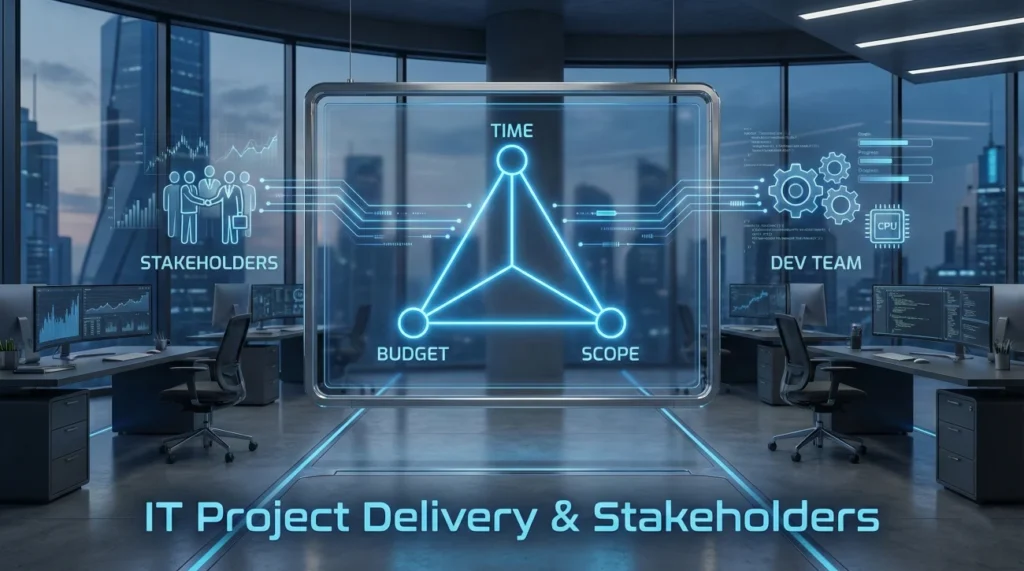
IT project manager interviews test delivery capabilities through project timeline management questions requiring realistic scheduling and deadline negotiation, budget control interview scenarios testing cost tracking and variance management, and risk management PM questions identifying threats before they derail projects. Companies probe how you handle scope changes without compromising quality, communicate with technical teams and business stakeholders translating requirements both directions, and balance competing constraints of time, cost, and quality. For comprehensive technical interview preparation, explore our complete IT interview resources.
These it project manager interview questions cover resource allocation ensuring team capacity matches workload, change control processes managing scope creep, quality assurance maintaining deliverable standards, and stakeholder management questions keeping executives, users, and teams aligned. Modern IT project management emphasizes Agile methodologies delivering value iteratively, hybrid approaches blending waterfall planning with agile execution, and data-driven decision making using metrics tracking project health rather than intuition.
Timeline & Schedule Management
Q: How do you create realistic project timelines?
Break down deliverables into work breakdown structure (WBS) identifying all tasks required. Estimate effort consulting with technical team members who’ll do work rather than guessing. Identify dependencies determining which tasks must complete before others start. Calculate critical path showing longest sequence of dependent tasks defining minimum project duration. Add buffer time for unknowns using percentage based on project complexity and team experience. Validate timeline against business deadlines negotiating scope or resources if mismatch exists. Review historical data from similar projects calibrating estimates. Involve team in planning getting buy-in and surfacing concerns early.
Q: What do you do when a project is falling behind schedule?
First diagnose root cause: Are estimates wrong, resources unavailable, requirements unclear, or external dependencies delayed? Assess impact on overall timeline determining if delay affects critical path or has float. Communicate status to stakeholders early avoiding surprises. Explore options: Add resources (costs money, may not help), reduce scope (removes features), extend deadline (impacts business), or improve efficiency (process changes). Implement changes adjusting plan and monitoring results. Document lessons learned preventing recurrence. Don’t hide problems hoping to catch up later; transparency enables informed decisions.
Q: How do you handle unrealistic deadlines from stakeholders?
Present data showing work breakdown, effort estimates, and resource constraints demonstrating why timeline is unrealistic. Offer options: Reduce scope delivering MVP first then enhancements, add resources if budget permits, or phase delivery releasing core functionality early. Explain risks of forcing unrealistic timeline like quality issues, team burnout, or technical debt requiring future rework. Use historical metrics from similar projects supporting estimates. Stand firm on realistic timeline while showing willingness to find creative solutions. Pushing back professionally with data builds credibility versus always saying yes then missing deadlines.
Q: Explain the critical path method and its importance.
Critical path is longest sequence of dependent tasks determining minimum project duration. Tasks on critical path have zero float meaning any delay directly impacts completion date. Non-critical tasks have float allowing some schedule flexibility. Identifying critical path focuses attention on high-risk tasks requiring close monitoring. It guides resource allocation prioritizing critical tasks over those with float. Changes to critical path tasks require immediate mitigation while non-critical delays may be acceptable. Use project management tools like Microsoft Project or Gantt charts visualizing critical path. Update regularly as project progresses since critical path may shift.
💡 Pro tip: IT project manager interviews value realistic planning over optimism. Saying “I always deliver on time” without acknowledging project challenges reveals inexperience. Demonstrating how you handle delays, negotiate scope, and communicate risks shows mature project management thinking.
Budget & Cost Control
Q: How do you create and manage project budgets?
Estimate costs across categories: Labor (team salaries, contractors), software licenses, hardware, training, travel, and contingency reserves. Use bottom-up estimating summing task-level costs or analogous estimating comparing to similar past projects. Build contingency (10-20%) for unknowns based on risk assessment. Track actual spending against budget weekly identifying variances early. Use earned value management calculating planned value, earned value, and actual cost showing if project is over/under budget relative to work completed. Report budget status regularly to stakeholders with trend forecasting. Implement change control requiring budget approval for scope changes preventing unplanned spending.
Q: What do you do when a project exceeds its budget?
Analyze variance identifying why costs exceeded estimates (scope creep, estimate errors, resource rate changes, vendor overruns). Forecast total cost at completion determining final budget overrun. Present options to stakeholders: Secure additional funding, reduce scope delivering less functionality, or reallocate from other projects. Implement cost controls like approving all purchases, renegotiating vendor contracts, or using lower-cost resources. Adjust processes preventing future overruns. Document lessons learned. Address budget issues immediately; small overruns compound without intervention. Transparency about cost problems enables leadership to make informed decisions.
Q: How do you track project expenses and report financial status?
Use project management software (MS Project, Jira, Asana) or financial tools tracking costs by category. Require team to log time enabling accurate labor cost calculation. Track vendor invoices against contracts ensuring charges match agreements. Calculate cost performance index (CPI = Earned Value / Actual Cost) where CPI < 1.0 indicates over budget. Create budget dashboard showing planned versus actual spending, variance, forecast at completion, and burn rate. Report financial status in steering committee meetings highlighting trends and concerns. Implement approval workflows for purchases over threshold amounts. Regular tracking enables proactive management versus discovering overruns at project end.
Q: How do you balance budget constraints with quality requirements?
Define minimum viable product (MVP) focusing budget on core features delivering business value. Prioritize requirements collaborating with stakeholders identifying must-haves versus nice-to-haves. Implement quality standards preventing defects which cost more to fix later than prevent now. Use automation for testing, deployment, or monitoring reducing long-term costs. Consider technical debt implications of cutting corners now creating future maintenance burden. Negotiate with vendors for better pricing or payment terms. Optimize resource utilization ensuring team isn’t overstaffed or underutilized. Quality and budget aren’t always opposed; good engineering practices often reduce costs over project lifetime.
Risk Management & Problem Solving
Describe your risk management process.
Risk identification brainstorms potential threats through team workshops, stakeholder interviews, and lessons learned from past projects. Categorize risks: technical (technology failures, integration issues), organizational (resource availability, skill gaps), external (vendor delays, regulatory changes), or project management (scope creep, communication breakdowns). Risk analysis assesses probability and impact creating risk matrix prioritizing high-probability, high-impact risks. Risk response planning develops mitigation strategies: Avoid (eliminate risk), mitigate (reduce probability or impact), transfer (insurance, vendor contracts), or accept (acknowledge risk, prepare contingency). Monitor risks regularly updating register as project progresses since risk profile changes.
Give an example of proactive risk mitigation you implemented.
During data migration project, identified risk that third-party vendor might delay data delivery jeopardizing timeline. Mitigation included weekly vendor check-ins tracking progress, contractual penalties for delays incentivizing on-time delivery, and contingency plan using partial datasets for testing if full data unavailable. Also allocated extra testing resources ready to expedite validation once data arrived. Risk materialized when vendor delayed two weeks, but contingency plan enabled testing with sample data maintaining overall timeline. Proactive mitigation converted potential project-killing delay into manageable issue. This demonstrates anticipating problems and planning responses versus reacting when risks become issues.
How do you handle project crises or emergencies?
Assess severity determining if this threatens project success or requires immediate escalation. Assemble response team pulling in technical experts and decision makers. Establish war room or communication channel enabling real-time collaboration. Delegate tasks leveraging team strengths and ensuring no duplication. Communicate with stakeholders providing frequent updates managing expectations. Focus on containment preventing crisis from spreading to other project areas. Implement temporary fixes stabilizing situation then plan permanent solutions. Document incident for lessons learned. Maintain calm under pressure; teams look to project manager for composure during chaos. After resolution, conduct postmortem identifying preventive measures.
Stakeholder & Communication Management
Q: How do you manage stakeholder expectations?
Identify all stakeholders early mapping their interests, influence, and communication needs. Clarify project objectives ensuring shared understanding of goals, scope, and success criteria. Set realistic expectations based on data avoiding over-promising. Establish communication plan defining frequency, format, and content for each stakeholder group. Provide regular status updates highlighting progress, risks, and issues. Manage scope creep through formal change control requiring stakeholder approval for additions. Address concerns promptly before they escalate. Balance competing stakeholder interests negotiating tradeoffs. Build trust through transparency about problems and consistent delivery on commitments.
Q: How do you communicate with both technical teams and business stakeholders?
Translate technical concepts into business impact for executives: “Database optimization reduces page load time by 50%, improving customer satisfaction and reducing cart abandonment.” Translate business requirements into technical specifications for developers: “Marketing wants personalized recommendations” becomes “implement collaborative filtering algorithm analyzing purchase history.” Use appropriate detail level: executives want summary dashboards showing RAG status, developers need detailed acceptance criteria. Avoid jargon with non-technical audiences but maintain technical accuracy with engineers. Act as bridge between business and technology ensuring both sides understand each other’s constraints and priorities.
Q: How do you handle conflicting stakeholder priorities?
Facilitate discussion bringing stakeholders together understanding underlying needs driving requests. Seek win-win solutions addressing multiple concerns through creative compromise. Use data supporting decisions with objective criteria like ROI, risk, or strategic alignment. Escalate to executive sponsor when stakeholders can’t agree letting appropriate authority make final call. Document decisions and rationale preventing revisiting resolved conflicts. Focus on project objectives reminding stakeholders of shared goals. Sometimes conflicting priorities reveal unclear project charter requiring scope clarification. Maintain relationships even when disappointing stakeholders ensuring professional collaboration continues.
Q: Describe your approach to change management.
Establish change control board reviewing significant changes for approval. Require change request form documenting proposed change, justification, and impact analysis. Assess impact on timeline, budget, resources, and quality before approving. Communicate approved changes to all affected parties updating project documentation. Reject low-value changes protecting team from constant disruption. Track changes measuring scope creep over time. Balance being responsive to legitimate needs versus allowing uncontrolled scope growth. Good change management enables flexibility while preventing chaos. Some methodologies (Agile) embrace change more than others (Waterfall) but all require disciplined approach.
⚠️ Common mistake: Treating all stakeholders equally. Executives need high-level status, not technical details. Developers need specific requirements, not business strategy. Team members need task clarity, not budget reports. Tailor communication to audience demonstrating stakeholder management maturity.
Project Management Practice
20 Practice Questions
1. Critical path represents?
- Most important tasks
- Longest sequence determining project duration
- Most expensive tasks
- Tasks assigned to senior developers
2. Work Breakdown Structure (WBS) is used to?
- Track budget only
- Decompose deliverables into manageable tasks
- Schedule meetings
- Assign team members
3. CPI (Cost Performance Index) < 1.0 means?
- Under budget
- Over budget
- On budget
- Project complete
4. Scope creep refers to?
- Budget increases
- Uncontrolled project scope expansion
- Schedule delays
- Resource shortages
5. Earned Value Management (EVM) tracks?
- Only costs
- Schedule and cost performance together
- Only timeline
- Team satisfaction
6. Risk mitigation strategies include?
- Only ignoring risks
- Avoid, mitigate, transfer, accept
- Escalate all risks
- Hide from stakeholders
7. MVP (Minimum Viable Product) focuses on?
- All possible features
- Core features delivering business value
- Cheapest solution
- Fastest development
8. Float (slack) in tasks means?
- Tasks are easy
- Delay possible without affecting completion date
- Tasks are incomplete
- Budget available
9. Change control board (CCB) purpose?
- Approve all purchases
- Review and approve/reject change requests
- Hire team members
- Write code
10. Contingency reserves in budget are for?
- Bonuses
- Known unknowns and identified risks
- Extra features
- Manager discretion
11. RAG status means?
- Resource allocation guide
- Red/Amber/Green health indicator
- Risk assessment grid
- Review and go
12. Gantt charts primarily show?
- Budget breakdown
- Task timeline and dependencies
- Team organization
- Risk register
13. Stakeholder analysis maps?
- Project timeline
- Power/interest of stakeholders
- Budget allocation
- Technical architecture
14. Bottom-up estimating involves?
- Guessing project cost
- Summing detailed task-level estimates
- Using industry averages
- Copying past projects
15. Project charter defines?
- Only budget
- Project authority, objectives, stakeholders
- Technical specifications
- Team salaries
16. Resource leveling aims to?
- Fire underperformers
- Balance resource utilization avoiding overallocation
- Increase budget
- Reduce project scope
17. Lessons learned should be documented?
- Only if project fails
- Throughout project and at closure
- Never (confidential)
- Only by executives
18. Triple constraint in PM refers to?
- Three team members
- Scope, time, cost (with quality)
- Three project phases
- Three stakeholders
19. Risk register contains?
- Only financial risks
- Identified risks, probability, impact, responses
- Team performance data
- Meeting minutes
20. Fast tracking means?
- Working faster
- Running sequential tasks in parallel
- Adding more people
- Cutting scope
❓ FAQ
📊 What’s the difference between IT Project Manager and Product Manager?
IT Project Managers focus on delivery: timeline, budget, resources, and execution of defined scope. They ensure projects complete on time and within budget. Product Managers focus on strategy: what to build, why it matters, and ensuring product meets user needs and business goals. Project Managers answer “how and when,” Product Managers answer “what and why.” In practice, roles often overlap, especially in smaller organizations. IT Project Managers may manage multiple projects simultaneously while Product Managers typically own one product long-term.
🎯 Should I get PMP certification for IT project management?
PMP (Project Management Professional) validates traditional project management knowledge and is widely recognized, especially in large enterprises, government, and regulated industries. It requires experience and passing rigorous exam. Agile certifications (CSM, PMI-ACP) suit companies using Scrum or Kanban. PRINCE2 is common in UK and Europe. For IT specifically, technical background plus PM experience often outweighs certification. Certifications help resume screening and demonstrate commitment but don’t replace practical experience. Consider certification if it’s common in your target industry or you lack PM experience to demonstrate.
⚙️ How important is technical knowledge for IT project managers?
Technical understanding helps credibility with development teams, realistic estimation, and identifying technical risks. You don’t need to code but should understand architecture concepts, development lifecycle, and technical tradeoffs. Some IT PM roles require deep technical background (infrastructure projects), others emphasize business acumen (enterprise software rollouts). Balance varies by company and project type. Former developers often make strong IT PMs but can over-focus on technical details versus business value. Non-technical PMs excel by leveraging technical experts and focusing on stakeholder management and delivery process.
🔄 How do I transition from developer to IT project manager?
Start by leading small projects or features while still coding, learning project planning and stakeholder communication. Volunteer for PM tasks like coordinating releases, facilitating team meetings, or creating project documentation. Develop non-technical skills: communication, negotiation, conflict resolution. Study project management methodologies (Agile, Waterfall, hybrid). Consider certification like CSM or PMP. Network with current PMs learning their daily challenges. Shift mindset from “how to build” to “what to build and why.” Apply for junior PM or technical PM roles bridging coding and management. Be prepared for career reset initially earning less than senior developer salary.
📈 How do I demonstrate PM success in interviews without prior PM title?
Describe projects you’ve led even without formal PM title: coordinating team efforts, managing deliverables, communicating with stakeholders. Quantify results: “Led migration affecting 50K users, completed 2 weeks early saving $30K.” Emphasize transferable skills: planning, organization, communication, problem-solving. Discuss cross-functional collaboration working with designers, QA, operations. Frame technical work in PM terms: risk mitigation, resource allocation, timeline management. Use STAR method (Situation, Task, Action, Result) structuring examples. Prepare for skepticism about lack of PM experience; acknowledge learning curve but highlight relevant skills. Consider contract or consulting PM work building formal experience.
Final Thoughts
Mastering it project manager interview questions requires demonstrating delivery track record through concrete examples of projects completed on time and within budget despite challenges encountered. The best preparation includes quantifying past achievements with metrics (cost savings, timeline improvements, quality measures), practicing STAR method structuring example stories clearly, and understanding project management frameworks whether Agile, Waterfall, or hybrid approaches. Focus on showing how you balanced competing constraints of scope, time, and cost rather than claiming everything always goes perfectly.
Companies value IT project managers who communicate effectively across technical and business audiences, proactively manage risks before they become crises, and maintain team morale during challenging projects. Your preparation should include ready examples of managing scope creep, recovering from delays, handling difficult stakeholders, and learning from project failures. Demonstrate both organizational skills managing complexity and people skills building relationships, since successful IT project management ultimately depends on getting teams to work together effectively toward shared goals despite obstacles and constraints.
⚠️ Disclaimer: The interview strategies, sample answers, and negotiation tips provided in this guide are for educational purposes only. Hiring decisions are subjective and vary by company and industry. While these strategies are based on professional HR standards, they do not guarantee a specific job offer or result.