The Most Dangerous Weakness to Claim
Claiming perfectionism as a weakness has become so overused that most interviewers roll their eyes when they hear it. The typical delivery sounds like a humble brag: “I just care too much about quality.” That response triggers immediate skepticism.
However, genuine perfectionism is a real limitation affecting many high performers. Presenting it authentically can build credibility if you avoid the cliché traps. The difference between eye-rolls and respect is whether you describe the actual costs of perfectionism, not just its benefits.
The Designer Who Missed Deadlines
A UX designer told me:
“My greatest weakness is perfectionism, and I mean that as a genuine problem, not a humble brag. My perfectionism has caused me to miss deadlines because I couldn’t stop refining designs that were already good enough. I’ve had managers frustrated with me because I kept iterating when we needed to ship.”
“I’ve learned to ask: ‘Is this refinement serving the user or serving my anxiety about imperfection?’ Usually, the additional work serves my anxiety. I now set hard personal deadlines earlier than actual deadlines to give myself permission to stop.”
“It’s still a daily struggle, but I haven’t missed a deadline in eighteen months.”
This answer names real negative consequences and specific strategies.
The Analyst Who Frustrated Colleagues
A financial analyst admitted:
“Perfectionism is my greatest weakness, and it has genuinely hurt my working relationships. I used to send back colleagues’ work with extensive corrections on things that didn’t actually matter. I focused on formatting and phrasing when the analysis was sound. People stopped wanting to collaborate with me because working with me felt like being graded.”
“A mentor told me something that changed my approach: ‘You’re optimizing for perfection when you should be optimizing for progress.’ I now ask whether a correction improves the outcome or just satisfies my preferences. I’ve learned to accept ‘good enough’ from others and save perfectionism for truly high-stakes deliverables.”
Key insight: Real perfectionism has interpersonal costs. Naming them makes your answer credible.
Making Perfectionism Sound Honest
Name the Real Costs
Genuine perfectionism has downsides: missed deadlines, strained relationships, burnout, inability to delegate, or slow decision-making. If you can’t name specific negative consequences, either you don’t actually have this weakness or you’re not being honest about it.
Use Specific Examples
Vague claims about “caring too much” sound like humble brags. Specific stories about times perfectionism created problems sound authentic.
Acknowledge Ongoing Struggle
Claiming complete transformation sounds dishonest. Perfectionism tends to be personality-level rather than behavior-level. More credible: “I’ve developed strategies to manage this, but it remains something I work on consciously.”
| Humble Brag Version | Honest Version |
|---|---|
| “I just care too much about quality” | “I’ve missed deadlines because I couldn’t stop refining” |
| “I hold myself to high standards” | “I’ve frustrated colleagues by correcting things that didn’t matter” |
| “I want everything to be perfect” | “I’ve experienced burnout from over-investing in minor details” |
Sample Answers
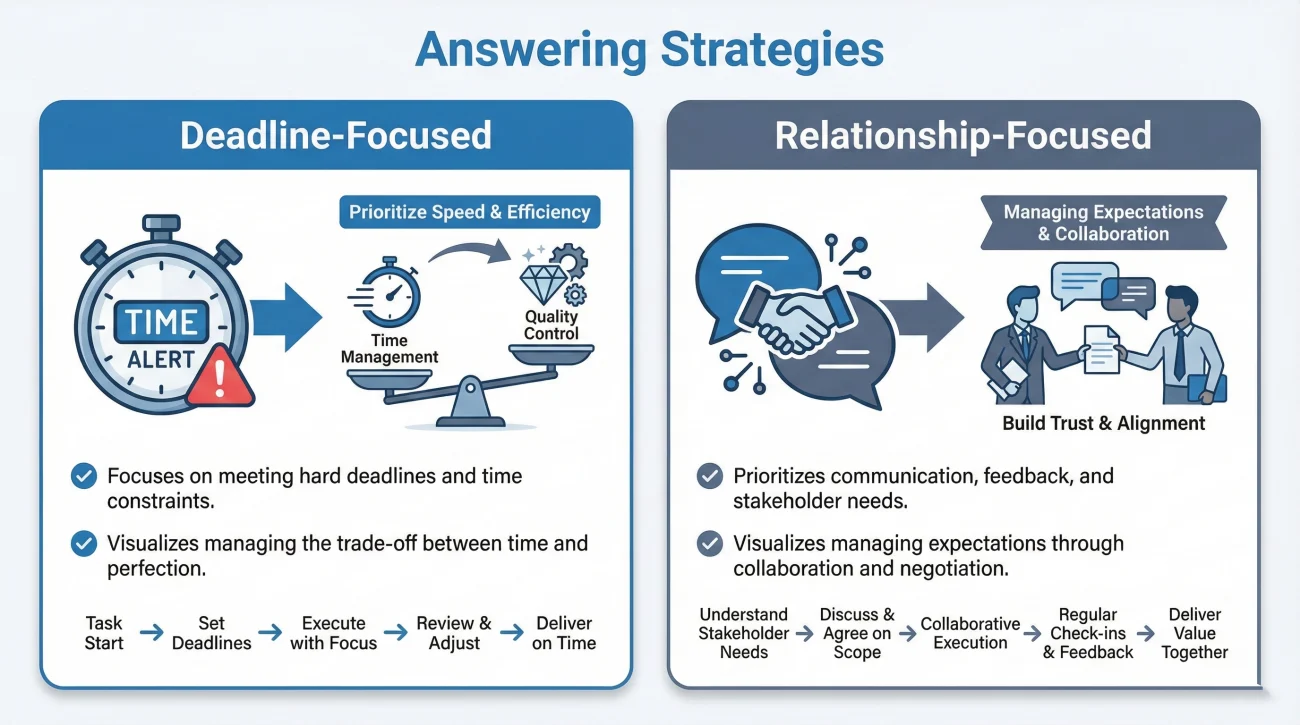
Deadline-Focused
“My greatest weakness is perfectionism that affects timelines. I’ve delivered excellent work late because I couldn’t accept ‘good enough.’ My manager once told me that my ninety-five percent solution delivered on time was more valuable than my hundred percent solution delivered late. I now set internal deadlines before actual deadlines and force myself to ship when I hit them. Quality hasn’t suffered, but reliability has improved significantly.”
Relationship-Focused
“Perfectionism is my genuine weakness because it has affected how I work with others. I used to hold colleagues to my standards, which created friction. I’ve learned to distinguish between ‘not how I would do it’ and ‘actually wrong.’ Most of the time, different isn’t worse. I now reserve perfectionist energy for work that truly needs it.”
For more on authentic self-presentation, explore our behavioral interview resources.
❓ FAQ
🎯 Should I avoid perfectionism as a weakness entirely?
Only if you can’t present it honestly. If perfectionism genuinely creates problems and you can describe those problems specifically, it can work. If you’re using it as a disguised strength, choose something else.
💼 How do I avoid sounding like I’m bragging?
Focus on costs, not benefits. Describe missed deadlines, strained relationships, or burnout rather than high standards. Real weaknesses have real downsides. Name them.
⏰ What if perfectionism actually helps my work?
It probably does in some ways. But if it’s truly a weakness, it also hurts in other ways. Acknowledge both: “My attention to detail produces high-quality work, but has also caused me to miss deadlines.”
📋 Can perfectionism work for detail-oriented roles?
Yes, if framed correctly. Even detail-oriented roles require efficiency and collaboration. Perfectionism that slows work or strains relationships is problematic in any context.
✨ How recent should my examples be?
Recent enough to show you still manage this actively, but including improvement over time. Show both authentic struggle and genuine growth.
Own the Real Costs
Using perfectionism as a weakness successfully requires radical honesty about its negative consequences. Describe missed deadlines, frustrated colleagues, or personal burnout rather than disguised strengths like high standards. When interviewers see you naming real costs and describing genuine strategies for managing them, they see authentic self-awareness rather than interview theater.
⚠️ Disclaimer: The interview strategies, sample answers, and negotiation tips provided in this guide are for educational purposes only. Hiring decisions are subjective and vary by company and industry. While these strategies are based on professional HR standards, they do not guarantee a specific job offer or result.