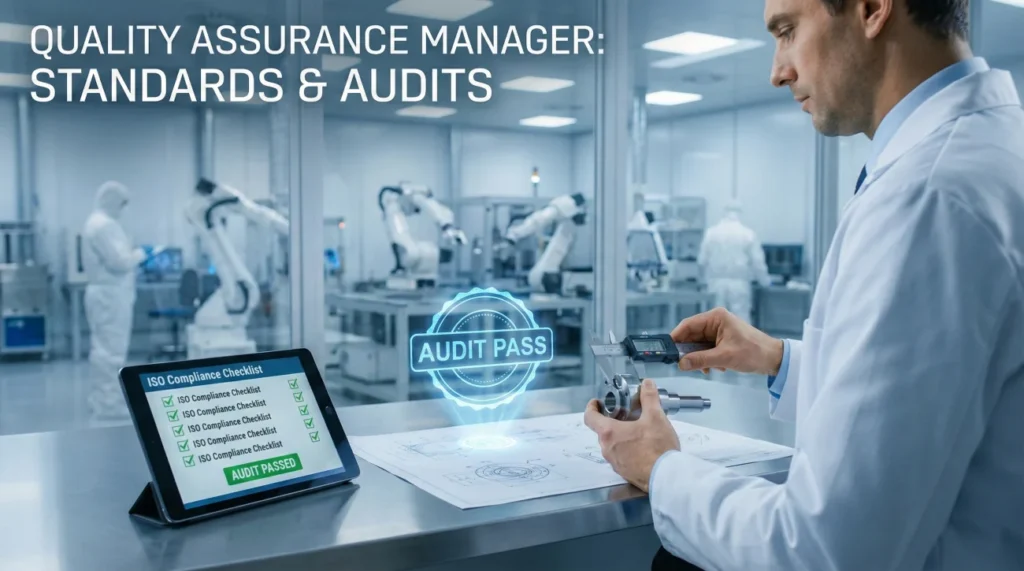
The Guardian of Supply Chain Integrity
A single defective component. A shipment stored at the wrong temperature. A supplier cutting corners undetected. These failures cascade through supply chains, damaging customer relationships and eroding margins. Quality assurance manager interview questions probe your ability to prevent such failures through robust systems, rigorous audits, and relentless root cause elimination.
Unlike software QA focused on code testing, supply chain quality management deals with physical products, third-party suppliers, warehouse conditions, and distribution integrity. You establish the standards that define acceptable quality, conduct the audits that verify compliance, manage the CAPA processes that eliminate recurring problems, and hold suppliers accountable for the materials they provide.
Expect questions covering quality system development, audit methodology and execution, corrective action effectiveness, supplier qualification and monitoring, and warehouse quality controls that protect product integrity from receipt through delivery.
Quality Standards & Systems
Q: What quality management systems and standards have you worked with?
I have experience implementing and maintaining ISO 9001 quality management systems, which provide the framework for consistent processes and continuous improvement. For industries with specific requirements, I have worked with additional standards like ISO 22000 for food safety and GDP (Good Distribution Practice) for pharmaceutical logistics.
Beyond certification standards, I develop internal quality systems tailored to specific operational needs. I create SOPs that translate standards into practical work instructions. I establish quality metrics and review cadences that maintain focus on performance. Standards provide the framework; effective quality management requires translating them into daily practice.
Q: How do you establish quality requirements for new operations or processes?
I start by understanding customer requirements, regulatory obligations, and industry expectations. I identify critical quality parameters: what must be controlled to meet these requirements. I develop specifications, procedures, and controls that address each critical parameter with appropriate rigor based on risk.
I involve operations in developing quality requirements, ensuring they are practical and understood by those who must execute them. I pilot new processes to validate that controls work as intended before full implementation. I establish measurement systems that verify ongoing compliance. Quality requirements that look good on paper but fail in practice do not protect quality.
Q: How do you ensure quality documentation is accurate and current?
I implement document control systems with version management, approval workflows, and distribution tracking. I establish review cycles that ensure documents are updated when processes change. I train staff on the importance of following current procedures and the risks of using outdated documents.
I also recognize that documentation burden can undermine quality if it becomes so onerous that shortcuts develop. I streamline documentation to capture essential information without unnecessary complexity. I audit compliance with documentation requirements and investigate when deviations occur. Documentation supports quality; it should not become an end in itself.
Audit Planning & Execution
Q: How do you develop an audit program?
I create risk-based audit schedules that focus resources on highest-risk areas. Critical processes, new operations, areas with prior issues, and supplier sites with significant quality impact receive more frequent and thorough audits. Lower-risk areas receive periodic audits that maintain coverage without over-investing resources.
I define audit scope, objectives, and criteria for each audit type. I ensure auditors have appropriate training and independence from areas they audit. I maintain an annual calendar while allowing flexibility for triggered audits when issues arise. The program provides systematic coverage while remaining responsive to emerging risks.
Q: Describe your approach to conducting effective audits.
I prepare thoroughly: reviewing previous audit findings, current procedures, and relevant data before arriving. I conduct opening meetings to explain scope and approach, reducing defensiveness. I gather evidence through document review, observation, and interviews, triangulating to verify what I find.
I focus on understanding whether systems work in practice, not just whether paperwork exists. I ask open-ended questions and follow evidence trails. I distinguish between significant findings that affect quality or compliance and minor observations. I close audits professionally, presenting findings objectively with supporting evidence.
Q: How do you handle resistance or defensiveness during audits?
I maintain professional demeanor and focus on facts rather than blame. I explain that audits identify improvement opportunities, not punish people. I listen to explanations and consider context; sometimes apparent issues have valid reasons I did not initially understand. I acknowledge what is working well, not just problems.
When genuine resistance persists, I document observations objectively and escalate through appropriate channels. I separate the finding from the response; whether someone accepts a finding does not change whether the evidence supports it. I work to build relationships that make future audits more collaborative while maintaining audit integrity.
Q: How do you ensure audit findings lead to meaningful improvement?
I require corrective action plans with specific actions, responsible owners, and realistic deadlines. I review plans to ensure they address root causes rather than just symptoms. I track action completion and verify effectiveness through follow-up audits or evidence review.
I analyze findings across audits to identify systemic issues requiring broader action. Recurring findings in different areas may indicate training gaps, resource constraints, or policy problems that individual corrective actions will not solve. Audit value comes from the improvement it drives, not the findings it documents.
CAPA Management
Explain your approach to CAPA (Corrective and Preventive Action) management.
I treat CAPA as a structured problem-solving process, not just documentation. When issues arise, I first contain immediate risks: quarantine affected product, stop problematic processes, or implement temporary controls. Then I investigate root causes using systematic methods like 5 Whys, fishbone diagrams, or failure mode analysis depending on complexity.
Corrective actions address the identified root causes to prevent recurrence. Preventive actions extend improvements to similar situations before problems occur there. I verify both action completion and effectiveness, requiring evidence that the problem has actually been solved, not just that we did something about it.
How do you distinguish between problems that require formal CAPA versus simpler corrections?
Formal CAPA is appropriate for significant or recurring issues where root cause investigation and systematic prevention are warranted. Minor or isolated problems may be addressed through simpler corrections without full CAPA documentation. I consider impact severity, occurrence frequency, detection difficulty, and regulatory requirements when deciding.
I avoid both extremes: CAPA for every minor issue bogs down the system and dilutes focus; conversely, addressing significant issues informally risks recurrence and compliance gaps. I establish criteria that guide consistent decisions about which issues require formal CAPA treatment.
How do you track and report CAPA effectiveness?
I maintain a CAPA tracking system that shows all open actions, due dates, owners, and status. I report metrics including CAPA volume trends, aging, on-time completion rates, and effectiveness verification results. I review CAPA data regularly with leadership to ensure appropriate resources and attention.
I also analyze CAPA data for patterns: are certain areas, processes, or issue types generating disproportionate CAPA activity? These patterns may indicate systemic problems requiring strategic intervention beyond individual CAPA responses. CAPA data tells a story about organizational quality performance when analyzed thoughtfully.
Supplier & Warehouse Quality
Q: How do you qualify and monitor supplier quality?
I evaluate supplier quality systems, capabilities, and track record before approval. This includes questionnaires, documentation review, and on-site audits for significant suppliers. I verify certifications, review quality metrics, and assess their CAPA and continuous improvement processes. Approval is not permanent; I maintain ongoing monitoring and periodic re-evaluation.
I track key metrics for each significant supplier: defect rates, on-time delivery, documentation accuracy, and responsiveness to issues. I compile scorecards that show performance trends and comparison to standards. When performance falls short, I work collaboratively with suppliers to understand causes and develop improvement plans. For persistent problems, I escalate consequences including reduced orders or disqualification.
Q: What quality controls are essential for warehouse operations?
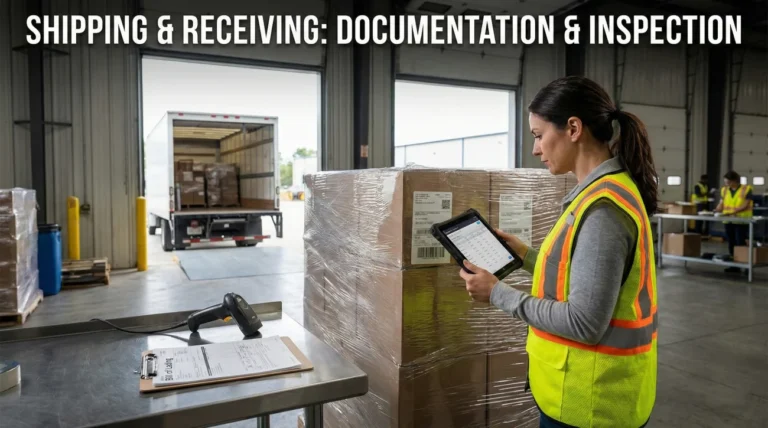
I implement controls at critical points: receiving inspection to catch supplier issues before putaway, storage condition monitoring for temperature-sensitive products, pick accuracy verification to prevent shipping errors, and packaging inspection to ensure protection during transit. I design controls that catch problems early when correction is easier.
I establish environmental controls for products requiring specific conditions: temperature monitoring and alarming, humidity control, pest management, and segregation of incompatible materials. I verify equipment calibration for any measurement devices. Warehouse quality protects product integrity from receipt through shipment.
Q: How do you address customer quality complaints?
I treat every complaint as important information, even when we believe we are not at fault. I gather details about the issue, retrieve relevant records to understand what happened on our end, and investigate whether the complaint indicates a systemic problem. I respond to customers promptly with findings and actions.
I analyze complaint data for patterns: are certain products, customers, carriers, or processes generating disproportionate complaints? I use complaint insights to drive preventive improvements. Complaints are valuable quality data when treated seriously rather than defensively.
Quality Assurance Knowledge Quiz
20 Practice Questions
1. CAPA stands for:
- Continuous Audit Process Assessment
- Corrective and Preventive Action
- Customer Acceptance Product Approval
- Compliance Audit Program Administration
2. ISO 9001 provides:
- Industry-specific technical requirements
- Framework for quality management systems
- Product specifications
- Audit checklists
3. Risk-based audit scheduling:
- Audits only when problems occur
- Focuses resources on highest-risk areas
- Eliminates need for audit schedule
- Reduces total audit activity
4. Root cause analysis should determine:
- Who made the error
- Why the problem occurred to prevent recurrence
- How to document the issue
- Whether to take corrective action
5. Supplier scorecards should:
- Be kept confidential from suppliers
- Be shared with suppliers for transparency
- Only track price performance
- Replace audits entirely
6. Incoming inspection should be:
- 100% for all suppliers
- Appropriate to supplier risk and product criticality
- Eliminated to save time
- Performed only when problems are suspected
7. When quality issues are found in incoming materials:
- Continue using while investigating
- Quarantine immediately to prevent use
- Return without documentation
- Notify supplier after disposition
8. Document control systems should include:
- Unlimited versions
- Version management and approval workflows
- Verbal approvals
- Optional compliance
9. Effectiveness verification confirms:
- Actions were completed
- The problem has actually been solved
- Documentation is complete
- Management approved the action
10. Audit independence means:
- External auditors only
- Auditors do not audit their own work areas
- No communication with auditees
- Hostile audit approach
11. Quality documentation burden should be:
- Maximized for compliance
- Balanced to capture essentials without creating shortcuts
- Minimized regardless of risk
- Determined by auditors
12. Customer complaints should be:
- Defended against
- Treated as valuable quality data
- Handled by customer service only
- Ignored if we believe we are not at fault
13. Preventive actions differ from corrective by:
- Being less important
- Addressing potential problems before they occur
- Requiring less documentation
- Being optional
14. Environmental monitoring in warehouses:
- Is only for pharmaceutical products
- Protects integrity of temperature-sensitive products
- Replaces other quality controls
- Is optional if HVAC exists
15. Recurring audit findings indicate:
- Thorough auditing
- Ineffective corrective actions or systemic issues
- Good documentation
- Normal operations
16. Supplier qualification audits should occur:
- After problems occur
- Before approval for significant suppliers
- Annually for all suppliers
- Never for certified suppliers
17. CAPA tracking systems should show:
- Closed actions only
- Open actions, due dates, owners, and status
- Financial impact only
- Audit findings only
18. Quality controls should catch problems:
- At final inspection only
- Early when correction is easier and cheaper
- After customer complaint
- During annual audit
19. Audit resistance should be handled by:
- Abandoning the audit
- Maintaining professionalism while documenting objectively
- Escalating immediately
- Ignoring the findings
20. Formal CAPA is appropriate for:
- Every minor issue
- Significant or recurring issues requiring root cause investigation
- Issues management wants documented
- Customer-facing issues only
❓ FAQ
🔬 Is this role different from software QA?
Completely different. Supply chain QA focuses on physical products, suppliers, storage conditions, and distribution integrity. Software QA focuses on code testing, bug detection, and application functionality. The methodologies, tools, and daily work differ significantly despite sharing the QA title.
📜 Which certifications strengthen a supply chain QA career?
ASQ Certified Quality Manager (CQM) and Certified Quality Auditor (CQA) are widely recognized. ISO Lead Auditor certification demonstrates audit competence. Industry-specific credentials like HACCP for food or GDP for pharma add specialized value. Six Sigma certification shows process improvement capability.
⚖️ How do you balance quality rigor with operational speed?
Design quality controls that prevent problems without creating bottlenecks. Focus rigor on high-risk areas while streamlining low-risk activities. Work with operations to find solutions that satisfy both quality and efficiency requirements. Quality that stops operations is unsustainable.
📊 What tools do supply chain QA managers commonly use?
Quality management systems (QMS) software for CAPA tracking and document control. Statistical analysis tools for data evaluation. Audit management platforms for scheduling and finding tracking. Temperature monitoring systems for cold chain. ERP integrations for supplier and inventory quality data.
🚀 Where can this role lead career-wise?
Director of Quality, VP of Quality and Regulatory, or Chief Quality Officer for advancement within quality. Some transition to operations leadership, supply chain management, or compliance roles. Consulting offers another path for those with broad experience across industries and standards.
Proving Your Quality Leadership
When answering quality assurance manager interview questions, concrete examples matter more than quality philosophy. Describe specific audits you conducted and what they revealed. Explain CAPA investigations where your root cause analysis prevented recurrence. Share supplier quality challenges you resolved and the metrics that improved as a result.
Interviewers want evidence that you build systems preventing problems, not just detecting them after the fact. Demonstrate your ability to translate standards into practical controls, conduct audits that uncover real risks, and drive corrective actions that actually stick. Quality managers who can show measurable improvement in defect rates, audit scores, and supplier performance stand apart from those who can only discuss methodology.
⚠️ Disclaimer: The interview strategies, sample answers, and negotiation tips provided in this guide are for educational purposes only. Hiring decisions are subjective and vary by company and industry. While these strategies are based on professional HR standards, they do not guarantee a specific job offer or result.