The Commander on the Concrete Floor
A warehouse is not merely a storage box. It is a high-speed bank vault where the currency is inventory. As a Warehouse Manager, you are the Ground Commander responsible for the physical security of millions of dollars in assets and the physical safety of the human beings moving them. In an era of Next-Day Delivery, the warehouse has transformed from a static cost center into the primary engine of customer satisfaction. If the warehouse sneezes, the entire supply chain catches a cold.
Hiring managers are no longer looking for someone who just knows how to drive a forklift. They need a “Space and Motion Economist”. They need a leader who can look at a 200,000 square foot facility and see a grid of inefficiencies to be solved. They will test you on “Slotting” science to reduce travel time. They will grill you on how you handle a temp worker who refuses to wear a safety vest. They want to know if you can transition a paper-based team to a sophisticated WMS without causing a strike. This guide delivers the tactical warehouse manager interview questions designed to prove you can orchestrate the chaos of the dock and deliver precision at scale.
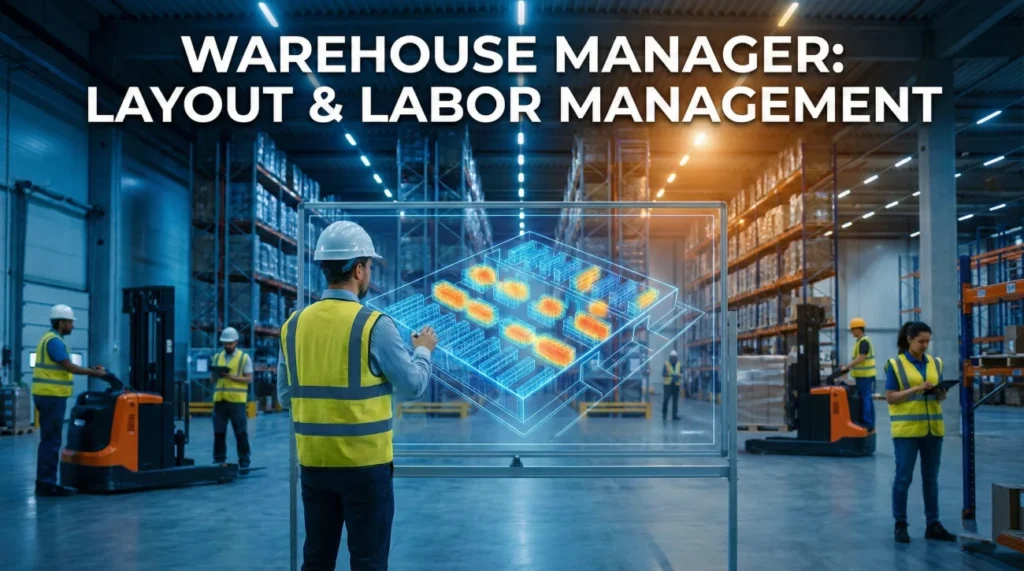
Layout & Operational Flow
Q: U-Shape vs. I-Shape flow. Which do you prefer and why?
This depends entirely on the building’s dock door configuration and cross-docking volume. I generally prefer a U-Shape flow where receiving and shipping docks are on the same side of the building. This allows for flexible labor allocation (receivers can help ship during crunch time) and consolidates security focus to one area. It also maximizes the utilization of dock equipment.
However, for high-volume, high-throughput facilities dealing with cross-docking, an I-Shape (Thru-flow) is superior. Goods enter one end and leave the other in a straight line, minimizing congestion and conflicting traffic patterns. In the interview, I would ask to see the facility’s blueprint before committing to a preference, showing I make data-driven decisions.
Q: Explain your strategy for “Slotting Optimization.”
Slotting is the science of putting the right item in the right place to minimize travel time. Travel time accounts for 50% or more of picking labor cost. I use the “Golden Zone” principle (between knees and shoulders) for the fastest moving SKUs (A-items).
I analyze velocity reports to place A-items nearest to the shipping dock to shorten the pick path. I group items that are frequently ordered together (like shampoo and conditioner) in adjacent bays. I also consider item weight. Heavy items go first in the pick path to form a solid base in the pallet, preventing crushing damage. I review slotting quarterly because demand shifts; a summer bestseller is dead stock in winter.
Q: How do you calculate and improve “Dock-to-Stock” time?
Dock-to-Stock measures the time from a truck arriving at the receiving dock until the goods are put away and available for sale in the WMS. A long cycle here causes “phantom stockouts” where we have the product, but we can’t sell it.
To improve it, I implement “Pre-Receiving” protocols. I require ASNs (Advanced Shipping Notices) from vendors so we can pre-load the system. I use license plate scanning (LPNs) to receive entire pallets with one scan rather than breaking down every box. My goal is to clear the receiving dock every shift. A cluttered dock is a safety hazard and a bottleneck.
Q: What is “Cross-Docking” and when is it applicable?
Cross-docking bypasses the “put-away” and “picking” steps entirely. Inbound materials are unloaded, sorted, and immediately reloaded onto outbound trucks. It turns the warehouse into a transfer station.
I apply this for pre-allocated orders (like retail store replenishment) or perishable goods. It requires precise timing. If the inbound truck is late, the outbound truck sits idle, burning money. It requires a mature operation with high vendor compliance; you cannot cross-dock if you have to inspect every incoming pallet for damage.
Metrics & Inventory Control
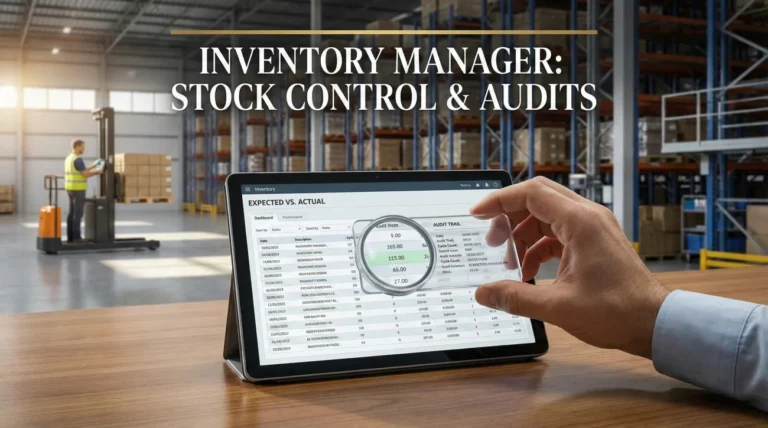
Q: Cycle Counting vs. Physical Inventory?
I strongly prefer Cycle Counting. It is a continuous daily audit of a subset of inventory (A-items counted monthly, C-items annually).
Physical Inventory requires shutting down the warehouse for days, which kills revenue. Cycle counting fixes errors in real-time without stopping ops.
Q: Defining “Inventory Shrinkage”?
Shrinkage is the difference between what the system says we have and what is actually there. Causes include theft, damage, and administrative errors.
I fight shrinkage with strict access controls, cage locks for high-value items, and “blind receiving” where staff count goods without knowing the expected quantity.
Q: Measuring “Order Cycle Time”?
This is the elapsed time from order drop to carrier pickup. In e-commerce, hours matter.
I use “Wave Picking” to batch orders efficiently. I monitor the “Cut-Off Time” performance. If we miss the 5 PM truck, that order is 24 hours late to the customer.
Q: What is FIFO/LIFO/FEFO?
FIFO (First In, First Out) prevents obsolescence. LIFO is rare, used for non-perishables in deep storage.
FEFO (First Expired, First Out) is mandatory for food/pharma. I configure the WMS to lock pickers from selecting newer batches if older ones exist.
Q: Importance of “Honeycombing”?
Honeycombing is the empty space lost in a storage location due to partial pallets. It reduces effective capacity.
I combat this by consolidating partial pallets regularly and using different sized locations (bins vs. racks) to match the inventory volume.
Q: Handling “Dead Stock”?
Dead stock eats expensive space. I run an “Aging Report” weekly. Items with zero movement in 12 months get flagged.
I move them to the highest, hardest-to-reach racks (least valuable space) or work with Sales to liquidate/scrap them. I treat space as money.
Scenarios: Labor & Safety Culture
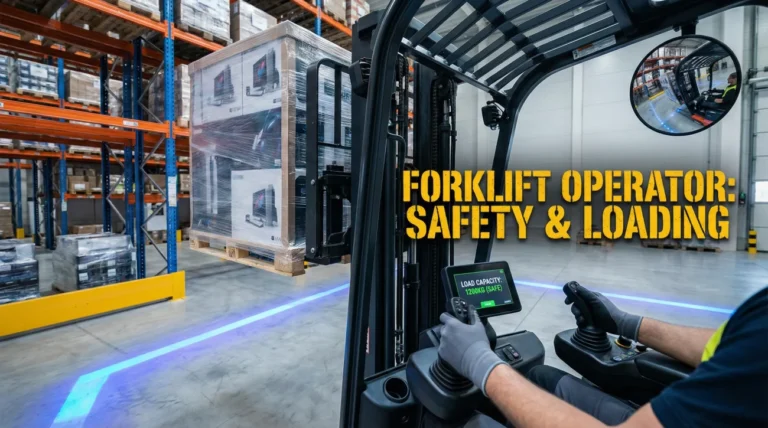
Scenario: You observe a high-performing forklift driver consistently taking shortcuts, like not honking at intersections or speeding.
I stop them immediately. Production never trumps safety. I pull them off the equipment for a private conversation. I acknowledge their high productivity but explain that “Speed at the cost of safety is negligence.”
I issue a documented verbal warning. I explain that if they hit a pedestrian, their speed won’t matter; they will be fired and possibly sued. If the behavior continues, I terminate them. A “cowboy” driver is a liability that will eventually cause a six-figure accident. I set the standard that safety rules apply to everyone, even the top performers.
Scenario: Peak season is approaching. You need to hire 50 temp workers, but the local labor market is extremely tight.
I focus on “Retention” of the current staff first. I implement an attendance bonus or “Perfect Week” raffle to keep my core team showing up. For recruitment, I streamline the onboarding.
I work with agencies to create a “Fast Track” training program. Instead of training temps on everything, I specialize them. One group only builds boxes; one group only loads trucks. This lowers the skill barrier and gets them productive in hours, not days. I also ensure the warehouse is clean and breakrooms are stocked; treating temps like humans makes them come back tomorrow.
Scenario: Your inventory count is off. A high-value item (e.g., iPhones) is missing. You suspect internal theft.
I move to “Lockdown” mode quietly. I review camera footage of the specific aisle and the packing stations. I check the WMS transaction logs to see who last touched the LPN (License Plate Number).
I do not accuse anyone without proof. I interview the staff involved about process: “Did you see this pallet?” If evidence points to a specific employee, I involve HR and Security for the interview. Moving forward, I implement a “Cage” system for high-value goods with a sign-in/sign-out log and clear bag policy to prevent future opportunities for theft.
Technology & WMS
Q: What is your experience with WMS (Warehouse Management Systems)?
I have worked with [Insert System: SAP EWM, Manhattan, Oracle, or Blue Yonder]. I understand the logic of directed put-away and wave picking. I know how to configure “Hard Allocations” vs. “Soft Allocations.” My value isn’t just using the software; it is troubleshooting it. When a scanner freezes or an order gets “stuck” in the system, I know how to trace the IDoc or error log to free it up without stopping the line.
Q: How do you introduce new technology (like Voice Pick or Tablets) to a resistant workforce?
Change management is key. I identify “Super Users” or influencers on the floor; usually the veteran shift leads. I train them first and get their buy-in. When the rest of the staff sees the veterans using the new tool successfully, resistance fades.
I also focus on the “WIIFM” (What’s In It For Me). I show them how the new scanner is lighter, faster, or reduces the amount of button pressing they have to do. If I prove it makes their job easier, they will adopt it.
Q: Automated Guided Vehicles (AGVs) and Robotics. Are you ready for them?
Automation is the future of warehousing. I view robots not as replacements but as “Cobots” (Collaborative Robots) that handle the non-value-added travel. My role changes from managing people walking to managing the flow of the robots.
I focus on maintaining clear aisles (5S) because robots can’t step over trash. I also upskill my best workers to become “Robot Handlers” or maintenance techs, giving them a career path that automation creates rather than destroys.
Warehouse Operations Quiz
Test Your Warehouse Logic (20 Questions)
1. “FIFO” ensures that:
- The newest items are sold first
- The oldest stock is sold first
- The fastest items are stored low
- The forklift drives forward
2. A “SKU” is a:
- Safe Keeping Unit
- Stock Keeping Unit
- Standard Kit Unit
- Shipping Key User
3. “Cross-Docking” minimizes:
- Shipping costs
- Storage time and handling labor
- The number of trucks used
- The need for managers
4. “Cycle Counting” is done:
- Once a year
- Continuously throughout the year
- Only when items are lost
- By the finance team only
5. “Slotting” refers to:
- Scheduling employee shifts
- Assigning specific storage locations to items based on velocity
- Parking trucks in the yard
- cutting holes in the wall
6. “LPN” stands for:
- Loss Prevention Number
- License Plate Number (pallet ID)
- Low Priority Note
- Last Pallet Needed
7. The “Golden Zone” for picking is:
- The top shelf
- Between waist and shoulder height
- On the floor
- In the back of the warehouse
8. “OSHA” regulates:
- Shipping rates
- Workplace safety and health
- Import taxes
- Truck driver hours
9. “Pick Density” measures:
- How heavy the boxes are
- The number of picks per area of travel
- The number of workers in an aisle
- The intelligence of the picker
10. A “Wave” in WMS is:
- A hand signal to drivers
- A batch of orders released for picking together
- A flood in the warehouse
- A spike in sales
11. “Dunnage” is used to:
- Clean the floor
- Protect cargo inside the truck/box
- Label the racks
- Lock the doors
12. “Narrow Aisle” racking requires:
- Smaller boxes
- Specialized forklifts (Turret trucks/Reach trucks)
- Less lighting
- Manual picking only
13. “Blind Receiving” forces the receiver to:
- Work in the dark
- Count items without knowing the expected quantity
- Guess the product name
- Accept damaged goods
14. “Honeycombing” results in:
- Sweet smelling inventory
- Lost storage density due to empty pallet slots
- More efficient storage
- Better pest control
15. “Pick-to-Light” systems use:
- Flashlights
- LED lights to indicate pick locations and quantities
- Lasers to cut boxes
- Sunlight from skylights
16. “Reverse Logistics” handles:
- Driving backwards
- Returns and recycling
- Outbound shipping
- Payroll processing
17. A “Bill of Materials” (BOM) is used for:
- Billing the landlord
- Kitting and assembly operations
- Ordering office supplies
- Tracking employee hours
18. “Cross-Training” employees helps to:
- Make them tired
- Balance labor during fluctuating demand
- Reduce their pay
- Increase the number of managers
19. “Lockout/Tagout” (LOTO) prevents:
- Theft of goods
- Accidental startup of machinery during maintenance
- Unauthorized entry to the building
- Drivers from leaving
20. “Pareto Principle” (80/20 Rule) in warehousing often means:
- 80% of staff do 20% of work
- 20% of SKUs generate 80% of the volume
- 80% of space is empty
- 20% of trucks are late
❓ Frequently Asked Questions
🚜 How do I handle a “Bad Apple” employee?
Document everything. Warehousing is a team sport; one person’s negativity spreads like a virus. I address behavior immediately, not just performance. If they are toxic to the culture (bullying, unsafe practices), I manage them out quickly to protect the morale of the good workers.
📉 How do I reduce “Mis-Picks”?
Start with the process, not the person. Is the scan gun confusing? Are two similar items slotted next to each other? I implement “Hands-Free” scanning or Voice Pick to keep eyes on the task. I also add a “Weight Check” at the packing station; if the box weight doesn’t match the calculated theoretical weight, the system flags it before it ships.
🏗️ What certification matters most?
OSHA 30-Hour General Industry certification is huge for safety credibility. For operations, a Lean Six Sigma Green Belt shows you know how to reduce waste. APICS CLTD (Certified in Logistics, Transportation and Distribution) is the gold standard for leadership theory.
⏱️ How do I manage “Overtime” costs?
I treat overtime as a failure of planning, not a reward. I track “Hours per Unit” daily. If volume spikes, I try to flex shift start times or bring in temporary labor before authorizing OT. However, during peak week, OT is often cheaper than missing shipments, so it is a calculated trade-off.
🤖 Will automation take my job?
No, but it will change it. Automation takes the walking and lifting away, but it requires more management, not less. You need to manage the maintenance schedule, the software integration, and the exception handling. The Warehouse Manager of the future is a Tech Manager.
The Custodian of Promises
The Warehouse Manager’s office might be in the back, but their impact is on the front line. Every package that leaves your dock is a promise kept to a customer. It is a role that demands the discipline of a drill sergeant and the analytical mind of an engineer. By mastering these warehouse manager interview questions, you prove that you are not just watching the inventory gather dust; you are driving the velocity that keeps the business alive.
⚠️ Disclaimer: The interview strategies, sample answers, and negotiation tips provided in this guide are for educational purposes only. Hiring decisions are subjective and vary by company and industry. While these strategies are based on professional HR standards, they do not guarantee a specific job offer or result.