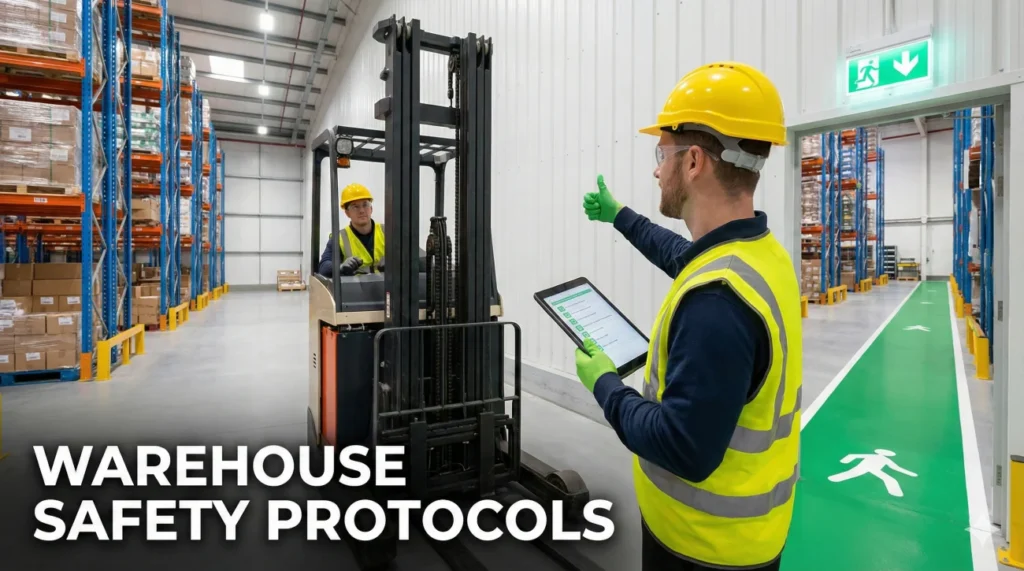
- Safety As A Core Skill: Warehouse roles are judged on prevention mindset and your ability to spot hazards and protect people, not just productivity.
- PPE Standards: Know baseline PPE, when task-specific gear is required, and show you wear it correctly and consistently without reminders.
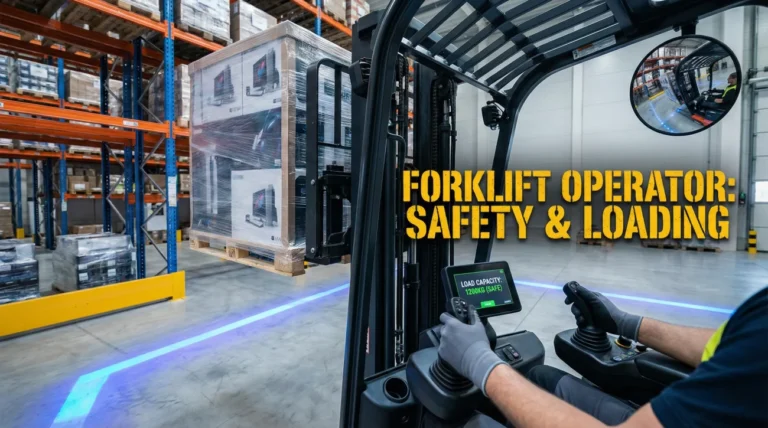
- Forklift And Handling: Emphasize certification, daily inspections, load limits, pedestrian awareness, and safe manual lifting with the right aids.
- Fire And Emergencies: Highlight housekeeping, electrical and battery charging safety, clear exit access, sprinkler clearance, and calm evacuation response.
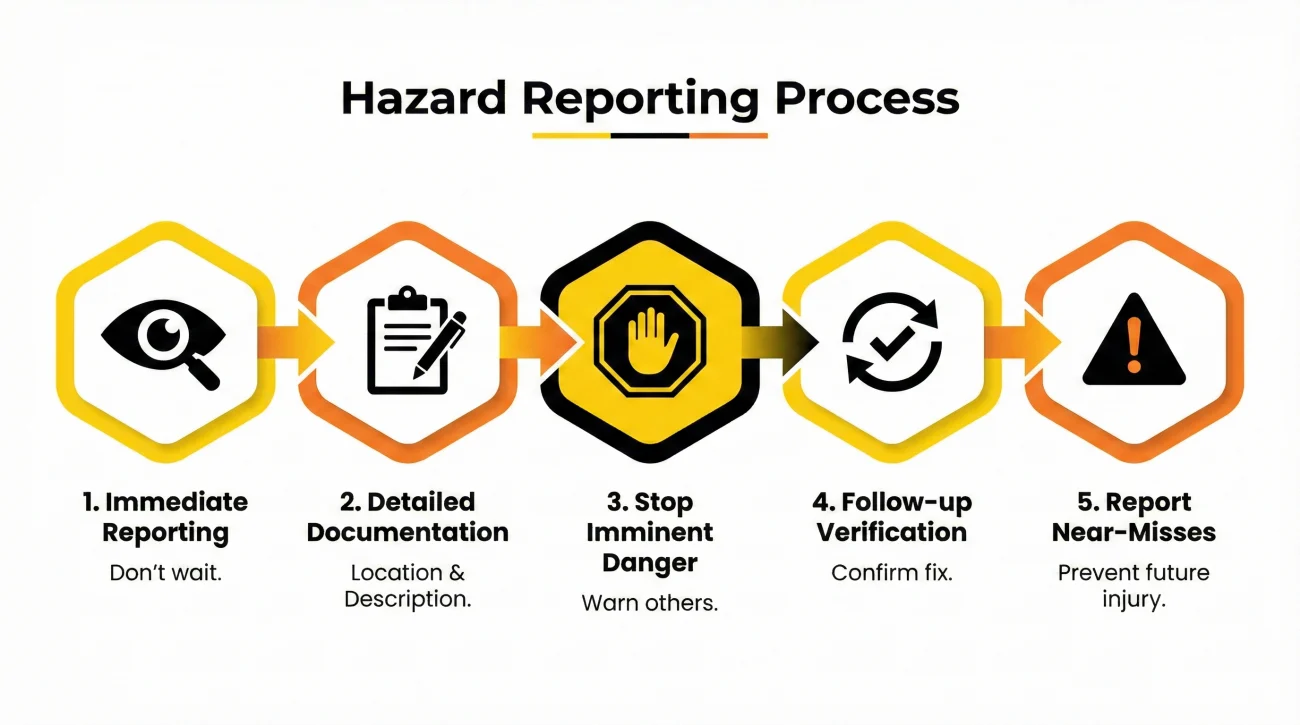
- Reporting Culture: Explain how you identify, document, escalate imminent danger, report near-misses, and follow up until hazards are truly fixed.
Safety as Core Competency
Warehouse environments present significant hazards: heavy equipment operation, elevated storage, moving loads, congested workspaces, and continuous activity creating constant risk exposure. Understanding warehouse safety interview questions demonstrates that you prioritize injury prevention, recognize common hazards, follow established protocols, and contribute to safety culture beyond mere compliance.
This guide establishes foundational warehouse safety knowledge for operations professionals. You’ll learn essential PPE requirements and usage, forklift and material handling safety protocols, fire prevention and emergency response, hazard recognition and reporting procedures, and demonstrating safety commitment during interviews.
Personal Protective Equipment Standards
Warehouse PPE requirements establish minimum protection for common hazards, with additional equipment required for specific tasks.
Standard Warehouse PPE
Most warehouse operations mandate baseline protective equipment for all personnel in active work areas.
| PPE Item | Purpose | Usage Requirements |
|---|---|---|
| Steel-toed safety shoes | Protects feet from crushing by falling objects, rolling equipment, dropped pallets | ASTM rated, ankle support, slip-resistant soles, worn at all times in warehouse areas |
| High-visibility vest | Ensures worker visibility to forklift operators and mobile equipment drivers | ANSI Class 2 minimum, clean and visible, worn over all clothing, reflective material intact |
| Hard hat | Protects head from falling objects in areas with overhead storage or lifting operations | Required in designated zones, replaced after impact or every 5 years, proper fit critical |
| Safety glasses | Eye protection from debris, dust, packaging materials, strapping fragments | ANSI Z87.1 rated, side shields required, prescription glasses need safety rating |
| Work gloves | Hand protection from cuts, abrasions, splinters during material handling | Task-appropriate (cut-resistant for sharp materials), proper fit, replace when damaged |
Task-Specific Additional Protection
Certain warehouse activities require supplemental PPE beyond universal requirements.
- 👂 Hearing protection: Earplugs or earmuffs in high-noise areas (powered equipment zones, 85+ dB)
- 😷 Respiratory protection: Dust masks for fine particles, respirators for chemical exposure, fit testing required
- 🧤 Specialized gloves: Heat-resistant for handling hot materials, chemical-resistant for hazmat, cold storage insulated gloves
- 🥾 Cold storage gear: Insulated clothing, thermal boots, face protection for freezer operations
- ⚡ Arc flash protection: Specialized clothing for electrical work on powered equipment or systems
💡 Pro tip: PPE protects only when worn correctly and consistently. Removing steel-toed shoes because they’re uncomfortable, skipping safety glasses “just for a minute,” or wearing damaged equipment defeats protection purpose. If PPE uncomfortable or ill-fitting, request proper size or different approved model rather than compromising safety for comfort.
Expert advice: During warehouse tours or working interviews, wearing appropriate PPE without being reminded demonstrates safety consciousness. Arrive with steel-toed shoes if you know you’ll tour warehouse, put on provided safety glasses immediately without waiting for instruction, and maintain PPE compliance throughout visit. This non-verbal communication about safety priorities often influences hiring decisions as much as interview answers.
Forklift and Material Handling Safety
Forklift safety protocols prevent the most common and severe warehouse injuries through systematic operation procedures and awareness.
Safe Forklift Operation Principles
Powered industrial truck operation requires certification, training, and adherence to strict safety protocols.
| Safety Element | Requirements | Why It Matters |
|---|---|---|
| Operator certification | OSHA-compliant training, written test, practical evaluation, renewal every 3 years | Ensures operators understand controls, physics, hazards; provides accountability |
| Pre-operation inspection | Daily check of brakes, steering, lights, horn, forks, hydraulics, tires before operation | Identifies mechanical issues before they cause accidents, documents equipment condition |
| Load capacity limits | Never exceed rated capacity on load center plate, consider load distribution and height | Overloading causes tip-overs, structural failure, loss of control killing operators and bystanders |
| Speed and awareness | Reduced speed in congested areas, honk at intersections, watch for pedestrians constantly | Prevents striking pedestrians who can’t hear approaching equipment over noise |
| Parking procedures | Lower forks flat, apply brake, turn off ignition, remove key, never leave running unattended | Prevents unauthorized use, uncontrolled movement, or children/visitors climbing on equipment |
Pedestrian Safety in Warehouse Environments
Non-equipment operators must understand safe behavior around forklifts and mobile equipment.
- Designated walkways: Stay in marked pedestrian paths, never walk under elevated loads, cross forklift aisles at designated points
- Visual awareness: Maintain eye contact with operators, don’t assume they see you, make yourself visible
- Distance maintenance: Stay at least 10 feet away from operating equipment, never approach from blind spots
- No distractions: Avoid phone use while walking in active areas, headphones prohibited in equipment zones
- Load stability: Report unstable loads, leaning stacks, or equipment operating unsafely immediately
Manual Material Handling Safety
Proper lifting techniques and load assessment prevent back injuries and muscle strains.
- 💪 Lifting technique: Bend knees not back, keep load close to body, avoid twisting while carrying
- ⚖️ Weight limits: Know your limits (typically 50 lbs max solo), get help for heavy or awkward items
- 🛠️ Mechanical aids: Use pallet jacks, hand trucks, dollies rather than carrying when available
- 👥 Team lifting: Coordinate with partner, count before lifting together, communicate throughout move
Never rush material handling to meet productivity targets. Speed pressure causes shortcuts leading to injuries. If you cannot safely handle a load due to weight, size, or positioning, stop and get appropriate equipment or assistance. No productivity metric justifies permanent back injury or crushed appendages.
Fire Safety and Emergency Protocols
Warehouse fire hazards include combustible materials, electrical equipment, battery charging, and packaging waste requiring comprehensive prevention and response planning.
Fire Prevention Measures
Proactive measures reduce fire risk through housekeeping, equipment maintenance, and hazard elimination.
| Prevention Area | Key Practices | Common Violations |
|---|---|---|
| Housekeeping | Remove combustible waste daily, keep aisles clear, proper trash disposal, clean dust accumulation | Cardboard piles near heat sources, blocked fire exits, excessive packaging debris |
| Electrical safety | Inspect cords for damage, avoid overloading circuits, proper grounding, qualified repairs only | Frayed cords, extension cord daisy-chaining, bypassing safety devices, unqualified repairs |
| Battery charging | Designated well-ventilated areas, spill containment, eyewash stations, no smoking/flames nearby | Charging in congested areas, inadequate ventilation, missing safety equipment |
| Exit access | Maintain clear paths to exits, mark exits visibly, keep doors unlocked during operations | Blocking exits with pallets, locked emergency doors, obstructed access routes |
| Sprinkler clearance | Maintain 18-inch minimum clearance below sprinkler heads, never hang items from sprinklers | Stacking too high, hanging signs/decorations from sprinkler pipes |
Emergency Response Procedures
Clear protocols enable effective response during fires, chemical spills, or other emergencies.
- Evacuation routes: Know primary and secondary exits from your area, assembly point location, headcount procedures
- Alarm systems: Recognize alarm sounds, pull station locations, when to activate versus call 911 first
- Fire extinguisher use: PASS method (Pull, Aim, Squeeze, Sweep), know extinguisher types and limitations, never fight fire alone
- Communication: Emergency contact numbers posted visibly, radio protocols for emergencies, who has authority to evacuate
- Shutdown procedures: Equipment shutdown sequence during emergencies, securing hazardous materials, door closure protocols
Hazardous Materials Handling
Warehouses storing chemicals, batteries, aerosols, or flammable materials require additional precautions.
- 📋 SDS familiarity: Safety Data Sheets accessible, understand hazard symbols, know emergency procedures
- 🔥 Flammable storage: Approved cabinets, separation from ignition sources, proper labeling, quantity limits
- ⚗️ Spill response: Spill kit locations, containment procedures, cleanup protocols, reporting requirements
- 🚫 Incompatible separation: Segregate reactive materials, prevent cross-contamination, proper disposal procedures
Hazard Recognition and Reporting Culture
Warehouse hazard reporting procedures enable proactive risk mitigation through systematic identification and correction before injuries occur.
Common Warehouse Hazards
Recognizing typical warehouse dangers enables prevention through awareness and correction.
- Slips, trips, and falls: Wet floors, uneven surfaces, debris in walkways, poor lighting, damaged flooring
- Struck-by incidents: Falling objects from racks, swinging loads, moving equipment, unstable stacks
- Ergonomic hazards: Repetitive motions, awkward postures, excessive reaching, vibration exposure
- Caught-in/between: Dock plates, conveyor pinch points, crushing between equipment and structures
- Environmental: Extreme temperatures (freezers, loading docks), inadequate ventilation, excessive noise
Effective Hazard Reporting
Systematic reporting and follow-up transforms hazard identification into injury prevention.
- 🔍 Immediate reporting: Don’t wait until shift end, report unsafe conditions when discovered
- 📝 Detailed documentation: Location, description, photos if possible, who else affected, severity assessment
- 🚨 Imminent danger: Stop work in immediate danger zones, warn others, notify supervision urgently
- ✅ Follow-up verification: Confirm corrections implemented, not just promises made, close the loop
- 🎯 Near-miss reporting: Report close calls: they predict future injuries if conditions unchanged
Contributing to Safety Culture
Strong safety culture requires individual accountability beyond compliance with rules.
- Peer accountability: Politely correct unsafe behavior you observe, don’t ignore risks affecting colleagues
- Suggestion participation: Contribute ideas for safety improvements, participate in safety committees
- Training engagement: Take safety training seriously, ask questions, practice procedures until proficient
- Stop work authority: Empower yourself and others to halt operations when unsafe conditions exist
- Recognition support: Acknowledge colleagues demonstrating excellent safety practices
Expert advice: Safety interview questions assess both knowledge and mindset. Reciting regulations proves less impressive than describing specific hazard you identified and reported, explaining your safety philosophy, or sharing example of choosing safety over productivity pressure. Authentic commitment to safety shows through concrete examples and decision patterns, not memorized OSHA standards.
For comprehensive warehouse operations preparation and safety scenario practice, explore our extensive logistics and operations interview guides.
❓ FAQ
🎯 What if I see coworker violating safety rules?
Address immediately if creating imminent danger: “Hey, you need to wear your hard hat in this area” or stop the work if serious risk. For less urgent violations, speak privately with colleague first: most violations stem from ignorance or habit, not intentional recklessness. If behavior continues after direct conversation, notify supervisor. Protecting colleagues from injury outweighs social discomfort. Remember: you may witness the unsafe act that eventually kills someone unless intervened.
💼 Can I be fired for refusing unsafe work?
OSHA protects workers from retaliation for refusing work posing reasonable belief of imminent danger of death or serious injury. However, refusal must be reasonable and you’ve requested correction without satisfactory response. Document concerns, notify supervisor clearly, offer to perform alternative safe work. Legitimate safety refusals should be supported by professional companies. If terminated for good-faith safety concern, contact OSHA and employment attorney.
⏰ Do I need forklift certification before applying?
Not typically required for entry-level warehouse positions. Most companies provide training and certification after hiring. However, existing certification demonstrates initiative and may give competitive advantage. If job posting requires certification, mention you’re willing to obtain it or already pursuing training. Focus on safety mindset, mechanical aptitude, and willingness to learn rather than worrying about lacking certification before employment starts.
📋 What constitutes reportable warehouse incident?
OSHA requires reporting work-related deaths within 8 hours and hospitalizations, amputations, or eye loss within 24 hours. Internal company policies typically require reporting any injury needing medical treatment beyond first aid, property damage above threshold, near-misses with serious potential, and environmental releases. When uncertain, report: over-reporting beats missing critical incident. Near-misses especially valuable: they reveal hazards before causing actual injury.
✨ How do I demonstrate safety commitment during interviews?
Share specific examples using STAR method: time you identified hazard and reported it, situation where you chose safety over speed, safety improvement you suggested and implemented, or how you handled colleague performing unsafe act. Discuss safety training and certifications. Explain your pre-shift inspection routine for equipment. Describe approach to maintaining safety during busy periods. Authentic safety commitment shows through concrete examples and decision rationale, not generic “safety is my top priority” claims.
Final Thoughts
Mastering warehouse safety interview questions demonstrates fundamental professional responsibility in operations roles. Safety isn’t bureaucratic obstacle but baseline commitment ensuring workers survive their employment. Strong candidates discuss safety naturally throughout interviews, share concrete examples of safety prioritization, and exhibit genuine understanding that no productivity target justifies injury risk.
⚠️ Disclaimer: The interview strategies, sample answers, and negotiation tips provided in this guide are for educational purposes only. Hiring decisions are subjective and vary by company and industry. While these strategies are based on professional HR standards, they do not guarantee a specific job offer or result.