Keeping Supply Lines Moving
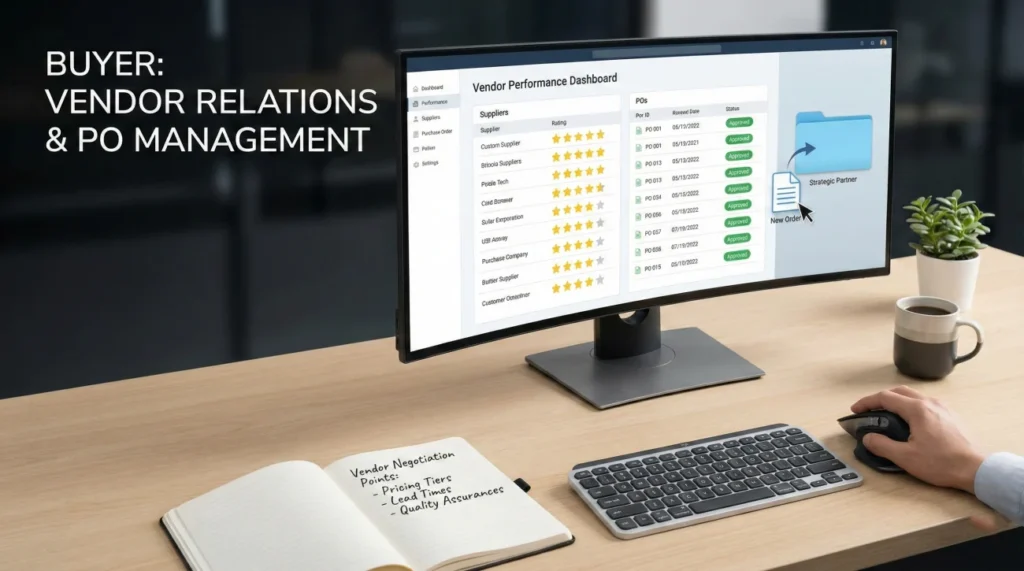
Buyer interview questions evaluate your ability to execute tactical purchasing that keeps operations running smoothly. You are the connection between your organization’s needs and the vendors who supply them. Every purchase order you manage, every delivery you track, and every supplier relationship you maintain directly affects whether production continues or stops.
Hiring managers want buyers who combine precision with persistence. You need to manage purchase orders accurately, follow up with vendors proactively, track deliveries obsessively, and expedite when circumstances demand it. They need someone who catches pricing discrepancies before they become problems and who maintains the relationships that ensure supply continuity even when challenges arise.
This guide covers purchase order management, vendor communication and follow-up, delivery tracking and expediting, price verification, and maintaining supply continuity through strong supplier relationships.
Purchase Order Management
Q: Walk me through your process for creating and managing purchase orders.
I verify requisition details before creating any PO: quantities, specifications, delivery requirements, and authorized approvals. I confirm pricing against contracts or recent quotes, ensuring terms match what was negotiated. Once the PO is accurate, I submit it through proper channels and maintain documentation of all communications.
After submission, I track PO status actively rather than waiting for problems. I confirm vendor acknowledgment within expected timeframes, note committed delivery dates, and flag any discrepancies between our requirements and vendor confirmations. I maintain organized records that allow quick retrieval when questions arise.
Q: How do you handle order modifications after a PO has been issued?
I first assess the modification’s impact: can the vendor accommodate the change, what are the cost implications, and how does it affect delivery? I communicate with the vendor immediately to understand their constraints before promising anything internally. Changes need proper documentation through formal PO amendments.
I ensure all modifications are approved through the same channels as the original order. I update all relevant parties including receiving, accounts payable, and the requisitioner. I maintain an audit trail showing what changed, when, and why. Proper change management prevents disputes and ensures everyone works from the same information.
Q: What procurement systems have you used and how do they improve your work?
I have experience with ERP systems including SAP and Oracle, as well as dedicated procurement platforms. These systems automate routine tasks like three-way matching between PO, receipt, and invoice. They provide visibility into order status, spending patterns, and vendor performance that manual processes cannot match.
System proficiency means more than knowing which buttons to click. I leverage reporting capabilities to identify trends, spot anomalies, and support data-driven decisions. I understand how data flows between procurement, receiving, and finance modules, which helps troubleshoot issues when transactions do not process as expected.
Q: How do you ensure purchase order accuracy?
I verify every element before submission: part numbers, quantities, unit prices, delivery dates, ship-to locations, and payment terms. I cross-reference against contracts, quotes, and historical orders to catch discrepancies. I double-check calculations, especially for orders with quantity breaks or tiered pricing.
I also verify that requisition approvals are complete and that budget allocation exists. Errors caught before PO submission are easy to fix; errors discovered after delivery create disputes and delays. My systematic verification approach has significantly reduced order errors and the rework they cause.
Vendor Communication & Follow-Up
Q: How do you build and maintain relationships with vendors?
I treat vendors as partners rather than adversaries. Clear communication, reasonable expectations, and prompt payment build goodwill that pays dividends when I need flexibility or expedited service. I maintain regular contact beyond just placing orders, checking in on their capacity, lead times, and any changes that might affect our business.
I am honest about our forecasts and provide as much advance notice as possible for significant changes. When problems occur, I work collaboratively toward solutions rather than assigning blame. Strong relationships mean vendors prioritize our orders when they are allocating constrained capacity. That relationship value is impossible to quantify but essential to consistent supply.
Q: Describe your approach to vendor follow-up on open orders.
I maintain a structured review cadence based on order criticality and lead time. Critical or long-lead items get weekly confirmation calls; routine items get systematic checks at key milestones. I do not wait until the delivery date to discover problems. Proactive follow-up surfaces issues when there is still time to react.
I document all vendor communications, noting commitments, concerns, and any changes to expected delivery. When vendors miss commitments, I address it promptly and directly while maintaining professionalism. I track vendor reliability over time, using this data for performance discussions and sourcing decisions.
Q: How do you handle a vendor who consistently underperforms?
I first ensure my expectations are clear and reasonable. I document specific instances of underperformance with dates, impacts, and what was communicated. I then have a direct conversation with the vendor, sharing the data and seeking to understand root causes. Sometimes problems stem from our side: unclear specifications, unrealistic timelines, or poor forecasting.
If the vendor acknowledges issues and commits to improvement, I establish specific metrics and timelines for evaluation. I continue monitoring and provide feedback. If improvement does not materialize despite good-faith efforts, I escalate internally and begin qualifying alternative sources. Vendor relationships matter, but they cannot compromise supply reliability.
Q: How do you communicate urgent needs to vendors?
I call rather than email for truly urgent situations. I explain the impact clearly: why this is urgent, what happens if we do not receive the order, and what flexibility exists on our end. I ask directly what it takes to make it happen: expedited production, premium freight, pulling from other orders. I am prepared to discuss cost implications and obtain necessary approvals.
I also recognize that constant urgency diminishes my credibility. If everything is a crisis, nothing is. I reserve urgent requests for genuine emergencies and work upstream to prevent recurring urgency through better planning and forecasting. Vendors are more responsive when they know my urgent requests are truly urgent.
Delivery Tracking & Expediting
How do you track deliveries to ensure on-time receipt?
I maintain a tracking system that shows all open orders by expected delivery date. For domestic shipments with tracking numbers, I monitor carrier systems for updates. For international or complex shipments, I coordinate with freight forwarders and customs brokers to understand status at each stage.
I review this tracking daily, focusing on orders due within the coming week and any showing delays or exceptions. I communicate proactively with receiving about incoming shipments so they can plan labor and space. When tracking shows potential delays, I contact carriers and vendors immediately rather than waiting to see if the problem resolves.
Describe a situation where you had to expedite a critical order. What did you do?
A key component supplier notified us that a quality issue would delay our order by two weeks. The component was needed for a customer commitment with significant penalty clauses. I immediately assessed our options: expediting the fix at the supplier, sourcing from an alternative vendor, or finding inventory elsewhere in our organization.
I worked with the supplier to understand the quality issue timeline precisely. Simultaneously, I contacted backup suppliers to check availability and lead times for the same specification. I discovered our European facility had safety stock of the component. We air-freighted from Europe while the supplier resolved their quality issue, which cost premium freight but avoided the customer penalty. The experience reinforced the importance of maintaining qualified backup sources.
How do you prioritize when multiple orders need expediting?
I prioritize based on business impact rather than who is asking loudest. Production stoppages, customer commitments with penalties, and safety stock replenishment take priority over buffer stock or lower-priority projects. I assess realistic improvement potential: which expediting efforts will actually change outcomes versus which situations are already beyond recovery.
I communicate priorities clearly to stakeholders, explaining trade-offs when I cannot expedite everything simultaneously. I also analyze patterns: if the same items require expediting repeatedly, that signals a systemic issue with lead time assumptions, safety stock levels, or supplier reliability that needs addressing beyond the immediate crisis.
Pricing & Supply Continuity
Q: How do you verify pricing on purchase orders?
I check prices against contracted rates, recent quotes, or historical orders before issuing any PO. For contract items, I verify we are using current pricing based on volume tiers, effective dates, and any applicable adjustments. For non-contract purchases, I compare quotes from multiple sources when time permits and document the basis for pricing acceptance.
I investigate discrepancies immediately rather than assuming someone else will catch them. If an invoice price differs from the PO, I contact the vendor before authorizing payment. I track price trends over time, flagging unexpected increases for investigation or renegotiation. Vigilance on pricing directly affects our cost performance.
Q: How do you ensure supply continuity for critical items?
I work closely with planning to understand which items are truly critical: high-cost-of-stockout, long lead time, single source, or limited supplier capacity. For these items, I establish monitoring protocols beyond routine PO management. I track supplier capacity, lead time trends, and any early warning signals of supply disruption.
I advocate for appropriate safety stock and qualified backup sources for critical items. I maintain relationships with secondary suppliers even when we are not actively ordering, so they remain viable options if needed. When disruption risks emerge, whether from supplier issues, logistics challenges, or market conditions, I escalate early so stakeholders can make informed decisions about inventory or alternative sourcing.
Q: How do you handle a sudden supplier disruption?
I first assess the situation scope: how much inventory do we have, how long will the disruption last, and what is the business impact of running out? I immediately contact alternative suppliers to check availability, even if we have not qualified them for the specific item. Sometimes specifications can be adjusted or temporary substitutions approved.
I communicate with internal stakeholders about the situation, timeline, and options. I explore all possibilities: expediting from other supplier locations, emergency qualification of alternatives, design modifications to use available materials, or prioritizing allocation among competing needs. Once the immediate crisis passes, I conduct a retrospective to improve our preparation for future disruptions.
Buyer Knowledge Quiz
20 Practice Questions
1. Three-way matching in procurement verifies:
- Only the PO and invoice
- PO, receiving document, and invoice
- Quote, PO, and payment
- Requisition, approval, and PO
2. When should you contact vendors about open orders?
- Only when problems arise
- Proactively at key milestones before delivery date
- After the delivery date passes
- Never, wait for vendor communication
3. Expediting should be reserved for:
- All orders to ensure on-time delivery
- Genuine emergencies with significant business impact
- Orders requested by senior managers
- Items that are easy to expedite
4. PO modifications require:
- Verbal agreement only
- Formal documentation and appropriate approvals
- Notification after the fact
- New PO creation only
5. Vendor relationship building helps by:
- Guaranteeing lowest prices
- Improving responsiveness when flexibility is needed
- Eliminating need for contracts
- Avoiding performance tracking
6. Price verification should occur:
- Only for large orders
- Before issuing every purchase order
- During invoice payment
- Annually
7. Underperforming vendors should:
- Be replaced immediately
- Receive documented feedback with improvement opportunity
- Be ignored until major problems occur
- Get more orders to improve
8. Critical item supply continuity requires:
- Hoping suppliers stay reliable
- Safety stock, backup sources, and proactive monitoring
- Lowest cost sourcing only
- Single source for best pricing
9. Urgent vendor communication should be:
- By email for documentation
- By phone with email confirmation
- Through the sales rep only
- Delayed until business hours
10. Delivery tracking should focus on:
- Orders already delivered
- Orders due soon and any showing delays
- Only critical orders
- Orders with tracking numbers only
11. Repeated expediting of the same items suggests:
- Good buyer performance
- Systemic issues with planning or supplier reliability
- Excellent vendor relationships
- Normal purchasing operations
12. Invoice price discrepancies should be:
- Paid as invoiced
- Investigated before payment authorization
- Ignored for small amounts
- Addressed by accounting only
13. Vendor acknowledgment of POs should:
- Be assumed if not declined
- Be confirmed with committed delivery dates noted
- Be tracked only for large orders
- Be optional
14. Supply disruption response includes:
- Waiting for supplier resolution
- Assessing inventory, contacting alternatives, and stakeholder communication
- Escalating to management only
- Documenting for future reference
15. Procurement system proficiency means:
- Knowing transaction entry
- Leveraging reporting and understanding data flows
- Avoiding the system when possible
- Following IT instructions
16. Backup suppliers should be:
- Contacted only during emergencies
- Maintained with relationships even when not ordering
- The lowest cost options
- Identified after disruptions occur
17. PO accuracy verification includes:
- Part numbers only
- All elements including prices, quantities, terms, and approvals
- What the requisitioner specified
- System-generated data only
18. Vendor performance tracking enables:
- Punishing poor performers
- Data-driven performance discussions and sourcing decisions
- Avoiding difficult conversations
- Annual reviews only
19. Expediting prioritization should consider:
- Who is asking loudest
- Business impact and realistic improvement potential
- Easiest items first
- Most expensive orders
20. Honest vendor communication includes:
- Hiding forecasts to maintain flexibility
- Sharing realistic forecasts and advance notice of changes
- Exaggerating urgency for every order
- Minimal communication
❓ FAQ
🎓 What qualifications do buyers need?
Many buyers have degrees in business, supply chain, or related fields, though strong organizational skills and procurement experience often matter more. Certifications like CPSM or CSCP can enhance credentials. ERP system proficiency and attention to detail are essential for success.
💼 How does a Buyer differ from a Purchasing Agent?
Buyers typically focus on tactical execution: managing POs, tracking deliveries, and vendor follow-up. Purchasing Agents often handle more sourcing and negotiation: RFQs, bid comparisons, and cost savings initiatives. Titles vary by organization, but agents usually have broader sourcing responsibility.
📈 What career paths exist for buyers?
Buyers can advance to Senior Buyer, Purchasing Agent, or Procurement Specialist roles with expanded sourcing authority. Further progression includes Procurement Manager, Category Manager, or Supply Chain Manager positions. Some specialize in particular categories or move into strategic sourcing.
📋 What metrics are buyers typically measured on?
Common metrics include on-time delivery rates, PO accuracy, cost savings contribution, supplier performance scores, and order cycle times. Some organizations track expediting frequency as an indicator of planning effectiveness. Metrics vary by organization and role focus.
🔧 What software do buyers typically use?
Buyers commonly use ERP systems like SAP, Oracle, or Microsoft Dynamics for PO management. Additional tools may include specialized procurement platforms, supplier portals, and reporting tools. Proficiency with spreadsheets for tracking and analysis is also essential.
Final Thoughts
Success with buyer interview questions requires demonstrating your ability to manage the tactical details that keep supply flowing. Show that you handle purchase orders accurately, follow up with vendors proactively, track deliveries vigilantly, and maintain relationships that ensure responsiveness when you need it most.
The best buyers combine systematic precision with relationship skills. Highlight your experience with procurement systems, your approach to vendor communication, and your ability to expedite effectively when situations demand it. Employers want buyers they can trust to manage the details that determine whether operations run smoothly or grind to a halt.
⚠️ Disclaimer: The interview strategies, sample answers, and negotiation tips provided in this guide are for educational purposes only. Hiring decisions are subjective and vary by company and industry. While these strategies are based on professional HR standards, they do not guarantee a specific job offer or result.