- Manufacturing Reality: Production interviews focus on safety, uptime pressure, and quality impact because mistakes and downtime cost real money fast.
- What They Screen For: Safety-first habits, lean and continuous improvement thinking, quality discipline, equipment competence, and calm root-cause problem-solving.
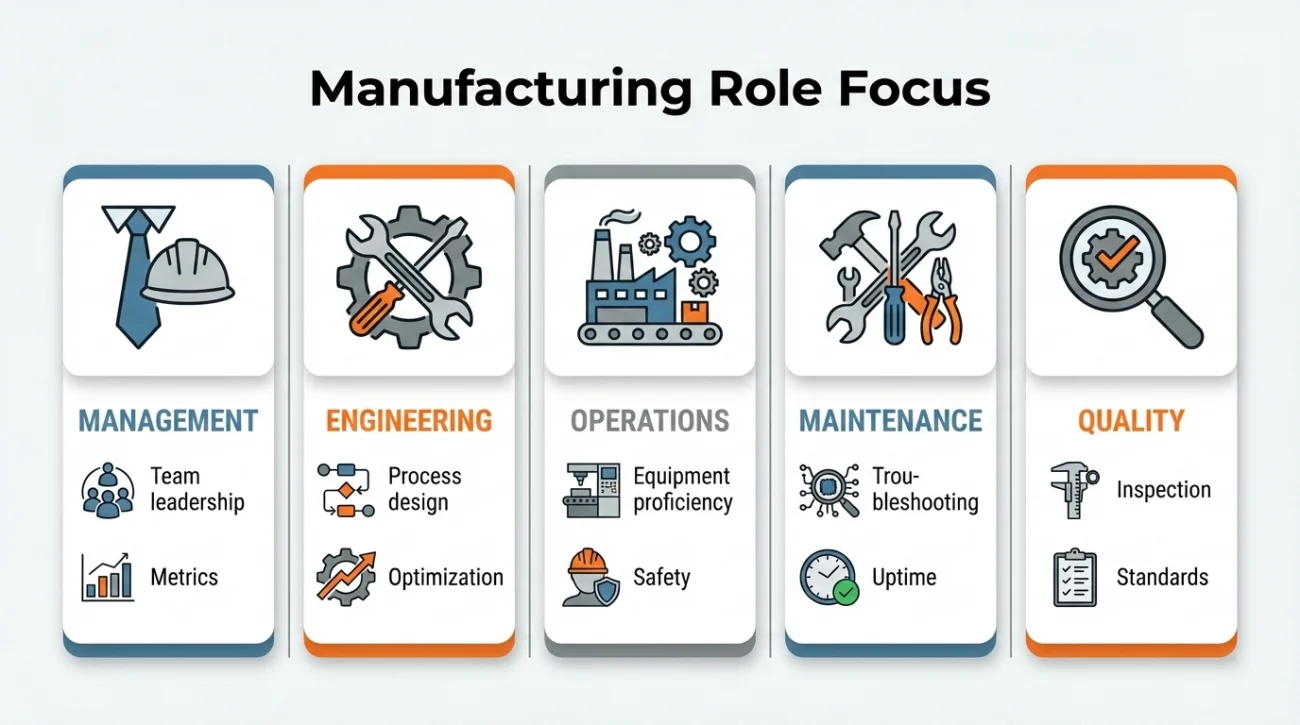
- Tailor To The Role: Management needs leadership plus metrics, engineering needs process and automation wins, operations needs hands-on reliability, maintenance needs downtime control, quality needs standards and documentation.
- Bring Proof In Numbers: Use cycle time, OEE, scrap, yield, uptime, and safety records, then prep 5 to 7 stories with clear actions and measurable outcomes.
- Don’t Trigger Red Flags: Never treat safety like a checkbox, don’t criticize past employers, and don’t hide behind vague “hard worker” claims without data.
Why Manufacturing Interviews Differ From Office Roles
Preparing for manufacturing interview questions requires understanding that production environments evaluate fundamentally different capabilities than desk jobs, emphasizing safety consciousness, process efficiency, hands-on problem-solving, and ability to work within complex operational constraints that office settings rarely encounter. Manufacturing interviews assess whether you can thrive in fast-paced production environments where downtime costs thousands per minute, safety lapses create serious consequences, and quality defects affect customer satisfaction and company reputation.
Strong candidates demonstrate practical understanding of manufacturing principles like lean methodology, continuous improvement, and total quality management alongside role-specific technical skills. During selection processes, hiring managers probe your experience with production metrics, problem-solving under pressure, collaboration across shifts and departments, and commitment to safety protocols that protect both people and equipment. The professionals who consistently secure manufacturing offers balance technical competence with operational awareness and safety mindset that distinguishes this field from other industries.
Essential Manufacturing Competencies
Understanding production interview preparation centers on mastering competencies that manufacturing environments universally value regardless of specific role or product type.
Safety Consciousness and Protocol Adherence
Manufacturing environments involve heavy machinery, moving parts, hazardous materials, and physical risks that office settings don’t present. Employers assess safety mindset through questions about past incidents, protocol compliance, hazard identification, and emergency response. Strong candidates discuss safety as non-negotiable priority, describe specific protocols they’ve followed, explain how they’ve identified and addressed potential hazards, and demonstrate understanding that production targets never justify cutting safety corners. This safety consciousness must feel authentic rather than rehearsed compliance because genuine commitment to safe practices protects both individuals and organizational reputation.
| Core Competency | What Employers Assess | Demonstration Strategy |
|---|---|---|
| Safety Mindset | Protocol adherence, hazard awareness, incident prevention | Specific examples of safety prioritization and protocols followed |
| Process Efficiency | Lean principles, waste reduction, continuous improvement | Metrics-based examples of efficiency improvements implemented |
| Quality Focus | Defect prevention, inspection rigor, quality standards | Quality metrics, inspection processes, problem resolution |
| Technical Skills | Equipment operation, troubleshooting, maintenance understanding | Specific machinery experience, technical certifications |
| Problem-Solving | Root cause analysis, quick decision-making, pressure performance | Examples of production issues resolved under time constraints |
Lean Manufacturing and Process Improvement
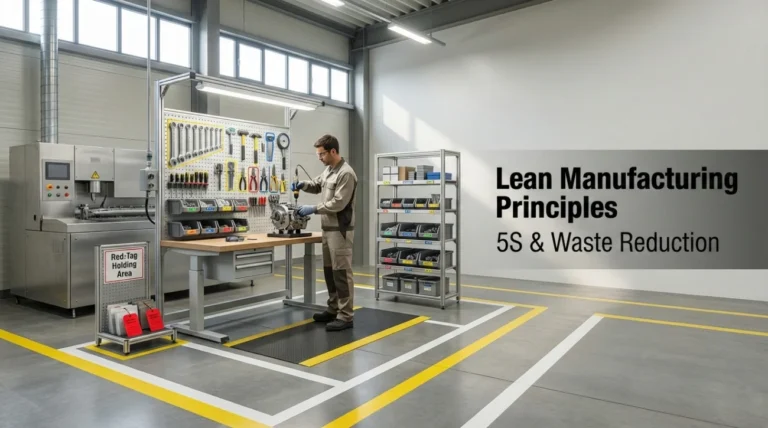
Modern manufacturing emphasizes continuous improvement through lean principles eliminating waste, reducing cycle times, and optimizing workflows. Interviewers assess your familiarity with concepts like 5S, kaizen, value stream mapping, and root cause analysis alongside practical experience implementing improvements. Prepare specific examples where you identified inefficiencies, proposed solutions, measured results, and sustained gains. Even entry-level candidates can discuss process improvement mindset demonstrating observation skills and initiative beyond just following existing procedures without questioning optimization opportunities.
Quality Control and Standards Adherence
Manufacturing quality directly impacts customer satisfaction, warranty costs, and brand reputation. Employers evaluate your understanding of quality systems, inspection procedures, documentation requirements, and response to defects. Strong candidates explain quality checks they’ve performed, how they’ve caught problems before shipment, their approach to addressing recurring defects, and balance between meeting production targets while maintaining quality standards. This quality commitment must demonstrate understanding that rushing defective products creates greater problems than brief production delays fixing issues correctly.
Expert advice: The most convincing manufacturing interview responses connect theoretical knowledge of lean principles and quality systems to specific production floor examples showing how you’ve applied concepts in real operational contexts.
Role-Specific Preparation Approaches
Effective manufacturing job interview tips recognize that different manufacturing roles emphasize distinct capabilities requiring adapted preparation beyond universal manufacturing competencies.
Management and Supervisory Positions
Manufacturing management interviews assess leadership in high-pressure production environments where decisions impact output, costs, and safety simultaneously. Prepare examples demonstrating people management across multiple shifts, conflict resolution between departments, resource allocation under constraints, and balancing competing priorities like production targets versus quality standards versus safety protocols. Strong candidates discuss metrics they’ve managed, improvements they’ve led, how they’ve developed team capabilities, and their approach to maintaining morale in demanding manufacturing environments.
Engineering and Technical Positions
Manufacturing engineering roles require demonstrating technical problem-solving, process design, equipment optimization, and cross-functional collaboration. Prepare to discuss specific technical challenges you’ve solved, how you’ve reduced cycle times or improved yields, your experience with automation or new technology implementation, and ability to balance theoretical engineering knowledge with practical production realities. Include examples showing how you’ve worked with operators and maintenance teams translating technical concepts into operational improvements they can implement and sustain.
- 🏭 Management focus: Team leadership, metrics achievement, resource optimization, cross-shift coordination
- 🔧 Engineering emphasis: Technical problem-solving, process design, automation, yield improvement
- ⚙️ Operations roles: Equipment proficiency, quality execution, safety compliance, efficiency contribution
- 🛠️ Maintenance positions: Troubleshooting speed, preventive practices, minimizing downtime
- 📊 Quality roles: Inspection rigor, defect analysis, standards enforcement, documentation accuracy
Operations and Skilled Trades
Operator and skilled trades interviews assess hands-on competence, safety awareness, quality consciousness, and ability to work efficiently within established processes. Discuss specific equipment you’ve operated, certifications you hold, your approach to maintaining quality standards, how you’ve identified and resolved equipment issues, and examples demonstrating initiative beyond minimum job requirements. Even experienced operators benefit from articulating their systematic approach to setup, operation, quality checks, and communication rather than assuming interviewers understand expertise from years of experience alone.
💡 Pro tip: Research the specific manufacturing processes, equipment brands, and production systems the company uses; demonstrating familiarity with their particular environment shows serious interest beyond generic manufacturing knowledge applicable anywhere.
Quantifying Manufacturing Contributions
Strong factory interview strategies include preparing metrics-based examples demonstrating concrete production contributions rather than vague claims about being hard workers or team players.
Production and Efficiency Metrics
Manufacturing environments track specific metrics like units per hour, cycle times, OEE (Overall Equipment Effectiveness), scrap rates, and yield percentages. Prepare examples including these metrics showing how your work contributed to improvements. “Reduced cycle time by 15% through fixture redesign” or “Maintained 99.2% quality rate while exceeding production targets by 8%” prove capability far more convincingly than generic claims. If you lack specific numbers, describe the improvements qualitatively with clear before/after comparisons demonstrating impact.
| Metric Category | Example Metrics |
|---|---|
| Production Output | Units per hour, cycle time, throughput, OEE, capacity utilization |
| Quality Performance | Defect rates, first-pass yield, scrap percentage, customer returns |
| Safety Record | Days without incidents, near-miss reports, safety audit scores |
| Cost Management | Waste reduction, energy savings, labor efficiency, material utilization |
| Equipment Reliability | Uptime percentage, MTBF, MTTR, preventive maintenance completion |
Process Improvement Examples
Prepare 5-7 specific stories demonstrating problem-solving, improvement initiatives, or challenging situations you’ve navigated successfully. Each story should include clear problem description, your specific actions, measurable outcomes, and what you learned. These stories provide flexible material you can adapt to different interview questions rather than trying to generate examples on the spot under pressure. Strong improvement stories show initiative, analytical thinking, collaboration, and results-orientation that manufacturing environments value highly.
Avoiding Manufacturing Interview Pitfalls
Several predictable errors undermine otherwise qualified candidates during operations interview questions assessment, creating doubt about manufacturing readiness or cultural fit.
Downplaying Safety Importance
Treating safety as bureaucratic checkbox rather than fundamental priority signals dangerous attitude manufacturing employers cannot tolerate. Never suggest you’ve bent safety rules for production targets, dismissed protocols as excessive, or blamed incidents on others without acknowledging systemic improvements. Even when discussing production pressure, maintain clear position that safety never gets compromised regardless of circumstances. This non-negotiable safety stance must feel authentic because manufacturing leaders recognize that genuine safety commitment versus lip service becomes apparent quickly in actual production environments.
Vague Generalities Without Metrics
Manufacturing environments run on measurable performance making vague claims about being good workers unconvincing. “I’m detail-oriented” carries no weight compared to “I maintained 99.5% quality rate across 12,000 units monthly.” Prepare specific numbers demonstrating your contributions even if estimates rather than exact figures. This quantification proves you understand manufacturing’s metrics-driven culture and can articulate concrete value you deliver beyond generic work ethic claims anyone can make.
Never criticize previous employers’ safety practices, equipment conditions, or management decisions during interviews; this negativity raises concerns about professionalism and suggests you’ll speak similarly about this organization after departure.
❓ FAQ
🎯 How do I demonstrate manufacturing knowledge without experience?
Research the company’s specific processes, products, and equipment. Discuss relevant coursework, certifications, or training. Express genuine interest in learning their systems. Emphasize transferable skills like quality focus, safety consciousness, and teamwork. Entry-level candidates win through demonstrated eagerness to learn and strong fundamental attitudes toward safety and quality.
💼 Should I mention salary expectations during manufacturing interviews?
Let employers raise compensation first when possible. Research typical pay for the role and location beforehand. If asked, provide range based on market research rather than specific number. Focus interviews on demonstrating value and fit, saving detailed compensation negotiation until offer stage when you have maximum leverage.
⏰ What if I lack experience with specific equipment they use?
Acknowledge gaps honestly while emphasizing similar equipment experience and ability to learn quickly. Discuss how you’ve mastered new equipment previously, showing learning capability. Express enthusiasm for training on their specific systems. Most employers accept learning curves for otherwise strong candidates demonstrating right attitudes and foundational competencies.
📋 How important are lean manufacturing certifications?
Certifications demonstrate knowledge but practical application matters more. If you have certifications, prepare examples showing how you’ve applied lean principles. Without formal certifications, discuss continuous improvement mindset and specific examples of waste reduction or efficiency improvements you’ve contributed to through observation and initiative.
✨ Should I discuss past safety incidents or near-misses?
Frame any incident discussion around lessons learned and improvements implemented, never making light of safety issues. Focus on how experiences strengthened your safety commitment and awareness. Demonstrate understanding that incidents represent learning opportunities requiring systematic prevention rather than random bad luck needing only individual blame.
Final Thoughts
Manufacturing interviews assess capabilities fundamentally different from office environments, emphasizing safety consciousness, operational efficiency, quality commitment, and ability to thrive in fast-paced production settings where downtime costs thousands per minute and quality defects affect customer satisfaction directly. The candidates who consistently secure manufacturing offers demonstrate practical understanding of lean principles and continuous improvement alongside role-specific technical skills, all grounded in non-negotiable commitment to safety that protects both people and operations.
Mastering manufacturing interview questions requires preparing metrics-based examples quantifying your production contributions, articulating genuine safety mindset beyond rehearsed compliance, and demonstrating process improvement thinking that manufacturing environments value highly. Research the company’s specific processes and equipment, prepare concrete stories showing problem-solving under pressure, balance technical competence with operational awareness, and adapt your preparation to specific role requirements recognizing that management, engineering, and operations positions emphasize distinct capabilities. This comprehensive preparation distinguishes you from candidates offering generic work ethic claims without manufacturing-specific competencies that production environments demand for sustained success.
⚠️ Disclaimer: The interview strategies, sample answers, and negotiation tips provided in this guide are for educational purposes only. Hiring decisions are subjective and vary by company and industry. While these strategies are based on professional HR standards, they do not guarantee a specific job offer or result.