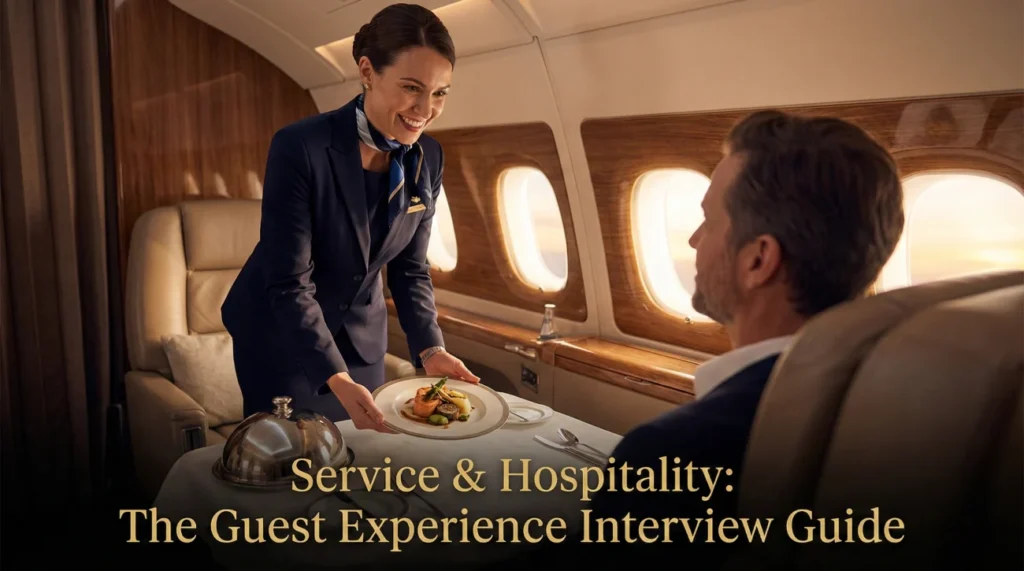
- What this guide is really about: Service and hospitality interview questions are designed to test guest-first mindset, emotional control, and consistency under pressure, not just whether you can do the tasks.
- Role clarity matters: Hospitality is not one job, so prep has to match your lane, for example food and beverage, lodging, or travel, or you will sound misaligned in the room.
- The four signals interviewers hunt for: Guest-first thinking, service recovery, calm handling of difficult people, and attention to detail that protects the guest experience even during peak stress.
- Your best proof is stories: Bring a few STAR examples that show a mistake fixed, a conflict de-escalated, an above-and-beyond moment, and teamwork when things got hectic.
- Preparation that separates you: Research the property or brand standards, know what practical assessments might show up, and present yourself like someone who already understands the role’s professional expectations.
The Guest Experience Industry
Hospitality and service industries exist to create memorable guest experiences through attentive care, anticipatory service, and genuine warmth. Mastering service and hospitality interview questions requires understanding that these roles assess not just technical skills but your ability to deliver consistently excellent experiences under pressure, navigate emotionally charged situations gracefully, and maintain professional composure when guests behave unreasonably.
The challenge is that hospitality roles span enormous diversity, ranging from flight attendants managing safety at 35,000 feet to casino dealers calculating payouts rapidly, from chefs creating culinary experiences to housekeepers maintaining impeccable room standards. Yet all share common threads: guest-first orientation, emotional regulation under stress, attention to detail affecting guest perception, and ability to recover gracefully from service failures.
This guide maps the hospitality interview landscape across food and beverage, lodging, and travel sectors. You’ll understand role distinctions preventing interview mismatch, identify core competencies assessed universally, recognize specialization-specific requirements, and prepare effectively for questions testing both technical knowledge and service mindset.
Understanding Industry Sectors
Hospitality divides into distinct sectors, each requiring different skill emphasis and interview preparation approaches.
Food & Beverage Sector
F&B roles range from front-of-house guest interaction to back-of-house culinary execution, with specialization increasing at higher levels.
| F&B Specialization | Primary Focus | Key Interview Themes |
|---|---|---|
| Restaurant Service | Table service and guest satisfaction | Menu knowledge, multitasking, upselling, handling complaints, teamwork with kitchen |
| Bar & Beverage | Drink preparation and bar service | Mixology skills, speed under pressure, responsible service, customer engagement |
| Culinary Operations | Food preparation and kitchen management | Cooking techniques, menu development, food safety, team leadership, cost control |
| Restaurant Management | Overall operations and P&L | Staff scheduling, inventory control, crisis management, guest recovery, revenue optimization |
Lodging & Accommodations Sector
Hotel and resort roles ensure comfortable stays through seamless operations and attentive service.
- 🏨 Front Office Operations: Check-in/out efficiency, PMS proficiency, reservation management, guest issue resolution
- 🧹 Housekeeping & Maintenance: Cleaning standards, speed with quality, attention to detail, trustworthiness
- 🎩 Guest Services: Concierge expertise, local knowledge, special request fulfillment, VIP handling
- 📊 Hotel Management: Occupancy optimization, department coordination, revenue management, brand standards
Travel & Transportation Sector
Travel roles facilitate journeys safely and comfortably while managing diverse passenger needs.
- Flight attendants: Safety protocols, emergency procedures, in-flight service, passenger conflict resolution
- Pilots: Situational awareness, crew resource management, checklist discipline, decision-making under pressure
- Travel agents: Itinerary planning, destination knowledge, sales skills, booking systems proficiency
- Tour guides: Public speaking, historical knowledge, group management, cultural sensitivity
Expert advice: The biggest interview mistake is assuming all hospitality roles are interchangeable. A server interview emphasizing check-in procedures misses the multitasking and menu knowledge focus. Similarly, a front desk candidate discussing culinary skills wastes time on irrelevant competencies. Research your specific role’s core responsibilities thoroughly, because hospitality breadth means interview focus varies dramatically by position.
Universal Hospitality Competencies
Despite sector diversity, certain competencies appear consistently in hospitality career prep scenarios across all guest-facing roles.
Guest-First Service Mindset
Hospitality professionals prioritize guest satisfaction even when personally inconvenient, finding solutions rather than citing limitations.
| Service Competency | What Interviewers Assess | Demonstration Methods |
|---|---|---|
| Anticipatory service | Recognizing unstated needs, proactive problem prevention | Describe situations where you identified guest needs before requests |
| Service recovery | Turning failures into loyalty opportunities, creative problem-solving | Share examples of recovering from mistakes or complaints successfully |
| Emotional labor | Maintaining warmth despite personal stress, authentic engagement | Explain how you stay positive during difficult shifts or with challenging guests |
| Attention to detail | Noticing small elements affecting guest perception | Discuss quality standards you maintain, how you catch potential issues |
Performance Under Pressure
Hospitality environments involve simultaneous demands, emotional intensity, and time pressure requiring composed multitasking.
- ⚡ Peak period management: Maintaining quality when overwhelmed, prioritizing effectively, staying calm
- 😤 Difficult guest handling: De-escalating anger, maintaining professionalism, finding solutions diplomatically
- 🔄 Multitasking capability: Managing multiple tables/guests/tasks simultaneously without dropping details
- 💪 Physical stamina: Sustaining energy through long shifts, remaining attentive despite fatigue
Professional Presentation Standards
Hospitality roles require impeccable grooming and professional appearance as guests judge service quality partially through visual first impressions.
- Grooming standards: Clean, well-maintained hair, nails, and personal hygiene
- Uniform compliance: Proper fit, cleanliness, adherence to brand standards
- Body language: Posture, eye contact, welcoming facial expressions, approachable demeanor
- Voice and tone: Clear articulation, appropriate volume, warm inflection, professional language
💡 Pro tip: Dress for your interview as if you’re already working in the role. Servers should appear polished and professional, flight attendants should demonstrate grooming standards, hotel staff should project welcoming professionalism. Your interview appearance provides evidence of understanding role presentation requirements before anyone asks questions.
Role-Specific Technical Knowledge
While service mindset appears universally, technical competencies vary dramatically based on specific hospitality specialization.
Food & Beverage Technical Skills
F&B roles require varying depth of culinary knowledge, beverage expertise, and operational proficiency depending on position level.
| Knowledge Domain | Entry Level | Mid Level | Senior Level |
|---|---|---|---|
| Menu knowledge | Ingredients, preparation methods, allergens | Pairing suggestions, customization options | Menu design, cost engineering, trend integration |
| Service techniques | Proper carrying, order accuracy, timing | Fine dining protocol, wine service, upselling | Training standards, service choreography, quality control |
| POS/Systems | Order entry, payment processing, basic reports | Inventory management, sales analysis | System selection, integration, data-driven decisions |
| Food safety | Basic hygiene, temperature awareness | HACCP principles, proper storage | Compliance management, training programs, audit readiness |
Lodging Technical Proficiency
Hotel and resort roles require property management systems expertise, operational knowledge, and service protocol mastery.
- Property management systems (Opera, Maestro, etc.) for reservations and guest management
- Revenue management principles for occupancy and rate optimization
- Housekeeping standards including room inspection criteria and cleaning protocols
- Safety and security procedures including emergency response and incident reporting
- Brand standards specific to hotel chains or independent property positioning
Travel & Aviation Requirements
Travel sector roles often require regulatory knowledge, safety certifications, and specialized operational expertise.
- ✈️ Flight attendants: FAA regulations, safety demonstrations, emergency procedures, first aid certification
- 🎯 Pilots: Licenses and ratings, aircraft systems, crew resource management, checklist discipline
- 🗺️ Travel agents: GDS systems (Sabre, Amadeus), destination knowledge, fare rules, visa requirements
- 📢 Tour guides: Historical knowledge, public speaking skills, group dynamics, multilingual capability
Expert advice: Don’t claim technical expertise you lack. Hospitality interviewers often include practical assessments. Servers may face menu quizzes, bartenders might demonstrate drink preparation, front desk candidates could role-play check-in scenarios. Instead of exaggerating skills, emphasize learning agility through examples of quickly mastering new menus, systems, or procedures in previous roles.
Strategic Interview Preparation
Effective preparation for guest service interviews balances demonstrating service mindset with showcasing role-specific technical competencies.
Service-Focused Behavioral Examples
Prepare specific examples demonstrating guest-first orientation using STAR method (Situation, Task, Action, Result).
| Competency | Example Scenario Type | Key Result Focus |
|---|---|---|
| Service recovery | Mistake correction, complaint resolution, failure redemption | Guest satisfaction restored, loyalty maintained, learning applied |
| Difficult guest handling | Angry customer, unreasonable demand, escalation prevention | Situation de-escalated, solution found, professionalism maintained |
| Going above-and-beyond | Special occasion recognition, anticipatory service, exceeding expectations | Memorable experience created, positive feedback received, repeat business |
| Teamwork under pressure | Peak period coordination, covering colleagues, collaborative problem-solving | Service quality maintained, team success achieved, guests unaware of challenges |
Property and Brand Research
Research target companies’ service philosophy, brand positioning, and guest demographics to tailor responses appropriately.
- Review recent guest reviews on TripAdvisor, Yelp, Google to understand reputation and common complaints
- Study brand standards and service values from company websites and materials
- Understand target guest demographics and expectations (luxury vs. budget, business vs. leisure)
- Note unique property features, amenities, or service differentiators to reference during interviews
For comprehensive behavioral interview preparation frameworks, explore detailed interview strategy guides covering STAR methodology and service-focused scenario responses.
❓ FAQ
🎯 How do hospitality interviews differ from other industries?
Hospitality interviews heavily emphasize personality, service attitude, and emotional regulation alongside technical skills. Interviewers assess whether you genuinely enjoy serving others versus merely tolerating guest interaction. Expect questions about handling difficult guests, working weekends/holidays, maintaining energy during long shifts, and recovering from mistakes gracefully. Your warmth, professionalism, and authentic engagement during the interview itself provide evidence of guest-facing capabilities.
💼 What if I lack direct hospitality experience?
Emphasize transferable service skills from any customer-facing roles: retail, volunteer work, campus jobs, personal services. Focus on examples demonstrating guest-first mindset, multitasking under pressure, professional presentation, and grace handling difficult people. Entry-level hospitality positions value attitude and work ethic as much as experience, so show eagerness to learn, flexibility about schedules, and genuine interest in creating positive experiences for others.
⏰ How should I prepare for practical skill assessments?
Some hospitality interviews include hands-on demonstrations: servers carrying trays, bartenders preparing drinks, housekeepers demonstrating bed-making, flight attendants performing safety demos. Research common practical assessments for your target role. Practice relevant skills beforehand if possible. If you lack experience with specific techniques, acknowledge honestly while demonstrating careful attention during instruction and learning agility. Interviewers often assess coachability as much as current proficiency.
📋 Should I mention schedule limitations during interviews?
Be honest about availability constraints, but frame positively. Instead of “I can’t work Sundays,” say “I’m available Monday-Saturday with flexibility for occasional Sunday shifts if needed.” Hospitality requires weekend, evening, and holiday work, and severe restrictions limit opportunities. If you have constraints, apply to roles matching your availability (hotel night audit for night-owls, corporate dining for weekday-only) rather than hoping employers will accommodate limitations in 24/7 operations.
✨ How do I demonstrate passion for hospitality during interviews?
Share specific examples of when you created positive experiences for others and the satisfaction it brought you. Discuss what you enjoy about service work, like variety, human connection, problem-solving, making people’s days better. Research the company’s service philosophy and explain genuine alignment with their values. Ask thoughtful questions about service standards, training programs, and guest experience priorities. Your enthusiasm during interview interactions (warmth, engagement, professionalism) demonstrates hospitality aptitude more than claimed passion.
Final Thoughts
Success with service and hospitality interview questions requires understanding your specific role within the broader industry landscape. A flight attendant emphasizing culinary skills demonstrates poor research just as a chef focusing on check-in procedures reveals misdirected preparation. Yet despite specialization diversity, all hospitality roles demand guest-first orientation, grace under pressure, professional presentation, and genuine enjoyment of creating positive experiences for others.
Strong candidates research thoroughly, prepare concrete service examples demonstrating key competencies, and communicate authentic passion for hospitality work. Whether you’re serving meals at 35,000 feet, preparing cocktails during rush hour, managing hotel operations, or creating culinary experiences, your value lies in making guests’ experiences memorable through attentive care and professional excellence. Demonstrate this service mindset combined with role-specific technical competence, and you’ll stand out in interviews across all hospitality specializations.
⚠️ Disclaimer: The interview strategies, sample answers, and negotiation tips provided in this guide are for educational purposes only. Hiring decisions are subjective and vary by company and industry. While these strategies are based on professional HR standards, they do not guarantee a specific job offer or result.