- Main message: Engineering and construction interview questions test technical judgment, safety mindset, and coordination, not just textbook knowledge.
- Know your lane: Design roles focus on analysis, codes, calculations, and CAD, field and management roles focus on scheduling, budget, subcontractors, and documentation, trades focus on hands-on skill and code compliance.
- Universal signals: Interviewers look for solid fundamentals, standards awareness, clear documentation habits, and a systematic way of solving problems under real constraints.
- Safety and quality are non-negotiable: Strong candidates naturally show hazard awareness, inspection thinking, risk mitigation, and ethics in the way they describe decisions.
- Prep that actually works: Refresh core concepts, build a small project story bank, bring visual proof when possible, and practice explaining your reasoning so it sounds practical, not rehearsed.
The Built Environment Industry
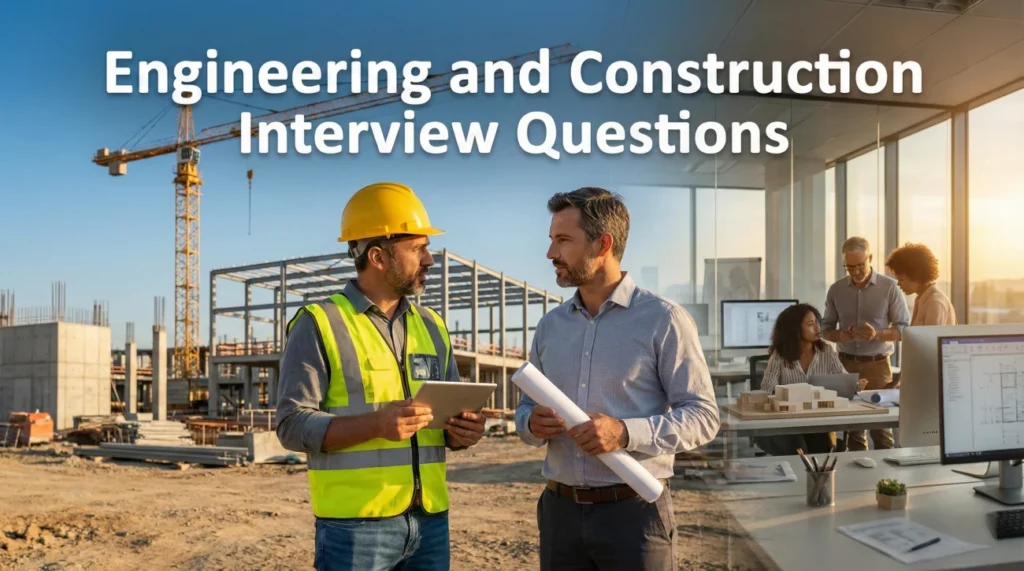
Engineering and construction careers shape the physical infrastructure enabling modern civilization: bridges spanning rivers, buildings housing communities, power systems energizing cities, water networks sustaining populations, and manufacturing processes creating products. Mastering engineering and construction interview questions requires demonstrating not just technical knowledge but systematic problem-solving, safety consciousness, project coordination capabilities, and understanding how design decisions affect construction feasibility and operational performance.
The challenge is that engineering and construction span enormous diversity: from civil engineers designing highway systems to electricians installing residential wiring, from construction managers coordinating multimillion-dollar projects to CAD technicians drafting detailed blueprints, from chemical engineers optimizing industrial processes to carpenters framing structures. Yet all share common threads: technical precision requirements, safety-critical decisions, coordination across disciplines, and accountability for outcomes affecting public welfare.
This guide maps the engineering and construction interview landscape across design engineering, construction management, and skilled trades. You’ll understand how role expectations differ between design and field execution, recognize core competencies assessed universally, identify specialization-specific technical requirements, and prepare effectively for questions testing both theoretical knowledge and practical application.
Understanding Industry Divisions
Engineering and construction divide into distinct sectors, each requiring different skill emphasis and interview preparation approaches.
Engineering and Design Roles
Design professionals apply scientific and mathematical principles to create specifications, systems, and solutions meeting functional requirements within constraints.
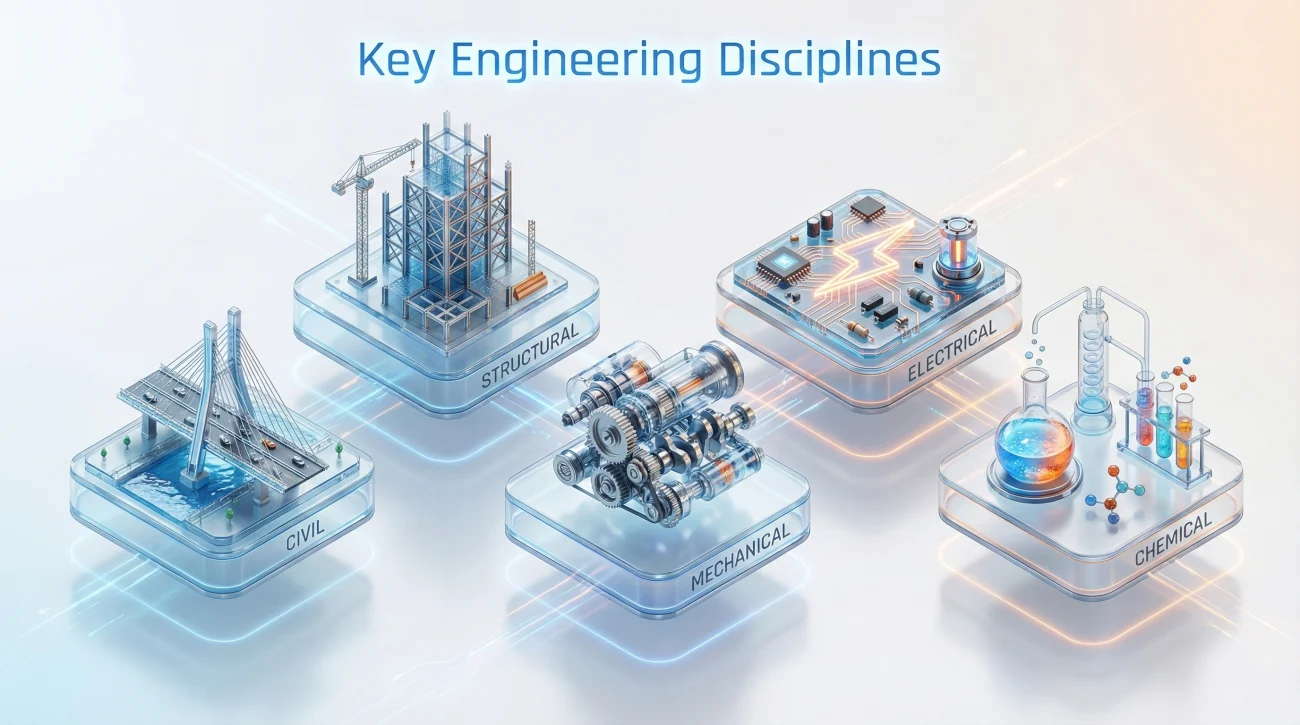
| Engineering Discipline | Primary Focus | Key Interview Themes |
|---|---|---|
| Civil Engineering | Infrastructure and site development | Drainage design, code compliance, surveying, materials testing, public works standards |
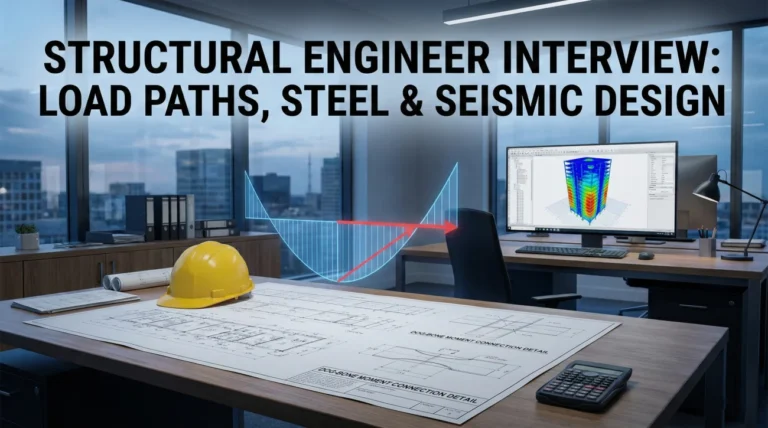
| Structural Engineering | Load-bearing systems analysis | Load calculations, material properties, steel/concrete design, seismic considerations, failure analysis |
| Mechanical Engineering | Machine and system design | Thermodynamics, CAD proficiency, HVAC fundamentals, material selection, manufacturing processes |
| Electrical Engineering | Power and control systems | Circuit analysis, power distribution, control theory, electrical codes, system integration |
| Chemical Engineering | Process and production systems | Process design, safety analysis (HAZOP), material balance, reaction engineering, scale-up |
Construction and Project Management
Construction professionals translate designs into physical reality through coordination, scheduling, quality control, and resource management.
- 🏗️ Construction Manager: Overall project coordination, budget/schedule management, subcontractor oversight, risk mitigation
- 📋 Site Manager: Daily field execution, labor management, logistics coordination, quality assurance, safety compliance
- 🔧 Project Engineer: Technical documentation, RFIs, submittals, shop drawing coordination, design-construction interface
- 💰 Quantity Surveyor: Cost control, contract administration, bills of quantities, variation management, commercial claims
- 📊 Construction Estimator: Pre-construction bidding, quantity takeoffs, pricing analysis, vendor quotes, risk assessment
Skilled Trades and Technical Support
Trades professionals execute specialized installation, fabrication, and maintenance work requiring hands-on expertise and precision craftsmanship.
- Electrician: Electrical installation, wiring, code compliance, troubleshooting, safety practices
- Plumber: Pipe systems installation, repairs, fixture installation, code requirements, material knowledge
- Welder: Metal joining techniques (MIG/TIG/stick), blueprint reading, quality inspection, certification requirements
- Carpenter: Framing, finishing, cabinetry, measurement accuracy, tool proficiency, material properties
- HVAC Technician: Climate system installation, maintenance, diagnostics, refrigeration, controls
- CAD Technician: Technical drawing, software proficiency, design coordination, detail accuracy, standards compliance
Specialized Engineering Fields
Certain engineering disciplines require industry-specific knowledge beyond general engineering fundamentals.
- ✈️ Aerospace: Aerodynamics, flight systems, avionics, materials science, testing protocols
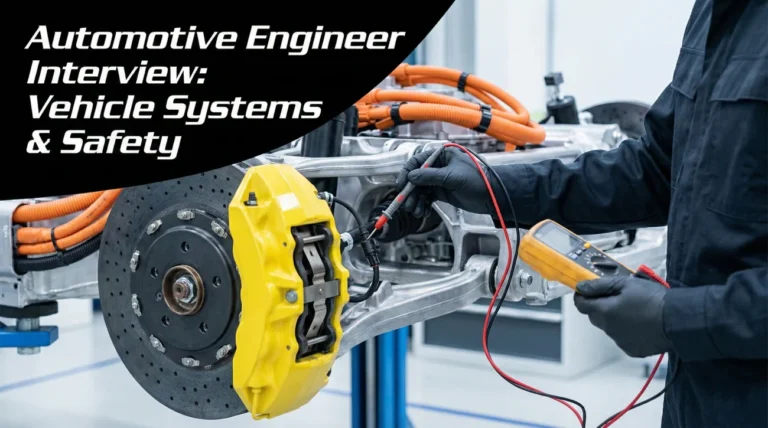
- 🚗 Automotive: Vehicle systems, safety testing, powertrain, electronics, manufacturing processes
- ⚕️ Biomedical: Medical device design, regulatory compliance (FDA), testing/validation, quality systems
- 🛢️ Petroleum: Reservoir engineering, drilling operations, production optimization, safety systems
- ⚓ Marine: Ship systems, propulsion, naval architecture, corrosion protection, offshore structures
Expert advice: The biggest interview mistake is conflating design with execution roles. An electrical engineer discussing residential wiring installation misses design focus while electrician emphasizing circuit theory wastes time on impractical depth. Similarly, construction managers discussing detailed trade execution miss strategic coordination focus. Research your specific role’s core responsibilities thoroughly: engineering breadth means interview expectations vary dramatically by position.
Universal Engineering and Construction Competencies
Despite role diversity, certain competencies appear consistently in engineering career preparation across all technical roles.
Technical Knowledge Foundation
All engineering and construction roles require solid grasp of relevant technical principles and practical application capability.
| Competency Area | What Interviewers Assess | Demonstration Methods |
|---|---|---|
| Technical fundamentals | Core knowledge depth, principle application, calculation ability, theoretical understanding | Technical questions, problem-solving exercises, explaining concepts, discussing past projects |
| Code and standards knowledge | Familiarity with relevant codes, compliance mindset, staying current with changes | Citing specific code sections, discussing code interpretation challenges, regulatory awareness |
| Drawing and documentation | Blueprint reading, technical drawing skills, documentation accuracy, attention to detail | Interpreting provided drawings, explaining symbols, discussing documentation standards |
| Software and tools | CAD proficiency, analysis software, project management tools, industry-specific applications | Portfolio review, discussing software experience, demonstrating workflows, tool selection reasoning |
Safety and Quality Mindset
Construction and engineering involve life-safety consequences requiring unwavering commitment to safe practices and quality standards.
- ⚠️ Safety culture: Prioritizing safety over schedule/cost, hazard recognition, PPE compliance, incident reporting
- ✅ Quality assurance: Inspection protocols, testing requirements, specification compliance, defect identification
- 📋 Risk management: Identifying potential failures, mitigation planning, contingency development, proactive prevention
- ⚖️ Regulatory compliance: Understanding code intent, maintaining documentation, audit readiness, ethical practice
Systematic Problem-Solving
Engineering and construction professionals solve complex problems with multiple constraints and stakeholders.
- Analytical thinking: Breaking complex problems into components, identifying root causes, data-driven decisions
- Creative solutions: Finding innovative approaches within constraints, optimizing competing objectives
- Practical judgment: Balancing theoretical ideal with field reality, constructability considerations, cost-effectiveness
- Troubleshooting capability: Diagnosing failures, testing hypotheses, systematic elimination, learning from mistakes
💡 Pro tip: Engineering and construction interviews heavily emphasize technical problem-solving through scenario questions or take-home assignments. Prepare examples demonstrating your systematic approach: how you defined the problem, gathered relevant information, considered alternatives, selected solution, and validated results. Process matters as much as final answer: interviewers assess whether you think like engineer/builder, not just recall formulas.
Role-Specific Interview Focus
While core competencies appear universally, technical depth and practical emphasis vary significantly by specialization.
Design Engineering Emphasis
Engineering design interviews emphasize theoretical knowledge, calculation capability, and design methodology more than construction logistics.
| Knowledge Domain | Entry Level | Mid Level | Senior Level |
|---|---|---|---|
| Technical depth | Fundamental principles, basic calculations, code awareness | Complex analysis, system design, optimization techniques | Advanced specialization, innovation, technical leadership, mentoring |
| Software proficiency | CAD basics, simple analysis, standard tools | Advanced modeling, simulation, custom applications | Tool selection strategy, workflow optimization, team standards |
| Project involvement | Component design, calculations, documentation support | System design, coordination, technical leadership | Project technical oversight, client interface, design review authority |
| Industry knowledge | Basic codes and standards, common practices | Deep code expertise, industry trends, emerging technologies | Thought leadership, standard development, innovation direction |
Construction and Field Role Emphasis
Construction interviews prioritize practical execution knowledge, coordination skills, and real-world problem-solving over theoretical depth.
- Scheduling and logistics: Sequencing work, resource allocation, critical path, coordination complexity
- Budget management: Cost control, change orders, tracking, forecasting, value engineering
- Subcontractor coordination: Managing trades, resolving conflicts, ensuring quality, schedule integration
- Documentation: RFIs, submittals, as-builts, daily reports, change documentation, closeout
- On-site leadership: Safety enforcement, quality inspection, problem resolution, team coordination
Skilled Trades Technical Focus
Trade interviews often include hands-on assessments alongside knowledge questions, emphasizing practical capability over theory.
- 🔨 Tool proficiency: Safe operation, proper selection, maintenance, troubleshooting equipment issues
- 📐 Measurement accuracy: Precision work, layout, verification, tolerance understanding, quality standards
- 📘 Code compliance: Trade-specific regulations, inspection requirements, permit processes, safety standards
- 🛠️ Troubleshooting: Diagnosing problems, systematic testing, repair techniques, preventing recurrence
Expert advice: Bring portfolio or work examples to interviews when possible: design calculations you’re proud of, CAD drawings demonstrating skills, project photos showing completed work, or problem-solving examples with measurable results. Visual evidence of capability proves more convincing than verbal claims alone, especially for roles where deliverables speak louder than credentials.
Strategic Interview Preparation
Effective preparation for technical design questions and construction scenarios balances theoretical knowledge review with practical application examples.
Technical Knowledge Review
Refresh core concepts and formulas relevant to your discipline, focusing on fundamentals over obscure specializations.
- Review undergraduate coursework notes on key subjects relevant to target role
- Practice fundamental calculations without relying on software: demonstrate understanding, not just tool proficiency
- Study relevant codes and standards: be able to cite key sections and explain application
- Prepare to explain technical concepts clearly: teaching ability demonstrates deep understanding
Project Experience Preparation
Develop detailed narratives about past projects demonstrating technical and professional capabilities.
| Project Aspect | Details to Prepare | What It Demonstrates |
|---|---|---|
| Technical challenge | Problem context, constraints, analysis approach, solution selection, validation | Problem-solving methodology, technical depth, practical judgment |
| Collaboration example | Cross-discipline coordination, conflict resolution, stakeholder management | Teamwork, communication, navigating competing priorities |
| Design-to-construction | Constructability considerations, field changes, lessons learned | Practical awareness, adaptability, learning from experience |
| Safety situation | Hazard identification, risk mitigation, safety culture demonstration | Safety consciousness, leadership, ethical commitment |
For comprehensive guidance on technical interview preparation, explore professional preparation resources covering engineering scenarios and construction management case studies.
❓ FAQ
🎯 How technical should I expect engineering interviews to be?
Varies significantly by role and company. Entry-level positions often include fundamental technical questions and problem-solving exercises testing knowledge application. Experienced roles emphasize project examples demonstrating judgment and expertise over testing textbook recall. Some companies use take-home technical assignments while others prefer conversational technical discussions. Research specific company interview format when possible. Always prepare to explain technical decisions from past projects and demonstrate problem-solving approach even if formal technical testing doesn’t occur.
💼 What if I lack direct experience in the specific industry sector?
Emphasize transferable technical skills and demonstrate learning agility. Mechanical engineering principles apply across industries even if you move from HVAC to automotive. Construction management fundamentals transfer between commercial and infrastructure projects. Discuss how you’ve successfully learned new domains previously, your approach to getting up to speed quickly, and genuine interest in target sector. Strong fundamentals plus eagerness to learn often outweigh narrow specialization for many roles.
⏰ Should I bring portfolio or work samples to interviews?
Yes, when possible and appropriate. Engineers benefit from calculation examples or CAD drawings (ensuring no confidential information disclosed). Construction professionals can share project photos, schedules, or documentation examples. Trades workers might bring photos of completed work demonstrating quality. Portfolio provides conversation catalyst and credibility evidence. However, respect intellectual property: never share proprietary designs or confidential project information without explicit permission.
📋 How important is software proficiency versus fundamental knowledge?
Fundamentals matter more than specific software experience for most engineering roles. Tools change but principles remain constant. However, demonstrate computer literacy and learning agility: “I haven’t used Software X but mastered similar Tool Y quickly and confident I’d do same here.” For CAD-heavy roles or specialized analysis positions, specific software proficiency weighs more heavily. Construction roles increasingly require project management software fluency. Show both solid fundamentals and technical tool adaptability.
✨ How do I demonstrate safety consciousness during interviews?
Weave safety awareness naturally into project examples: mention how you considered safety in design decisions, describe safety protocols you followed or enforced, share example of stopping work due to unsafe condition even under schedule pressure. Discuss safety training or certifications. For construction roles, explain your approach to toolbox talks, hazard recognition, or incident investigation. Authentic safety commitment shows through specific examples and decision rationale, not generic “safety is important” statements.
Final Thoughts
Success with engineering and construction interview questions requires understanding your specific role within the broader industry landscape. A structural engineer emphasizing construction scheduling wastes interview time on execution details while site manager discussing advanced structural analysis misses practical coordination focus. Yet despite specialization diversity, all engineering and construction roles demand technical precision, safety consciousness, systematic problem-solving, and coordination across disciplines.
Strong candidates prepare thoroughly: reviewing technical fundamentals relevant to their discipline, developing detailed project examples demonstrating both knowledge and judgment, articulating problem-solving methodology showing how they think not just what they know, and communicating genuine passion for building and creating rather than just collecting paychecks. Whether you’re designing bridge structures, managing construction sites, installing electrical systems, or optimizing industrial processes, your value lies in applying technical expertise to create safe, functional, efficient solutions serving public welfare and organizational objectives.
⚠️ Disclaimer: The interview strategies, sample answers, and negotiation tips provided in this guide are for educational purposes only. Hiring decisions are subjective and vary by company and industry. While these strategies are based on professional HR standards, they do not guarantee a specific job offer or result.