- Core Difference: Creative interviews judge your portfolio story, design thinking, and decision rationale, not just whether you can answer standard questions well.
- Portfolio Strategy: Curate 5 to 7 strong pieces, give clear context and your exact contribution, and show outcomes so quality stays loud and focused.
- Show Your Process: Bring sketches, iterations, research, and trade-offs so interviewers can see how you solve ambiguous problems, not just the polished final.
- Handle Feedback Well: Respond calmly to critique, ask clarifying questions, explain your reasoning, and show you can iterate without getting defensive.
- Avoid Common Traps: Don’t flood them with mediocre work, don’t present aesthetics without strategy, and never blur ownership or NDA boundaries.
Why Creative Interviews Differ From Other Fields
Preparing for creative and design interview questions requires understanding that hiring managers evaluate capabilities beyond what resumes reveal through portfolio quality, design thinking processes, creative problem-solving approaches, and ability to articulate decisions rather than relying solely on verbal responses to standard questions. Creative roles demand demonstrating both innovative thinking and practical execution, balancing artistic vision with business constraints, user needs, and technical feasibility.
Strong candidates showcase portfolios telling coherent stories about their work, explain design decisions with clear rationale, demonstrate receptiveness to feedback without defensiveness, and articulate how they balance creativity with strategic objectives. Understanding interview fundamentals provides baseline preparation, but creative roles require additional focus on visual presentation, process explanation, and demonstrating how aesthetic choices serve user experience and business goals rather than existing purely for artistic expression.
Portfolio Presentation Strategy
Understanding design interview preparation centers on portfolio quality and presentation approach since visual work speaks louder than verbal claims about creative capabilities.
Strategic Project Selection
Curate portfolio showcasing diverse capabilities relevant to the role rather than including every project you’ve completed. Quality trumps quantity; 5-7 strong pieces demonstrating different skills prove more valuable than 20 mediocre examples diluting impact. Each piece should tell complete story including challenge, your approach, iterations, final solution, and measurable outcomes when possible. Tailor selection emphasizing work most relevant to position requirements and organizational style.
| Portfolio Element | What to Include | Why It Matters |
|---|---|---|
| Process Documentation | Sketches, iterations, wireframes, mood boards, research | Demonstrates thinking beyond final polish |
| Problem Context | Client needs, user challenges, constraints, objectives | Shows strategic thinking, not just aesthetics |
| Design Decisions | Rationale for choices, trade-offs considered, alternatives | Reveals intentional approach versus random styling |
| Collaboration Evidence | Team roles, stakeholder input, feedback incorporation | Proves ability to work with others effectively |
| Impact Metrics | User engagement, business results, measurable improvements | Connects creative work to tangible outcomes |
Effective Portfolio Walkthrough
Practice explaining portfolio pieces concisely, focusing on challenge, approach, and outcomes rather than exhaustive technical details. Lead with problem context before showcasing solution, explain design decisions with clear rationale, and acknowledge constraints or limitations honestly. Allow time for questions rather than monologuing through entire portfolio. Strong presentations balance showing finished work with revealing process demonstrating how you think and solve problems creatively.
Expert advice: The most compelling portfolio presentations focus less on defending aesthetic choices and more on explaining how design decisions serve user needs, business objectives, and strategic goals within real-world constraints.
Demonstrating Design Process and Thinking
Strong creative job interview tips emphasize articulating your creative process and design thinking approach beyond showcasing finished work.
Creative Problem-Solving Approach
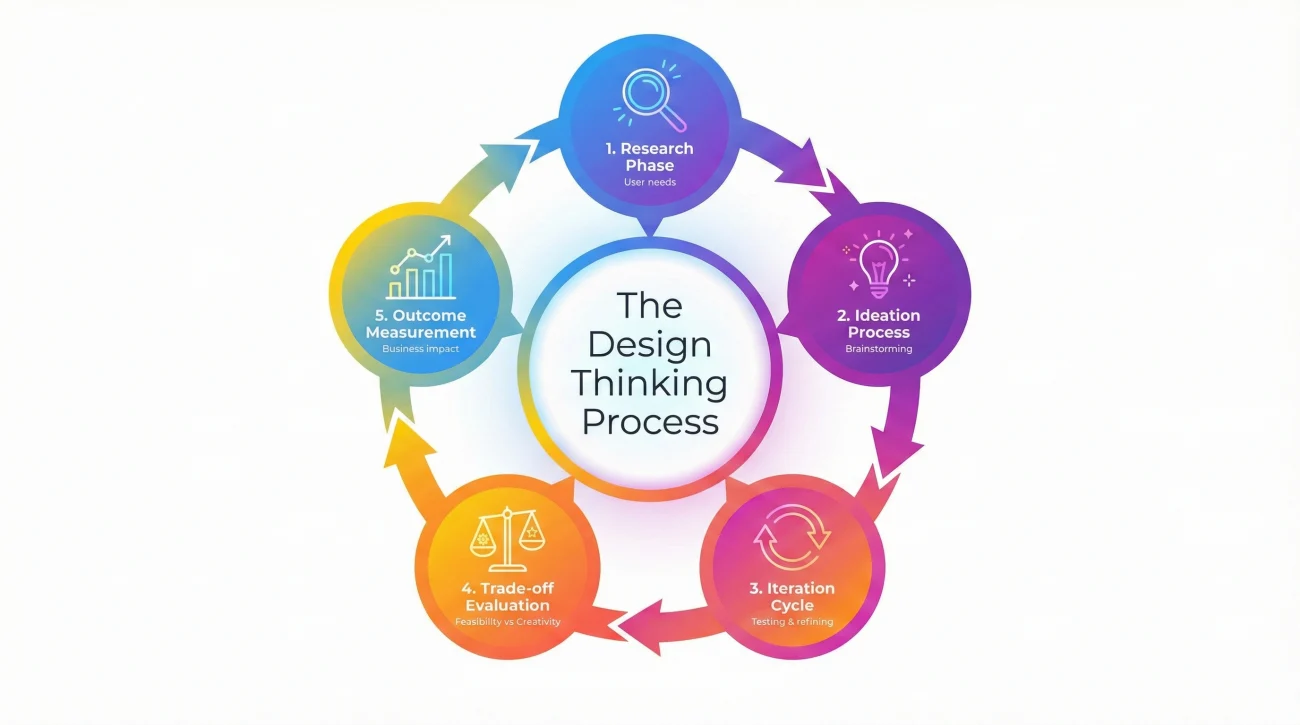
Interviewers assess how you approach ambiguous creative challenges through situational questions or design exercises. Walk through your process starting with understanding the problem, researching context and users, exploring multiple solutions through ideation, testing concepts, iterating based on feedback, and arriving at final recommendations. This structured approach demonstrates disciplined creativity rather than random inspiration, showing you can apply creative thinking systematically to business challenges.
Handling Critique and Feedback
Creative roles require receiving feedback gracefully, distinguishing between valuable input and misguided critique, and incorporating suggestions without losing design integrity. During portfolio reviews, expect interviewers to challenge decisions or suggest alternatives. Respond thoughtfully, acknowledge valid points, explain your reasoning clearly, and demonstrate willingness to iterate rather than defensively protecting every choice. This receptiveness signals collaborative potential more valuable than perfect initial execution.
- 🎨 Research phase: User needs, market analysis, competitive review, constraints understanding
- 💡 Ideation process: Brainstorming, sketching, exploring alternatives, divergent thinking
- 🔄 Iteration cycle: Testing concepts, gathering feedback, refining solutions
- ⚖️ Trade-off evaluation: Balancing creativity, feasibility, timeline, budget
- 📊 Outcome measurement: Success metrics, user response, business impact
💡 Pro tip: Prepare 2-3 examples where you received critical feedback and successfully incorporated it, demonstrating collaborative flexibility rather than rigid attachment to initial concepts.
Role-Specific Preparation Variations
Effective portfolio presentation strategies adapt to specific creative discipline requirements since graphic design interviews differ from motion graphics, video production, or industrial design assessments.
Visual and Graphic Design Roles
Visual design interviews emphasize typography, color theory, composition, brand consistency, and translating strategy into visual communication. Prepare to discuss how design choices support messaging, why specific styles match brand positioning, and how you balance creativity with client needs. Portfolio should demonstrate versatility across media while showing cohesive design sensibility and understanding of visual hierarchy, balance, and user experience principles.
Media Production and Editing
Production roles assess technical proficiency, storytelling ability, collaboration skills, and understanding of full production workflow from concept through final delivery. Portfolio should include diverse project types, demonstrate technical mastery of relevant tools, and show ability to work within budgets and timelines. Be prepared to discuss equipment, software, problem-solving during shoots or edits, and how you handle inevitable production challenges.
| Discipline | Key Interview Focus |
|---|---|
| Graphic/Visual Design | Typography, composition, brand systems, visual communication strategy |
| UI/UX Design | User research, interaction design, usability, prototyping, testing |
| Motion Graphics/Animation | Timing, storytelling, technical execution, software mastery |
| Video/Photo Production | Technical skills, storytelling, workflow, collaboration, problem-solving |
| 3D/Game Design | Technical proficiency, optimization, pipeline understanding, artistic vision |
Avoiding Creative Interview Pitfalls
Several predictable errors undermine otherwise talented candidates during design thinking interview assessments, creating doubt about professionalism or collaborative ability.
Portfolio Presentation Mistakes
Showing too many mediocre pieces dilutes impact of strong work. Including projects without context leaves interviewers guessing about your actual contribution versus team efforts. Focusing solely on aesthetics without explaining strategic thinking suggests superficial approach. Defensive responses to portfolio feedback signal collaboration challenges. Strong candidates curate selectively, provide clear context, explain decisions strategically, and welcome constructive critique demonstrating growth mindset.
Failing to Show Process
Only presenting polished finals without revealing how you arrived at solutions misses opportunity to demonstrate problem-solving capabilities. Interviewers want to see your thinking, iteration, and how you respond to constraints. Include sketches, wireframes, alternative concepts, and explain why you chose specific directions. This process transparency proves you can think through problems systematically rather than relying on lucky inspiration or copying trends without strategic rationale.
Never present others’ work as your own or obscure actual contributions in team projects; creative communities are small and dishonesty destroys reputations permanently once discovered.
❓ FAQ
🎯 How many portfolio pieces should I show?
Quality over quantity; 5-7 strong pieces demonstrating diverse skills and thinking prove more valuable than 20+ mediocre examples. Curate strategically for each interview, emphasizing work most relevant to the specific role and organizational style you’re pursuing.
💼 Should I include personal projects or only professional work?
Include personal projects that demonstrate relevant skills, especially if you’re early career with limited professional work. Clearly label them as personal versus client work. Strong personal projects showing initiative and passion can impress more than mediocre professional pieces.
⏰ How do I handle NDA-protected work in my portfolio?
Respect NDAs absolutely; ask clients for permission to share work publicly or create sanitized versions removing confidential elements. Explain your process and contributions verbally without showing protected visuals. Most employers respect NDA compliance and appreciate your professional integrity.
📋 What if I receive harsh feedback on my portfolio?
Listen without defensiveness, ask clarifying questions to understand concerns, acknowledge valid points, and explain your rationale calmly. Demonstrate willingness to iterate and learn. How you handle critique reveals collaborative potential and growth mindset that matters as much as portfolio quality itself.
✨ Should I focus more on creativity or strategic thinking?
Balance both; show creative innovation constrained by strategy, user needs, and business goals. Pure artistic expression without strategic rationale suggests you can’t balance vision with practical requirements. Explain how creative choices serve objectives rather than existing purely for aesthetic reasons.
Final Thoughts
Creative and design interviews assess capabilities beyond what resumes reveal, emphasizing portfolio quality, design thinking processes, and ability to balance artistic vision with business constraints. The candidates who consistently secure offers prepare portfolios telling coherent stories, articulate design decisions with strategic rationale, demonstrate receptiveness to feedback, and show how creative choices serve user needs and organizational objectives rather than existing purely for aesthetic expression.
Mastering creative and design interview questions requires investing equal effort in portfolio curation, process documentation, and verbal articulation of your thinking alongside developing creative skills themselves. Curate strategically emphasizing quality over quantity, explain decisions with clear rationale connecting aesthetics to strategy, welcome feedback demonstrating collaborative flexibility, and adapt preparation to specific discipline requirements recognizing that graphic design interviews differ fundamentally from video production or industrial design assessments. This comprehensive preparation distinguishes you from candidates showcasing strong work without explaining the thinking, process, and strategic considerations that produced compelling creative solutions.
⚠️ Disclaimer: The interview strategies, sample answers, and negotiation tips provided in this guide are for educational purposes only. Hiring decisions are subjective and vary by company and industry. While these strategies are based on professional HR standards, they do not guarantee a specific job offer or result.